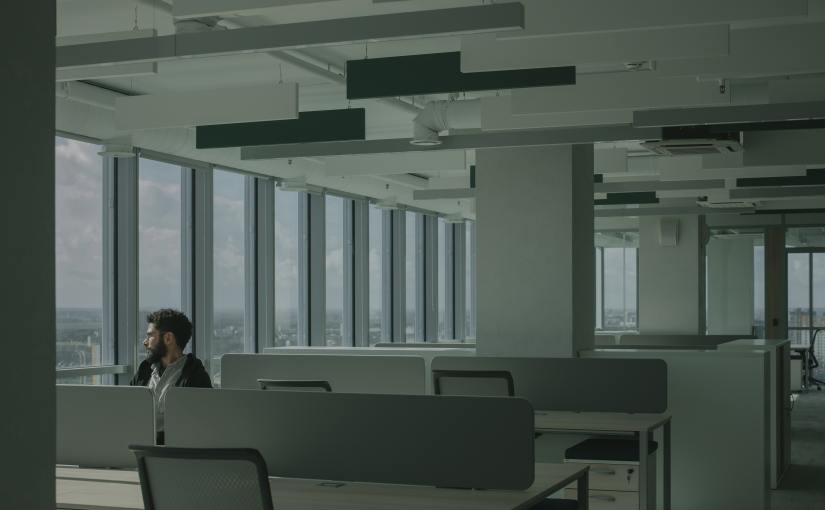
‘I’m holding out to go to the toilet’: Why monitoring employees – inside and outside the office – is rocketing anxiety

How would you like it if your working day was monitored, and the time at the computer, the number of keystrokes and non-work-related searches all counted by your employer? 

Despite knowledge workers pleading for greater flexibility and autonomy in this messy post-pandemic period, and a clear shift to measuring outcomes rather than time, there has been a massive surge in worldwide demand for solutions to keep tabs on staff, wherever they are working. 

Now businesses are firming up their hybrid working strategies there is even greater interest in various forms of monitoring tech. Research from Top10VPN shows global demand for employee monitoring software jumped by 75% between January and March 2022, marking the biggest three-month increase since 2019.

This article was first published on DigiDay’s future-of-work platform, WorkLife, in May 2022 – to continue reading please click HERE.

WTF is Pleasanteeism?

You’ve heard of presenteeism, but a new and arguably even more troubling related term is now entering the business lexicon: pleasanteeism.

As businesses chisel their hybrid-working strategies, employees are being forced back into offices. And while many relish the opportunity to converse and collaborate with colleagues in person, for some, this cheery attitude belies underlying fears about returning to work, money troubles, and mental health woes. As a result, people are suffering in silence.

“Pleasanteeism is the sense that we always have to display our best self and show that we are OK regardless of whether we’re stressed, under too much pressure, or in need of support,” said Shaun Williams, CEO and founder of insurance firm Lime Global, who invented the term in August 2021. 

This article was first published on DigiDay’s future-of-work platform, WorkLife, in May 2022 – to continue reading please click HERE.

WTF is an employee engagement platform?

Every successful company has realized that its people are its greatest asset for decades – if not centuries. Now, more than ever before in the history of work, employers have to understand in great detail what their employees want and need because of the seismic shifts happening. 

With most organizations figuring out flexible and hybrid working models, their employees are the most critical stakeholders. For this reason, to gauge their sentiments, companies are turning to employee experience (EX) platforms.

What exactly are EX platforms, and when did they become a thing?

This article was first published on DigiDay’s future-of-work platform, WorkLife, in May 2022 – to continue reading please click HERE.

Badly managed return-to-office plans will fuel a ‘well-being crisis’ doctors warn

Doctors are lining up to warn U.S. and U.K. business leaders that they face a “well-being crisis” if they fail to improve the mental health support for employees returning to the office.

While people’s mental health has suffered in general over the past two years, the return to office is adding some new stressors to the mix. Employers must respond in kind, and actively listen to staff in order to provide the right support, or they’ll risk a backlash, say health experts.

A Slack-commissioned study of 1,000 knowledge workers in the U.K., launched in May which is Mental Health Awareness month, revealed that 73% of employees have experienced exhaustion in the last year. And almost half (49%) of respondents highlight associated costs with office working, such as travel and food, as stressors — at a time when 87% of British adults are reporting a rise in their cost of living, according to the Office for National Statistics.

This article was first published on DigiDay’s future-of-work platform, WorkLife, in May 2022 – to continue reading please click HERE.

Fast-track to remote-first success: Experienced experts reveal their tips so others can accelerate their journeys

When Airbnb CEO Brian Chesky unveiled the company’s remote working policy at the start of May, in only 105 words, there was much to admire about its boldness and simplicity. However, one detail concerned Paul McKinlay, vp and head of remote for Cimpress/Vista, which implemented a similar strategy two years ago. It was Chesky’s comment that remote working “will become the predominant way companies work 10 years from now.”

The Airbnb boss’s prediction is supported by electronics firm Ricoh Europe’s research, which polled 3,000 employees in the U.K. and Ireland, France, Germany, Spain, Italy and the Netherlands last month. Almost half of the respondents (47%) think we’ll all work remotely in a decade’s time and that the traditional office space won’t exist.

But for Boston-based McKinlay that timeframe isn’t nearly fast enough. He warned that global leaders need to “act much sooner” and develop fully-fledged hybrid and remote-friendly working models for the benefit of their team members, shareholders and business results.

WorkLife spoke to a range of execs from different companies, which have already implemented successful hybrid and remote-first models, for tips on what to focus on. Here’s what they had to say ….

This article was first published on DigiDay’s future-of-work platform, WorkLife, in May 2022 – to continue reading please click HERE.

The seven biggest hybrid-working challenges, and how to fix them

The phrase “new normal” is a misnomer, given the state of flux in the business world. Few organizations have been able to normalize operations; who can say they’ve nailed their hybrid working strategy with a straight face?

As Kate Thrumble, executive director of talent at marketing company R/GA London, said: “We are all on a – to use an overused word – ‘journey’ with the post-pandemic way of working. No one has cracked it yet. Even those with the best intentions will have to wait a year or two to understand the impact of today’s decisions.”

However, by matching the right technology solutions with the most pressing hybrid-working challenges, organizations will reach their end destination quicker: a happy, productive, engaged and empowered workforce.

So what exactly are the seven most significant business challenges and the best tech, tools and processes to solve them and speed up progress?

This article was first published on DigiDay’s future-of-work platform, WorkLife, in May 2022 – to continue reading please click HERE.
Hangover and ‘disappointment’ days: Unusual flexible work policies that will have you raising a glass

Imagine the chaotic scene: you wake up with a pounding head and bloodshot eyes, and last night’s clothes, which reek of alcohol, are strewn carelessly throughout your home. And, worst of all, you have to be in the office in 10 minutes.

Once upon a time, you might have “pulled a sickie,” but now you can be honest because you remember, thankfully, that your employer has a “hangover day” policy. So you message your boss to say you won’t be coming in today.

The Audit Lab, a digital marketing agency in Bolton, near Manchester in the U.K., established such a policy in the summer of 2019. As per the rules: “A hangover day is essentially a work from home day that is booked in last minute. Due to the nature of our industry, which can involve schmoozing with clients and networking, there are a lot of conferences, events and work dos. Our approach acknowledges that our staff may like to enjoy a drink or two at these events.” 

This article was first published on DigiDay’s WorkLife platform in May 2022 – to continue reading please click here.

Caught red-handed: What happens when employees are found watching pornography in the workplace?

When disgraced U.K. Conservative politician Neil Parish was caught red-handed watching pornography on his mobile phone in the House of Commons last week, his defense was messy. He claimed to have inadvertently stumbled across the explicit content after searching for farming equipment — specifically Claas Dominator combine harvesters.

But, as the late U.K. Labour politician and former chancellor Denis Healey famously said: “It’s a good thing to follow the first law of holes; if you are in one, stop digging.”

At the end of April, the unseemly incident quickly escalated. Parish bowed to public pressure and announced his resignation admitting a “moment of madness.” The scandal, however, brought into sharp focus the similarities — and contrasts — between employment law in the U.K. and the U.S., and what is deemed to be inappropriate in the workplace. In this case, it was telling that Parish, who represents the Devon, England constituency Tiverton and Honiton resigned but was not fired.

This article was first published on DigiDay’s WorkLife platform in May 2022 – to continue reading please click here.

Why new hybrid working policies are falling short for employees

Hybrid working policies are a mess.

In the stampede to get people back into the office, most employers have fallen short when it comes to providing real flexibility and autonomy. The result: employees that have returned to the office haven’t enjoyed the experience, while those that have been forced to return, have quit as a result, according to sources.

Part of the issue is that hybrid workforce strategies have largely been centered on where employees should be while they work, rather than on work outcomes. It should be the other way around.

This article was first published on DigiDay’s WorkLife platform in April 2022 – to continue reading please click here.

Navigating the messy business of pets in the workplace – at home and in the office

Never work with children or animals, warns the old show-biz adage. So what happens if you acquired a pet during the pandemic — as millions of households did — and need to tend to your newish pooch or pussycat either at home while on videoconferencing calls or in the company workplace? 

When things go wrong, it can be highly amusing for everyone apart from the embarrassed owner and possibly their boss, especially if there is a mess to clean up. For instance, New York-based HR professional Harriet – a pseudonym WorkLife agreed to – recently suffered a “disgusting” experience while on a virtual call with her team. 

“In the background of the shot, I noticed my dog, Rooster, starting to poo,” she said. “I immediately pushed my camera up, so he was out of sight, put myself on mute, and used my best poker face. Within seconds he had defecated all over the room – something to do with eating a discarded takeaway-food wrapper the day before.”

This article was first published on DigiDay’s WorkLife platform in April 2022 – to continue reading please click here.

Retiring ‘Out of office’ for ‘In the office’ email sign-offs: How to avoid defaulting to video meetings when in the office

When, on April 1, Bruce Daisley, best-selling author of “The Joy of Work,” posed a provocative question on LinkedIn musing whether “the ‘in the office’ message [will] replace the ‘out of office’” it was no foolish whimsy. 

As he explained: “Heard a brilliant thing today. One firm says they don’t want workers in the office spending all day on email. The suggestion is that everyone put their ‘in the office’ message on and deal with email from home.”

The former vp of Twitter for Europe, Middle East and Africa later told WorkLife that his comment came after hearing complaints from numerous firms that employees are heading into the office only to spend all day on video conferencing calls.

“Throughout the pandemic, the number of meetings in our diaries has doubled, and those meetings have stuck, like knotweed,” he said. “We’ve spent two years reflecting on the best way to get our work done, and then we’ve sleepwalked into a horrible solution.”

This article was first published on DigiDay’s WorkLife platform in April 2022 – to continue reading please click here.

Bookshelf: Lynda Gratton on why design is central to making hybrid returns work for everyone

Hundreds if not thousands of organizations have revealed their hybrid working strategies in the last few weeks, with varying volumes of fanfare. Clearly, these plans are works in progress, given the colossal shift — for many — from the old normal. And it’s also apparent that there is no blueprint for success. Or is there?

Lynda Gratton, a professor of management practice at London Business School and the founder of HSM, the future-of-work research consultancy, is known for her work on organizational behavior. And in her latest book, “Redesigning Work: How to Transform Your Organization and Make Hybrid Work for Everyone,” she offers a four-step process to success: understand what matters: reimagine the future, model and test and, finally, act and create. But perhaps the most crucial advice is delivered in the book’s dedication: “To all those who are bold enough to redesign work.” 

This article was first published on DigiDay’s WorkLife platform in April 2022 – to continue reading please click here.

WTF is ‘hotelification’ and how can companies cash in on the workplace trend?

If you’ve never before heard of “hotelification,” you might think it sounds like a workplace provider’s take on a famous Red Hot Chili Peppers album — and perhaps that’s a pretty accurate description. Joking aside, here follows an explanation about what it is and why it matters without referring to popular U.S. rock bands.

What exactly is workplace hotelification?

“The ‘hotelification’ [the repositioning of residential, retail and office space] of the workplace is here,” declared Tim Oldman, founder and CEO of Leesman, which measures and analyzes employee workplace experience for organizations globally, in a recent WorkLife article. “Employees will treat offices differently because they are using them nomadically, booking in for a conscious stay,” he explained. “As such, they need to be beacons of warmth and hospitality to motivate them to come.”

This article was first published on DigiDay’s WorkLife platform in March 2022 – to continue reading please click here.

‘Vulnerability can be your fortress’: How to move away from a command-and-control management approach

The events of the last two years have necessitated the acceleration of a multitude of work-related trends, but the erosion of the command-and-control leadership is arguably the most significant.

A decade ago, “The How Report,” published by LRN, surveyed 16,000 employees in 17 countries and concluded that 97% adhered to a command-and-control model. Four years later, in 2016, the figure in a follow-up survey was 92%. So what is the percentage likely to be in 2022, post-pandemic?

While there is not currently a definitive answer to that puzzler, plenty of other studies indicate a significant shift away from command-and-control leadership.

This article was first published on DigiDay’s WorkLife platform in March 2022 – to continue reading please click here.

How employees are urging HR chiefs to ‘take action’ on social and political issues

As Vladimir Putin’s invasion of Ukraine drags into a fourth week, and the rest of the world looks on while the level of horror ratchets up daily, the pressure for organizations to respond is increasing.

Human resources professionals are bearing the brunt of the load. It is their responsibility to support employees, ensure internal communications are aligned with external messaging, and much more.

They didn’t teach wartime situations at HR management school. Still, neither did they teach how to handle a pandemic, and many have excelled in displaying the human side of HR in the last two years. That greater emphasis on compassion, empathy, and staff well-being will be critical, once more, with Putin’s bloody “special operation” likely to last for many more weeks.

This article was first published on DigiDay’s WorkLife platform in March 2022 – to continue reading please click here.

‘My role changed drastically overnight’: Ukraine HR execs share what they’re doing on the front line

Human resources teams across the globe are working tirelessly, encouraging employers to take a firm stance on the Ukraine invasion, ensuring deeds match words and internal and external communication is pitch-perfect, supporting staff well-being, and more. And all on top of their typical duties. Granted, it’s incredibly stressful right now — but for HR professionals on the front line, it’s far worse.

Consider the experiences of Ksenia Prozhogina, vice president of people at 3DLOOK, a retail tech company headquartered in San Mateo, California, with a research-and-development arm in Ukraine. She grew up in Nizhny Novgorod, western Russia, and has many friends still there, but her focus has been relocating 3DLOOK’s 74 Ukraine-based employees and their families away from danger.

This article was first published on DigiDay’s WorkLife platform in March 2022 – to continue reading please click here.

Why poor coordination and communication are undermining hybrid working models and making staff miserable

In theory, hybrid working is incredibly empowering for employees as it promises greater flexibility and autonomy. But it’s difficult to get right. In practice, poorly coordinated efforts are causing them to fall short.

What’s worse, those affected often suffer in silence, not raising their concerns, worried about repercussions.

For instance, New York-based finance administrator Stella — a pseudonym WorkLife agreed to — has become wholly demoralized by returning to the office. A toxic combination of poor coordination and miscommunication means that her teammates and colleagues are absent most of the time. 

This article was first published on DigiDay’s WorkLife platform in March 2022 – to continue reading please click here.

‘It’s going to get messy’: How rising generational divides could kill workplace culture

Intergenerational divides are more expansive than ever, and if left unchecked could quickly lead to toxic workplace cultures, experts warn.

Opinions on post-pandemic work values vary wildly across generations, according to a report from London-based global recruitment firm Robert Walters published in early March.

Some 60% of the 4,000 U.K. office workers surveyed reported a rise in “new challenges” when working with teammates from different generations. And 40% of respondents are “annoyed” at the post-pandemic working values and global-minded outlooks of colleagues in other age ranges.

This article was first published on DigiDay’s WorkLife platform in March 2022 – to continue reading please click here.

‘What’s in it for me?’: The employee question that needs answering in any return-to-office playbook

It’s crunch time for hybrid return-to-office plans, again.

After numerous false starts (thanks Delta and Omicron) it looks like a full-scale return to the office, in whatever shape or form that takes, has arrived. As such, a growing number of major organizations have started to show what hybrid model they’re going for.

Last week, Google told staff in the San Francisco Bay Area and several other U.S. locations that it will end its voluntary work-from-home phase in April, in favor of a plan where most employees will spend three days in the office and two working remotely.

Microsoft has also said it will reopen its Washington state and Bay Area offices, and that employees can configure what days they come to the office with their managers. Likewise, with all coronavirus restrictions officially lifted in England, organizations there are being pressured to articulate and activate their return-to-the-office plans.

Trite as it may be, it’s vital to acknowledge that an incredible amount has changed in the world of work since the pandemic struck almost precisely two years ago. And the most significant transformation has been where most of us work.

Models will naturally vary depending on the company, but there are a few essential guidelines that are worthwhile for all employers to take note of. Here’s a breakdown of five key areas employers need to have in their playbook.

This article was first published on DigiDay’s WorkLife platform in March 2022 – to continue reading please click here.

How to steer clear of ‘employee whiplash’ if driving a return to the office

On Valentine’s Day, Microsoft showed its affection to staff by announcing plans to reopen its Washington state and California Bay Area offices on February 28 — but will workers love it?

Due to the ongoing pandemic, the technology titan had indefinitely postponed return-to-work plans for its 103,000 employees, last September. But now its hybrid-working strategy has been revealed, and staff members are being called back into the office, it will likely spur other prominent organizations to follow suit. 

But could the sudden shift from remote to in-office working cause what Brian Kropp, chief of research for Gartner’s HR practice, calls “employee whiplash”? And, if so, what are the likely short- and long-term effects, and how can they be avoided?

This article was first published on DigiDay’s WorkLife platform in February 2022 – to continue reading please click here.