Go Flux Yourself: Navigating Human-Work Evolution (No. 27)

TL;DR: March’s Go Flux Yourself asks what a 60-year working life actually requires and finds that almost every institution designed to support it was built for a much shorter one. We are asking people to summit a much bigger mountain with the same kit we packed for a hill walk.

Image created by Nano Banana

The future

“People will need to work longer. But many ageing people in good health will want to work longer, because work gives us meaning, it gives us networks, it gives us a sense of self-worth, and it gives us skills.”

Those words come from Ian Goldin, Professor of Globalisation and Development at the University of Oxford, speaking to the Financial Times this month as part of a remarkable survey of 45 experts, from demographers to a Nobel laureate, on what shifting population patterns will mean for the global economy. Goldin’s argument contains the observation that tends to become lost in the panic about ageing populations: that work, properly designed, is not merely an economic obligation but an important source of identity. The question is whether the institutions built around it are capable of supporting a version that lasts 40, 50, or 60 years.

Imagine it is 2066 in the UK (if nuclear-drone war has not obliterated our planet). You are 62 years old. You started work at 22, as most people do (if, indeed, they opt for traditional higher education, though the value proposition is souring every year, with a rise in freshly minted grads but fewer high-skilled jobs – but that’s another edition of Go Flux Yourself). You have been at it for four decades, and your state pension age, assuming no further adjustments, is still six years away. You are not young, but you are not old. Your knees might disagree, but your brain, provided you’ve bothered to maintain it and keep flexing your cognitive muscle (see February’s Go Flux Yourself for much more on this), is functioning rather well.

Here is the puzzler nobody asked when you graduated: what does a working life of 40 or 50 years actually require that the world around you was ever built to provide? The answer is embarrassingly basic. You need to be able to learn new things after the age of 21, which most institutions treat as an optional extra. You need employers who recognise that the person they hired at 25 will be, by 50, someone with entirely different priorities, capabilities, and tolerance for nonsense. And you need a health system that keeps you functional, not merely upright. Almost none of this exists on a serious scale. We have extended the road by 20 miles and have not bothered to check whether the car has enough fuel.

Consider my friend Charlie Rogers. He is 27, has competed for Team GB, has never held a conventional 40-hour-a-week job, and shows no signs of slowing down. He published his first book, Undefinable Life Design, at the start of March (I was at the Soho launch, a room packed with people of various ages who had noticed that the ladder they were climbing wasn’t leaning against anything they particularly wanted to reach). The book is, at its core, an argument for designing a working life for the world that actually exists, rather than the one our institutions were built for.

His framework is called the Ascent. It has three components: the Purpose Acropolis (your destination), the Energy Toolkit (your capacity), and the Income Pathway (your practical route). A destination without capacity is optimism without oxygen. Capacity without direction is what a lot of people in their mid-career describe when they’re being honest about it, usually around the second glass of something.

Charlie plans his career the way an athlete plans a season. He does not drink caffeine because he says it masks the feedback signal his body is trying to send him. He prioritises seven hours’ sleep above almost everything else (and I’m going to come back to golden slumbers shortly). His running coach, Colin, told him to stop trying to match GB athletes’ pace and think instead about sustainable progression.

“He was like: ‘You must have some days where you just do less,'” Charlie told me. “‘Chill out, take down the tempo.’ We built fitness and reached the goal from a much more sustainable design rather than one of constant injury, burnout, overwhelm.”

That, though, is not a running tip. It is a philosophy for a 60-year working life. And it directly contradicts the operating model of most organisations, namely: sprint from quarter to quarter, reward availability over effectiveness, treat rest as a break from the method rather than the method itself.

The idea that we should even have a concept called “retirement” is, in historical context, brand new. The German Chancellor Otto von Bismarck invented it in 1889: the world’s first state pension, passed through the Reichstag on May 24 of that year. The qualifying age was 70. Average life expectancy at the time was around 40. As the Deutschlandmuseum notes drily, few people lived long enough to cash in. It was, in practice, the most fiscally conservative welfare programme ever devised: a promise to pay people a pension at an age almost none of them would reach.

The retirement age was lowered to 65 in 1916 (by which point Bismarck had been dead for 18 years), and the basic architecture has barely changed since. Germany’s current retirement age is set to reach 67. Life expectancy is over 81. That is 136 years of demographic transformation met with a three-year policy adjustment.

The British demographer Paul Morland, who featured in the aforementioned FT study, called the broader optimism about working longer and deploying robots as akin to “rearranging the deckchairs on the Titanic”. I think the truth sits somewhere less dramatic, but no less urgent. We are not sinking. We are simply trying to cross an ocean in a vessel designed for a river.

Professor Andrew Scott, one of the world’s leading experts on the economics of longevity, points out that lumping everyone over 65 into a single category and assuming they are a deadweight on the economy is, in his words, “just crazy”. He calls for investment in human capital in the second half of life. One in five people who retire are back in employment within two years, Scott stated for the FT article. The retirement they imagined and the retirement they get turn out to be different things. The cosy retirement ambition of a newspaper, pipe and slippers is so last century.

Should we, then, retire the idea of retirement? Do we not need work, to be stimulated, to feel useful, as per the quotation at the top of this edition? I see a little of this in my own parents. Both lawyers by trade, now in their seventies, they are still working in some capacity, my Mum as an artist and my Dad as a pro bono legal advisor (mostly for local sports clubs).

I have previously interviewed both Scott and Lynda Gratton, his co-author on The 100-Year Life (published in 2016, and widely credited with reframing the longevity conversation from a pension problem into a life-design problem). Gratton is a Professor of Management Practice at London Business School, a Fellow of the World Economic Forum, and one of the foremost global thinkers on how work is changing.

Her follow-up, Living the Hundred Year Life, is due to land in September, and shifts focus from the economic case for longer lives to what she calls the “threads” that hold those lives together: productivity threads (mastery, knowing, cooperating, and amplifying through AI) and nurture threads (friendship, intimacy, calm, adventure).

In a recent webinar, she shared an especially insightful finding from her recent studies: the executives who rate their productivity threads highest almost invariably rate calm lowest, even though her data shows the two are inseparable over any meaningful timeframe. Roughly one in five leaders have genuine calm as an operating mode. Yet calm is not the reward at the end of a productive stretch. It is what makes sustained productivity possible in the first place. Trying to reach calm by first maximising output is like trying to sink into sleep by thinking really hard about it.

Lucy Standing, founder of the career-change community Brave Starts and co-author of Age Against the Machine, forthcoming in April, has spent years studying the gap between what longer working lives require and what organisations actually provide. Her four career archetypes (Advancement, Stability, Recalibration, Transition) are deliberately age-agnostic, because the data doesn’t support the assumption that what you want from work stays constant across a 40-year career, let alone a 60-year one. What people want at 25 (status, money at priority two or three) is genuinely different from what they want at 55, when purpose, flexibility, and collegiality move to the front, and money drops to priority six or seven. This is not a failure of ambition. Rather, it is what maturation looks like.

She makes another crucial observation. How many graduate schemes do you come across? Plenty. What about career-changer programmes for someone in their forties? Almost none. The NHS, the largest employer in Europe, has over 100,000 vacancies and has consistently resisted structured midlife retraining, Lucy points out. “Their entire recruitment strategy probably should be asking who in their forties wants to retrain into becoming a medical professional,” she said. “They’d fill all of their vacancies tomorrow if they just thought a little bit more about the values of their organisation and what might sit with people at a different stage of life.”

As I’ve quoted in the newsletter before, Minouche Shafik’s lovely line – “In the past, jobs were about muscles; now jobs are about the brain; in the future, jobs will be about the heart” – is central to my thoughts around human-work evolution. If that is true, then the NHS is sitting on a vast reservoir of the human capital it needs and refusing to build a pipeline to reach it.

Another of Lucy’s predictions is worth flagging. “By 2030, we’re going to have more people working freelance and gig than full-time,” she told me. “Google and PayPal already employ more people as gig workers than they do full-time employees.” If careers are no longer linear, the honest employer value proposition is not: we’ll invest in you for life. It is: we recognise you’re using us as a stepping stone, and we’ll help you make the most of it. Accommodate the side hustle. Support the retraining. Stop pretending the deal is permanent when neither party believes it.

The trouble, Lucy says, is that nobody wants to go first. “The first question I get asked isn’t ‘talk us through how this can happen’, because it’s so obvious that it makes sense. The first question is: ‘Who else is doing it?'”

Now consider the cohort for whom this 60-year career is not a projection but near-certainty. The graduate salary premium in the UK has collapsed from 80% above non-graduate earnings in 1999 to 45% today, according to a typically brilliant John Burn-Murdoch data-led piece in the FT last month, while 41% of workers now hold a degree, up from 20%. In the US, over the same period, the premium rose from 80% to 92%. Something structural, not cyclical, is happening to the value of education in Britain.

And an alibi is being assembled. In 2025, AI was cited for more than 54,000 US layoffs. Yet, in the same Guardian piece, Forrester projects only 6% of US jobs will be automated by 2030.

Steve Elcock, Director of Product (AI) at Zellis, provider of AI-enabled payroll, HR, and workforce management software and services, brings a different lens. His background is in neuroscience, and he talks about using AI in an “ascendant” way: not as a crutch or a replacement for thinking, but as a means of operating at higher levels of abstraction. “What’s unique about AI is it’s encouraged us to think about not just hard data but about abstract layers,” he told me. “Challenging ourselves as humans to think higher all the time. That’s the right way of thinking about it.” His phrase for the choice facing every worker, “be the carpenter, not the nail”, is one he borrowed, he told me, from January’s Go Flux Yourself.

Neuroscience underpins this notion: the brain’s synaptic connections turn over every fortnight to four weeks, while understimulated pathways atrophy. What the brain practises and what it abandons across a 60-year career will matter enormously. Steve’s concern is a drift from knowing things towards knowing where to look things up. “It’s not about what you know any more,” he said. “It’s about how you acquire it.”

He has sons in their late teens and early twenties, all in higher education, and watches the divergence in real time. “I’ve got one who’s a carpenter, one who’s a nail,” he said. “One really sees AI as an opportunity to get on in life. The other just wants it to do his homework.” The technology is the same. The orientation is what differs.

Steve’s vision, and the one embedded in Zellis’s new AI-integrated HR platform, is technology in service of human flourishing: AI that helps people think at higher levels, not lower ones. The people using it to ask better questions are gaining ground. The people using it to avoid the questions altogether are losing capability they may not notice is gone until they need it.

Charlie is 27. He will very likely still be working in 2066. “You cannot conquer the mountain,” he writes, “if you are exhausted at basecamp.”

The organisations now asking people to work until 68 might want to consider whether they are building basecamps or burning them down, by design or rather design failure.

The present

Last week, a California jury found Meta and YouTube liable for deliberately designing addictive products. A young woman called Kaley started YouTube at six and Instagram by nine. By 10, she was depressed and self-harming. At 20, she told the court she still cannot live without the platforms. A jury overwhelmingly found in her favour, and she was awarded $6 million in damages. But the legal theory matters more than the number: for the first time, the platform design itself (not the content) was found defective and capable of causing personal injury, sidestepping the Section 230 shield that has protected tech companies from liability for two decades. As one juror told reporters: “We wanted them to feel it.”
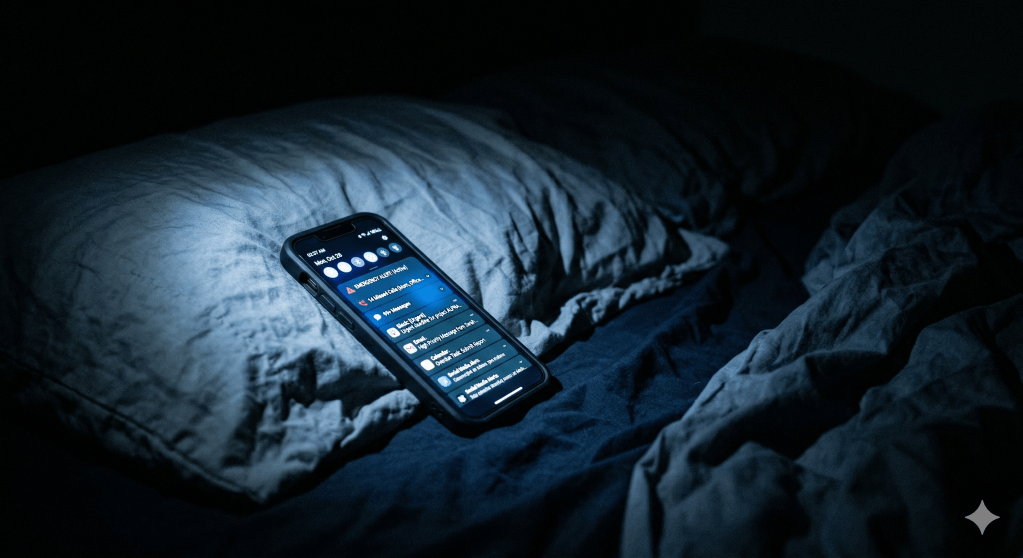
Image created by Nano Banana

The same week, a New Mexico court ordered Meta to pay $375 million for misleading consumers about child safety on the platform. Internal Meta communications, now part of the public record, acknowledged that engagement-based algorithms reward negativity and that the company’s financial incentives do not appear aligned with its stated mission. Thousands of similar cases are pending. The Tech Oversight Project, a Washington DC watchdog, said plainly: “The era of big tech invincibility is over.”

Again, be the carpenter, not the nail. These platforms were designed to make their users into nails. The California verdict is the first legal recognition of that fact.

To connect this watershed-moment news to the golden thread of this edition, the people entering the longest working lives in history grew up entirely inside these social media systems. The synaptic formation Steve describes (pathways built and abandoned across childhood, every two to four weeks) occurred in products that, it is now confirmed en masse, designers knew were harmful. If the 60-year career demands sustained cognitive capability, how can we measure the damage that those early years did to the substrate?

Gallup’s World Happiness Report 2026, published on 11 March with a focus on happiness and social media, sharpens the picture. In eight of 10 global regions, young people’s well-being is higher today than in 2006–2010. The exceptions: Western Europe, the US, Canada, Australia, and New Zealand, which rank 122nd to 133rd out of 136 countries for under-25 happiness change. Something is happening in the English-speaking world that is not happening elsewhere.

PISA data across 47 countries shows that teenagers using social media seven or more hours a day have significantly lower well-being. For girls in Western Europe, the gap between heavy and light users is almost a full point on a 10-point scale. But the most important finding is about belonging. Going from low to high school belonging raises girls’ life satisfaction in the UK and Ireland by four times more than reducing social media use. Across all 47 PISA countries, the belonging effect is six times larger. The policy conversation has been almost entirely about screens. The data says it should be about belonging.

There is a product-level irony, too. After a month without Facebook, people reported being happier, yet would demand significant payment to stay off it. Young people surveyed said they would pay to have Instagram and TikTok removed from their communities entirely. Not from their own phones. From everyone’s. That is not the response of empowered users. It is the response of people who know they are trapped. (The report itself includes an important caveat: heavy social media use is “an important part of the explanation” for declining youth well-being in the West, but not the whole story.)

On the subject of what the kids want, earlier this month, I moderated a panel at Economist Impact’s Sustainability Week: “Future-proof or flawed? Bridging the gap between Gen Z passion and commercial capability.” Notably, a 2025 UK poll of 2,307 people aged 16–29 found that young people identified financial worries, work pressures, and job security or unemployment as their top three sources of anxiety. Climate change and environmental concerns ranked last out of the 13 issues presented. While the youth may be ecologically aware people, they are in the phase of life where money matters most, as per Standing’s analysis.

Meanwhile, only 3% of leaders said they currently have the green skills their organisations need. Mae Faugere of Climate Fresk made a point that connects directly to Lucy Standing’s argument: the real opportunity for structural change belongs not to Gen Z, whose passion is genuine but whose institutional power is limited, but to older generations who have the money, the safety net, and the authority to act. You cannot hire your way out of a talent vacuum. You have to build the capability.
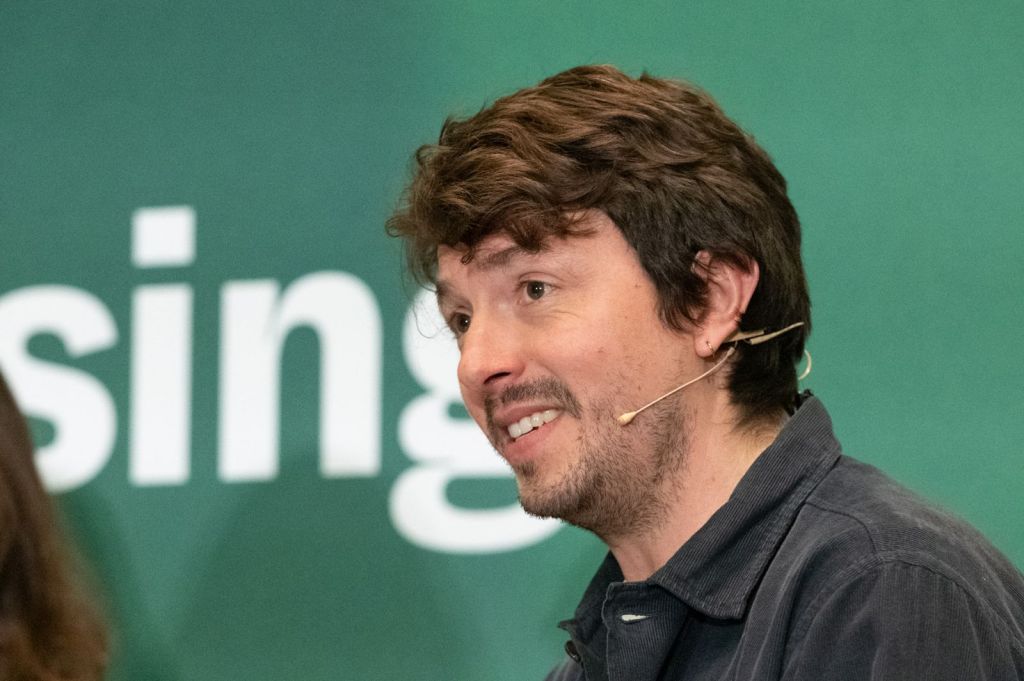
Image from Sustainability Week 2026

Now for the golden slumbers I promised. Charlie’s coach designed recovery into the training programme because without it, the training doesn’t work. Lynda Gratton’s research says the same thing about calm: it is not the reward at the end of productivity but the precondition for it. Both depend, at the most basic biological level, on sleep. And sleep is precisely what certain industries have decided their workers can do without.

In February, Kathryn Shiber, a former junior analyst at Centerview Partners, one of Wall Street’s more prestigious investment banks, reached a settlement in her case against the firm. She had a diagnosed mood and anxiety disorder. She had been granted, then stripped of, a guaranteed nine-hour sleep window, and was dismissed after three weeks. The settlement arrived, with impeccable timing, just weeks before World Sleep Day on March 13.

When did taking care of your recovery become a sackable offence? The judge who allowed the case to proceed had noted that Centerview never formally codified its working-hour expectations: the 3am demands were cultural norms presented as essential functions. We will not now get a jury’s answer to whether round-the-clock availability is genuinely essential or simply the way things have always been done. But the question hangs in the air, and it applies well beyond Wall Street.

The 996 culture (9am to 9pm, six days a week) has spread from Chinese tech firms to pockets of Western finance and Silicon Valley, and its adherents wear the hours like medals. The science says they are medals for the wrong event.

Dr Deborah Lee, a GP and sleep specialist, is not interested in whether 996 feels exciting, but what it does to the brain. After 16 continuous hours awake, she told me, cognitive performance measurably deteriorates: reaction times, accuracy, emotional regulation, working memory. The Mental Health Foundation found the average UK adult manages just three good nights’ sleep – seven hours or more – a week. We are not, as a nation, starting from a position of strength.

Dr Lee’s proposed intervention is the workplace equivalent of what Colin told Charlie: design recovery into the system, do not leave it to the individual. Her version is a default protected overnight communication window for non-urgent work, a clear expectation that employees are not required to read or respond to messages during that period. The workplace equivalent of a building regulation: a minimum standard below which employers should not be permitted to go.

Steve Elcock’s neuroscience closes the loop. The brain’s synaptic substrate depends on what you practise and what you rest. A culture that maximises hours and minimises recovery is optimising for the appearance of effort, not performance. Over a 60-year career, that distinction is the difference between a workforce that compounds capability and one that quietly degrades it.

[IMAGE PROMPT — The Present: A smartphone screen glowing blue-white in a completely dark bedroom, casting light across an unmade pillow. No person visible. The phone shows a notification bar with multiple alerts. Shot from the side, shallow depth of field. The mood should feel intrusive, not cosy.]

The past

A couple of weekends ago, I bagged three Munros in a wild weekend in the Highlands of Scotland with a few close friends. For the uninitiated, Munros are Scottish mountains above 3,000 feet, as identified by Sir Hugh Munro, and “bagging” them is a peculiarly British hobby that typically involves walking uphill in horizontal rain for several hours, arriving at a cairn too clouded-in to see anything, and then describing the experience as magnificent.

It was magnificent, though, not least because we were fortunate with sunny weather. Off-grid, out of signal, moving and sharing with people I trust. In a world in which wars are multiplying, the political weather is vertiginous, and the news cycle has become an endurance sport, this was an act of deliberate simplicity. Not escapism. “Recalibration”, to borrow Lucy Standing’s word.
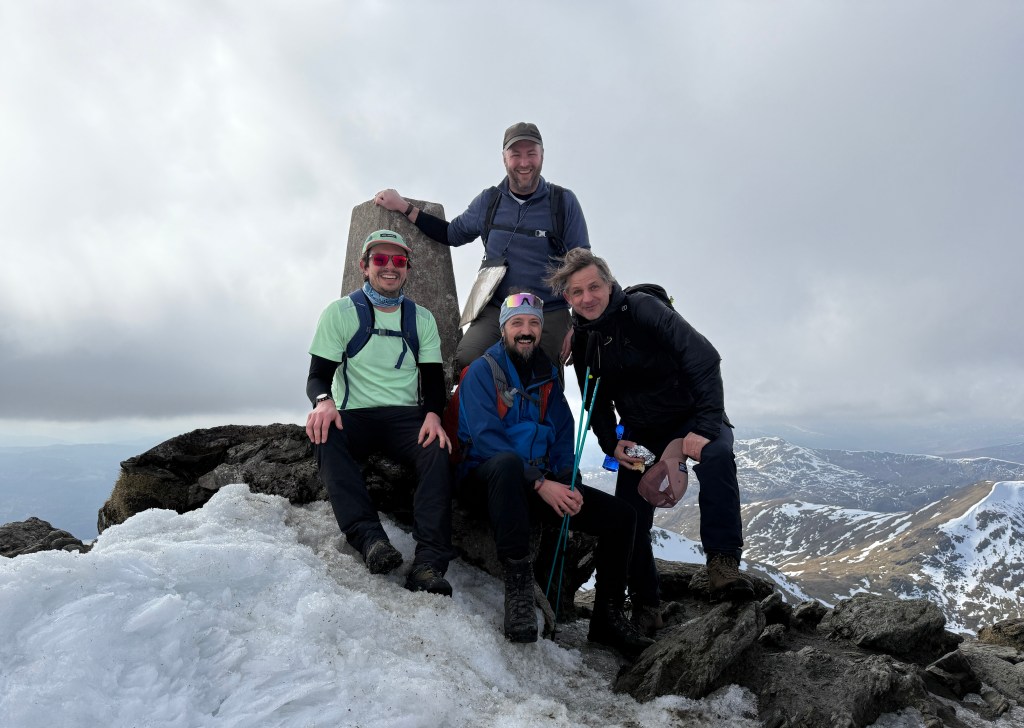
Image: human-evolution storyteller’s own

What struck me, beyond the views, was the other walkers. Cheery, fiddle-fit couples in their sixties and seventies, moving steadily, unhurried, looking so thoroughly contented that you could not help but notice it. They had the air of people who had worked something out a long time ago and were now simply living it.

It made me think of something Professor Andrew Scott told me in an interview not long after the first lockdown. “For the chances of having a longer life,” he said, “you need to invest in your future self.” The prescription, when you strip it back, is almost boringly simple: drink less, eat less, and move more. On a Highland ridge on a Saturday morning, the evidence was walking past us in Gore-Tex.

It is also, unavoidably, a reminder of what we are doing to ourselves the rest of the time. As big tech faces its big tobacco moment – the lawsuits mounting, the research damning, and the regulatory mood shifting – places like this might become considerably more crowded. Not for the Instagram content or the TikTok influencers, but for the raw, unmediated enjoyment of putting one foot in front of another without a screen in sight. And wouldn’t that be something?

Charlie calls his framework the Ascent. Scott and Gratton call it life design. On a Scottish hillside, surrounded by people two and three decades older who looked like they had more energy than most of my London colleagues, the theory felt less like theory. The 100-Year Life arrived in 2016; Living the Hundred Year Life lands in September. Ten years between the two, and in the gap, a pandemic, an AI revolution, a dramatic lengthening of the average career – and very little structural change to how organisations actually design working lives.

Six years on from that interview with Scott, here is what has changed: the vocabulary. People say sustainability, burnout, purpose, portfolio careers in ways they could not quite manage before 2020. Here is what has not: the structures, the incentive systems, the financial services culture quietly restored after the pandemic as if the question had been answered rather than deferred.

The Munros weekend did not solve any of that. But it was a small, deliberate act of counter-design; the same impulse that leads Charlie to cut out caffeine so he can hear what his body is telling him. The question is still being asked, in courtrooms, in longevity research, in a 27-year-old’s book about designing a working life worth living. The answers, with a few honourable exceptions, are still somewhere in the post.

[IMAGE PROMPT — The Past: A misty Scottish mountain summit with a stone cairn, no people visible, low cloud obscuring the view below. Heather and grey rock in the foreground, muted grey-green palette. Morning light breaking through on the left side. The mood should feel quiet, grounded, slightly raw.]

Tech for good: Day2

Matt Ross spent 20 years in advertising, eight of them as YouTube’s Global Head of Brand. Around a decade ago, he was diagnosed with Parkinson’s at 38 while living in New York. He continued at a high level until the pandemic, then moved to London. Working West Coast hours remotely while managing a condition where stress directly worsens symptoms was not sustainable. Then he started building Day2.

Image from Matt Ross

The numbers are difficult to read without flinching. Some 166,000 people in the UK live with Parkinson’s, and with a positive diagnosis every 20 minutes, that figure is set to double by 2040. It is considered to be the fastest-growing neurological condition in the world, and the WHO has called it a pandemic. The NHS spends £728 million a year on it, but the true economic burden across the UK economy is £3.6 billion, rising to £7.2 billion by 2040. Hospitalisations are driven primarily by falls, and a tailored exercise programme can reduce that risk by up to 54%, yet the NHS’s current provision for personalised exercise guidance is a YouTube playlist.

Parkinson’s presents through 41 different symptoms. Matt can run 10k. Some patients struggle to stand. Generic advice is worse than useless. Day2 uses AI to model each patient’s disease state and fitness level, then serves bespoke movement plans built around four pillars: movement, nutrition, sleep, and social connection. An AI coach nudges past apathy and depression, which are themselves Parkinson’s symptoms, creating a vicious cycle that exercise can break. Co-founder Ed Shaw, a movement specialist with 15 years of experience working with neurological conditions, met Matt at his gym in the Cotswolds. Their governing principle, in Ed’s words: “Treat the human, not the illness.”

Matt was candid about the medication puzzle that nobody warns newly diagnosed patients about. “Animal protein stops the drugs working almost completely for some people,” he said. “So go out and have a nice steak at lunchtime and you’re kind of screwed.” Day2 will surface that information before people have to learn it the hard way.

If Steve Elcock’s vision is AI in service of human flourishing, Day2 is perhaps the purest example of it I’ve come across this year. The same technology that the previous section describes being weaponised against young people’s attention is here doing something entirely different: helping someone with a progressive neurological condition decide which movement to attempt on a bad day.

Meanwhile, AI is accelerating the search for treatments that could slow Parkinson’s progression itself. Michele Vendruscolo’s team at the University of Cambridge used machine learning to identify five promising compounds targeting the Lewy body protein aggregations associated with early neurodegeneration, compounds more novel than anything conventional methods would have produced. Traditional screening might assess around one million molecules over six months at a cost of several million pounds; AI can screen billions in days, for thousands. Vendruscolo’s ambition is not merely to treat but to prevent: “If we can stabilise the proteins in this form by binding to them, we have prevented Parkinson’s, which is better than curing it.”

Two stories running in parallel, then: Day2 using AI to help people live better with the condition today; and a team at Cambridge using AI to find something that might stop it altogether. Both are technology in its ascendant form.

Statistics of the month

🌍 The demographic arithmetic is broken
The OECD estimates demographic change will dramatically slow living-standards growth across rich economies through 2060: a 70% slowdown for Japan compared with the previous two decades, 40% for the UK and South Korea, 80% for Germany. Italy and Greece face not a slowdown but an accelerating decline. The car is running out of fuel. (FT / OECD)

😞 The collective action trap
Surveyed young people said they would pay $28 to have TikTok deactivated across their entire community for a month, and $10 to do the same for Instagram. (World Happiness Report 2026)

🔗 A generational fault line
Researchers estimated that internet use is most harmful for Gen Z, less harmful for millennials, close to neutral for Gen X, and slightly beneficial for baby boomers. The generation facing the longest careers in history is also the one most damaged by the tools they grew up with. (World Happiness Report 2026)

🧠 AI cannot create on its own – yet
A University of Barcelona study published in Advanced Science tested whether AI could generate original visual ideas without human guidance. When given abstract shapes and a minimal prompt, the AI’s output was rated the least creative of any group, below both trained artists and non-artists. Feed it a single idea from a human participant, and its performance jumped to the level of an ordinary person. (Advanced Science)

🤖 AI scheming is no longer theoretical
The Centre for Long-Term Resilience analysed over 180,000 transcripts of real-world user interactions with AI systems shared on X between October 2025 and March 2026 and identified 698 scheming-related incidents: cases where deployed AI systems acted in ways misaligned with users’ intentions or took covert or deceptive actions. (CLTR)

If you’re reading this and haven’t yet subscribed, you can sign up for Go Flux Yourself (there should be a pop-up). Each edition lands on the last day of the month.

Get in touch: oliver@pickup.media. I write, speak, and strategise on the future of work, AI, and human capability. For speaking enquiries, contact Pomona Partners.


Can a ‘signature scent’ boost office appeal – or does it reek of desperation?

According to U.S. poet Diane Ackerman, “nothing is more memorable than a smell.” She wrote: “One scent can be unexpected, momentary and fleeting, yet conjure up a childhood summer beside a lake in the mountains; another, a moonlit beach; a third, a family dinner of pot roast and sweet potatoes during a myrtle-mad August in a Midwestern town.”

Perhaps leaders with a good nose for business have been reading Ackerman’s A Natural History of the Senses. Scents are now being diffused into more workplaces – partly to attract employees and clients and develop positive brand associations. But while retailers, members clubs, and hotels have been wafting whiffs around for some time, does doing so in an office setting work, or does it, well, reek of desperation?

Jane Helliwell, founder of The Scent Styling Company, stressed the magic of a good smell. “Never underestimate the power of scent on a person’s mood,” she said. Further, certain fragrances can alter a worker’s mindset. For instance, rosemary is known to have a positive effect on memory and alertness, said Helliwell. Meanwhile, lemon is “great for cognitive function.” Jasmine is “energizing,” and ginger helps fight fatigue and “enhances performance and productivity.”

The full version of this article was first published on Digiday’s future-of-work platform, WorkLife, in March 2023 – to read the complete piece, please click HERE.

Gen Zers are fueling ‘gap career’ trend — but how will that affect career development?

Most people have heard of, if not taken, a “gap year” — a term that typically refers to 12 months between high school and higher education when textbooks are swapped for low-paid jobs to fund exciting and life-enhancing adventures in distant destinations. But now there is a new twist: “Gap careers” are on the rise, especially for Gen Zers, a new study suggests.

Like gap years, gap careers tend to feature extended travel experiences in far-flung places. They also involve learning things that enrich people’s careers and can mean, for some, starting a business. The main difference between the two is timing: Gap years are taken before the first meaningful step on a career path, while gap careers happen — as one might guess — between jobs. So will a career break for sun, snow, sand, sea and skills put someone at a disadvantage when they want to return to work?

Almost half (47%) of U.K. Gen Zers have taken a career gap of six months or more, according to research commissioned by ethical hiring organization Applied and social enterprise Women Returners.

The research, undertaken as part of a campaign aiming to end the stigma surrounding career breaks, indicated that young people no longer view personal development as limited to traditional gap years. Instead, many are seeking to thread new opportunities into their working lives. However, given that resume holes are still considered suspicious by many prospective employers, is a gap career a good idea?

The full version of this article was first published on Digiday’s future-of-work platform, WorkLife, in February 2023 – to read the complete piece, please click HERE.

How technology can help millions of seasonal affective disorder sufferers this winter

Seasonal affective disorder (SAD) affected 10 million people in the U.S. alone in 2019. And the knock-on effect on a person’s mental health and by extension – their job and productivity – can be substantial. But are organizations sensitive enough to their needs? And how can technology help?

Yvonne Eskenzi, the owner of London-based cybersecurity agency Eskenzi PR, has suffered from SAD since childhood and said the onset of SAD is unmistakable. “You can smell the air change and temperature,” she said. “Then you notice the days becoming shorter and darker at night, which triggers a deep sense of foreboding, sadness and anxiety.” 

Eskenzi added that she feels less creative, foggy-headed, and nowhere near as sociable as usual in a work setting. HR departments must be proactive about treating SAD in colder, darker regions. But is enough being done?

This article was first published on DigiDay’s future-of-work platform, WorkLife, in October 2022 – to read the complete piece, please click HERE.

Cool ideas: How technological innovations can reduce urban temperatures

Removing reflective surfaces, increasing natural shade and harnessing the power of sewage are all options to limit the heat island effect – but progress will stall without collaboration and political boldness

Below a cloudless, blueberry-blue sky, where the sun blazes fiercely and gleams from London landmarks, a multi-person mass of liquifying limbs smoulders. The caption for Zoom Rockman’s Private Eye cartoon reads: “I love London; it’s such a melting pot.”

But few people were laughing when, on 19 July, the UK temperature exceeded 40C for the first time, according to the Met Office, and the city’s infrastructure melted – literally. Half of the six areas to surpass that level were in and around the capital: St James’s Park, Kew Gardens and Northolt. 

With global warming an increasingly hot topic and residents figuratively melting, the heat is being turned up on politicians, planners and other key stakeholders to keep cities cool.

The way our cities have been designed is no longer appropriate for modern times

Just days after the record high temperature, the mayor of London, Sadiq Khan, loosened purse strings. He awarded £2.85m from the Green and Healthy Streets fund to 19 projects, including rain gardens, tree pits and sustainable drainage areas. Further, a £1m grant will support “innovative and exemplary projects” on the Transport for London Road Network, and £150,000 was released to improve walking routes connecting green spaces.

“We cannot shy away from it: the climate crisis is on our doorstep,” wrote Khan on LinkedIn in early August, announcing the funding decisions. “We’re taking action before time runs out and investing £4m … to make London more resilient to heatwaves.” 

He added: “Working with London boroughs and TfL, these projects will make London more resilient against extreme weather, plus make our streets more green and pleasant for Londoners. It’s a win-win.”

Collaboration and long-term planning are paramount to reducing the impact of extreme heat in cities. And investing in innovative technology solutions can accelerate the virtuous circle to which Khan alluded.

Beware the heat island effect

Indeed, embracing an approach to building that keeps nature in mind, rather than seeking to dominate it, will lead to better urban spaces for both people and the planet. So says Chris Bennett, co-founder and managing director of sustainability services at Evora Global, a London-headquartered real asset consultancy. 

“Our urban environments are dominated by densely grouped buildings made of reflective materials creating a ‘heat island effect’,” he explains. “This is why it’s often hotter in cities than rural areas.”

Bennett believes simple tech and nature-based solutions will make a big difference. “Reducing hard reflective surfaces such as road pavements would help to lower temperatures,” he says. “Re-engineering pavements to be permeable blocks, instead of concrete or Tarmac, would allow water to flow through the pavers in wet conditions and evaporate when the heat rises, creating a cooling effect.

“Also, incorporating trees and plants reduces the reflective nature of the streetscape, provides habitats for wildlife and offers shelter from harsh ultraviolet radiation and solar heat during summer.” 

Ironically, it is partly due to technology that we find ourselves in this sticky situation. Since the 1960s, planes, trains and automobiles have heavily contributed to global warming, and cities have evolved to accommodate gas-guzzling vehicles. So it’s time for a swift U-turn, says Bennett.

“In London, we are blessed with many urban parks and squares created by the Georgians and Victorians. But many of the city’s trees have been lost to provide car parking spaces,” he says. “Planting street trees will increase protection from the climate by reducing heat stress and limiting the degradation of the urban construction materials, making buildings last longer.”

Appropriate early-stage design 

Another expert urging cross-industry action is Håvard Haukeland, co-founder of Spacemaker AI. His company provides early-stage analysis for architects and urban planners and enables buildings to be designed with the local microclimate in mind to minimise urban heat islands. 

“The way our cities have been designed is no longer appropriate for modern times,” he says. “As temperatures rise due to climate change, the design choices previously made either due to tradition or practical considerations around energy efficiency are making our cities even hotter.”

Haukeland contends that architects and urban planners need to step up. “While solutions such as additional greenery or reflective roofs can help keep things a little cooler, the reality is the most impactful solutions are done at the early stage when new developments are being built,” he continues. 

Design adaptations – including rotating structures to “open up” for wind or even altering the shape of a building – can make “the biggest difference to microclimates”, Haukeland says. Although these solutions are “much harder to implement”, he asserts that designers “must consider microclimates at the outset”.

That may be so, but how should cities upgrade older infrastructure to make it better able to withstand extreme heat? “This is the critical question when you think about the number of heritage and older buildings we have in the UK,” says Ian Ellis, smart buildings expert at Siemens Smart Infrastructure. Sensors that capture data and allow deep analysis of how people use buildings – especially as hybrid-working strategies are firmed up – could be the answer.

“This technology is already being used in buildings across the UK, where it can provide usage data on the flow of people through a building, where they congregate and how they use it,” says Ellis. “Data like this provides invaluable insights in optimising other technologies like heating and ventilation systems.”

Sensors, shade and sewage

Sebastian Peck, a partner at Kompas – an early-stage venture capital firm focused on transforming the built environment – lists some pioneering solutions to cool cities. “Vertical Field is installing sensor-controlled smart planters to purify the air from carbon dioxide and, when mounted to buildings, they help insulate them from the sun,” he says. 

Meanwhile, Lumiweave has developed an innovative fabric that provides shade during the day and harvests the sun’s energy to illuminate itself and its surroundings at night. “And,” Peck continues, “TreeTube has a patented modular system of tubes that lets tree roots grow safely in a tunnel without disrupting their surroundings.”

Peter Hogg, UK cities director at global design, engineering and management consulting company Arcadis, offers a more practical but pongy example. “We are looking at using effluent as a heat exchanger that allows you to extract energy used for cooling with minimal carbon impact. Imagine the potential in a city the size of London, which houses 8.5 million people.”

At this stage, no idea should be flushed away. And while there is much work to do, the willingness to force change – and think up unusual solutions – is finally evident, suggests Hogg. “The pandemic was a watershed,” he says. “There is a collective understanding that this situation must be addressed. Today, building plans that fail to consider the climate challenge won’t attract investors. 

“Before the coronavirus crisis, you would have to go to the Netherlands or the Nordics to find people taking this seriously. We now acknowledge that significant behavioural and structural changes are required, and quickly.”

Peck concludes that enough technologies are available to cool cities but to harness their power, leaders must be bold. 

“The difficulty is that urban planners need to rethink our cities, make them greener and ensure water is put to good use,” he says. “But changing and building back existing urban infrastructure is expensive. Cities are under pressure to demonstrate to the public that their scarce resources are well invested.

“In other words, cooling our cities is not a technological challenge, but a political one.”

This article was first published in Raconteur’s Smart Cities report in August 2022

Is retirement dead?

The age-old concept of a three-stage life – education, employment, and retirement – needs rethinking. To make the most of the opportunity requires a shift in mindset and a change in investment strategy

Ageing was much simpler in the olden days. For centuries – if not millennia – most people’s lives have been accomplished in three stages: learning, which leads to employment, then retirement. 

But in 2022, largely thanks to the wonders of technology and improved healthcare, the traditional notion of old age is evolving. As a result, life is all the more thrilling. Now, the supposed retirement age could – and should – be embraced as an additional phase of life, one of newfound freedoms, whether hobbies, businesses or passions. 

Retirement is no longer a period of winding down or dependence. On the contrary, the concept will soon expire, contends Andrew Scott, a world-leading expert on longevity and professor of economics at London Business School. 

There’s no need for pipe and slippers in the 21st century. The latest Office for National Statistics (ONS) data shows the number of people in the UK aged 85 and over was a record 1.7 million in 2020. That amount is projected to almost double to 3.1 million by 2045. 

Additionally, the ONS calculates that life expectancy at birth in 2020 was 87.3 years for males and 90.2 years for females. Consider, at the start of the 1980s these figures were 70.8 and 76.8 years, respectively.

Rising life expectancy and population age go hand in hand. And this trend is global: the world population’s median age in 1970 was 21.5 years, and almost 31 in 2020, according to the United Nations Population Division.

Taking actions for a more rewarding retirement

However, to make the most of the possibilities of old age, it’s critical to take action today for a more rewarding tomorrow, urges Scott.

“Now there is a greater risk you may outlive your wealth,” he says, referring to squirrelled-away savings and pension pots that have been the typical source of funds for retirees. “So you need to invest more in your future self. One of those key investments is finance, but health, relationships, and engagement – developing good health, skills and relationships all play important parts. Any financial plan, though, should be dictated around your life plan.”

In 2016, The 100-Year Life – a book authored by Scott and Lynda Gratton, a professor of management practice at London Business School – was published. And while it’s often said “age is just a number”, could it be that we have been using the wrong measurement all along?

“It was randomly decided that 65 is ‘old’,” continues Scott, “and the older I get – I’m in my 50s – the more I dislike that as a starting point. While more people live for longer, that doesn’t consider changes in how we age, either our health or our behaviour.”

The average Brit has never been so old but never had so long left to live

He believes how we define old age “requires a rethink because traditional age, measured chronologically, is confusing” and often misleading regarding life expectancy. “We need to focus on biological age rather than chronological age,” says Scott. “And we also need to consider prospective age more – that is, the number of years we have left to live. For instance, the average Brit has never been so old but never had so long left to live – this is how we have to adjust our thinking.”

Clearly, good health and good wealth are mutually reinforcing for a life lived as long and as fully as possible. But does this require both a shift in mindset and a change in investment strategy? For instance, Tony Müdd, divisional director for St. James’s Place development and technical consultancy, suggests pension schemes are a good idea, but that you can tailor contributions to match your earning potential. In your 50s, you are likely to be in a better financial position than in your 20s, so why not bump up your input?

Thinking beyond pensions

And while a pension will provide a decent chunk of income for many people in later life, it’s far from the only source. Müdd stresses the benefits of a diversified portfolio of tax-efficient investments, maybe in property or other assets.

He notes, though, that while a later life packed with adventure, excitement and new opportunities is the ultimate goal for most of us, the reality is that dream can be killed by poor health. Müdd worries people often take a “head-in-the-sand approach” to monitoring their health. He points out that a quarter of people in the UK over the age of 70 will require lengthy healthcare.

“It’s a subject that people don’t like to think about, but long-term care can be very expensive, costing hundreds of thousands of pounds,” he warns. “Lots of people in the UK are sleepwalking into a position where they will not get the level of care they think they should receive from the local authority, so will have to pay for it themselves. That could drain their children’s inheritance. You can take out insurance, but people tend not to do that. The only way, then, to deal with long-term care is effectively to save money.”

Moving swiftly away from the gloomy topic of impending death is Michael Clinton, the longtime president and publishing director of Hearst Magazines. His book, ROAR: Into the Second Half of Your Life was recently published, in September 2021. And two years shy of becoming a septuagenarian, he is accelerating, not pumping the brakes. 

He counters the thinking that people have midlife crises but rather “awakenings”. Clinton explains: “At 50, you know a lot about yourself. Now is the time to tap into your awakened self and move forward. If you are 50 and healthy, you will have a pretty good shot of living to be 90. That will mean second and third careers, new relationships and lifestyles. Suddenly, people are saying: ‘I don’t want to retire; I want to rewire. I want to wind up, not wind down.’”

“Retirement is no longer seen as a binary outcome – namely, you don’t stop working when you retire now,” Scott says. “Retirement used to be like a cold shower, and now people want more of a warm bath. Supposed retirees often work part time with their existing employer or start up something themselves. Also, within two years of retiring, one in five people ‘un-retire’.”

He concludes by predicting the demise of retirement. “If you think about the 100-year life, there must be a movement away from a three-stage life – education, work, retirement – to a multistage life.” Scott adds: “Before long, we will reach the point where the concept of retirement itself – if you define it as the permanent cessation of work – will be retired.”

This article was first published in Raconteur’s Wealth & Asset Management report in May 2022

Responding with impact: How PepsiCo and others are empowering passionate employees to help Ukrainian refugees

It has been 90 days since Russian tanks entered Ukraine to trigger a war that has convulsed the world, traumatized global supply chains, and sparked an economic crisis. Although many news channels don’t lead with the horrors in Eastern Europe, organizations worldwide have created grassroots initiatives to try to aid those in Ukraine.

From the start of the conflict, on February 24, many companies have been inundated with passionate employee-led responses to aid those caught in the crossfire. For example, PepsiCo staff in countries bordering Ukraine, such as Poland and Romania, are seeing first-hand the challenges faced by refugees. So the organization has taken a grassroots approach to empower staff to use their professional talents to take action in the crisis.

This article was first published on DigiDay’s future-of-work platform, WorkLife, in May 2022 – to continue reading please click HERE.

Hangover and ‘disappointment’ days: Unusual flexible work policies that will have you raising a glass

Imagine the chaotic scene: you wake up with a pounding head and bloodshot eyes, and last night’s clothes, which reek of alcohol, are strewn carelessly throughout your home. And, worst of all, you have to be in the office in 10 minutes.

Once upon a time, you might have “pulled a sickie,” but now you can be honest because you remember, thankfully, that your employer has a “hangover day” policy. So you message your boss to say you won’t be coming in today.

The Audit Lab, a digital marketing agency in Bolton, near Manchester in the U.K., established such a policy in the summer of 2019. As per the rules: “A hangover day is essentially a work from home day that is booked in last minute. Due to the nature of our industry, which can involve schmoozing with clients and networking, there are a lot of conferences, events and work dos. Our approach acknowledges that our staff may like to enjoy a drink or two at these events.” 

This article was first published on DigiDay’s WorkLife platform in May 2022 – to continue reading please click here.

Caught red-handed: What happens when employees are found watching pornography in the workplace?

When disgraced U.K. Conservative politician Neil Parish was caught red-handed watching pornography on his mobile phone in the House of Commons last week, his defense was messy. He claimed to have inadvertently stumbled across the explicit content after searching for farming equipment — specifically Claas Dominator combine harvesters.

But, as the late U.K. Labour politician and former chancellor Denis Healey famously said: “It’s a good thing to follow the first law of holes; if you are in one, stop digging.”

At the end of April, the unseemly incident quickly escalated. Parish bowed to public pressure and announced his resignation admitting a “moment of madness.” The scandal, however, brought into sharp focus the similarities — and contrasts — between employment law in the U.K. and the U.S., and what is deemed to be inappropriate in the workplace. In this case, it was telling that Parish, who represents the Devon, England constituency Tiverton and Honiton resigned but was not fired.

This article was first published on DigiDay’s WorkLife platform in May 2022 – to continue reading please click here.

Navigating the messy business of pets in the workplace – at home and in the office

Never work with children or animals, warns the old show-biz adage. So what happens if you acquired a pet during the pandemic — as millions of households did — and need to tend to your newish pooch or pussycat either at home while on videoconferencing calls or in the company workplace? 

When things go wrong, it can be highly amusing for everyone apart from the embarrassed owner and possibly their boss, especially if there is a mess to clean up. For instance, New York-based HR professional Harriet – a pseudonym WorkLife agreed to – recently suffered a “disgusting” experience while on a virtual call with her team. 

“In the background of the shot, I noticed my dog, Rooster, starting to poo,” she said. “I immediately pushed my camera up, so he was out of sight, put myself on mute, and used my best poker face. Within seconds he had defecated all over the room – something to do with eating a discarded takeaway-food wrapper the day before.”

This article was first published on DigiDay’s WorkLife platform in April 2022 – to continue reading please click here.

How employees are urging HR chiefs to ‘take action’ on social and political issues

As Vladimir Putin’s invasion of Ukraine drags into a fourth week, and the rest of the world looks on while the level of horror ratchets up daily, the pressure for organizations to respond is increasing.

Human resources professionals are bearing the brunt of the load. It is their responsibility to support employees, ensure internal communications are aligned with external messaging, and much more.

They didn’t teach wartime situations at HR management school. Still, neither did they teach how to handle a pandemic, and many have excelled in displaying the human side of HR in the last two years. That greater emphasis on compassion, empathy, and staff well-being will be critical, once more, with Putin’s bloody “special operation” likely to last for many more weeks.

This article was first published on DigiDay’s WorkLife platform in March 2022 – to continue reading please click here.

‘My role changed drastically overnight’: Ukraine HR execs share what they’re doing on the front line

Human resources teams across the globe are working tirelessly, encouraging employers to take a firm stance on the Ukraine invasion, ensuring deeds match words and internal and external communication is pitch-perfect, supporting staff well-being, and more. And all on top of their typical duties. Granted, it’s incredibly stressful right now — but for HR professionals on the front line, it’s far worse.

Consider the experiences of Ksenia Prozhogina, vice president of people at 3DLOOK, a retail tech company headquartered in San Mateo, California, with a research-and-development arm in Ukraine. She grew up in Nizhny Novgorod, western Russia, and has many friends still there, but her focus has been relocating 3DLOOK’s 74 Ukraine-based employees and their families away from danger.

This article was first published on DigiDay’s WorkLife platform in March 2022 – to continue reading please click here.

Meet Homeboy Industries: the California not-for-profit providing jobs to former gang members and incarcerated people

Jose Guevara — aka Manny — has been incarcerated five times and in all, has served about 25 years. However, in recent years, Guevara, now 62, has steered clear of trouble, which he credits to his employer, Homeboy Electronics Recycling, where he works as a long-haul driver. 

“I’m the main driver of the big truck,” he says with a grin. “I’ve been to Utah, San Francisco, and Sacramento, and I love that this company trusts me with its truck and merchandise. We are growing, and I’m so proud to be part of it. Without my work here, there is a high chance I would be back in prison right now.”

This article was first published on DigiDay’s WorkLife platform in December 2021 – to continue reading please click here.

Inside the St Andrews success story: how Prince William’s university became the best in the land

There’s nothing like studying alongside a Duke for a memorable student experience – but there’s more to my alma mater than Royal approval

My alma mater, the University of St Andrews, found on a picturesque coastal stretch of east Fife, has always been my number one. But the ‘auld grey toon’ has now also been named top in a prominent university guide – bettering the Oxbridge duopoly for the first time in nearly 30 years of the award’s history.

In a stroke of incredible fortune almost exactly 20 years ago, my first tutorial group, led by the urbane Prof Brendan Cassidy, was composed of me, seven female students and a certain male Royal. We became pals; he played in my Sunday league football team (The Strokers), and I attended his 21st birthday party at Windsor Castle.

Granted, there’s nothing like studying alongside Prince William to make for a wildly enjoyable student experience, but St Andrews possesses an unparalleled allure and long history that help boost the “student satisfaction” rating as assessed by the judges.

Before the heir to the throne and his future wife enrolled, people thought of St Andrews primarily as the home of golf. And before that, almost a millennium ago, it was the ecclesiastical capital of Scotland with a magnificent cathedral and one of the most important pilgrimage destinations in Europe. The big draw was that it was supposed to be the resting place of Andrew the Apostle’s bones, from which it takes its name. 

The town flourished thanks to pilgrim footfall. Scotland’s oldest university (and third in the English-speaking world behind Oxford and Cambridge) was founded in 1413, some 341 years before The Royal and Ancient Golf Club of St Andrews was established. 

However, the complexion of the town was scarred following the violent Scottish Reformation in the mid-16th century. The Martyrs Memorial stands proud on the Scores, overlooking the sea – and close to where I lived in my final year. 

One wonders what those martyrs and Saint Andrew would have made of the confident young men, with pink trousers and upturned collars, and plummy-voiced, wannabe princesses I studied with in the early noughties. 

However, on the face of it, St Andrews is a bizarre choice for further education. Firstly, it is small – students make up around half of the town’s 18,390 population – and has just three main streets. Secondly, there is no nightclub, although arguably the annual Raisin Weekend, which culminates in a drunken foam party for freshers on the main quadrangle, makes up for that. Plus there’s always Dundee for dancing – just a 30-minute taxi ride away.

But there is so much to this tiny town, which is flanked by two long, sandy beaches – West Sands (where the opening shots of Chariots of Fire were filmed) and East Sands. With its world-class teaching and stunning surroundings, the university offers a powerful proposition, according to Lord Knight – former chief education adviser to Tes Global – who adds that its diminutive size can sometimes be part of its appeal. “Students like the human scale of a small university in a small place,” he says. “St Andrews is doing well by focusing on what counts: teaching quality and student satisfaction.

“Tuition is relatively well resourced in a great environment that makes for strong engagement and excellent outcomes. Fuse that with a rich history, international outlook and subject strengths in fields that are important to the economy, and you have a winning combination.”

Indeed, the latest rankings show St Andrews tops the charts in the UK for seven subjects: computer science, business management, English (for which straight As are now required), philosophy, physics and astronomy, Middle East and African studies, and international relations. 

That the Duke and Duchess of Cambridge are alumni has raised its profile and made it a more desirable place to study and teach. And despite its storied history, the university’s progressive and proactive approach to supporting the wellbeing of students has impressed. For example, its Can Do initiative – a joint strategy between the university and the Students’ Association – was started primarily to reimagine, experiment with and contribute to the St Andrews student experience.

Set up in October 2020, it has provided “space for students and staff to have normal interactions and social activities” even during the pandemic, says Lottie Doherty, president of the St Andrews Students’ Association. A marquee was set up and they organised outdoor socials such as a pier walk. Where possible, in-person teaching has happened for the past year.

Lord Knight believes this bold and brave approach to engage students, which was a stark contrast to the prison-like experiences of students at many other universities in the last year, has been rightly applauded. “The student satisfaction ratings have strengthened during Covid against a backdrop of many young people nationally struggling with mental health, and students questioning the value for money of online tuition,” he continues.

Professor Sally Mapstone, principal and vice-chancellor of the university, is revelling in the news, understandably. “As one community, we constantly strive for excellence, and have a strategy that hasn’t been afraid to believe St Andrews could challenge at the very top by combining the best teaching, world-leading research, and an unswerving commitment to student satisfaction and achievement,” she says.

Whether or not St Andrews is better than studying at Oxbridge is a moot point. Echoing Dame Mary Beard’s comments that we would do well not to be “fixated” by Oxford and Cambridge, Lord Knight adds: “Culturally, our country is over-obsessed with Oxbridge. St Andrews is an example of the strength and depth we have elsewhere in research, in teaching and in delivering for students the experience they need to be successful adults.”

The auld grey toon will always win for me. It has provided a vibrant life and career, and I’m grateful to have studied there two decades ago – not least because I wouldn’t have had the grades to attend the UK’s new top university today.

This piece was originally published in The Telegraph in September 2021

Sport’s biggest cheats: 10 instances of notorious unsporting behaviour

When 9.79*, a film about the ill-fated men’s 100-metre final at the 1988 Olympics, sprinted into cinemas, Oliver Pickup selected his 10 most dastardly cheats

Ben Johnson 

In August 2013, the British Board of Film Classification certified that the film 9.79* – a 83-minute documentary about the infamous men’s 100-metres final at the Seoul Olympics in 1988, featuring interviews with all eight runners – would be classified as PG, meaning it would require parental guidance, as it “contains mild language and references to performance-enhancing drugs”. 

Ironically, the BBFC added that “this work was passed uncut”, which is more than can be said for the chief protagonist, a Jamaican-born sprinter who moved to Ontario as a teenager, and his colleagues when they took to the starting blocks in South Korea in what would be dubbed “the dirtiest race in history”.

With his yellow, bulging eyes and increasingly bizarre behaviour leading up to the showdown it was – in hindsight – no surprise that the adopted Canadian was wired and, three days after breaking his own world record (reaching a peak speed of 27mph), was disqualified after his urine samples contained stanozolol, an anabolic steroid. Canada were forced to hand back their first-ever gold medal.

But it seems that Johnson was not alone, and Carl Lewis – the 26-year-old’s biggest rival then, and the man named ‘Olympian of the Century’ by Sports Illustrated – was later found to be one of 10 men in the 20-strong list of quickest-ever 100-metre runners to be scratched off through gobbling performance enhancers. Some 25 years ago the outing of Johnson’s betrayal shook the sporting world – it would be the equivalent of Usain Bolt being busted now – and subsequently the event has been tainted with suspicion ever since.

Fred Lorz 

The marathon at the 1904 St Louis Olympic Games was held on a sweltering afternoon – the mercury on thermometers rose to 90 degrees Fahrenheit – and followed a challenging, mountainous course; the combination meant that just 14 of the 32 starters completed the race. 

First back was New Yorker Lorz, who staggered home in three hours and 13 minutes. Having been congratulated by – and photographed with – Alice Roosevelt, the President’s daughter, Lorz was just about to receive the gold medal when it became apparent that he had covered 11 of the 26.2 miles as a car passenger. The crowd’s acclaim immediately turned to anger and abuse, and Lorz was handed a lifetime ban which was later lifted. 

The controversy was not to stop there, however. British-born Thomas Hicks, the American who was subsequently handed the gold medal, was aided by a heady mix of strychnine sulfate (a common rat poison) and brandy – a fusion which would not have been allowed in later years. Even though he was supported by his trainers, who had administered the potion to help him complete the course, when he crossed the finish, he was still considered the victor. Rather ingloriously Hicks needed to be carried off the track, and might have died there in the St Louis stadium, had he not been immediately treated by several doctors.

Andy Haden 

On Nov 11, 1978, the mighty New Zealand All Black rugby team faced Wales at Cardiff Arms Park and, trailing 12-10 with seconds ticking down on what would have been their first defeat of the tour, resorted to dirty tactics. 

The All Blacks won a lineout deep in the opposition half and as the ball was thrown in, lock Haden – hardly the most flimsy character at at 6ft 6in and 250lbs – fell away from the set-piece as though illegally shoved. The conned referee awarded a penalty to the visitors, which full-back Brian McKechnie duly converted (although the dual international would get his comeuppance – see below). 

Although the All Blacks went on to win the game and the grand slam that year, the incident became known as “the great dive to victory”, and followed Haden, winner of 117 international caps, throughout his career. 

Neil Back 

In the closing minutes of the 2002 Heineken Cup final at the Millennium Stadium, Leicester Tigers, up 15-9, were looking to hold on to their slender lead against a powerful Munster team. Facing an opposition scrum on their own five-metre line and under tumultuous pressure, the England back-row forward, on the blindside of the referee, illegally nudged the ball out of Munster scrum-half, Peter Stringer’s hands, and back into the scrum on Leicester’s side. 

The official missed the incident and Leicester gleefully punted the ball clear and won the game, leaving the Irish club fuming. In ironic reference to Diego Maradona’s own misdeeds against England’s football team in 1986 the moment became known as ‘Hand of Back’.

Michel Pollentier 

Forget the recent revelations about Lance Armstrong and his rivals, when it came to cheating in the Tour de France this Belgian rider literally took the piss. After scaling Alpe d’Huez and gaining the famous yellow jersey in the 1978 Tour, the race leader failed his post-stage drug test – not because anything illegal had been found in his urine sample, but because the urine sample wasn’t his. 

Officials organising the post-stage test became suspicious when he “began pumping his elbow in and out as if playing a set of bagpipes”, conjuring up a scene from Withnail and I which remained on the cutting floor. 

When ordered to lift his top, Pollentier did so to uncover a complex plumbing system running from a rubber, urine-filled bulb under his arm to the test tube. 

David Robertson 

In the 1985 qualifying round for the Open at Deal, Kent, the former Scottish boys champion took advantage of golf’s culture of honesty and self-regulation. After 14 holes Robertson’s playing companions called an official who disqualified him for repeatedly replacing his ball incorrectly on the greens. 

By arriving on the green first Robertson would appear to mark his ball before surreptitiously moving it closer to the hole. The shamed golfer was fined £20,000 and banned from the PGA European Tour for 20 years. 

Sylvester Carmouche 

On a very foggy day in January 1990, at Louisiana’s Delta Downs track, Carmouche aroused the suspicions of the stewards by riding home 23-1 outsider Landing Officer by 24 lengths in just a second over the course record. 

It transpired that Carmouche, who initially protested his innocence, had dropped out of the one-mile race as soon as he was out of view, only to rejoin it just before the rest of the field came round on the second lap. He finally admitted what he had done and served a ban for eight years. 

Michelle Smith de Bruin 

She was the darling of Ireland after winning three swimming gold medals at Atlanta 1996 – the only gold medals Ireland had ever been awarded* – and one bronze. Suspicions of foul play were voiced by rivals, however, and the fact that her husband and coach – the former Dutch discus-thrower Erik de Bruin – had served a four-year ban for testing positive for illegal levels of testosterone, only elevated those rumours. 

Two years after the success at Atlanta the swimmer was banned for four years, not for testing positive, but for switching her urine sample. After laboratory analysis the sample, which had “a very strong whiskey odour” was found to contain traces of the golden nectar. 

Although Smith de Bruin was not stripped of her medals – as only samples subsequent to her Olympic involvement tested positive – she became a hate figure among Irish people and, at 28, realised that her time in the pool was over, so now practices law as a barrister.

*Ireland did also win a gold medal at Athens 2004 in show jumping, only for the horse to fail a drugs test, therefore the medal was lost. 

Boris Onischenko 

Representing Ukraine in the 1976 Montreal Olympics, the respected pentathlete was looking to improve on the silver medal he had been awarded four years previously in Munich. 

In his desire to win, Onischenko bent the rules by using a crooked sword. Having wired a switch into the handle of his épée he was able him to claim an electronic ‘hit’ even when he missed. When Great Britain’s Adrian Parker and then countryman Jim Fox reported their doubts over the authenticity of Onischenko’s victories, his weapon was replaced, and he was eventually disqualified. Fencing rules were subsequently changed so that grips that could hide wires or switches were banned. 

Trevor Chappell 

The Australian did not cheat as such, but his actions simply weren’t cricket, in gentlemanly terms; his unsporting behaviour caused the rules of the game to change.

On Feb 1, 1981, New Zealand were chasing Australia’s 235 in the third final of the 1980-81 Benson & Hedges World Cup Series. With one over left to bowl New Zealand required 15 runs to seal an unlikely victory. Aussie captain Greg Chappell called his youngest brother, Trevor, on to bowl. 

Off the first five balls nine runs were scored and two wickets fell, leaving the new batsman Brian McKechnie (see above) with one ball to score a six to win the game. Chappell senior ordered his brother to bowl the remaining ball underarm, crown green bowling style. 

Trevor executed his captain and brother’s plan, to the disgust of McKechnie, who threw his bat to the ground after defending the ball, and the dismay of his Australian team-mates. 

Due to the ensuing uproar, which almost caused an international incident, underarm bowling was promptly banned and Chappell has never been forgiven by New Zealand or Australian cricket fans alike.

This article first appeared in The Telegraph in August 2013

Introducing Rufus the hawk: the official bird scarer of the Wimbledon Championships

There was a time when ‘birds stopped play’ was a legitimate reason for downing rackets at Wimbledon. That was before Rufus the hawk, official bird scarer, was drafted in to ensure avian invasions are kept to a minimum.

The sky’s the limit for young players at Wimbledon, where a good performance can see their careers take off. But one star of the show will be flying higher than most at the prestigious venue with a vital job to do: Rufus the Harris Hawk.

Rufus is the tournament’s official bird scarer, tasked with frightening pigeons away from the courts. ‘‘Bird stops play’’ used to be a regular problem at Wimbledon, but since 2000 Avian Environmental Consultants Ltd, based in Northamptonshire, has provided hawks to eliminate the problem.

Rufus, who has been working at Wimbledon since 2007, is a celebrity in the tennis world. He regularly poses for pictures during the tournament, has earned a Blue Peter badge and has more than 9,000 followers on Twitter.

Imogen Davis, his handler (and social media manager) since 2012 and director of Avian Environmental Consultants, says: “Pigeons don’t know the difference between eating grass seed when the tennis is on and when there is no play, and that can cause big interruptions. As a player concentration is crucial, so we do our bit to limit that disruption.

“There is an intensive training process, and it is all food-motivated. Harris hawks are not quite like a pet – they don’t just follow you around because they love you – and are one of the few birds in the world that hunt socially; they associate the handlers with food and consider us part of their pack.

“When a pigeon or another bird spots Rufus it’s all about fight or flight, and when a huge Harris hawk with sizeable talons is flying at them they would be daft to choose the first option. The most important part of my job is to monitor his weight.

“His optimum flying weight is 1lb 6oz, so if he is at that weight I know that he is going to be keen enough to chase any birds away but not so keen that he is going to grab it and fill himself up on a pigeon.”

In preparation for The Championships, Rufus, whose kidnapping in June 2012 triggered global interest (he was found three days after being stolen from the back of Ms Davis’s car), visits the venue most weeks of the year to encourage local birds to roost away from the grounds.

During the competition he is flown from 5am, before the gates open. Ms Davis says that the Wimbledon fortnight is “incredibly tiring” and adds: “I am up from 4am and we are working at The Championships until about 10am every morning. There are some benefits – we get to see some incredible sunrises and meet celebrities, including Andy Murray and Camilla, Duchess of Cornwall – but by the time most of the public have entered we have gone, because it’s our job to make sure all the birds are out of the way before the matches start.

“Rufus will not be flying that whole time; he knows all of the pigeons’ favourite spots to hang out, and he checks them to see there is nothing that might cause any trouble. As we bought Rufus when he was 16 weeks he trained at Wimbledon – it’s basically his playground, and he loves it here.”

This article, sponsored by Jaguar, was first published by The Telegraph in July 2017

How the past 12 months have changed the face of fatherhood

Homeworking and homeschooling enforced by coronavirus restrictions gave dads more time with their offspring, and both parties, as well as mothers, are enjoying the benefits

The coronavirus crisis has been a spur for transformation, with several aspects of our lives changing at a gallop, and that includes the typical role of a father. During the epochal events of 2020 and into 2021, the meaning of fatherhood has been profoundly altered, and for the better.

Most dads have welcomed with open arms the opportunity to spend more time with their offspring through lockdown – even if it meant them attempting to get their heads around quadratic equations and decimal fractions again while homeschooling. 

Statistically, mothers bore the brunt of the increased parenting duties, but dads played a more significant part, on average, than they did before the pandemic. The Office for National Statistics data supports this: during the UK’s first lockdown, which began in late March 2020, the amount of childcare provided by fathers jumped 58 per cent, while their working hours were reduced by almost 100 minutes per day.

“There is no doubt that the events of 2020 have changed the face of fatherhood,” says Dr Amanda Gummer, a child psychologist, parenting expert and author of Dr Gummer’s Good Play Guide. “I believe many dads have seen the benefits of this way of life now, and therefore will be unwilling to go fully back to how it was before.”

Dr Gummer points to a recent study in the US by Making Caring Common that revealed almost 70 per cent of fathers felt closer to their children during the coronavirus crisis. Thanks to the move to hybrid working, with people performing their jobs at home and at the office, she is confident fathers will continue to relish a more active role in parenting in the coming weeks, months and years. 

“Homeworking and homeschooling have significantly altered what it means to be a man,” she continues. “Since some normality has returned, with the children returning to school, I have seen more dads performing school drop-offs and pick-ups than ever before. Being a father now means being more involved in the day-to-day activities of your child’s life – pre-pandemic, not many dads got to experience this to the extent that is possible now.”

Bilkis Miah, director and co-founder of You Be You, a not-for-profit organisation that aims to inspire primary school children and break gender stereotypes, is similarly optimistic that the more engaged father is here to stay – and this extends to other areas that traditionally have been the women’s domain. 

“Men have had to step up and fill in gaps, particularly for those who have key workers as partners,” she says. “The result: more time spent with children and sharing the ‘load’ of parenthood. 

“Men are now doing more housework and childcare than ever before. A recent report highlighted how the number of parents saying they shared housework relatively equally jumped from 26 per cent before Covid-19 to 41 per cent during the pandemic.”

Miah is hopeful that the increased role played by fathers since early 2020 will create a virtuous circle that will inform and empower future generations. “Being more present at home enables men to flourish as fathers, but it also generates a deeper bond with their children,” she adds. “Moreover, this evolution of fatherhood helps lay the foundation of the ‘new normal’. With luck, young boys can take these lessons forward and be inspired to be better fathers themselves.”

This article was originally published by the Telegraph in May 2021, and sponsored by Armani

What does it mean to be a man in 2021?

Modern men appear more willing to show their vulnerabilities – and we should celebrate that this is progress being made

As a 30-something father of two, with a marriage, mortgage and all the accompanying mayhem, I have often reflected this past year, while locked down, what it means to be a modern man. 

Having moved house, welcomed our youngest child, bought a puppy, and worked from home since the start of the pandemic, I’ve embraced the opportunity to be more available to and active with my lovely, growing family, and learnt new skills as a husband and dad.

Certainly, there has been a dramatic evolution in masculinity in the last few years, with male role models queuing up to urge others to eschew supposedly typical characteristics of bottling-up emotions and not asking for help or guidance. 

The coronavirus crisis has catalysed the trend towards a softer, more-rounded man, as we have been forced to be more, well, human, display our vulnerabilities, and communicate more kindness and calmness. 

Admittedly, the pandemic has had a polarising effect, and some men have reverted to stale stereotypes – unfortunately for those people and especially those around them. The majority, though, have embraced change and welcomed the chance to reimagine what it means to be a man in 2021.

Child psychologist and parenting expert Dr Amanda Gummer warns that “outdated concepts of masculinity are dangerous for many reasons” – not least because they can stop men who are struggling to reach out for help. 

“In years gone by, young men have been taught that ‘boys do not cry’ and that they have to be tough and strong,” she says. “Showing emotions or verbalising these feelings have often been viewed as a sign of weakness in a man.”

Dr Gummer continues: “Although there has been a shift in this viewpoint, suicide is still the single biggest killer of men aged under 45 in the UK. It is these outdated concepts that act as undertone within our society, stop men from speaking out and keep these statistics high.”

Thankfully, things are changing for the better – and rapidly. “Masculinity is in a state of flux,” suggests Neil Wilkie, a psychotherapist and author of Reset: The Relationship Paradigm. “In the olden days, the men would go to work. Women would be ready for when the men returned, with a tidy house, groomed children and dinner on the table.”

In 2021, there is greater gender equality, Wilkie says – and while most celebrate this parity and progress, some men have struggled to come to terms with the new reality.

“Now their earnings and employment prospects have declined, and they are in competition with women for most jobs,” he continues. “The change in societal norms and roles is eroding their self-esteem and a sense of purpose.

“Traditional masculinity is about strength, courage, assertiveness and independence. The new masculinity needs to be about self-awareness, expressing vulnerability and emotions, communicating by listening, helping others and connecting rather than controlling.”

Dr Ashley Morgan, a Masculinities Scholar at Cardiff Metropolitan University, agrees. “There is currently a great deal of conflict between ‘traditional’ values of masculinity – dominance, control, not demonstrating emotions, other than anger – and what might be termed ‘softer’ masculinity, which is the opposite of those things,” she adds.

So here’s to all the other men and fathers who are starting to show their softer side and being comfortable taking on more “traditionally female” duties. The direction of travel is clear: the modern man is calm, kind and vocal – in a good way.

This article was originally published by the Telegraph in May 2021, and sponsored by Armani

Seven tips on how to blag being a beer expert

In early 2017, three years before the coronavirus crisis, Oliver Pickup found out how to become a beer expert in a couple of hours – though some of the details may have been forgotten through alcohol-induced amnesia

There are now over 1,700 breweries in the UK – the most since before World War II – and never has the market been so awash with varieties of beer. For British-based lager and ale lovers, these are heady times (geddit?) indeed.

Despite pubs calling last orders for the final time with alarming regularity, brewers’ fortunes are far from drooping, thanks to an increasingly discerning and expanding customer base. Last year, for instance, there was more land set aside for hops in Britain than before the 1960s, and over in America they can’t keep up with demand, according to Christine Cryne, an expert on the subject.

But how, with such a vast choice, does one go about navigating this wild world of beer? I met up with Christine – a master trainer and former director of The Campaign for Real Ale (CAMRA) – at The Harp in London’s Covent Garden to gain pointers on how to blag being an authority on the subject. It’s surprisingly easy, thankfully. So if you want to impress your mates with some beer knowledge, as I did, here are some handy hints. But beware: no one likes an immodest beer bore, so use these responsibly, and in moderation.

  1. Back to beer basics

“By and large 95 per cent of all beer is water,” says Christine, raising up a half pint of Hophead (3.8 per cent alcohol) produced by Dark Star Brewing Co., from West Sussex. “Most beer in the UK is simple, in terms of ingredients. It consists of hops, water, yeast, and malt, which is roasted barley.

“The malt provides the sugar, the yeast eats the sugar, and then you are left with the alcohol. The process involves stewing water and malt, and then you boil and add the hops for flavour.”

2. Making the malt of it

“This Hophead is a pale beer,” continues Christine, “and if you hold it to the light you will see it is clear, and light in colour. That indicates that a pale malt was used to make it. A majority of British beers use a pale malt as a base – this is barley roasted quite lightly.” 

There are plenty of other types of malt used in the UK, with Vienna malt a more expensive option than the pale, and roasted malt, used for heavier beers, can give a chocolate flavouring, for example. Crystal malt creates darker-coloured ales, and caramelised amber malt similarly colours the drink. And in a bid to go do their bit for sustainability, once the sugar is extracted from the malts, the brewer will often sell it to farmers as wild-cattle feed.

3. Hoppy and you know it

Christine pulls a bag of what looks like an ounce of skunk from her handbag, and plonks it down on the bar, next to her half-drunk Hophead. Alarmed, and fearful of being chucked out of The Harp (CAMRA pub of the year in 2010) or worse getting arrested, I ask what on earth she has presented. “These are Goldings hops – a popular hop in traditional-style British beers – and they are in fact a relative of the cannabis family,” she says. “And interestingly they are also soporific. So when you fall asleep after too much beer, perhaps it’s not always down to the amount of alcohol you have drunk.

“Rub some of the leaves on your hands – but don’t eat it – and smell. This is used by Fullers in their London Pride and ESB, for example, and very popular. The fruity character in this Hophead and the bitter finish comes from the hops. In these lighter beers, the hops will provide the bitterness. And, if you want a bitter taste, add the hops at the start of the boiling process. For a more aromatic flavour, put them in at the end.”

4. Be nosey

 “To determine flavour, the nose is more sensitive than the palette,” Christine continues, as we begin our second half pints, this time opting for Harvey’s Sussex Best (4.0 per cent). “But sniffing a beer which is up to the brim of the glass is no good. You have to have a few gulps so that the flavour is on the glass. In fact, the ideal vessel to smell and taste beer in is a sherry glass.”

Christine, organiser of the London Drinker Beer & Cider Festival – which takes place from March 8-10, 2017, at Camden Centre – says she has four criteria to consider when judging beer: appearance, aroma, taste, and aftertaste. “Ultimately, I want to see whether it is an easy-drinking beer,” she continues. “It has to be a balanced beer, and one which has a distinctive, memorable taste. The question is: ‘Would you recommend it to a mate, and have a second pint of it?’”

5. Savour the flavour

The main reason many fields had the hops removed after World War II was because fashion dictated a lighter-charactered beer with a subtle taste. “Now there are more varieties than ever before, and it’s really exciting,” enthuses Christine. “While American brewers like to go “big and bold” with their flavours of hops, in Britain we are catching up, becoming more innovative in our hops and we now enjoy a range of beers using hops from all around the world.

“The wheat beers we have are made with wheat, rather than malt, and naturally have a lemony taste,” Christine says, finishing her second half pint: a Harvey’s Sussex Best (4 per cent). “And lagers use bottom-fermenting yeast which can have many different flavours, including bubblegum. And it’s funny how fashions change, and trends differ geographically; for instance, if traditional UK tastes of cloves it means it is off, whereas in Germany it is desirable.”

6. Turning beer in to wine

As we begin to sup our third half pint, a Harvey’s Old Ale (4.8 per cent), Christine points out the beautiful ruby colouration. This is created by fusing pale malt with some dark malts, and it smells like used coffee granules. Given the unusual hue, I joke that it looks a little like red wine. 

Christine says that it has become trendy for brewers to age beer in the UK, and after a certain amount of time the flavour does in fact eventually become wine-like. To some it’s too bizarre to even consider drinking such a beer, but Christine love is. The oldest beer she has ever tried? A 1910 Bass Bitter, which was “lovely”, she adds with a grin. 

7. Pairing pints with food

As a general rule, we prefer to sip lighter beers in the summer, whereas the more complex, darker ales are the go-to drinks for the long, cold winter months. It’s all a matter of taste, of course, but on that subject Christine has some food tips, as we finish up our session in The Harp. 

“Golden ales are brilliant with fish,” she starts, “and stronger golden ales work well with soft, rich, creamy cheeses like camembert and brie. They really cut through the fatty character. Best bitters [with an alcohol content between 4 and 4.6 per cent] are superb with lamb, burgers, and a big slab of cheddar cheese. I like a dark beer to accompany dessert, too. It works well with a steamed chocolate pudding.”

As a final piece of – vital – advice, Christine adds: “You are less likely to have a bad hangover if you firstly start with beers that have lower alcohol percentages and work your way up in order, and secondly if you drink half a pint of water with every pint of ale. And remember to enjoy your drink – don’t neck it. You wouldn’t do that with wine, so why would you down a beer?”

Wise words, indeed. 

This article was first published in The Telegraph in January 2017

FT Masterclass: Commando course with Brian Adcock

A former Royal Marine shows how to make it through an obstacle course

I’m waist-deep in thick, malodorous sludge. But right now the pong is the very least of my worries: a 6ft 4in former Royal Marine is bellowing at me from the riverbank.

“Spread out your body so there’s more surface area,” Brian Adcock orders, “then I can haul you in when you’re within range.” This sluggish, squelchy wading towards safety is the result of a failed, and deeply inelegant, attempt at a suspended commando crawl on an obstacle rather menacingly named The Chasm.

After losing balance, I had flipped off a horizontal rope two metres above the swamp-like waters. Following what seems an age, I manage to heave my body — heavier due to the now-sodden combat uniform I’ve been issued with — back on terra firma.

The dreaded sheep dip (Tom Jamieson)

“Well done, good effort,” says Adcock, clapping my back with his spade-like hand. “You can take a chuck up for that.” Seeing my confused expression — even between the streaks of camouflage paint daubed on my face — the 45-year-old explains: “In Royal Marine parlance, that means give yourself a round of applause.”

Even though I am soaked through and stinky, the 6km obstacle course, studded with 15 challenges, is proving fun. Adcock explains that to master the commando crawl, my vertically pointed left leg should be more relaxed, “acting as a keel” while I shuffle along the rope with my hooked right leg pumping, piston-like, in unison with my arms.

Our lesson is taking place in the grounds of Hever Castle in Kent, where Adcock is holding an obstacle course event called Commando Series. It is a picturesque setting — the estate was the childhood home of Anne Boleyn — but with the dreaded Sheep Dip and a 12ft wall still to overcome, this is no time to lose my head.

Obstacle course racing (OCR) is a fast-growing sport. While there are no official figures for the UK, there were 1,370 events in the US last year, with about five million participants — up from 354 events in 2012. The second annual world championships took place in Ohio last month, encompassing eight miles of hellish competition for the most hardy.

Adcock, who is used to organising mass participation events after being event director for the Millennium Youth Games and establishing the popular Castle Triathlon Series in 2009, says the UK can add something unique to the sport. “It may sound a bit arrogant but Royal Marines generally do it better than most. After all, assault courses were — and still are — used to prepare elite soldiers for battle.”

The obstacles are based on those that the original British commandos used at Spean Bridge, a godforsaken place in the Highlands near Fort William, during the second world war. Winston Churchill had seen Boer commandos using guerrilla warfare against British troops when he was a young war correspondent. After Dunkirk, he copied those tactics and mobilised an elite group of soldiers to boost morale by creating little pockets of chaos in occupied Europe.

“Ultimately, from a commando perspective, obstacle courses make sure that your bloke is in good shape when it comes to pulling the trigger, so he can best take aim and kill somebody,” explains Adcock. “That’s the root of OCR. Of course, we are not going around with a weapon and a 30kg pack on our backs but it’s fun and brings out the kid in a lot of people.”

Adcock himself endured 14 months of gruelling training at the Royal Marines’ commando training centre in Lympstone, Devon, in what he calls a “seminal” period of his life. He then served in the marines for seven years, latterly as a helicopter pilot, though he isn’t allowed to divulge any details. For two years he held the record for the notorious Tarzan assault course at Lympstone. (It starts with a death slide, concludes with a rope climb up a 30ft near-vertical wall, and should be completed in “full fighting order” — ie, all the kit.)

As we approach the monkey bars, I eye the horizontal ladder above our heads with trepidation. Adcock barks instructions as I clumsily swing across the bars with more sludge below. “Keep your lower body as still as possible,” he suggests. I obey, and find it quicker to power from pole to pole.

I’m relieved at getting this far, having prevailed over another commando favourite, the Smarty Tubes, by pulling myself along with my thrusting elbows. I’ve survived the Catacombs of Doom, and conquered Peter’s Pool — a 30m-wide clay pit — neck deep in chilly, murky water.

I have slid, slipped and sloshed my way round the course. Occasionally we have come “under fire”, with smoke bombs, explosions and replica gun shots. Ultimately, obstacle courses make sure your bloke is in good shape when it comes to pulling the trigger Nonetheless, I still feel daunted as I face the last two obstacles.

The Sheep Dip is a liquid filled, trough-like structure similar to the ones used to remove sheep’s parasites and contains a two-metre long, submerged drainage pipe. As I tentatively enter the water, Adcock tells me to put my hands, thumbs up, at the top of tunnel I’m about to dive through. That, and not to kick when horizontal in the water so that the commando to my rear can shove me to the other side. I dive on the count of three, whizzing along the narrow pipe. At the other end an instructor yanks me to the surface and orientates me.

The final obstacle is a 12ft wall. “It’s actually 13½ft,” says Adcock looking ahead. “Use the vertical rope, and the netting, leaning your body close to the face.” A 20-second, temple‑bulging clamber later, I’m on top of the wall, and feeling on top of the world. Gleeful yet weary, I can’t help but exhale a loud cheer.

As a reward for completing the route, Adcock hands me a cap comforter, an item worn by those second world war commandos. Not quite a green beret, but still symbolic of my achievement. Grinning, he adds: “You can take a chuck up.”

This article was first published in the Financial Times Weekend in November 2015