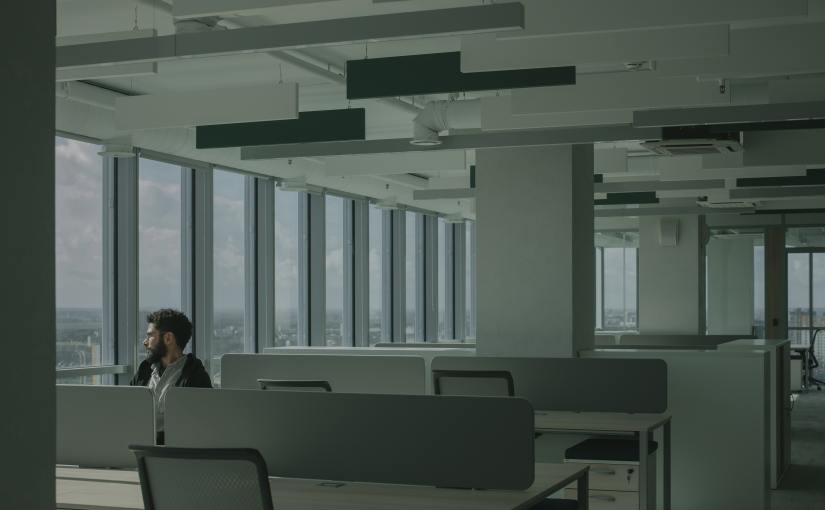
Demand for fully remote jobs is on the decline

Is the desire for fully remote roles dwindling? Yes, dramatically, according to Flexa Careers’ most recent installment of the Flexible Working Index, which tracks where, when, and how people prefer to work and what companies offer. 

In August, 60% of job searches on Flexa’s global directory for flexible jobs were for fully remote roles. Yet it plummeted to 44% in September — a drop of 26 percentage points and, in pleasing symmetry, 26.4% — using a sample size of 43,569 searches by those hunting work (83% in the U.K. and 3% in the U.S.) and over 1,290 job adverts.

Interestingly, employers also mirrored the decline: only 10% of fully remote roles were advertised in September. The figure was 24% just a month earlier.

Could we be witnessing the start of seasonal fluctuations in demand for fully remote jobs?

Perhaps the drop in searches for fully remote roles hints at a deeper trend — employees and employers alike have concluded that being out-of-the-office five days a week is counter-productive. Moreover, it is increasing well-being issues and loneliness for some employees and, in turn, making it harder for employers to attract and retain talent. 

The full version of this article was first published on DigiDay’s future-of-work platform, WorkLife, in October 2022 – to read the complete piece, please click HERE.

Broken meetings culture is causing people to switch off, literally

It was only a matter of time. The endless meetings cycles that have become embedded in the working cultures of so many organizations across industries have escalated to the point where people are simply tuning out during them.

And with so many meetings still taking place on video, rather than in-person, a large number of people don’t think they need to be in them at all – which is leading to mass disengagement, according to some workplace sources.

A whopping 43% of 31,000 workers, polled from across 31 countries by Microsoft, said they don’t feel included in meetings. 

“Meeting culture is broken, and it’s having a significant impact on employee productivity and business efficiency,” said Sam Liang, CEO and co-founder of Otter.ai, a California-based software company that uses artificial intelligence to convert speech to text.

A recent Otter.ai study revealed that, on average, workers spend one-third of their time in meetings, 31% of which are considered unnecessary. But employers continue to plow ahead without changing these embedded structures.

The full version of this article was first published on DigiDay’s future-of-work platform, WorkLife, in October 2022 – to read the complete piece, please click HERE.

Time to break the stereotypes about Gen Z attitudes to work

Organizations are over-relying on stereotypes to try and understand what makes them tick in the scramble to attract and retain the best young talent.

Sure, Generation Zers have unique perspectives on careers and how to succeed in the workforce that differs from previous generations, but in the race to better understand an entire generation, important details are falling through the cracks.

For instance, Gen Z bore the brunt of the criticism for harboring so-called lazy work ethics like “quiet quitting.” But that falls short of the full truth, talent execs have asserted.

Meanwhile, new research has emerged that disproves another myth: that Gen Zers don’t want to work in an office, ever. It turns out a large proportion does want to experience in-person workplace environments. Indeed, 72% of 4,000 U.K. Gen Zers said they want to be in the office between three and five days a week, according to research published in September by Bright Network, a graduate careers and employment firm.

The full version of this article was first published on DigiDay’s future-of-work platform, WorkLife, in October 2022 – to read the complete piece, please click HERE.

Rise in ’employee nomading’ leaves HR teams baffled about where their staff are

Ask any human resources professional what their biggest work headache is, and you’re unlikely to hear it’s that they can’t locate their staff.

It turns out, the shift to hybrid or fully remote working that’s occurred over the last few years has meant that now HR departments are often left in the dark about where all their employees are. And in many cases, employees who decide to travel somewhere to work for a week or month aren’t always informing HR.

Well over two-thirds of employees surveyed in the U.S. and U.K. said they do not report which days they work outside of their home state or country to HR, according to HR company Topia’s Adapt to Work Anywhere report.

A further 40% of HR professionals admitted they were shocked to discover certain employees had changed their working location without informing them, but also conceded that many more employees who have gone AWOL may have done so under the radar, according to the same report.

It’s a catch-22 for employers. Most (96%) employees interviewed in the Topia survey (and other surveys indicate similar findings) ranked flexibility in working arrangements as a key factor when seeking a new employer. And 94% agreed with the statement: “I should be able to work from anywhere I want as long as I get my work done.” 

This article was first published on DigiDay’s future-of-work platform, WorkLife, in September 2022 – to read the complete piece, please click HERE.

How hybrid working has complicated mergers & acquisitions

Up to 90% of business acquisitions don’t achieve the expected value or benefits. The principal reason for this failure is that integrating groups is notoriously challenging – and even more so now, with many organizations shifting to hybrid working strategies. 

Global deal-making activities hit a record $6 trillion last year. And yet, while employees are the most critical asset of most companies, they often get neglected in the excitement of an M&A.

The age-old M&A model typically involved the employees of one company leaving their offices, to join those of their new employer. But with today’s hybrid and flexible working setups, that looks very different. And adds new complexity to the long-term challenge of successful cultural integration.

Organic opportunities for new colleagues to connect are likely to be missed thanks to the move to hybrid working. So what could – and should – be done?

This article was first published on DigiDay’s future-of-work platform, WorkLife, in August 2022 – to read the complete piece, please click HERE.

Tech troubles, urgency bias, bad communication: Hybrid working’s biggest hurdles

New data confirms what most already suspected: hybrid working is not working for a large majority of companies. 

The XpertHR research, gathered from 292 U.K. organizations with a combined workforce of over 350,000 employees, revealed that 95% of companies have struggled to implement a hybrid-working strategy. Reluctant returners – staff who don’t want to head back to the office – are the primary reason for failure. However, there are plenty of other causes besides.

The data indicated that 59% of organizations’ staff spend two or three days in the office, but 37% of employers are unhappy and would rather spend less time there. This finding echoed results from Slack’s Q2 global Future Forum study, which questioned 10,000 knowledge workers in the U.S., U.K., Australia, France, Germany and Japan on how they feel about their work environments and employers.

This article was first published on DigiDay’s future-of-work platform, WorkLife, in July 2022 – to read the complete piece, please click HERE.

Managers are not being trained to run hybrid teams – and it’s a big problem

Hands up, who really wants to be a manager today, in an uncertain and fast-paced, post-pandemic world, where organizations worldwide are shifting to hybrid working and struggling to attract and retain talent, plus employees are demanding more attention than ever? 

At the heart of operations, trusted to pull the strings, are managers, many of whom are promoted to their positions after excelling in non-management roles. “Managers often have the most accountability to the largest proportion of the workforce,” said Emma Price, head of customer success at management process automation company ActiveOps. “They are responsible for delivering against cost, quality, and service and managing customer outcomes.”

However, many would-be puppet masters are now tied up in additional, complex tasks that weren’t part of their already stacked workload in early 2020. They are crying out to be untangled by their bosses, yet evidence suggests the critical training and tools they require are not being made available. This lack of support is baffling when one considers the cost of the great resignation alongside the truism that “people leave managers, not companies.”

Microsoft’s Work Trend Index, published in March, concluded that “managers feel wedged between leadership and employee expectations.” The survey, featuring responses from over 30,000 workers across 31 markets, revealed that 54% of managers say company leadership is out of touch with employees, and almost three-quarters (74%) lament not having the influence or resources to implement the necessary changes for their teams.

This article was first published on DigiDay’s future-of-work platform, WorkLife, in July 2022 – to read the complete piece, please click HERE.

Which laws around the world are reshaping how we work?

Societal, political, and ethical forces are reshaping the world of work.

To get a handle on some of the changes, a slew of laws have been introduced. Some of them have been passed to tackle cultural trends that have arisen since – or been expedited by – the pandemic. Others are more freestanding.

When considering how the laws that have come into force – or are due to be passed soon – since the start of the pandemic will shape the future of work, a quotation attributed to American-Canadian writer William Gibson, father of the cyberpunk sub-genre of science-fiction, comes to mind. “The future is already here; it’s just not evenly distributed.”

Here are five new laws that will affect how work is done in the specific nations in which they have been inked:

This article was first published on DigiDay’s future-of-work platform, WorkLife, in July 2022 – to read the complete piece please click HERE.

WTF is a digital HQ?

Pandemic-induced lockdowns forced many industries to dial up their digital capabilities rapidly. However, thanks to the marvels of technology, we learned that communication and collaboration were possible without being physically present with colleagues, even if “you’re on mute” was an all-too-familiar refrain.

But now that most businesses are firming up their post-pandemic strategies, with numerous organizations around the globe opting for a hybrid-working model, how can leaders strike the right balance between in-office and remote work? 

In a digital-first, post-pandemic world, the physical office is no longer the key place that people connect, it could be argued. Could the answer be a futuristic-sounding digital headquarters with no proximity bias, where communication is transparent and the culture thrives? What many are referring to as a digital HQ?

This article was first published on DigiDay’s future-of-work platform, WorkLife, in June 2022 – to continue reading please click HERE.

Badly managed return-to-office plans will fuel a ‘well-being crisis’ doctors warn

Doctors are lining up to warn U.S. and U.K. business leaders that they face a “well-being crisis” if they fail to improve the mental health support for employees returning to the office.

While people’s mental health has suffered in general over the past two years, the return to office is adding some new stressors to the mix. Employers must respond in kind, and actively listen to staff in order to provide the right support, or they’ll risk a backlash, say health experts.

A Slack-commissioned study of 1,000 knowledge workers in the U.K., launched in May which is Mental Health Awareness month, revealed that 73% of employees have experienced exhaustion in the last year. And almost half (49%) of respondents highlight associated costs with office working, such as travel and food, as stressors — at a time when 87% of British adults are reporting a rise in their cost of living, according to the Office for National Statistics.

This article was first published on DigiDay’s future-of-work platform, WorkLife, in May 2022 – to continue reading please click HERE.

Fast-track to remote-first success: Experienced experts reveal their tips so others can accelerate their journeys

When Airbnb CEO Brian Chesky unveiled the company’s remote working policy at the start of May, in only 105 words, there was much to admire about its boldness and simplicity. However, one detail concerned Paul McKinlay, vp and head of remote for Cimpress/Vista, which implemented a similar strategy two years ago. It was Chesky’s comment that remote working “will become the predominant way companies work 10 years from now.”

The Airbnb boss’s prediction is supported by electronics firm Ricoh Europe’s research, which polled 3,000 employees in the U.K. and Ireland, France, Germany, Spain, Italy and the Netherlands last month. Almost half of the respondents (47%) think we’ll all work remotely in a decade’s time and that the traditional office space won’t exist.

But for Boston-based McKinlay that timeframe isn’t nearly fast enough. He warned that global leaders need to “act much sooner” and develop fully-fledged hybrid and remote-friendly working models for the benefit of their team members, shareholders and business results.

WorkLife spoke to a range of execs from different companies, which have already implemented successful hybrid and remote-first models, for tips on what to focus on. Here’s what they had to say ….

This article was first published on DigiDay’s future-of-work platform, WorkLife, in May 2022 – to continue reading please click HERE.

The seven biggest hybrid-working challenges, and how to fix them

The phrase “new normal” is a misnomer, given the state of flux in the business world. Few organizations have been able to normalize operations; who can say they’ve nailed their hybrid working strategy with a straight face?

As Kate Thrumble, executive director of talent at marketing company R/GA London, said: “We are all on a – to use an overused word – ‘journey’ with the post-pandemic way of working. No one has cracked it yet. Even those with the best intentions will have to wait a year or two to understand the impact of today’s decisions.”

However, by matching the right technology solutions with the most pressing hybrid-working challenges, organizations will reach their end destination quicker: a happy, productive, engaged and empowered workforce.

So what exactly are the seven most significant business challenges and the best tech, tools and processes to solve them and speed up progress?

This article was first published on DigiDay’s future-of-work platform, WorkLife, in May 2022 – to continue reading please click HERE.

Why new hybrid working policies are falling short for employees

Hybrid working policies are a mess.

In the stampede to get people back into the office, most employers have fallen short when it comes to providing real flexibility and autonomy. The result: employees that have returned to the office haven’t enjoyed the experience, while those that have been forced to return, have quit as a result, according to sources.

Part of the issue is that hybrid workforce strategies have largely been centered on where employees should be while they work, rather than on work outcomes. It should be the other way around.

This article was first published on DigiDay’s WorkLife platform in April 2022 – to continue reading please click here.

Navigating the messy business of pets in the workplace – at home and in the office

Never work with children or animals, warns the old show-biz adage. So what happens if you acquired a pet during the pandemic — as millions of households did — and need to tend to your newish pooch or pussycat either at home while on videoconferencing calls or in the company workplace? 

When things go wrong, it can be highly amusing for everyone apart from the embarrassed owner and possibly their boss, especially if there is a mess to clean up. For instance, New York-based HR professional Harriet – a pseudonym WorkLife agreed to – recently suffered a “disgusting” experience while on a virtual call with her team. 

“In the background of the shot, I noticed my dog, Rooster, starting to poo,” she said. “I immediately pushed my camera up, so he was out of sight, put myself on mute, and used my best poker face. Within seconds he had defecated all over the room – something to do with eating a discarded takeaway-food wrapper the day before.”

This article was first published on DigiDay’s WorkLife platform in April 2022 – to continue reading please click here.

Retiring ‘Out of office’ for ‘In the office’ email sign-offs: How to avoid defaulting to video meetings when in the office

When, on April 1, Bruce Daisley, best-selling author of “The Joy of Work,” posed a provocative question on LinkedIn musing whether “the ‘in the office’ message [will] replace the ‘out of office’” it was no foolish whimsy. 

As he explained: “Heard a brilliant thing today. One firm says they don’t want workers in the office spending all day on email. The suggestion is that everyone put their ‘in the office’ message on and deal with email from home.”

The former vp of Twitter for Europe, Middle East and Africa later told WorkLife that his comment came after hearing complaints from numerous firms that employees are heading into the office only to spend all day on video conferencing calls.

“Throughout the pandemic, the number of meetings in our diaries has doubled, and those meetings have stuck, like knotweed,” he said. “We’ve spent two years reflecting on the best way to get our work done, and then we’ve sleepwalked into a horrible solution.”

This article was first published on DigiDay’s WorkLife platform in April 2022 – to continue reading please click here.

Bookshelf: Lynda Gratton on why design is central to making hybrid returns work for everyone

Hundreds if not thousands of organizations have revealed their hybrid working strategies in the last few weeks, with varying volumes of fanfare. Clearly, these plans are works in progress, given the colossal shift — for many — from the old normal. And it’s also apparent that there is no blueprint for success. Or is there?

Lynda Gratton, a professor of management practice at London Business School and the founder of HSM, the future-of-work research consultancy, is known for her work on organizational behavior. And in her latest book, “Redesigning Work: How to Transform Your Organization and Make Hybrid Work for Everyone,” she offers a four-step process to success: understand what matters: reimagine the future, model and test and, finally, act and create. But perhaps the most crucial advice is delivered in the book’s dedication: “To all those who are bold enough to redesign work.” 

This article was first published on DigiDay’s WorkLife platform in April 2022 – to continue reading please click here.

Why poor coordination and communication are undermining hybrid working models and making staff miserable

In theory, hybrid working is incredibly empowering for employees as it promises greater flexibility and autonomy. But it’s difficult to get right. In practice, poorly coordinated efforts are causing them to fall short.

What’s worse, those affected often suffer in silence, not raising their concerns, worried about repercussions.

For instance, New York-based finance administrator Stella — a pseudonym WorkLife agreed to — has become wholly demoralized by returning to the office. A toxic combination of poor coordination and miscommunication means that her teammates and colleagues are absent most of the time. 

This article was first published on DigiDay’s WorkLife platform in March 2022 – to continue reading please click here.

‘What’s in it for me?’: The employee question that needs answering in any return-to-office playbook

It’s crunch time for hybrid return-to-office plans, again.

After numerous false starts (thanks Delta and Omicron) it looks like a full-scale return to the office, in whatever shape or form that takes, has arrived. As such, a growing number of major organizations have started to show what hybrid model they’re going for.

Last week, Google told staff in the San Francisco Bay Area and several other U.S. locations that it will end its voluntary work-from-home phase in April, in favor of a plan where most employees will spend three days in the office and two working remotely.

Microsoft has also said it will reopen its Washington state and Bay Area offices, and that employees can configure what days they come to the office with their managers. Likewise, with all coronavirus restrictions officially lifted in England, organizations there are being pressured to articulate and activate their return-to-the-office plans.

Trite as it may be, it’s vital to acknowledge that an incredible amount has changed in the world of work since the pandemic struck almost precisely two years ago. And the most significant transformation has been where most of us work.

Models will naturally vary depending on the company, but there are a few essential guidelines that are worthwhile for all employers to take note of. Here’s a breakdown of five key areas employers need to have in their playbook.

This article was first published on DigiDay’s WorkLife platform in March 2022 – to continue reading please click here.

How to steer clear of ‘employee whiplash’ if driving a return to the office

On Valentine’s Day, Microsoft showed its affection to staff by announcing plans to reopen its Washington state and California Bay Area offices on February 28 — but will workers love it?

Due to the ongoing pandemic, the technology titan had indefinitely postponed return-to-work plans for its 103,000 employees, last September. But now its hybrid-working strategy has been revealed, and staff members are being called back into the office, it will likely spur other prominent organizations to follow suit. 

But could the sudden shift from remote to in-office working cause what Brian Kropp, chief of research for Gartner’s HR practice, calls “employee whiplash”? And, if so, what are the likely short- and long-term effects, and how can they be avoided?

This article was first published on DigiDay’s WorkLife platform in February 2022 – to continue reading please click here.

Employers should focus on improving employees’ experiences in 2022, say experts

People are at odds with their employers on what makes a great employee experience — a disconnect that will need to be swiftly rectified in 2022 if businesses are to retain their talent, according to analysts and workplace experts.

We asked a range of execs what they predict will be the top priorities for business leaders in 2022, and alongside finessing what the right hybrid models are, fixing the employee experience emerged as another major theme.

This article was first published on DigiDay’s WorkLife platform in December 2021 – to continue reading please click here.