Unpacking which harmful work practices the pandemic exposed, and which are — hopefully — banished for good

It’s crass to argue “the pandemic has been good for humanity.” It has, though, effectively taken an X-ray of society and highlighted where sickness lies. And, most agree, much remedial work is required to restore total health.

Whether acute areas are treated — or, indeed, treatable — is a matter for incumbent politicians and business leaders. In this article, we turned to the latter cohort to reflect on what harmful work practices were exposed by the coronavirus crisis and how they’ve evolved as a result, for the better.

This article was first published on DigiDay’s WorkLife platform in February 2022 – to continue reading please click here.

Mojitos in the metaverse? More companies take to hosting team happy hours via virtual reality headsets

Before the pandemic, U.S. marketing agency The Starr Conspiracy’s employees would enjoy Olympic-like competitions in the office car parks and revel in regular in-person, happy-hour meetings. However, with the fun tap turned off by the coronavirus-induced restrictions, company bosses sensed disconnection and isolation were growing for remote-working staff. So they reached for virtual reality headsets.

Now, all 72 employees have Oculus Quest 2s, which cost about $300 per set, and join in for happy hours and quiz nights in the metaverse. But, aside from the obvious practical issues — it’s hard first to locate and then swig a mojito while wearing an obstructive plastic mask — will employees swallow such activities, and can they genuinely re-engage staff?

This article was first published on DigiDay’s WorkLife platform in February 2022 – to continue reading please click here.

‘Remote managers are killing company culture’: How to avoid common hybrid-working mistakes and engage increasingly disparate workforces

The general consensus in the corporate world is that hybrid working is here to stay. Yet, without a blueprint for what good looks like a period of trial and error is inevitable.

What is more clear: the role of managers will be critical in making whatever model a company adopts a success and ensuring people feel valued enough not to jump ship. So far, it’s not looking good.

This article was first published on DigiDay’s WorkLife platform in February 2022 – to continue reading please click here.

‘It’s central to the future of work’: World’s first coordinated 4-day week pilot begins

Determining what successful hybrid working looks like is a priority for most business leaders in 2022. But as employers grapple with shaping a system that works for both them and their employees, could it be that a better solution is operating a four-day working week?

A growing number of people seem to think so. In the U.S., 30 businesses will kick off four-day week trials across industries including manufacturing, hospitality, healthcare, recruitment, and technology, on February 1. The six-month trials will be overseen by not-for-profit 4 Day Week Global — a community created to support employers that want to shift to the shorter workweek and ensure productivity remains high.

This article was first published on DigiDay’s WorkLife platform in January 2022 – to continue reading please click here.

Meet Homeboy Industries: the California not-for-profit providing jobs to former gang members and incarcerated people

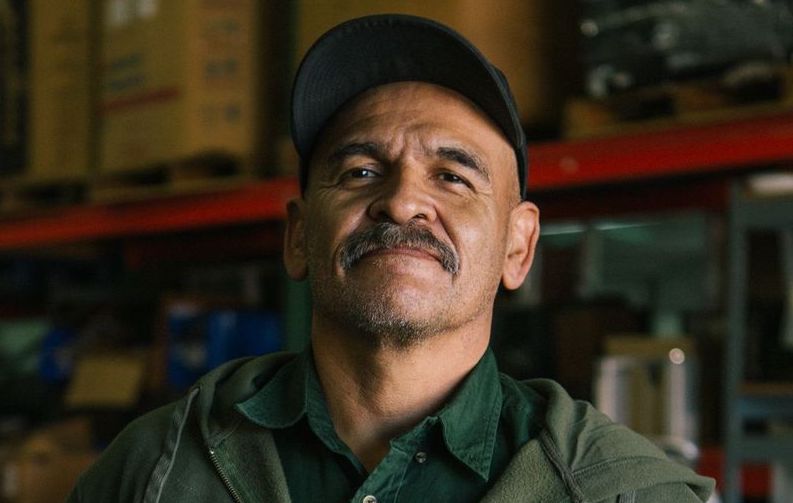
Jose Guevara — aka Manny — has been incarcerated five times and in all, has served about 25 years. However, in recent years, Guevara, now 62, has steered clear of trouble, which he credits to his employer, Homeboy Electronics Recycling, where he works as a long-haul driver. 

“I’m the main driver of the big truck,” he says with a grin. “I’ve been to Utah, San Francisco, and Sacramento, and I love that this company trusts me with its truck and merchandise. We are growing, and I’m so proud to be part of it. Without my work here, there is a high chance I would be back in prison right now.”

This article was first published on DigiDay’s WorkLife platform in December 2021 – to continue reading please click here.

Employers should focus on improving employees’ experiences in 2022, say experts

People are at odds with their employers on what makes a great employee experience — a disconnect that will need to be swiftly rectified in 2022 if businesses are to retain their talent, according to analysts and workplace experts.

We asked a range of execs what they predict will be the top priorities for business leaders in 2022, and alongside finessing what the right hybrid models are, fixing the employee experience emerged as another major theme.

This article was first published on DigiDay’s WorkLife platform in December 2021 – to continue reading please click here.

‘It’s just another 9 to 5’: Employers assess productivity levels after introducing 4-day work week

As organizations tiptoe into the post-pandemic world of hybrid working, the idea of a four-day week is gaining popularity. Little surprise, if working one fewer day and not being docked any pay is in the offing, which is precisely what some businesses are already offering. 

For smaller businesses that can’t afford to pay staff 20% extra, a four-day week is still an appealing proposition. Many leaders acknowledge that working 9 to 5 is, in 2021, only heard of in Dolly Parton’s classic tune. More flexibility, trust, and autonomy are the vital factors that will count to attracting and retaining top talent. 

Indeed, in the U.K., 38% of small- and medium-sized enterprises leaders recently indicated they plan to forge ahead with four-day-week plans. It’s a concept that works in theory, but does it work in practice?

This article was first published on DigiDay’s WorkLife platform in October 2021 – to continue reading please click here.

‘Old maps don’t apply to new worlds’: Experts predict what’s in store for 2022

Toward the end of 2019, business leaders discussed the likely trends in the next year, claiming to have a “20/20 vision.” No one had the foresight, however, to spot a once-in-a-lifetime global pandemic that would alter every aspect of the “old normal.”

To begin with, organizations and governments blindly battled the coronavirus crisis. It is only now we can blink into the light and see more clearly what factors might shape the future of work in the coming year.

Given the U.S. military phrase VUCA — an acronym for volatility, uncertainty, complexity, and ambiguity — encapsulates the world in which companies now operate, long-term plans are so last year. So instead, more immediate, tangible, and attainable goals are recommended. And it is in this spirit that a raft of business leaders offered bold future-of-work predictions for 2022.

This article was first published on DigiDay’s WorkLife platform in December 2021 – to continue reading please click here.

Why in-demand freelancers are looking to Singapore and other countries to ply their trades

The first mention of “freelancers” can be found in Sir Walter Scott’s Ivanhoe, published in 1819, about an army of medieval mercenaries who would fight for whichever nation or person paid them the most. Not much has changed since, save for the lances being swapped for laptops and smartphones. Oh, and many freelancers can fight their 21st-century battles virtually, from anywhere on the planet.

The modern weapons wielded by freelancers means they can, theoretically, work from anywhere with a decent internet connection. According to a new study from Tide, a U.K. financial technology company offering mobile-first banking services for small and medium-sized enterprises, Singapore tops the list of desirable places for freelancers to operate.

This article was first published on DigiDay’s WorkLife platform in December 2021 – to continue reading please click here.

How companies are tapping avatars, virtual spaces to introduce new hires to their colleagues and cultures

The digital world, where hybrid working is increasingly the norm, can be a lonely place — especially when joining an organization or learning a new skill for career development. To solve this challenge, companies are reaching for their virtual and augmented reality headsets and taking the plunge with immersive training.

One such organization is HubSpot. The customer relationship management company is trialing VR remote office tours and using it to present employees with an “immersive and unique look” into HubSpot’s remote community. “The VR platform allows employees to build an avatar, walk around the virtual space, and even hear other employee voices — connecting in real-time, as you would in an office setting,” said Hubspot’s Boston-based culture manager Meaghan Williams.

This article was first published on DigiDay’s WorkLife platform in December 2021 – to continue reading please click here.

Employees and their employers can’t seem to agree on which flexible work perks will make them stay

For decades, the majority of organizations have, in one way or another, told anyone who would listen that “people are our greatest asset.” Clichéd as the phrase may be, its veracity is being tested as this hybrid-working world has shifted the balance of power away from leaders toward staff. 

For some people, watching efforts other employers have made to offer flexible-working perks to attract and retain talent has made the meager efforts of their own employer even more grating.

This article was first published on DigiDay’s WorkLife platform in December 2021 – to continue reading please click here.

Leading for the future: how has the pandemic changed those in charge?

In a world where change is the only constant, leaders must be authentic, tech-savvy and human. They have to prepare for the next crisis by empowering employees so their businesses are more agile and resilient

Be honest, how has the coronavirus pandemic changed you?

For most of us, it is only now – more than 18 months after the pandemic hit and as some semblance of normality returns – that we finally have the headspace to reflect properly on this question, answer it truthfully and inspect the mental scars, having been in survival mode for so very long.

Spare a thought, then, for business leaders who, alongside any personal struggles, have been forced to steer their organisations out of choppy waters while faced with cascades of disruption.

The list includes supply chain problems, geopolitical issues, increased pressure to recruit and retain top talent in the so-called ‘great resignation’ age, and the need to engage with a range of stakeholders to facilitate an accelerated digital transformation. They don’t teach this stuff at business school and many will have felt out of their depth, understandably.

The torrents of chaos have eroded everyone to a degree. And businesses and laggard leaders who have not kept up with the waves of change have, alas, been swept away. The response to Covid-19 necessitated the locking down of people, but paradoxically it opened minds. As a result, in the post-pandemic wash-up, the world looks and feels different. 

For instance, videoconferencing technology’s rapid advancement or adoption has enabled businesses to communicate to colleagues and customers, and somehow brought people closer together. Moreover, there is something thrillingly democratising about everyone having the same-size square box on Zoom, Teams or Google Meet, whether a chief executive or a 21-year old, fresh out of university.

New normal: mindset change required

Cybersecurity and global warming have leapfrogged other concerns for boards and consumers alike. In the afterglow of COP26, ‘ESG strategy’ has become a business buzzword, while actions and transparency speak louder than words. And as many are focused on the environment and governance, is the social element the squeezed middle?

As we tiptoe hopefully out of the worst of the coronavirus crisis, leaders have many important questions to answer. How will hybrid working actually work? What business models need evolving or binning? And, most fundamentally, in a world of constant change, how can greater agility and resilience be achieved?

“The US military phrase VUCA – an acronym for volatility, uncertainty, complexity and ambiguity – captures the world in which we now operate,” says Alan Patefield-Smith, chief information officer of insurers Admiral Group. “Everyone has their favourite worry.”

Paul Szumilewicz, programme director for retail in continental Europe at HSBC, bristles at the concept of ‘resilience.’ He says: “What I’ve seen in the last few years, especially during the pandemic, is that ‘resilience’ is overrated. Too often, we have unrealistic expectations of people and particularly leaders.”

Szumilewicz argues that admitting “we don’t know the answer, but we are working on it” shows strength. “There is a positive shift in leaders to accept that being vulnerable makes us more real, more relatable,” he says.

Citing a 2017 Harvard Business Review paper, he continues: “The single biggest factor that triggers oxytocin [a hormone that plays a role in social bonding] in the brain at work is when a leader, manager or colleague shows vulnerability. Resilience is sometimes not as powerful as we think. Being honest about that can have an even more powerful impact.”

Invest in technology but don’t forget people

Simon Finch, supply chain director at Harrods, concedes that “there was a lot of scrambling around to make things work” when the coronavirus crisis and, more recently, Brexit fallout exposed operational weaknesses. He posits that businesses were “obsessed with making supply chains as lean as possible” before Covid, moving items around quickly, with minimal stock and expense. 

“Coronavirus completely screwed up that approach,” says Finch. “From now on, the supply chain must be more about agility, to cope with volatility and uncertainty, and less about being lean. However, that agility has to be fully supported by technology and data insights.” 

Technology alone, though, is not enough. If leaders fail to invest in their people, and that includes themselves, then the much-maligned skills gap will gape even wider. Consider the World Economic Forum estimates that technology will subsume 85m human jobs and 97m new roles will be created in just the next four years. As man, woman and machine work together, leaders should become less robotic and more human.

Indeed, according to Wayne Clarke, founding partner of the Global Growth Institute: “The most essential leadership trait of the 21st century, without a doubt, is empathy. The leaders with the most emotional intelligence will stand out. To better engage staff and improve the employee experience, the most critical question to ask is ‘How do you feel?’”

So go on, be honest.

This article was first published by Raconteur as part of a long-scroll project sponsored by Oliver Wight in November 2021

How sustainability has become an advantage in the talent war, but candidates aren’t fooled by ‘greenwashing,’ say experts

The meeting in early November of officials from approximately 120 countries at the 2021 United Nations Climate Change Conference (COP26), in a desperate bid to improve the planet’s health, highlights the critical importance of environmental issues.

But it’s not just world leaders who need to boost their sustainability credentials: so do businesses, or they risk defeat in the raging war for talent.

Indeed, new research from global recruitment firm Robert Walters indicates 34% of U.K. office workers would refuse a job offer if a company’s environmental, sustainability or climate control values do not align with their own. In the U.S., the figure is even higher: 41%. France and Chile (both on 53%) top the list, closely followed by Switzerland (52%).

It’s a “new era of recruiting,” according to Chris Poole, managing director of Robert Walters U.K. “While all the normal questions still get asked around pay, benefits, training and career paths, increasingly we get asked: ‘What does X company stand for?’” he said.  

Before accepting a job offer, people now carefully consider their prospective employer’s social media output, check the “about us” pages on its website and Google the latest news articles about the company to see if its actions match its words.

“Employers failing to improve on their sustainability credentials should expect to see a knock-on impact to their hiring,” said Poole. “With there being so many avenues to being environmentally conscious as an employer, there simply isn’t much room to ignore the matter.” Moreover, he added: “As a workforce strategy, ESG [environmental, social and governance] has become a competitive advantage in attracting and retaining talent.”

However, while a commitment to improving sustainability is attractive to employees, the opposite is true if businesses offer token gestures. Younger workers are especially attuned to this, according to Gordon Wilson, CEO of Advanced, a U.K.-based software company. His business’ recent trends report found 56% of 18 to 24-year olds “are accusing their employer of ‘greenwashing’, meaning that they overstate and gloss over their sustainable business efforts for business gain,” he said. 

“We cannot afford to ignore the voice of this generation, which has much greater personal awareness of their values and the impact they want to have on the world than previous generations. These are the voices of future leaders, and they’re joining the business world with an inherent distrust.”

Young people want to align themselves with companies that are doing the right thing for the planet and society, and are working towards positive change. “They want more than just a job,” added Wilson.

This insight chimes with the experience of Andrew Hunter, co-founder and economist at job-search engine Adzuna. “Having a strong ESG strategy can be a big talent draw for a brand, though people are becoming increasingly aware of greenwashing and are judging employers based on their actions, rather than their opinions,” he said. 

“It’s part of a wider trend where company culture and beliefs are becoming more important to job seekers, financial reimbursements alone are taking a bit more of a back seat, and work-life balance and well-being are instead coming to the fore.”

Hunter points out the social element of ESG is also about sustainability.

He notes that many of the businesses leading the way in this area are B Corp certified, including Homeboy Recycling in California, which provides on-the-job training and employment opportunities for ex-offenders. “Rubicon Bakers is another B Corp focusing on creating opportunities for marginalized sectors of the workforce,” he said. “In the U.K., The Body Shop has a focus on providing employment for people experiencing homelessness or with lower levels of education. Making sure these jobseeker segments don’t slip through the cracks is an important aspect of ESG efforts that we forsee growing.”

Rita Trehan, founder of DARE Worldwide, a global transformation consultancy, believes that a well-known Swedish teenager, who has been in Glasgow at COP26, is spearheading the drive for younger workers demanding greater sustainability. “Greta Thunberg’s ‘Blah, blah blah’ message has resonated with people,” she said. “The conversation today is more scrupulous, more cynical, better at challenging businesses and governments on the gap between policy and impact.”

Trehan pointed to statistics that show a vital distinction to make for businesses looking to dial up their sustainability credentials: nearly three-quarters of employees believe all workers are responsible for upholding a sustainability policy. It needs to be baked into the company culture, she added.

And yet, businesses that want to do so will need to tread carefully if they’re to avoid being accused of greenwashing, according to James Hand, a data scientist and co-founder of Giki—which stands for Get Informed Know your Impact—a social enterprise in London that helps people live sustainably. “There aren’t any ‘quick wins’ that don’t end up looking like greenwashing,” he said.

Instead, companies need to include all stakeholders and map the carbon impact of their operations to inform their sustainability policy, said Hand. “When they have measured their operational footprint, having a net-zero plan and building a staff engagement program can really help bolster their credentials and, more importantly, actually have an impact. Some 70% of emissions come from individuals, but organizations can bring those individuals together to make sure we halve emissions this decade,” he added.

Taylor Francis, co-founder of Watershed, a climate-action startup based in San Francisco, agreed and stressed that companies who improve their sustainability credentials have higher employee retention — 40% higher according to a 2020 Deloitte report.

“Employees are putting pressure on their current employers to introduce more accurate methods for carbon accounting, and more actionable and aggressive plans to reach true net zero,” he added.

Clearly, what’s been discussed at COP26 is just the tip of the (melting) iceberg.

This article was originally published by Digiday in November 2021

Five ways automation enables finance teams to be more human

As we stride into the fourth industrial revolution, finance teams can work alongside machines to drive strategy and value. And, as the war for talent rages investing in technology is crucial to attract and retain skilled workers

The argument that robots will replace human jobs misses the crucial point that machines empower workers with a pulse. It has been this way for hundreds of years – since the original industrial revolution in the mid-18th century when the Luddites, led by Ned Ludd, a Leicester weaver fearful of change, attacked factories and their owners. However, it soon became obvious man worked much better alongside machine.

Now, as we stride into the fourth industrial revolution, which uses modern smart technology to automate traditional manufacturing and industrial practices, robots are taking over more menial, repetitive tasks. This capability frees up workers to be more human. For finance teams especially, this automation of processes enables them to be more human and drive value and strategy – here follow five ways how.

1. Paper processes are old news

In the finance world, paper has been essential for centuries – but in the digital age, we can speed up processes, and save the trees, argues Nitin Purwar, India-based industry practice director of banking at UiPath. “Within finance, data-intensive and repetitive tasks are commonplace,” he says. “Often further weighed down by legacy systems, paper-based documents and unstructured data, these processes can take up a large proportion of a professional’s day.”

Purwar argues that “this work isn’t what humans are best at and often isn’t what we enjoy doing. By automating these processes, finance professionals can be freed to spend more time on value-added, strategic activities that require judgement and skill, thus enhancing the employee experience all while saving the department time, money and improving the accuracy of processes.”

2. Manual ways of working are highly inefficient – and a turn off for talent

Businesses that embrace automation stand to gain a competitive advantage – not least when it comes to attracting and retaining talent. Adobe’s Future of Time study, published in late August, finds that UK business employees waste more than a day a week on low-value tasks that should be automated. Tellingly, almost two-thirds (59%) of respondents are seeking new jobs with better technology to reclaim work-life balance.

Purwar from UiPath uses an example to explain the benefits of automation in this regard.“One infrastructure solutions firm we work with used to process all invoices manually, printing, signing, scanning and uploading 400,000 invoices a year. Now, a robot affectionately named Archie processes all invoices digitally, freeing up on average 11 minutes per invoice of time that employees can now spend focusing on value-added tasks instead. That amounts to thousands of hours per year saved.” 

There is more potential to realise, which is why organisations should double down on automated solution. Kevin Kimber, managing director of global accounts receivable at BlackLine, suggests that while many businesses seek robotic process automation, now “advancements in artificial intelligence and machine learning take what is possible to the next level”.

3. Financial leaders can show their human skills and improve collaboration

Ash Finnegan, digital transformation officer at Conga, which provides commercial operations transformation solutions, points out that the pandemic has forced financial leaders to show their human sides and manage change.

“Out of necessity, most digital transformation journeys have been accelerated, with artificial intelligence being a major focus,” she says. “Financial leaders have invested heavily in AI and wider automation technology, entirely restructuring their back office to deliver their services remotely.”

Neil Murphy, global vice president at ABBYY, a digital intelligence company, posits workers who embrace automation can “work more efficiently, collaborate better, and ease the burden of administration in their day-to-day roles. Deploying AI-powered robots gives this opportunity, gifting finance teams more time to focus on more creative, problem-solving tasks and alleviate the pressure. Now more than ever, it’s time to put the human touch back into the finance.” 

4. Automation elevates financial professionals to become trusted advisors

Glen Foster, director of small business and partners at accounting software company Xero, says “time truly is money” for financial professionals. Xero data shows these workers can use up to 30% of their time on manual data entry – equivalent to 1.5 days a week.

By contrast, automation and digital software can free up most of that time. “Cloud accounting tools allow you to automate time-consuming tasks like data entry, bank reconciliation and payments so that you can spend more time advising, analysing data and focusing on growth,” he says. 

“Providing advice and insights on financials is more valuable to clients and businesses than manual, repetitive data entry skills. This ultimately sets accountants and finance professionals up as trusted advisors.”

5. Improve relationships with customers – and add value

FreeAgent survey from 2020 calculated that 81% of accountants have discovered that using automated software has freed up an average of two working hours a week. The same report states that this time saved could generate an additional £68,000 in revenue a year.

John Miller, chief operations officer of Addition, a London-based financial services firm, adds: “Automation has allowed humans to do what they do best: offer advice to the client, knowing that the routine tasks are done robustly and accurately.”

This article first appeared in BlackLine’s special report, Optimising the accounts receivable department, published by Raconteur in November 2021

‘There are now a lot more boxes a role needs to tick’: Recruiters share how post-pandemic job expectations have changed

The coronavirus crisis has triggered the so-called “great resignation,” with workers ditching and shifting their jobs in record numbers. But as the war for top talent rages on, spare a thought for the recruiters, and human resources professionals tasked with attracting and retaining the best in the business — all remotely.  

It’s been a transformative 20 months for everyone, and recruiters have had an arduous time matching employees’ newfound job expectations with the right employer, amid skills shortages.

In the U.K., recent research from HR tech firm Employment Hero revealed 77% of millennials are actively looking for fresh starts and predicts that 2.5 million executives and managers will quit within the next six months. Replacing them collectively cost businesses £34 billion ($47 billion), according to the same report.

Meanwhile, 63% of U.K. business leaders are struggling with recruitment as candidates lack specialist skills and experience, particularly in digital and tech, according to The Open University’s annual Business Barometer 2021 report, published in October. And 24% of employers said this skills shortage will be the biggest challenge facing businesses in the next five years.

“On the plus side, we are also seeing optimism around the potential for remote working to fill skills gaps and an appreciation of the role of apprenticeships to train tomorrow’s workers,” said Kitty Ussher, chief economist at the Institute of Directors, co-publishers of the study.

Dropbox’s director of international HR, Laura Ryan, also focuses on the positive changes sparked by the pandemic fallout. “A huge benefit of remote work is the ability to widen your talent pool by being able to recruit the right people regardless of their location,” she said. “The time delay of scheduling and completing our onsite interviews has reduced by 70% since running the processes virtually.” 

On the eve of the pandemic, in December 2019, customer relationship management company HubSpot was crowned Glassdoor’s Best Place to Work in the U.S. However, the organization has not lounged on its laurels. In 2020 it was one of the first businesses to overhaul its approach and go fully remote and has committed to a long-term plan to improve staff well-being. 

Benefits offered in the hope that employees stay happy, and avoid burnout, include three months working anywhere in the world HubSpot is based, unlimited vacation and financial contributions to continue education.

Becky McCullough, HubSpot’s vp of global recruiting, who lives in Cambridge, Massachusetts, notes the shift to remote working has significantly diversified the talent pool and urges recruiters to dive in — particularly those in the tech space. 

“Candidate location played a huge part in the hiring process before the pandemic, with the technology industry being largely dominated by big cities globally,” she said, noting that just five urban areas accounted for 90% of all U.S. high-tech job growth between 2005 and 2017. “This not only contributed to income inequality, but it made opportunities for talent from smaller, more rural communities much harder to source.”

This insight chimes with Zoë Morris, president of Frank Recruitment Group, which operates in over 20 offices worldwide and snares talent for technology giants including Microsoft, Salesforce and Amazon Web Services. “The most prominent way that recruitment has changed is that recruiters now have to focus on a number of new priorities to match their clients with the perfect role,” she said. “This makes recruitment much trickier as there are now a lot more boxes a role needs to tick, particularly in relation to flexible working and perks being offered.”

Granted, the balance of power has swung away from the employer and towards the employee, but various studies —including from management consultancy McKinsey—indicate the highest bidder no longer triumphs, with increasingly more workers favoring purpose and aligned values over a bump in cold, hard cash.

Therefore, those in charge of businesses have a pivotal role. “Empathy and authenticity are now essential characteristics for leaders who want to create true community and a more inclusive culture — and in doing so attract and retain talent,” said Nazir Ul-Ghani, head of Workplace from Facebook in EMEA. He points to his company’s research that shows 58% of U.K. employees would consider walking away from their jobs if they felt unsupported.  

McCullough believes mobility alongside diversity, inclusion and belonging have become critical to attracting and retaining talent and enriching culture. The recruitment firms that can be adaptable and flexible will be the winners in this post-pandemic world, she believes.

“Whether it’s exploring hybrid work setups, sourcing into new talent pools, or overhauling the interview process, recruitment teams are truly challenging conventional thinking on what makes a great candidate experience and how to ensure the culture and the mission comes to life in the process,” she added.

This article was first published by Digiday as part of its Future of Work series in October 2021

LinkedIn on how companies can overcome the ‘development dip’ caused by Covid

As research indicates that young workers have suffered a pandemic-induced ‘development dip’, Becky Schnauffer, senior director at LinkedIn Talent Solutions, urges employers to invest more in online education

Do you think digital learning isn’t for you or your business? How do you fancy becoming a work-from-home facilitator? What about a data detective or maybe an extended-reality immersion counsellor? If those jobs don’t float your boat, could tidewater architect, cyber-calamity forecaster or even algorithm bias auditor be more suitable, perhaps? 

If you don’t think you’re qualified for any of the above roles, you’ll be far from alone. But don’t feel complacent about that, because they are among the top 10 professions emerging in the wake of the Covid crisis, according to the World Economic Forum (WEF). And, given that the WEF estimates that technology will replace 85 million human jobs while 97 million new ones will be created in the next four years, you may well need to reassess your attitude to digital learning – and quickly. From both individual and organisational perspectives, it’s crucial to invest in online education now.

The pandemic has completely disrupted the workplace. With many businesses concentrating on ensuring their immediate survival, training and development activities have stalled. People just embarking on their careers have been especially badly affected by this.

Indeed, 87% of UK business leaders surveyed by LinkedIn in September admitted that young employees had suffered a “development dip” during the Covid crisis. The networking platform also polled 1,000 people aged between 16 and 34 about their learning experiences. Well over two-thirds (69%) of these respondents agreed that the pandemic was harming their professional development. 

Becky Schnauffer, senior director of LinkedIn Talent Solutions in the UK and Ireland

For all those struggling to get to grips with digital learning, Becky Schnauffer, senior director of LinkedIn Talent Solutions in the UK and Ireland, can offer some valuable guidance. Her role, which she started in July after joining in 2018 as director of LinkedIn Sales Solutions, covers the company’s recruitment and learning activities. In essence, Schnauffer helps businesses to “attract, engage, develop and retain employees”. 

With the skills gap widening and the war for talent raging during the so-called Great Resignation – the trend in which hordes of dissatisfied workers are quitting their jobs – her views are well worth heeding.

“While digital learning has been around for a lot longer than the pandemic, now is the time for companies to prioritise it and build it into their strategy,” she says. “An awful lot of people, not only those just now entering the workforce, have been digitally savvy from a young age. You’d therefore expect part – if not all – of their learning to be digital. They are very comfortable with this medium.”

Schnauffer, who gained a degree in business management from Swansea University before joining IBM’s graduate scheme in the late 1990s, recalls that “even at a technology giant, every piece of learning at that time was one-size-fits-all, delivered in a classroom and lumped together in intensive, week-long chunks. Now, though, digital learning is personalised, interactive, community-based, snackable and stackable. Customisation of learning on the digital pathway is becoming so much more important and effective.”

Given that she has two children who are both at secondary school, she has a vested interest in promoting digital learning. Schnauffer is confident that, by the time they enter the job market, employee engagement and career development will be on a higher plane. “Everyone must embrace digital learning – it’s the new normal. And it’s going to continue evolving,” she says.

Businesses that are already investing heavily in employee development stand to gain a competitive edge in attracting and retaining the best talent, Schnauffer argues. This in turn should improve their chances of achieving the holy trinity of innovation, agility and resilience. 

Digital learning is personalised, interactive, community-based, snackable and stackable

“You want highly skilled people on your team who are always learning,” she says. “Business leaders have to allow their employees the time and space to develop themselves. Moreover, leaders must look ahead to where they want their business to be in two to three or more years, and plan how to narrow the skills gaps that are likely to emerge.” 

Her point is that it’s hugely more cost-effective to build a learning culture and invest in employees’ skills than it is to scour the market for new talent, where the competition will be fierce. LinkedIn’s new skills-building platform, the Learning Hub, has been designed to help employers do the former.

When asked how damaging it could be to organisations that don’t encourage digital learning, Schnauffer quotes an aphorism that’s widely attributed to Henry Ford: “The only thing worse than training your employees and having them leave is not training them and having them stay.”

More encouragingly, the LinkedIn survey of business leaders indicated that more than three-quarters (78%) are planning to establish training courses to help employees – particularly younger ones – adapt to new ways of working. But Schnauffer stresses that members of the C-suite must also schedule in digital learning for themselves. Progressive leaders are doing just that on the LinkedIn Learning platform, which offers almost 17,000 courses across a wide range of categories. 

The most popular course over the past year has been one about detecting and avoiding unconscious bias, followed by one on strategic thinking. Other subjects in the top 10 include inclusivity, public speaking and the agile approach to project management.

“You only grow and improve by building your knowledge,” Schnauffer says. “And digital learning makes the experience convenient. It’s always available, relevant, personalised, and enjoyable.”

Business leaders, take note and act accordingly – or watch your organisations wither on the vine.

This article was first published in Raconteur’s Digital Learning report in October 2021

Remote, hybrid, office? Which will be your ‘new normal’?


To help business leaders decide how their future workplaces might best operate, three experts with very different views on the subject argue the pros and cons of fully remote, hybrid and office working

After 18 months of enforced homeworking for many people, it’s difficult to foresee a future in which remote and hybrid working won’t feature. However, many businesses are keen to coax staff back to the office at least for part of the week – Covid-19 restrictions permitting – while others have spoken out against working from home, including Goldman Sachs CEO David Solomon who called it an “aberration”.

So, is hybrid working likely to last, or will there be a snapback to old operating methods? Here, three experts debate whether fully remote, hybrid or office working is the best option for the future.

Fully remote working

Darren Murph has written the manual on remote working, literally, publishing Living the Remote Dream: A Guide to Seeing the World, Setting Records and Advancing Your Career in 2015. Four years later, in July 2019, he was appointed head of remote at technology company GitLab, one of the world’s largest fully remote organisations with more than 1,300 employees spread across 65 countries.

For Murph, the past 18 months have proved that remote working is the future. “The pandemic has forced organisations to grapple with reality: distributed work is here, it’s happening, and it’s no longer a choice or an argument for the vast majority of industries,” he says. “Covid-19 accelerated a trend that began decades ago, as society leverages the internet to live better lives while driving business results. The benefits are many – to the employee, the employer and the world.”

Some of the advantages, Murph argues, are a more diverse and inclusive workforce, greater efficiency in workflows and a broader global coverage in servicing clients. He also believes being fully remote makes businesses more resilient and more able to preserve continuity regardless of whether the office is open or closed. 

“Businesses will be better equipped to weather future crises by empowering results that are decoupled from geography. They’ll find it easier to hire diverse teams and elevate introverted voices that have historically been squashed,” he says.

While Murph acknowledges that “all-remote isn’t for everyone” and can make onboarding recruits more challenging, he believes the pros far outweigh the cons. “Knowledge workers have proven that they can drive results without the crutch of the office,” he says. “Rather than employees needing to justify why they should work from home as opposed to the office, we’ve entered a world where employers must justify exorbitant waste in terms of commute time and real estate to accomplish digital tasks.”

Offering his three top tips for businesses seeking to optimise a remote-working model, Murph suggests the first step is to hire a dedicated remote-work leader. “Companies need to realise this is a full-scale organisational transformation and, if you want it done well, it can’t be a part-time job,” he says.

Murph also recommends that companies audit their values and documentation hygiene to ensure both are ready for a distributed workforce. Finally, he suggests starting to shut down office spaces. “Nothing sends a clearer signal that your future will be driven by how not where work happens than a shift away from offices,” he says.

Hybrid working

Samantha Fisher is head of dynamic work for Okta, an identity and access management company. Explaining what dynamic working means at Okta, she says: “It’s about personalising the working experience and enabling employees to work in whichever way makes the most sense for them. It’s not just a case of where employees are located – at the office, home or elsewhere – it’s about workplace design, people engagement, technology, talent acquisition, morale and company culture.”

At the start of the coronavirus crisis, 30% of Okta’s 2,400 employees were already working remotely. “We found that this flexibility increased empowerment, satisfaction and productivity,” says Fisher. “The pandemic accelerated the need for more flexible frameworks. Over the past year or so, employees have benefitted from a better work-life balance and reduced commuting costs, as well as greater autonomy which has led to more empowerment.”

Appointed Okta’s first head of dynamic work in January 2021, she was tasked with building organisational culture more broadly, anchoring equity, social connection and productivity, and enabling employees to work from anywhere successfully. “I spend a lot of my time working with cross-functional teams, thinking about the programmes, services and experiences we offer while in the office and how we can translate these for a hybrid environment and/or reposition services in a way that enhances experiences at any location,” she says.

The pandemic has forced organisations to grapple with reality: distributed work is here… it’s no longer a choice or an argument for the vast majority of industries

Fisher stresses the importance of “community building”, explaining that the workplace is a vital part of the business ecosystem and a key element of organisational culture. “I look at developing creative and holistic solutions that augment talent strategies, optimise technology enablement and support shifts in workforce operations,” she says.

Okta’s The New Workplace Report: A Business Balancing Act – published in June 2021 and based on a survey of more than 10,000 office-based workers across eight European countries and 12 industry sectors – found 42% of respondents wanted a mix of home- and office-based working, 17% wanted to work from home permanently and just 16% wanted to work in the office five days a week.

But what’s needed to make hybrid working successful? “For organisations to provide flexibility and equity in their workplace environment, you need executive support, investment in technology, a focus on culture and experience, and leaders to build and drive long-term strategy,” says Fisher. “It’s a fully cross-functional initiative and requires both passion and heart to curate a dynamic working environment.”

Office working

Chris Grazier, an office agency partner at Hartnell Taylor Cook and president of the Bristol Property Agents Association, is confident that office working will thrive again. But he urges organisations to be smarter with their workspaces rather than using the trend for hybrid working as a way to downsize and, ultimately, cut overheads.

Grazier admits that the democratisation of video conferencing during the pandemic has been “a revelation for all businesses”, including in the property industry in which he has operated for almost three decades. “The flipside,” he says, “has been staff isolation, the effect on teamwork, the inability to mentor junior staff and the loss of creativity that springs from face-to-face or group working.”

Now, after a year and a half of Zoom calls, there is a collective craving to return to the office and to network and collaborate without an awkward time delay or mistakenly being on mute. “The office is where business culture is formed,” says Grazier. “It’s both good for the employee, who can build some separation between home life and work, and it connects employers with employees in a way that a Zoom call never can. And despite headlines touting that the home is the office of the future, over the past few months we have witnessed businesses returning staff to the workplace.” 

Rather than employees needing to justify why they should work from home… employers must justify exorbitant waste in terms of commute time and real estate to accomplish digital tasks.

Indeed, data showing the floor space taken up in Bristol city centre in the past three quarters, including Q2 this year, reveals more ‘Grade A offices’ – high-quality workspace, refurbished or new – have been occupied than non-Grade A spaces. “This is a complete reversal of previous trends, and it hints that businesses are focusing on less but higher-quality space for their new offices than they did for their former ones,” Grazier says.

Echoing concerns from business leaders about tracking workers’ productivity away from the office, Grazier believes that by investing in smarter workspaces, staff will want to return. “I’d recommend that organisations use less space but improve the quality,” he says. 

Grazier also points out that many organisations are emerging from the pandemic with a decent balance sheet, thanks to government support, offering them a unique opportunity to upgrade their offices. “Don’t try to save money if you are moving,” he advises. “Try to spend that money more wisely by creating an environment that draws on the strengths of teamworking and positive culture.”

This article first appeared in Raconteur’s Hybrid Working report, published in September 2021

Dell’s digital boss on being a change agent for transformation

Jen Felch is leveraging her deep knowledge and experience from 17 years at Dell to manage change, drive collaboration and supercharge innovation

What’s the secret to achieving as smooth a digital transformation journey as possible? Taking your people every small step of the way with clear communication and, more specifically, letting them help plot the route. This insight is shared by an expert perfectly placed to offer an opinion on the subject: Jen Felch, Dell Technologies’ chief digital and information officer.

In September 2019, she took on the dual roles for the first time in the computer technology company’s 37-year history. Back then, like everyone else, Felch had no inkling of the coronavirus-induced disruption that lay ahead. 

During the pandemic, from her home in Austin, Texas, she has been at the helm to navigate the organisation’s road to recovery, driving the strategy, direction and delivery for Dell Digital, Dell’s IT arm. 

As if that wasn’t enough, Felch combines her responsibilities as CDO and CIO alongside “the emerging role of change agent for digital transformation”. No wonder the 53-year-old has taken up hot yoga to help increase her physical and mental flexibility.

Aside from an eight-month stint with Boeing in 2010, she has been employed by Dell since April 2003. Her deep knowledge of the company is hugely beneficial to steering digital transformation, particularly in a period of epochal change. Felch has access to all areas, is a trusted ally and understands various stakeholders’ pain points.

“I started my career as a software developer and spent two years working in the Dell factories as part of a development rotation, and it was a fabulous experience,” says Felch. “That hands-on operational experience is invaluable and I still leverage it today. I don’t have to imagine what it is like in a factory because I have first-hand knowledge.”

Digital transformation: a never-ending continuum

Felch boasts a Bachelor’s and Master’s degrees in mechanical engineering from the Massachusetts Institute of Technology and is an alumnus of the Leaders for Global Operations Program at MIT, where she earned her MBA and a Master’s in computer science. She continues: “Thanks to my 17 years with Dell, I can make use of a network of people across the company. 

“I can pick up the phone to find out what is really happening in a certain area and what people are truly thinking. By understanding what they are trying to achieve and how we can make them more effective, employees are less resistant towards technology adoption and change.”

We might have great technology, but it is having highly skilled people who are available and have the environment in which to innovate that makes the difference

Indeed, when asked about the biggest challenge to successful digital transformation, Felch is quick to answer: change management. “You need the right mechanisms – people, tools and processes – for managing and leading change. You need people within your organisation who will champion change, interact with the business and with the technical teams, and drive understanding and solutions to opportunities.” 

She posits it is “human nature” to find change daunting, hence why there is resistance, at least initially. However, Felch acknowledges the irony of IT professionals needing to be more communicative, collaborative and, well, human in 2021. Man and machine must comprehend one another and stride ahead together to enable an optimal digital transformation journey.

“Today, IT all depends on developing the right engineering culture within an organisation,” Felch says. “At Dell, we are highly dependent on how we engage with others and we have to draw out those latent needs, so we understand where we are going and innovate accordingly. 

“We might have great technology, but it is having highly skilled people who are available and have the environment in which to innovate that makes the difference.”

Little surprise, then, that Felch views digital transformation, both for her company and its clients, as a “continuum that doesn’t end”. She explains: “For us, digital transformation is much more than upgrading a server rack; it is about a mindset to keep the whole business performing and moving forward. As we look ahead, we’re finding the balance between security, privacy and ease-of use, which I believe can be accomplished with good design.”

Further, she is a “firm believer” in Dell’s lean and agile methodology concerning development that drives transformation. “Our iterative approach is delivering great results,” Felch says, lauding a more open, collaborative mindset across the business and also with trusted partners. 

“It’s incredibly powerful when you pair strong technologists with strong business partners and modern IT, like a developer experience rooted in self-service, to drive transformation. That’s where you see multiple wins of creating better experiences, improving employee satisfaction and driving out cost.”

Lean and agile development: delivering results

The outcomes are impressive. She claims that by eliminating redundant work and reducing manual tasks or testing, Dell Technologies has shifted around 10 per cent of its workforce into the development team to “be able to engage with our business partners directly to develop new solutions”.

The company has also reduced its cycle time to deploy new capabilities by 30% and the number of incidents – when a user calls for help – by 31%. It has done this, Felch says, through a focus on user experience, fixing the root cause of existing problems and driving quality in new capabilities.

“The net of it all is that we’re getting faster and more responsive, quality is improving and we have better engagement with our business partners. That’s what digital transformation is all about,” she says.

Finally, Felch stresses how business-critical it is for organisations to “embrace digital transformation”. Those that do not, and are closed to change and constant evolution, will fail – and sooner, rather than later.

“Digital transformation can drive growth opportunities, enhance customer experiences, better connect employees and continue to accelerate positive change within a business,” she explains. 

Given Felch’s wealth of knowledge and experience, it’s worth heeding her words of wisdom.

Felch’s top five tips for leading through digital transformation

  1. Start small
    Find the people who are willing to drive change and solve their first problem. Solve it, celebrate it and let that be the example that you build upon for broader transformation. Having people who can step back, see the larger opportunity or problem that could improve other areas or be replicated, and interact with designers, developers, and so on, can serve as powerful change agents within your organisation.
  2. Focus on the end user experience
    Take the time to listen and observe the problem or opportunity. This avoids the “telephone game” and helps surface latent needs that will delight the user.
  3. Invest in your own processes and team
    Create and embed common ways of working and interacting for the entire team so that it is easy for people to focus on the problem. Have common processes for tracking status and priorities so that people can bring their expertise, whether that’s in DevOps, design, or user experience, to solve the problem efficiently. 
  4. Stay connected to your teams
    Keep providing context and communicate priorities left and right, up and down, to help keep everyone pulling together in the same direction. Stay close so that you can jump in to help remove obstacles, celebrate successes and to remind people that change can be hard. Mistakes will happen but if we commit to learn quickly and to move forward together, driving real change is hugely rewarding.
  5. Be optimistic
    Stay flexible, agile and be ready to pivot. Be optimistic about the present and excited for what transformation will deliver in the future.

This article was first published by Raconteur in April 2021

Why occupational health is now a top priority

Ethics aside, supporting the physical and mental health of employees creates a win-win scenario in the post-pandemic workplace, but there are challenges to providing better support

The coronavirus crisis has squeezed the life out of so much we previously took for granted, at home and at work. Things have changed, irreversibly. Many people express both a heightened appreciation of life and respect for mortality. But how does this translate to occupational health? 

As organisations begin to coax their employees back to the workplace, the expectation that employers should support the mental and physical health of staff, particularly in a workplace setting, has been dialled up in the past year. 

To instil confidence in employees that a return to work is safe, many companies provide COVID-19 rapid lateral flow tests, promise better ventilation, rigorous cleaning programmes and gallons of hand sanitiser. But is it enough? Should businesses take more accountability for their workers’ health?

According to employee benefits provider Unum’s Value of Help study, published in December, 86 per cent of UK employers have changed their approach to staff health and wellbeing because of the coronavirus situation. 

Moreover, 95 per cent of the 350 employers surveyed revealed the pandemic has “impacted their need to make employees feel more protected”, says Glenn Thompson, chief distribution officer at Unum UK. “Whether it is from individuals, communities or organisations, 2020 has brought the value of help and support to the front of all our minds,” he adds.

Dr Robin Hart, co-founder of Companion, which offers mental health support tools, is pleased organisations are showing a greater willingness to look after staff. “A lack of focus in this area historically has seen an increase in lost revenue and diminished productivity,” he says. “Attitudes have had to change in a very reactive way due to the pandemic. In reality, it’s accelerated a process which would have played out anyway, eventually.”

Win-win scenario

Besides, supporting staff health and wellbeing creates a win-win scenario. Health and Safety Executive (HSE) data shows that in the 12 months to March 2020, when the first lockdown came into force, approximately 828,000 workers, the equivalent of 2,440 per 100,000 people, were affected by work-related stress, depression or anxiety. This absenteeism resulted in an estimated 17.9 million working days lost. In the previous year, the cost of workplace injury and ill health was calculated by HSE at £16.2 billion.

“Nobody’s health should be worse at the end of a shift than it was at the start,” says Dr Craig Jackson, professor of occupational health psychology at Birmingham City University. “If it is poorer, then there is something morally, ethically and legally wrong in that workplace.”

He believes there is a newfound respect for occupational health departments. “The excellent, proactive work undertaken by many professionals in preparing COVID-secure workplaces – assessing staff return to workplaces, COVID screening, testing, tracking and tracing – will lead to people realising occupational health is not just somewhere to go to when you are ill and unable to work,” he says.

Jackson acknowledges “supporting staff better than before does involve additional time and costs”, but argues such spending is a good investment. This is backed by research from Deloitte, published last year, that estimates for every £1 spent by employers on mental health interventions, they gain £5 back in business value.

“Not only is there a strong moral case for employers to look after staff health, but it makes good business sense, too,” agrees Oliver Harrison, chief executive of Koa Health, provider of mental health programmes. “Healthy workplaces attract the best talent. They also avoid the negative impact of illness on productivity, measured in staff turnover, absenteeism and presenteeism.”

Wellbeing challenges

From a legal standpoint, organisations have a statutory obligation to protect their staff from physical and mental harm. However, Elena Cooper, employment consultant at Discreet Law, reports that “a large number of employees are taking advantage of what they perceive to be their employer’s duties around mental health”.

She asks: “We know a caring and supportive employer is a good employer, but where do you draw the line between being a profit-making entity and a nanny state?” With the prospect of businesses having to afford time off to long-COVID sufferers in the coming months, if not years, it’s a pertinent question.

Ethical and legal debates aside, organisations face other pressing challenges to improve staff wellbeing. “One of the greatest barriers is ensuring healthcare support tends to the needs of all who work within a company,” says Bob Andrews, chief executive of private medical cover provider Benenden Health. 

“There is often a disconnect between what employees want to see from a health and wellbeing programme and what businesses offer. Also employees are not the same and therefore a one-size-fits-all approach is outdated and ineffective.” He advises using a range of tools, including mental health apps, as well as low-cost human management.

Luke Bullen, chief executive in the UK and Ireland at Gympass, which seeks to improve wellbeing through exercise classes, spots another issue. “One of the major challenges for a post-pandemic workforce is going to be the hybrid workplace,” he says. “How do employees ensure their wellbeing strategy works just as well for those working at their tables as though working in the office?” Empowering staff to “tailor the wellbeing offering” is critical, he suggests. 

Spurred by events of the last 12 months, occupational health will surge in importance in the coming years. “By 2025 I expect it to be available anywhere, anytime, thanks to digital advancement,” predicts Paul Shawcross, clinical lead of occupational health services at physiotherapy provider Connect Health. His company employs an artificial intelligence-chatbot as a method of referral that “triages the patient to the right support for them, 24 hours a day, seven days a week”.

Whether it is bot therapists, wellbeing apps or human professionals, employers need to prioritise occupational health in the post-pandemic workplace. Support, of any kind, is what staff truly want and need right now.

This article was originally published in Raconteur’s Future of Healthcare report in March 2021

Doubling down to build creative spaces in the age of remote working

Creativity often flourishes when people are together in the same place, but technology solutions can help whether at home or company headquarters

Even before the coronavirus pandemic, workspaces sought to maximise innovation and collaboration by introducing communal spaces, breakout areas, brainstorming pods and the like. Now remote or location-independent working has become more widespread, how can organisations ensure their offices remain a lightning rod for creativity?

It’s a puzzle that business leaders must urgently tackle. According to Nespresso research, over a third (34 per cent) of large enterprise businesses see themselves utilising co-working and collaborative spaces in the future. Organisations need to double down and make offices inviting, comfortable and collaborative spaces.

“Businesses can’t assume employees will flood back to the office in the long term,” says Rebecca Tully, managing director of inclusion and diversity at Accenture in the UK and Ireland. “Employees are increasingly looking for more flexibility from their employer. As such, the onus is on business leaders to rebuild trust with its employees when it comes to returning to the office, ensuring the environment is both safe and beneficial for them.”

Dr Susan Lund, partner at McKinsey Global Institute, says the tasks needed to be performed in an office have changed irreversibly because of the rise of remote working, the ubiquity of good wifi connectivity and the capabilities of tech devices. It is arguably more efficient for practical, task-based work to be performed at home. Meanwhile, creative and collaborative work is best done in the office.

“I can answer an email or write something from anywhere,” says Lund. “When people go into the office now they are not going to be sitting at desks in cubicles. The office, however, is important for creativity and collaborating, and also bringing on board and training new colleagues. The same is true for making business-critical decisions, serious negotiations and forming new relationships.”

In-office cross-pollination of ideas

Nicola Mendelsohn, vice president, Europe, Middle East and Africa (EMEA), at Facebook, concurs. “When I started my career, I would dream that one day I’d get the big corner office on the eighth floor, but that’s no longer the case,” she says. “The spaces we have to co-create, to ideate, to bring people together need to be even bigger than they were before the coronavirus pandemic.”

Future smart technologies will soon be harnessed by workplaces to provide personalised environments able to be altered seamlessly from one mode to another

While existing physical offices are widely considered to be vital for collaboration, Adam Steel, strategic foresight editor at The Future Laboratory, believes these buildings might evolve to become what he calls “rotation offices”. He explains: “These spaces, owned by multiple companies but used by one at a time for weekly or monthly face-to-face meetings, would help employees retain a degree of tactile humanness with colleagues, resulting in a cross-pollination of ideas.

“Beyond design, future smart technologies will soon be harnessed by workplaces to provide personalised environments able to be altered seamlessly from one mode to another.”

It’s already something the workforce expects, according to research from Aruba Networks that reveals almost three quarters (72 per cent) of people think the future workplace should automatically adjust and update itself.

Companies that embrace these concepts, using technology to usher workers to take breaks in social spaces and encourage conviviality, will likely experience a boost in productivity too,” says Steel.

ComRes research demonstrates the impact social spaces can have on overall efficiency, with two thirds of workers (67 per cent) feeling more productive after a coffee break.

Steel adds: “Being based around conviviality, the bleeding edge between workspace and hospitality space is a natural one and will also inspire a new wave of hospitality-focused brands to develop their own co-working spaces, enabling the creations of connections between employees, fostering collaboration and creativity.”

Investing in collaboration tools

Thankfully for businesses whose headquarters are not co-working spaces, technology is making it easier to innovate as part of a dispersed team. “Collaboration solutions that foster productivity, from online meetings and videoconferencing, to instant messaging and content-sharing, can be used to maintain a high level of collaboration between employees and facilitate creativity, regardless of their location,” says Sion Lewis, vice president, EMEA, for remote IT specialists LogMeIn.

“We are likely to see an increasing number of IT professionals adopting artificial intelligence in their workflow to make their collaboration efforts smarter and more efficient.”

More than ever though, the office is vital for generating innovation. And remote workers should be encouraged to head in for meetings regularly, says Lee Penson, founder of PENSON, the innovative commercial architectural firm behind Google’s famous inflatable office space. He believes the office “needs to be somewhere that caters for all teams to support their creativity, whether it’s in-house or remotely”, he says.

“The simplicity of taking a group call on FaceTime with colleagues and the progress of conferencing on the move has developed significantly. These innovations join people together in the most basic way. But spaces are still facilitators for unlocking creativity for people and businesses; the cross-pollination of ideas between people happens when they’re together,” says Penson.

Lewis concludes: “Technology is an enabler, not the end-goal, for creativity. It removes the barriers of geographies, time zones and accessibility, and creates a limitless space where people and their creativity can flourish. Ultimately, tech enables us to drive innovation, wherever we are in the world.”

This article – sponsored by Nespresso – first appeared on Raconteur’s Return to the Workplace for SMEs report in March 2021