Is retirement dead?

The age-old concept of a three-stage life – education, employment, and retirement – needs rethinking. To make the most of the opportunity requires a shift in mindset and a change in investment strategy

Ageing was much simpler in the olden days. For centuries – if not millennia – most people’s lives have been accomplished in three stages: learning, which leads to employment, then retirement. 

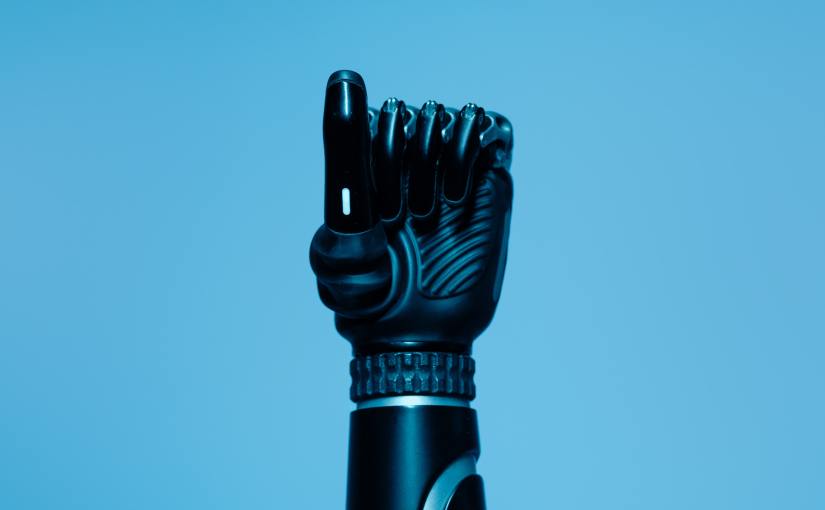
But in 2022, largely thanks to the wonders of technology and improved healthcare, the traditional notion of old age is evolving. As a result, life is all the more thrilling. Now, the supposed retirement age could – and should – be embraced as an additional phase of life, one of newfound freedoms, whether hobbies, businesses or passions. 

Retirement is no longer a period of winding down or dependence. On the contrary, the concept will soon expire, contends Andrew Scott, a world-leading expert on longevity and professor of economics at London Business School. 

There’s no need for pipe and slippers in the 21st century. The latest Office for National Statistics (ONS) data shows the number of people in the UK aged 85 and over was a record 1.7 million in 2020. That amount is projected to almost double to 3.1 million by 2045. 

Additionally, the ONS calculates that life expectancy at birth in 2020 was 87.3 years for males and 90.2 years for females. Consider, at the start of the 1980s these figures were 70.8 and 76.8 years, respectively.

Rising life expectancy and population age go hand in hand. And this trend is global: the world population’s median age in 1970 was 21.5 years, and almost 31 in 2020, according to the United Nations Population Division.

Taking actions for a more rewarding retirement

However, to make the most of the possibilities of old age, it’s critical to take action today for a more rewarding tomorrow, urges Scott.

“Now there is a greater risk you may outlive your wealth,” he says, referring to squirrelled-away savings and pension pots that have been the typical source of funds for retirees. “So you need to invest more in your future self. One of those key investments is finance, but health, relationships, and engagement – developing good health, skills and relationships all play important parts. Any financial plan, though, should be dictated around your life plan.”

In 2016, The 100-Year Life – a book authored by Scott and Lynda Gratton, a professor of management practice at London Business School – was published. And while it’s often said “age is just a number”, could it be that we have been using the wrong measurement all along?

“It was randomly decided that 65 is ‘old’,” continues Scott, “and the older I get – I’m in my 50s – the more I dislike that as a starting point. While more people live for longer, that doesn’t consider changes in how we age, either our health or our behaviour.”

The average Brit has never been so old but never had so long left to live

He believes how we define old age “requires a rethink because traditional age, measured chronologically, is confusing” and often misleading regarding life expectancy. “We need to focus on biological age rather than chronological age,” says Scott. “And we also need to consider prospective age more – that is, the number of years we have left to live. For instance, the average Brit has never been so old but never had so long left to live – this is how we have to adjust our thinking.”

Clearly, good health and good wealth are mutually reinforcing for a life lived as long and as fully as possible. But does this require both a shift in mindset and a change in investment strategy? For instance, Tony Müdd, divisional director for St. James’s Place development and technical consultancy, suggests pension schemes are a good idea, but that you can tailor contributions to match your earning potential. In your 50s, you are likely to be in a better financial position than in your 20s, so why not bump up your input?

Thinking beyond pensions

And while a pension will provide a decent chunk of income for many people in later life, it’s far from the only source. Müdd stresses the benefits of a diversified portfolio of tax-efficient investments, maybe in property or other assets.

He notes, though, that while a later life packed with adventure, excitement and new opportunities is the ultimate goal for most of us, the reality is that dream can be killed by poor health. Müdd worries people often take a “head-in-the-sand approach” to monitoring their health. He points out that a quarter of people in the UK over the age of 70 will require lengthy healthcare.

“It’s a subject that people don’t like to think about, but long-term care can be very expensive, costing hundreds of thousands of pounds,” he warns. “Lots of people in the UK are sleepwalking into a position where they will not get the level of care they think they should receive from the local authority, so will have to pay for it themselves. That could drain their children’s inheritance. You can take out insurance, but people tend not to do that. The only way, then, to deal with long-term care is effectively to save money.”

Moving swiftly away from the gloomy topic of impending death is Michael Clinton, the longtime president and publishing director of Hearst Magazines. His book, ROAR: Into the Second Half of Your Life was recently published, in September 2021. And two years shy of becoming a septuagenarian, he is accelerating, not pumping the brakes. 

He counters the thinking that people have midlife crises but rather “awakenings”. Clinton explains: “At 50, you know a lot about yourself. Now is the time to tap into your awakened self and move forward. If you are 50 and healthy, you will have a pretty good shot of living to be 90. That will mean second and third careers, new relationships and lifestyles. Suddenly, people are saying: ‘I don’t want to retire; I want to rewire. I want to wind up, not wind down.’”

“Retirement is no longer seen as a binary outcome – namely, you don’t stop working when you retire now,” Scott says. “Retirement used to be like a cold shower, and now people want more of a warm bath. Supposed retirees often work part time with their existing employer or start up something themselves. Also, within two years of retiring, one in five people ‘un-retire’.”

He concludes by predicting the demise of retirement. “If you think about the 100-year life, there must be a movement away from a three-stage life – education, work, retirement – to a multistage life.” Scott adds: “Before long, we will reach the point where the concept of retirement itself – if you define it as the permanent cessation of work – will be retired.”

This article was first published in Raconteur’s Wealth & Asset Management report in May 2022

Tech troubles, urgency bias, bad communication: Hybrid working’s biggest hurdles

New data confirms what most already suspected: hybrid working is not working for a large majority of companies. 

The XpertHR research, gathered from 292 U.K. organizations with a combined workforce of over 350,000 employees, revealed that 95% of companies have struggled to implement a hybrid-working strategy. Reluctant returners – staff who don’t want to head back to the office – are the primary reason for failure. However, there are plenty of other causes besides.

The data indicated that 59% of organizations’ staff spend two or three days in the office, but 37% of employers are unhappy and would rather spend less time there. This finding echoed results from Slack’s Q2 global Future Forum study, which questioned 10,000 knowledge workers in the U.S., U.K., Australia, France, Germany and Japan on how they feel about their work environments and employers.

This article was first published on DigiDay’s future-of-work platform, WorkLife, in July 2022 – to read the complete piece, please click HERE.

WTF is Tropicalization?

The purest distillation of Darwinism is “evolve or die.” And following the acceleration of trends spurred by the coronavirus crisis, most business leaders have realized they must lasso and partner with specialists all over the planet to survive and thrive in the post-pandemic world.

Little wonder the value of the average merger and acquisition (M&A) deal in 2021 for the 10 highest deals in the U.K. was £3.3 billion ($3.9 billion), according to Office for National Statistics data — over five times more than the previous year’s £600,000 ($716,000). In the U.S., the value of M&A deals amounted to roughly $212 billion in December 2021, with the acquisition of Time Warner by America Online deemed the largest all-time M&A deal in the U.S. in 2022, according to Statista. And globally, M&A volumes hit a record $5.9 trillion, up 62% on the 2020 figure, Dealogic data showed.

While transformation is necessary for growth, few welcome it. Change management is essential for the success — or failure — of the merging of companies. If not handled with sensitivity, a clash of ways of working and cultures can be toxic. For this reason, the word “tropicalization” is increasingly being used in business circles.

This article was first published on DigiDay’s future-of-work platform, WorkLife, in July 2022 – to read the complete piece, please click HERE.

What business leaders can learn from the rise of cross-industry U.K. strikes and union activism in the U.S.

It’s ironic that Britons, who stereotypically bask in small talk about the weather, are experiencing a so-called “summer of discontent” as temperatures hit record highs. The strike action in late June of railway workers, followed by criminal barristers, is likely to be copied in the coming weeks by inflamed teachers, airport staff, and healthcare workers, among others. 

With the cost-of-living crisis raging, it’s a tinderbox. And while it’s broadly understood that the predominant reason for the strike action is pay, some believe there is more to it. In fact, employees feeling they are not being heard by leadership is at the crux of the issue.

Business leaders in the U.K., U.S., or elsewhere would be wise to heed the lessons or risk sparking employee revolts that they can’t contain.

This article was first published on DigiDay’s future-of-work platform, WorkLife, in July 2022 – to read the complete piece, please click HERE.

Managers are not being trained to run hybrid teams – and it’s a big problem

Hands up, who really wants to be a manager today, in an uncertain and fast-paced, post-pandemic world, where organizations worldwide are shifting to hybrid working and struggling to attract and retain talent, plus employees are demanding more attention than ever? 

At the heart of operations, trusted to pull the strings, are managers, many of whom are promoted to their positions after excelling in non-management roles. “Managers often have the most accountability to the largest proportion of the workforce,” said Emma Price, head of customer success at management process automation company ActiveOps. “They are responsible for delivering against cost, quality, and service and managing customer outcomes.”

However, many would-be puppet masters are now tied up in additional, complex tasks that weren’t part of their already stacked workload in early 2020. They are crying out to be untangled by their bosses, yet evidence suggests the critical training and tools they require are not being made available. This lack of support is baffling when one considers the cost of the great resignation alongside the truism that “people leave managers, not companies.”

Microsoft’s Work Trend Index, published in March, concluded that “managers feel wedged between leadership and employee expectations.” The survey, featuring responses from over 30,000 workers across 31 markets, revealed that 54% of managers say company leadership is out of touch with employees, and almost three-quarters (74%) lament not having the influence or resources to implement the necessary changes for their teams.

This article was first published on DigiDay’s future-of-work platform, WorkLife, in July 2022 – to read the complete piece, please click HERE.

Former Twitter VP on why we need an ‘in-the-office’ status

The bestselling author and former Twitter VP, Bruce Daisley, feels that many firms may be allowing hybrid workers to waste their precious time at HQ. He’s not alone 

On 1 April, Bruce Daisley, author of The Joy of Work, posted a whimsical observation on LinkedIn that would ignite a serious debate about the modern workplace. He questioned whether an ‘in the office’ (ITO) message should supersede the traditional ‘out of office’ auto-reply (OOO). Given the timing of his post, the biggest fools are employers failing to adapt, because the old normal is no longer fit for purpose.

“Heard a brilliant thing today,” he wrote. “One firm says they don’t want workers in the office spending all day on email. The suggestion is that everyone should put their ‘in the office’ message on and deal with email from home.” 

Daisley explains that he made the comment after he’d got wind of complaints from several employers that their hybrid workers were spending too much of their time in the office catching up on their emails, participating in video calls and completing other tasks that they could perform just as well remotely. 

“We’ve spent two years reflecting on the best way to get our work done and then we’ve sleepwalked into a horrible solution,” says Daisley, who argues that the onus is on employers to determine which activities are most suitable in each workplace. 

Noting that people often confuse being busy with being productive, he adds: “Hybrid working isn’t the best of both worlds; it’s the worst. We need to redefine our cultures. The more intentional we get about what we’re using the office for, the better. The office is a brilliant resource, but we don’t need to use it for everything.”

The argument is that the Covid crisis has generally tilted the balance of power at work towards employees, so the evolution of the office must keep pace with their changing preferences. Moreover, offices should be markedly different from remote working environments. Although much time, money and effort are required to make a success of hybrid working, culture should be the true key to progress. 

Perhaps unsurprisingly, the results of a survey published by digital IT consultancy Ricoh Europe in March suggest that underinvestment and poor planning have reduced the effectiveness of firms’ return-to-office policies. 

The indications are that employers throughout Europe have been struggling to adapt. Of the 3,000 workers polled on Ricoh’s behalf in the UK, France, Germany, Ireland, Italy the Netherlands and Spain, 36% said they had felt pressured to return to the office, while 44% agreed that their company’s culture had suffered during the Covid lockdowns. Pertinent to the debate about office-based work, 48% considered themselves “more productive when working remotely”. 

Molly Johnson-Jones, co-founder and CEO of Flexa Careers, says she has been heartened to see that some organisations have understood recent changes in how employees view working in the office. But she argues that most of them need to do much more in this respect to attract and retain talent. 

“The fact that we need to indicate when we are ‘in the office’ signals how people have come expect to work remotely for some, if not most, of their time,” she says. “For many companies we work with, office work is now reserved purely for the tasks and conversations that face-to-face meetings make easier. Having ‘ITO’ days for this kind of work can help to keep teams connected, maintain a sense of structure and boost staff wellbeing.”

The office is a brilliant resource, but we don’t need to use it for everything

Johnson-Jones cites research published in April by the Chartered Institute of Personnel and Development indicating that remote work is far more likely to boost an employee’s productivity than reduce it. 

Flexibility is vital, which means that dictating when staff have ITO days can prove detrimental, she stresses. 

“On days when coming into the office isn’t going to provide workers with any of the benefits mentioned – perhaps when they want to focus on deep work – they must not feel bound to do so,” says Johnson-Jones. “This is when companies risk tipping into creating a culture of presenteeism.” 

She continues: “ITO days are helpful only if we keep them flexible. Employers must recognise that remote and office-based work are complementary and also that it’s no bad thing if one occurs more often than the other.”

Just over three-quarters (77%) of organisations are planning to redesign their offices to include more open-plan areas and collaboration spaces, according to new research from Poly, a US provider of telecoms tech. 

This finding tallies with Tim Oldman’s belief that the “hotelification” of the workplace is a growing trend. He is the founder and CEO of Leesman, a firm that helps firms to assess the employee experience provided by their workplaces.

“Employees will treat offices differently because they are using them nomadically, booking in for a conscious stay,” Oldman notes. “They need to be beacons of warmth and hospitality to motivate them to come.”

He makes an important point about the feeling of sanctuary that returning to the office can offer to people whose remote workplaces are far from ideal. 

“In a typical knowledge business, up to a third of employees do not have a separate space at home that they can designate for work,” he explains. “These people risk being a forgotten minority, whose needs are overlooked by those further progressed in their careers who are privileged enough to have a private room to spare.”

Of the idea that ITO is becoming the new OOO, Oldman says: “It’s happening already, although on a small scale. We aren’t yet at the point of this becoming a trend, but we are experimenting with post-pandemic practices.”

Stuart Templeton, head of Slack Technologies in the UK, offers a different take. He believes that “all businesses should be introducing and prioritising a digital headquarters: a place that serves as the main hub for collaboration, communication and connection between teams, wherever they are. The digital HQ doesn’t mean the office will disappear; it will be used for social, collaborative and dynamic activities.” 

A digital HQ might be too futuristic for some people. But what’s evident is that where and when work takes place should be hugely different from the norm before the pandemic struck. A recent survey of 10,000 knowledge workers by Future Forum, a research consortium supported by Slack, has found that schedule flexibility is more important to them than location flexibility.

“Whatever work is done in the physical office, employees need to have a say in when they’re there,” Templeton argues. “Employers that don’t act accordingly will pay the price. Workers who are unsatisfied with their level of flexibility – in both where and when they work – are three times likelier than those who are satisfied to say they will ‘definitely’ seek a new employer in the coming year.”

He adds: “If you’re coming into an office daily just to stare at a screen, something’s gone wrong.”

This article was first published in Raconteur’s Hybrid Working report in May 2022

WTF is well-being debt?

The gut punches just keep coming. War in Ukraine, women’s rights under fire in the U.S. where a potential recession also darkens the horizon, and a cost-of-living crisis in the U.K. Add in the trauma of enduring two years of an unprecedented global pandemic and the climate crisis, and it’s no surprise many people feel their mental well-being is at an all-time low.

And while many employers are stepping up to the plate with financial assistance and additional benefits, much more investment is needed to bolster employee well-being, experts say. To help employers better understand the financial impact that having an exhausted and unhappy workforce has on the bottom line, a new term has been coined and is starting to be used more broadly: “well-being debt.”

But WTF is it?

This article was first published on DigiDay’s future-of-work platform, WorkLife, in July 2022 – to read the complete piece please click HERE.

‘I was thrown off a project because I misheard’: Deaf inclusivity in the workplace still an issue

The LinkedIn profile image of culture and behavioral change consultant Simon Houghton, shows him wearing a black mask with white writing that reads: “I’m deaf. I can’t read your lips with your mask on.”

Houghton, based in Reading in the U.K., has significant hearing loss so relies heavily on lipreading when communicating – a skill which became even harder to use during the pandemic when everyone wore masks. And while the rise of virtual meetings has helped to some extent (people still turn their cameras off blocking lipreading), workplaces still don’t cater well enough to people with hidden conditions like deafness or severe hearing loss.

To boost awareness Houghton launched social enterprise WeSupportDeafAwareness during the pandemic. His message is clear: not enough is being done to support deaf workers, who make up a large chunk of the population. Consider that 1.5 billion people – almost 20% of the global population – live with a degree of hearing loss, according to the latest World Health Organization calculations

Houghton has had to pay a heavy price for this lack of inclusivity at work. One of his worst memories he still recalls. “I was working for a big-four management consultancy firm and was thrown off a project because I misheard an action during a client meeting,” he said. 

This article was first published on DigiDay’s future-of-work platform, WorkLife, in July 2022 – to read the complete piece please click HERE.

What does the advent of sentient AI really mean for businesses and the workforce?

The futuristic notion that a machine will one day become self-aware, for good and evil, has been a staple of science fiction. So when a Google engineer reckoned the company’s Language Model for Dialogue Applications (LaMDA) program had achieved “sentience” in mid-June, it triggered both alarm and glee.

A fortnight before Lemoine’s claim, Elon Musk announced that a prototype of Tesla’s humanoid robot, “Optimus,” would be unveiled in September. Last August, the billionaire suggested the 173-cm, general-purpose bot would have “profound implications for the economy” and be capable of carrying out everyday tasks, including supermarket shopping. 

So, how significant are these two headline-grabbing development for businesses? What, back in the realms of science fact and reality, could the advent of sentient AI mean for the future of work? And what should business leaders be doing, if anything, to prepare for this challenge and opportunity?

This article was first published on DigiDay’s future-of-work platform, WorkLife, in July 2022 – to read the complete piece please click HERE.

How companies are attempting to tackle diversity ‘blind spots’ at the hiring stage

In an attempt to root out all biases – conscious or unconscious – at the hiring stage, more organizations are overhauling their recruitment processes.

For many, that’s meant stripping their recruitment methods to the bare bones and examining everything from how language in job ads can influence who applies, to improving interview questions so they focus on a person’s aptitude and skill, rather than background and experience.

This article was first published on DigiDay’s future-of-work platform, WorkLife, in July 2022 – to read the complete piece please click HERE.

Which laws around the world are reshaping how we work?

Societal, political, and ethical forces are reshaping the world of work.

To get a handle on some of the changes, a slew of laws have been introduced. Some of them have been passed to tackle cultural trends that have arisen since – or been expedited by – the pandemic. Others are more freestanding.

When considering how the laws that have come into force – or are due to be passed soon – since the start of the pandemic will shape the future of work, a quotation attributed to American-Canadian writer William Gibson, father of the cyberpunk sub-genre of science-fiction, comes to mind. “The future is already here; it’s just not evenly distributed.”

Here are five new laws that will affect how work is done in the specific nations in which they have been inked:

This article was first published on DigiDay’s future-of-work platform, WorkLife, in July 2022 – to read the complete piece please click HERE.

Boomerang employees trend continues to grow, but is a returning worker a good idea long-term?

According to LinkedIn, boomerang employees accounted for 5% – 1.4 million people – of all new hires in 2021 in the U.K., a record high. The professional social media platform also contributed to this trend, with nearly 150 returning employees between September 2021 and February 2022.

It is a good idea for businesses to take a supportive and pragmatic approach, believes James Lloyd-Townshend, CEO and chairman of Frank Recruitment Group. Mainly because the workforce “is far more fluid now” compared to a decade ago, and the average length of service has reduced.

“There’s also far less of an ‘us’ and ‘them’ relationship between employer and employee today,” he said. “The dream scenario as an organization is for everyone leaving you to be welcome back at any stage in their career, and boomerang hires are just evidence of that attitude translating into practice.”

Glassdoor research published in 2020 calculated that the average U.K. employer spends around £3,000 ($3,688) per new hire, and the process takes approximately 28 days.

The price to pay for a wrong candidate is significantly higher, though. The U.S Department of Labor warns that a misfit will cost the business up to 30% of the employee’s wages for the first year. Others argue that the figure is significantly higher when training and supervision are factored in.

A Harris Poll research, published by USA Today in March, indicates the Great Resignation triggered during the pandemic has proved to be not so great for a high majority of movers. Indeed, just 26% of job switchers quizzed say they like their new position enough to stay.

This article was first published on DigiDay’s future-of-work platform, WorkLife, in June 2022 – to read the complete piece please click HERE.

Business leaders’ latest headache: Supporting staff through cost-of-living crisis, while staying profitable

The unholy trinity of rising energy, fuel and food prices is forcing U.K. residents to sacrifice luxuries — and even necessities — in a cost-of-living crisis that is already far worse than many predicted earlier in the year. Things are similarly bleak in the U.S., where inflation hit 8.6% in May, and the Federal Reserve has responded by raising interest rates by three-quarters of a percentage point — the sharpest hike in 28 years.

Granted, the war in Ukraine has exacerbated the situation. But with inflation now at 9.1% in the U.K. and the Bank of England, which raised interest rates to 1.25% in mid-June, predicting that will increase to 11% in the fall, plus almost daily record-high petrol and diesel costs, things are unlikely to improve any time soon.

In response to all of this, employers on both sides of the Atlantic are pushing through new policies to better support their employees.

This article was first published on DigiDay’s future-of-work platform, WorkLife, in June 2022 – to read the complete piece please click HERE.

Why more companies are sending new hires straight to the metaverse for improved onboarding

What will you learn on your first day at work in the metaverse? 

This year, some 150,000 joiners will begin their careers at Accenture in the company’s virtual campus, called the Nth Floor, according to Allison Horn, the company’s executive director of global talent, based in Washington DC.

The Nth Floor is where new hires and existing Accenture staff “can have a more immersive experience for learning and networking,” said Jon Ayres, U.K. managing director for talent and organization at the company. It is one of a growing list of examples showcasing how employers are using pioneering technology to attract and retain top talent. 

Given the tussle for top talent and the need for greater connection with colleagues in the age of hybrid working, Ayres predicts that companies will “experiment with new technology so employees can collaborate in a more meaningful way, which will advance the virtual working tools used widely today.” His statement is supported by new McKinsey research, published mid-June, which calculates metaverse spending will hit $5 trillion by 2030.

This article was first published on DigiDay’s future-of-work platform, WorkLife, in June 2022 – to read the complete piece please click HERE.

Flexibility is key to recruitment – and keeping your staff

Fallout from Brexit and the pandemic has led to more vacancies than applicants, but paying extra is not a long-term option

When the Office for National Statistics published its latest job vacancies data this week, it exposed the post-pandemic recruitment challenges facing most businesses. The number of unfilled positions in the UK increased by 20,000 between March and May to a record 1.3 million, while in the three months from February to April the unemployment rate dropped to 3.8 per cent, the lowest since 1974.

“For the first time since records began there are fewer unemployed people than job vacancies,” said Jack Kennedy, a UK economist at the job-listing platform Indeed. “That marks a dramatic turnaround from last summer when there were four unemployed people per vacancy. It also highlights the extreme tightness of the labour market, which has been fuelling hiring difficulties across many sectors.”

Cleaning, construction, warehouse, manufacturing and hospitality roles are all receiving lower interest levels on average than before the pandemic, he added. Brexit is exacerbating the challenges for sectors that relied on workers from the European Union.

The lack of flexible working in these roles, in comparison with desk-based jobs, is another factor, as is the number of people opting for early retirement.

The pandemic “put the brakes on decades of improvement” in employment rates among those in their fifties and sixties, said Ian Nicholas, the global managing director at the employment agency Reed. “The number of people in this age group who are not even looking for work has risen by 228,000,” he said, adding that companies should encourage older staff to stay in work to share knowledge and engage with younger members of the workforce.

This article was first published in The Times in June 2022 – to read the complete piece please click HERE (note: it is behind a paywall).

‘A business imperative’: How Salesforce developed its employee-centric hybrid model

The truism that a happy worker is a productive worker has perhaps never been more closely scrutinized.

At Salesforce, it has become the motto that underpins the company’s entire flexible workforce structure, which it has rolled out for its 77,000 employees globally.

This ‘Success from Anywhere’ model, launched in 2021, was the fruits of two years worth of internal employee surveys the company ran to get a grasp on what employees want from their workplace and their jobs, post-pandemic.

The model has made it a popular place to work. Salesforce is one of only four employers that feature on all five country lists — the U.S., the U.K., Canada, France and Germany) in Glassdoor’s Best Places to Work in 2022. And in late April, it was ranked top in the “super large” classification – organizations with over 1,000 employees – of the U.K.’s Best Workplaces 2022, elevated from third place last year, according to management consultancy Great Place to Work.

This article was first published on DigiDay’s future-of-work platform, WorkLife, in June 2022 – to read the complete piece please click HERE.

How switching to a 4-day week solved challenger bank Atom’s talent shortage

Six months ago, challenger bank Atom was in a tight spot: its growth tear was being stunted by a major talent shortage.

The company had 70 unfilled job vacancies and, in a tight labor market, was struggling to find the best talent to fill them.

To boost its visibility as a great place to work and attract top talent, Atom’s U.K.-based leadership decided to take the plunge and trial a four-day week, to see if it boosted the volume of candidates applying.

It worked. The company had a 500% increase in applications for open roles, according to Atom’s chief people officer Anne-Marie Lister.

This article was first published on DigiDay’s future-of-work platform, WorkLife, in June 2022 – to read the complete piece please click HERE.

Why the U.K. is becoming a forerunner for a ‘worrying recruitment trend’

While all countries have to deal with the pandemic-induced change in the job market, Ian Nicholas, global managing director at employment agency Reed, believes that Brexit is an aggravating factor and means that the U.K. is a forerunner of a worrying recruitment trend. 

The break from the European Union has led to an “exodus” of lower-paid workers, with many industries – including construction, cleaning, manufacturing and hospitality – struggling to fill the vacancies, he added.

The deepening cost-of-living crisis is likely to make recruitment even more challenging. And it might mean organizations move abroad, Nicholas argues. “There must be a danger that some companies could relocate if they feel that they cannot attract and retain talent within the U.K. at remuneration levels that maintain their commercial competitiveness,” he said. 

While business relocation is probably not currently front of mind for most leaders in the U.K., there are signs that other less extreme contingency plans and innovative recruitment schemes are on the agenda.

This article was first published on DigiDay’s future-of-work platform, WorkLife, in June 2022 – to read the complete piece please click HERE.

WTF is a digital HQ?

Pandemic-induced lockdowns forced many industries to dial up their digital capabilities rapidly. However, thanks to the marvels of technology, we learned that communication and collaboration were possible without being physically present with colleagues, even if “you’re on mute” was an all-too-familiar refrain.

But now that most businesses are firming up their post-pandemic strategies, with numerous organizations around the globe opting for a hybrid-working model, how can leaders strike the right balance between in-office and remote work? 

In a digital-first, post-pandemic world, the physical office is no longer the key place that people connect, it could be argued. Could the answer be a futuristic-sounding digital headquarters with no proximity bias, where communication is transparent and the culture thrives? What many are referring to as a digital HQ?

This article was first published on DigiDay’s future-of-work platform, WorkLife, in June 2022 – to continue reading please click HERE.

‘I’m holding out to go to the toilet’: Why monitoring employees – inside and outside the office – is rocketing anxiety

How would you like it if your working day was monitored, and the time at the computer, the number of keystrokes and non-work-related searches all counted by your employer? 

Despite knowledge workers pleading for greater flexibility and autonomy in this messy post-pandemic period, and a clear shift to measuring outcomes rather than time, there has been a massive surge in worldwide demand for solutions to keep tabs on staff, wherever they are working. 

Now businesses are firming up their hybrid working strategies there is even greater interest in various forms of monitoring tech. Research from Top10VPN shows global demand for employee monitoring software jumped by 75% between January and March 2022, marking the biggest three-month increase since 2019.

This article was first published on DigiDay’s future-of-work platform, WorkLife, in May 2022 – to continue reading please click HERE.