Unpacking which harmful work practices the pandemic exposed, and which are — hopefully — banished for good

It’s crass to argue “the pandemic has been good for humanity.” It has, though, effectively taken an X-ray of society and highlighted where sickness lies. And, most agree, much remedial work is required to restore total health.

Whether acute areas are treated — or, indeed, treatable — is a matter for incumbent politicians and business leaders. In this article, we turned to the latter cohort to reflect on what harmful work practices were exposed by the coronavirus crisis and how they’ve evolved as a result, for the better.

This article was first published on DigiDay’s WorkLife platform in February 2022 – to continue reading please click here.

Mojitos in the metaverse? More companies take to hosting team happy hours via virtual reality headsets

Before the pandemic, U.S. marketing agency The Starr Conspiracy’s employees would enjoy Olympic-like competitions in the office car parks and revel in regular in-person, happy-hour meetings. However, with the fun tap turned off by the coronavirus-induced restrictions, company bosses sensed disconnection and isolation were growing for remote-working staff. So they reached for virtual reality headsets.

Now, all 72 employees have Oculus Quest 2s, which cost about $300 per set, and join in for happy hours and quiz nights in the metaverse. But, aside from the obvious practical issues — it’s hard first to locate and then swig a mojito while wearing an obstructive plastic mask — will employees swallow such activities, and can they genuinely re-engage staff?

This article was first published on DigiDay’s WorkLife platform in February 2022 – to continue reading please click here.

‘Remote managers are killing company culture’: How to avoid common hybrid-working mistakes and engage increasingly disparate workforces

The general consensus in the corporate world is that hybrid working is here to stay. Yet, without a blueprint for what good looks like a period of trial and error is inevitable.

What is more clear: the role of managers will be critical in making whatever model a company adopts a success and ensuring people feel valued enough not to jump ship. So far, it’s not looking good.

This article was first published on DigiDay’s WorkLife platform in February 2022 – to continue reading please click here.

The war for talent is raging: Here’s how to make your LinkedIn profile sparkle

Some call it the Great Resignation. LinkedIn, the world’s largest professional network with almost 800 million users, labels it the Great Reshuffle. Whichever phrase you use, it’s clear: the war for talent is raging like never before. More people than ever, spurred by the coronavirus crisis, are seeking to change their course of life, which translates to curriculum vitae in Latin, fittingly.

“We are experiencing unprecedented change when it comes to work,” Charlotte Davies, careers expert at LinkedIn, told WorkLife. “The coronavirus crisis has driven people to consider what they truly want from work and life. Because of this, companies are rethinking their entire working models, culture, and values.”

While employers must do more to attract and retain skilled workers, employees should update and polish their resumés. That said — perhaps it’s more worthwhile to buff one’s LinkedIn profile, given that research from last April suggests a person is hired via the platform every 15 seconds. 

This article was first published on DigiDay’s WorkLife platform in January 2022 – to continue reading please click here.

‘It’s central to the future of work’: World’s first coordinated 4-day week pilot begins

Determining what successful hybrid working looks like is a priority for most business leaders in 2022. But as employers grapple with shaping a system that works for both them and their employees, could it be that a better solution is operating a four-day working week?

A growing number of people seem to think so. In the U.S., 30 businesses will kick off four-day week trials across industries including manufacturing, hospitality, healthcare, recruitment, and technology, on February 1. The six-month trials will be overseen by not-for-profit 4 Day Week Global — a community created to support employers that want to shift to the shorter workweek and ensure productivity remains high.

This article was first published on DigiDay’s WorkLife platform in January 2022 – to continue reading please click here.

‘Imagine a corporation without a CEO’: Why the concept of a DAO is gaining traction in the business world

Until recently, the only time most people had heard of “dao” was in the context of East Asian philosophy. The word translates from Chinese as the “way.” Now, though, another DAO — an acronym for a decentralized autonomous organization — is entering the mainstream of business consciousness. Many progressive people, especially cryptocurrency supporters, believe it might even be the way to a more equitable world.

ConstitutionDAO sparked global headlines in November 2021 when it tried to buy an original copy of the U.S. Constitution at a Sotheby’s auction. For the bid, more than 17,000 donors had contributed to raising $47 million worth of Ether, the second-largest cryptocurrency by market capitalization. Ultimately, the group failed in its attempt, with a cash offer of $43.2 million preferred. 

This article was first published on DigiDay’s WorkLife platform in January 2022 – to continue reading please click here.

Meet Homeboy Industries: the California not-for-profit providing jobs to former gang members and incarcerated people

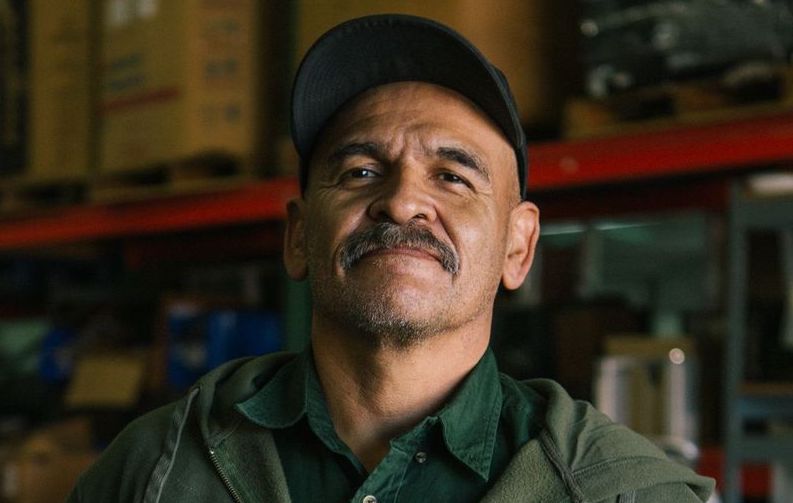
Jose Guevara — aka Manny — has been incarcerated five times and in all, has served about 25 years. However, in recent years, Guevara, now 62, has steered clear of trouble, which he credits to his employer, Homeboy Electronics Recycling, where he works as a long-haul driver. 

“I’m the main driver of the big truck,” he says with a grin. “I’ve been to Utah, San Francisco, and Sacramento, and I love that this company trusts me with its truck and merchandise. We are growing, and I’m so proud to be part of it. Without my work here, there is a high chance I would be back in prison right now.”

This article was first published on DigiDay’s WorkLife platform in December 2021 – to continue reading please click here.

Employers should focus on improving employees’ experiences in 2022, say experts

People are at odds with their employers on what makes a great employee experience — a disconnect that will need to be swiftly rectified in 2022 if businesses are to retain their talent, according to analysts and workplace experts.

We asked a range of execs what they predict will be the top priorities for business leaders in 2022, and alongside finessing what the right hybrid models are, fixing the employee experience emerged as another major theme.

This article was first published on DigiDay’s WorkLife platform in December 2021 – to continue reading please click here.

‘It’s just another 9 to 5’: Employers assess productivity levels after introducing 4-day work week

As organizations tiptoe into the post-pandemic world of hybrid working, the idea of a four-day week is gaining popularity. Little surprise, if working one fewer day and not being docked any pay is in the offing, which is precisely what some businesses are already offering. 

For smaller businesses that can’t afford to pay staff 20% extra, a four-day week is still an appealing proposition. Many leaders acknowledge that working 9 to 5 is, in 2021, only heard of in Dolly Parton’s classic tune. More flexibility, trust, and autonomy are the vital factors that will count to attracting and retaining top talent. 

Indeed, in the U.K., 38% of small- and medium-sized enterprises leaders recently indicated they plan to forge ahead with four-day-week plans. It’s a concept that works in theory, but does it work in practice?

This article was first published on DigiDay’s WorkLife platform in October 2021 – to continue reading please click here.

‘Old maps don’t apply to new worlds’: Experts predict what’s in store for 2022

Toward the end of 2019, business leaders discussed the likely trends in the next year, claiming to have a “20/20 vision.” No one had the foresight, however, to spot a once-in-a-lifetime global pandemic that would alter every aspect of the “old normal.”

To begin with, organizations and governments blindly battled the coronavirus crisis. It is only now we can blink into the light and see more clearly what factors might shape the future of work in the coming year.

Given the U.S. military phrase VUCA — an acronym for volatility, uncertainty, complexity, and ambiguity — encapsulates the world in which companies now operate, long-term plans are so last year. So instead, more immediate, tangible, and attainable goals are recommended. And it is in this spirit that a raft of business leaders offered bold future-of-work predictions for 2022.

This article was first published on DigiDay’s WorkLife platform in December 2021 – to continue reading please click here.

Why in-demand freelancers are looking to Singapore and other countries to ply their trades

The first mention of “freelancers” can be found in Sir Walter Scott’s Ivanhoe, published in 1819, about an army of medieval mercenaries who would fight for whichever nation or person paid them the most. Not much has changed since, save for the lances being swapped for laptops and smartphones. Oh, and many freelancers can fight their 21st-century battles virtually, from anywhere on the planet.

The modern weapons wielded by freelancers means they can, theoretically, work from anywhere with a decent internet connection. According to a new study from Tide, a U.K. financial technology company offering mobile-first banking services for small and medium-sized enterprises, Singapore tops the list of desirable places for freelancers to operate.

This article was first published on DigiDay’s WorkLife platform in December 2021 – to continue reading please click here.

How companies are tapping avatars, virtual spaces to introduce new hires to their colleagues and cultures

The digital world, where hybrid working is increasingly the norm, can be a lonely place — especially when joining an organization or learning a new skill for career development. To solve this challenge, companies are reaching for their virtual and augmented reality headsets and taking the plunge with immersive training.

One such organization is HubSpot. The customer relationship management company is trialing VR remote office tours and using it to present employees with an “immersive and unique look” into HubSpot’s remote community. “The VR platform allows employees to build an avatar, walk around the virtual space, and even hear other employee voices — connecting in real-time, as you would in an office setting,” said Hubspot’s Boston-based culture manager Meaghan Williams.

This article was first published on DigiDay’s WorkLife platform in December 2021 – to continue reading please click here.

Web creator Sir Tim Berners-Lee on the future of data

Data literacy will drive innovation, easing global warming and empowering citizens, according to Sir Tim Berners-Lee and Sir Nigel Shadbolt

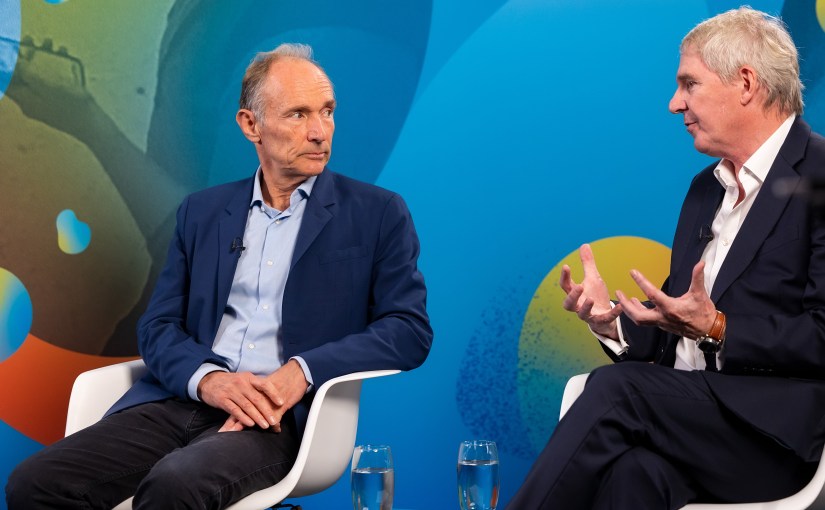
Billions of us use the World Wide Web as our primary tool to interact online. Today, its creator Sir Tim Berners-Lee is on a new mission: to ensure data is used appropriately to create the public sector of the future.

Berners-Lee partnered with artificial intelligence (AI) expert Sir Nigel Shadbolt in 2012 to found the Open Data Institute (ODI). At the ODI Summit in early November, the pair of computer scientists warned that now is a pivotal moment. As we hurtle into the digital era powered by data-hungry algorithms and AI, it’s critical to collaborate with good intentions and maximise the potential of technology, for the sake of the planet and its inhabitants. 

The acceleration of digital transformation necessitated by the coronavirus chaos is exciting, but there’s a responsibility for authorities around the world to keep pace with this incredible change. Those in power must set standards, encourage data to be opened and shared responsibly, and narrow the ever-widening skills gap. The quicker that data literacy in both private and public sectors can be improved, the better for everyone.

As Berners-Lee points out, the pandemic has unconsciously boosted public awareness of how data can save and enrich lives. “Something that took off hugely was communication through data, with the government telling us to ‘flatten the curve’ [and limit the spread of the virus],” he says. “I would imagine that the data literacy of the general population has gone up a chunk.” 

Driving change 

By improving their data literacy, leaders and members of the public could understand and challenge how data is presented, Shadbolt suggests. As public sector technology and its application develops in the coming years, fuelled by more and better-quality data, greater scrutiny will help shape products and services for the digital era. 

The opening of more data sources will super-charge the public sector of the future and drive innovation, says Shadbolt. The chair of the ODI – who’s been principal of Jesus College at Oxford University since 2015, among other roles – points to the success of open data pioneer Transport for London (TfL). Often held up as an exemplar of open data, TfL offers data feeds and guidelines about air quality, cycling, walking, planning and more. 

In 2017, Deloitte calculated that TfL’s release of open data generated annual economic benefits and savings of up to £130 million for travellers, the capital and the organisation itself. Additionally, many private businesses have taken advantage and cashed in on the open application programming interfaces (APIs).

“Imagine that a lot of data relevant to everything climate-related was just being routinely published using standard APIs,” Shadbolt continues. “It’s what we saw happen with TfL. And there’s just a bunch of sectors and areas to go for.”

However, it can be dangerous to blindly follow data. Shadbolt wonders whether Boris Johnson’s refrain during the pandemic that the government would “follow the data” to justify its pandemic-related decisions coronavirus sent out the wrong message. “It was quite a bad phrase, in some respects,” he says, “because while there should be a basic ability to understand the data, we need to interrogate and critique that data.”

Data can be good, but it never gives a complete picture

Questioning data sources is not just essential to fight fake news on social media and elsewhere – it will also enable public sector organisations to build greater trust, Berners-Lee says. With more connected data, they could trigger a shift from reactive to proactive services. 

It’s a virtuous circle, because trusted and quality datasets will widen the possibilities and reach of public sector technology and empower citizens. “Provenance is important for data quality, and provenance is important for trust,” he says.

Building trust

For example, Berners-Lee says a doctor should be able to look at the digital notes of a person with diabetes and open a data narrative explaining how this diagnosis was made and other relevant history. Public trust in the data used by the public sector is central to the adoption of technologies and services, he points out.

The general public seemed to go into different categories regarding coronavirus data, Berners-Lee says. Some accepted recommendations for pushing the curve down, but others “don’t listen to the same people as we might. Instead, they find groups of people –

the conspiracy theorists – usually on social media, who make up all kinds of strange things about the pandemic, vaccines or climate change, for that matter.”

Shadbolt says experts act in good faith with the information available at a specific time, but their visibility is limited if they have scant amounts of data. The wider the variety of good quality data sources, the fuller the picture. “We’ve talked a lot about how it’s important, particularly during the pandemic, not to regard the scientists, medics and people in white coats as telling you the whole truth,” he says. “They’re trying to give the best information, very often under conditions of considerable uncertainty.” We must take a nuanced approach, he argues, understanding that “the data can be good, but it never gives a complete picture.”

Those in the public sector and beyond must be “critically reflective” of data. “All our responses are made, in a sense, standing on the edge of error. But that’s what science is: it can believe something is wrong and can revise what we believe as these things unfold.” 

While the collaborative use of data will create smarter public services in the UK, this approach is crucial on a larger scale if humanity is to overcome its biggest challenges. It’s been vital in the response to coronavirus, while a cooperative, non-competitive and can-do attitude is also essential to reduce global warming.

“We’ve just been living through an existential crisis – a global pandemic – and we’re in the midst of another one unfolding, with the climate challenge,” says Shadbolt. “Data will be an essential part of [solving this]: the infrastructure, the institutions we might need, the trust we have [in its use], and our literacy.”

Sir Patrick Vallance, the UK’s chief scientific advisor, echoed this view at the 2021 United Nations Climate Change Conference (COP26). He warned that the challenge of global warming is a greater risk than Covid-19 and more people will die from it than the pandemic if the public sector doesn’t act quickly. Vallance also said the climate crisis could last 100 years and require “a combination of technology and behavioural change”.

Provenance is important for data quality, and provenance is important for trust

Shadbolt concurs but stresses that opening data and boosting cross-sector collaboration will accelerate meaningful change on a macro and micro scale and increase the capabilities of public sector technology. “While environment data is in the news because of COP26, there is other information that can help spur action,” he says, hinting that greater transparency from public sector organisations will ratchet up pressure on private companies to keep clean. For example, he notes that data on utility companies discharging sewage will help the Environment Agency, which struggles with funds and support. 

“We are starting to gain a sense of what data’s going to make a difference – everything from emissions to insulation. There’s a whole network of interconnected data types that we can bring together, much of it held in the public sector, and some of it held in the private sector,” he says. “We need to begin that work on joint public-private enterprises, though we are beginning to see the private sector, with its commitments to ESG, saying ‘we now have to have a public purpose as well as a private one.’” Publishing some of this data “would be a great first step”, he adds. 

Information advantage

Berners-Lee and Shadbolt were appointed as information advisors to the government in June 2009. The duo led the team that developed data.gov.uk, a single point of access for UK non-personal governmental public data. This offers real-time information on a range of topics, such as government spending, digital service performance, crime and justice, transport and more.

When the pair founded the not-for-profit ODI nine years ago, the mission was to “connect, equip and inspire people around the world to innovate with data”. Almost a decade later, the ODI continues to provide free and paid-for training courses and learning materials both in-house and online. These cover theory and practice surrounding data publishing and use. The ODI has long championed open data as a public good, but always emphasised that effective governance models are necessary to protect citizens.

Some 20 months since the start of the coronavirus crisis, people are beginning to appreciate the ODI’s work and concerns around data standards. “When the pandemic began we provided a data publication template,” says Shadbolt. “The challenge was so many people wanted to contribute data. It needed sorting and we had to determine what was helpful. If there was just a little more awareness around open standards to publish data, so that it is in a more interoperable format, it would be better for everyone.”

For public sector technology to thrive, however, public trust is critical, says Berners-Lee, who notes a difference in attitudes to tech in the UK compared to the US. “Typically in the UK people trust the government and don’t trust [the tech] industry, and in the US people trust industry and don’t trust the government,” he says. More should be done to assuage fears about how tech giants handle user data, he adds. “To an extent, it’s how people are brought up and therefore cultural. But for people in the UK to trust these large American companies then you need to have serious legislation and regulation.”

The backlash against the allegedly avaricious Facebook, which according to a recent whistleblower puts user engagement ahead of safety, is a cautionary tale for public sector organisations seeking to embrace technology solutions and partner with companies without fully knowing their policies on data privacy and other questionable values, suggests Berners-Lee. More than ever, at the outset, digital products must be “good by design”.

Data management is integral to these processes. Here too the coronavirus has proven useful, testing the robustness of so-called ‘trusted research environments’. “In these environments, the data stays behind a firewall and it’s modelled and analysed with tools that can go behind the firewall,” Shadbolt explains. “The data never actually leaves the highly secure data storage areas where 47 million patient records are linked, but incredible insights are gained.”

Offering an alternative, he says: “The other solution is to leave the data with the people who generate it, which is very local. There are different technical solutions there and there are different institutions we can build to share this. It’s a complicated area, but the ODI is looking very carefully at making data sharing more effective.”

Unfinished business

What does the future hold for the ODI as it nears its 10-year anniversary? “We started off explaining to people working in the public sector how to put your data on the web,” says Berners-Lee. Now, however, “we realise it’s important to cover the whole spectrum, from public to private, but it’s also about developing policies as well.”

This assessment chimes with Shadbolt. “There is unfinished business,” he says. “The whole commitment to getting data out there was started with open data initiatives that were very much focused around the public sector – everything from hospital data to educational data to transport data. That work has gone well. We’re now looking at extending those learnings. As governments move on [in their digital transformation journeys], you want to ensure that momentum is kept up and that the infrastructure is there to help sustain publishing the data out.”

Returning to the global climate crisis, he says of the ODI’s mission: “We did anticipate that in trying to build a trusted research data ecosystem it would become one of the consequential questions for the future of the planet and the future of our wellbeing. There’s a huge amount of work to do. We’re trying to make sense of it in terms of programmes of work, from data literacy to institutions, from ethics to infrastructure.”

Shadbolt adds: “Fundamentally the ODI’s work is about listening, it’s about trying to take ideas and put them in a format that allows that to scale. We may be an organisation of 60-odd people but we think we can have a fantastic impact and so we need to reach out and sustain ourselves to make a better future.”

This article was first published in Raconteur’s Public Sector Technology report in December 2021

Employees and their employers can’t seem to agree on which flexible work perks will make them stay

For decades, the majority of organizations have, in one way or another, told anyone who would listen that “people are our greatest asset.” Clichéd as the phrase may be, its veracity is being tested as this hybrid-working world has shifted the balance of power away from leaders toward staff. 

For some people, watching efforts other employers have made to offer flexible-working perks to attract and retain talent has made the meager efforts of their own employer even more grating.

This article was first published on DigiDay’s WorkLife platform in December 2021 – to continue reading please click here.

Leading for the future: how has the pandemic changed those in charge?

In a world where change is the only constant, leaders must be authentic, tech-savvy and human. They have to prepare for the next crisis by empowering employees so their businesses are more agile and resilient

Be honest, how has the coronavirus pandemic changed you?

For most of us, it is only now – more than 18 months after the pandemic hit and as some semblance of normality returns – that we finally have the headspace to reflect properly on this question, answer it truthfully and inspect the mental scars, having been in survival mode for so very long.

Spare a thought, then, for business leaders who, alongside any personal struggles, have been forced to steer their organisations out of choppy waters while faced with cascades of disruption.

The list includes supply chain problems, geopolitical issues, increased pressure to recruit and retain top talent in the so-called ‘great resignation’ age, and the need to engage with a range of stakeholders to facilitate an accelerated digital transformation. They don’t teach this stuff at business school and many will have felt out of their depth, understandably.

The torrents of chaos have eroded everyone to a degree. And businesses and laggard leaders who have not kept up with the waves of change have, alas, been swept away. The response to Covid-19 necessitated the locking down of people, but paradoxically it opened minds. As a result, in the post-pandemic wash-up, the world looks and feels different. 

For instance, videoconferencing technology’s rapid advancement or adoption has enabled businesses to communicate to colleagues and customers, and somehow brought people closer together. Moreover, there is something thrillingly democratising about everyone having the same-size square box on Zoom, Teams or Google Meet, whether a chief executive or a 21-year old, fresh out of university.

New normal: mindset change required

Cybersecurity and global warming have leapfrogged other concerns for boards and consumers alike. In the afterglow of COP26, ‘ESG strategy’ has become a business buzzword, while actions and transparency speak louder than words. And as many are focused on the environment and governance, is the social element the squeezed middle?

As we tiptoe hopefully out of the worst of the coronavirus crisis, leaders have many important questions to answer. How will hybrid working actually work? What business models need evolving or binning? And, most fundamentally, in a world of constant change, how can greater agility and resilience be achieved?

“The US military phrase VUCA – an acronym for volatility, uncertainty, complexity and ambiguity – captures the world in which we now operate,” says Alan Patefield-Smith, chief information officer of insurers Admiral Group. “Everyone has their favourite worry.”

Paul Szumilewicz, programme director for retail in continental Europe at HSBC, bristles at the concept of ‘resilience.’ He says: “What I’ve seen in the last few years, especially during the pandemic, is that ‘resilience’ is overrated. Too often, we have unrealistic expectations of people and particularly leaders.”

Szumilewicz argues that admitting “we don’t know the answer, but we are working on it” shows strength. “There is a positive shift in leaders to accept that being vulnerable makes us more real, more relatable,” he says.

Citing a 2017 Harvard Business Review paper, he continues: “The single biggest factor that triggers oxytocin [a hormone that plays a role in social bonding] in the brain at work is when a leader, manager or colleague shows vulnerability. Resilience is sometimes not as powerful as we think. Being honest about that can have an even more powerful impact.”

Invest in technology but don’t forget people

Simon Finch, supply chain director at Harrods, concedes that “there was a lot of scrambling around to make things work” when the coronavirus crisis and, more recently, Brexit fallout exposed operational weaknesses. He posits that businesses were “obsessed with making supply chains as lean as possible” before Covid, moving items around quickly, with minimal stock and expense. 

“Coronavirus completely screwed up that approach,” says Finch. “From now on, the supply chain must be more about agility, to cope with volatility and uncertainty, and less about being lean. However, that agility has to be fully supported by technology and data insights.” 

Technology alone, though, is not enough. If leaders fail to invest in their people, and that includes themselves, then the much-maligned skills gap will gape even wider. Consider the World Economic Forum estimates that technology will subsume 85m human jobs and 97m new roles will be created in just the next four years. As man, woman and machine work together, leaders should become less robotic and more human.

Indeed, according to Wayne Clarke, founding partner of the Global Growth Institute: “The most essential leadership trait of the 21st century, without a doubt, is empathy. The leaders with the most emotional intelligence will stand out. To better engage staff and improve the employee experience, the most critical question to ask is ‘How do you feel?’”

So go on, be honest.

This article was first published by Raconteur as part of a long-scroll project sponsored by Oliver Wight in November 2021

How sustainability has become an advantage in the talent war, but candidates aren’t fooled by ‘greenwashing,’ say experts

The meeting in early November of officials from approximately 120 countries at the 2021 United Nations Climate Change Conference (COP26), in a desperate bid to improve the planet’s health, highlights the critical importance of environmental issues.

But it’s not just world leaders who need to boost their sustainability credentials: so do businesses, or they risk defeat in the raging war for talent.

Indeed, new research from global recruitment firm Robert Walters indicates 34% of U.K. office workers would refuse a job offer if a company’s environmental, sustainability or climate control values do not align with their own. In the U.S., the figure is even higher: 41%. France and Chile (both on 53%) top the list, closely followed by Switzerland (52%).

It’s a “new era of recruiting,” according to Chris Poole, managing director of Robert Walters U.K. “While all the normal questions still get asked around pay, benefits, training and career paths, increasingly we get asked: ‘What does X company stand for?’” he said.  

Before accepting a job offer, people now carefully consider their prospective employer’s social media output, check the “about us” pages on its website and Google the latest news articles about the company to see if its actions match its words.

“Employers failing to improve on their sustainability credentials should expect to see a knock-on impact to their hiring,” said Poole. “With there being so many avenues to being environmentally conscious as an employer, there simply isn’t much room to ignore the matter.” Moreover, he added: “As a workforce strategy, ESG [environmental, social and governance] has become a competitive advantage in attracting and retaining talent.”

However, while a commitment to improving sustainability is attractive to employees, the opposite is true if businesses offer token gestures. Younger workers are especially attuned to this, according to Gordon Wilson, CEO of Advanced, a U.K.-based software company. His business’ recent trends report found 56% of 18 to 24-year olds “are accusing their employer of ‘greenwashing’, meaning that they overstate and gloss over their sustainable business efforts for business gain,” he said. 

“We cannot afford to ignore the voice of this generation, which has much greater personal awareness of their values and the impact they want to have on the world than previous generations. These are the voices of future leaders, and they’re joining the business world with an inherent distrust.”

Young people want to align themselves with companies that are doing the right thing for the planet and society, and are working towards positive change. “They want more than just a job,” added Wilson.

This insight chimes with the experience of Andrew Hunter, co-founder and economist at job-search engine Adzuna. “Having a strong ESG strategy can be a big talent draw for a brand, though people are becoming increasingly aware of greenwashing and are judging employers based on their actions, rather than their opinions,” he said. 

“It’s part of a wider trend where company culture and beliefs are becoming more important to job seekers, financial reimbursements alone are taking a bit more of a back seat, and work-life balance and well-being are instead coming to the fore.”

Hunter points out the social element of ESG is also about sustainability.

He notes that many of the businesses leading the way in this area are B Corp certified, including Homeboy Recycling in California, which provides on-the-job training and employment opportunities for ex-offenders. “Rubicon Bakers is another B Corp focusing on creating opportunities for marginalized sectors of the workforce,” he said. “In the U.K., The Body Shop has a focus on providing employment for people experiencing homelessness or with lower levels of education. Making sure these jobseeker segments don’t slip through the cracks is an important aspect of ESG efforts that we forsee growing.”

Rita Trehan, founder of DARE Worldwide, a global transformation consultancy, believes that a well-known Swedish teenager, who has been in Glasgow at COP26, is spearheading the drive for younger workers demanding greater sustainability. “Greta Thunberg’s ‘Blah, blah blah’ message has resonated with people,” she said. “The conversation today is more scrupulous, more cynical, better at challenging businesses and governments on the gap between policy and impact.”

Trehan pointed to statistics that show a vital distinction to make for businesses looking to dial up their sustainability credentials: nearly three-quarters of employees believe all workers are responsible for upholding a sustainability policy. It needs to be baked into the company culture, she added.

And yet, businesses that want to do so will need to tread carefully if they’re to avoid being accused of greenwashing, according to James Hand, a data scientist and co-founder of Giki—which stands for Get Informed Know your Impact—a social enterprise in London that helps people live sustainably. “There aren’t any ‘quick wins’ that don’t end up looking like greenwashing,” he said.

Instead, companies need to include all stakeholders and map the carbon impact of their operations to inform their sustainability policy, said Hand. “When they have measured their operational footprint, having a net-zero plan and building a staff engagement program can really help bolster their credentials and, more importantly, actually have an impact. Some 70% of emissions come from individuals, but organizations can bring those individuals together to make sure we halve emissions this decade,” he added.

Taylor Francis, co-founder of Watershed, a climate-action startup based in San Francisco, agreed and stressed that companies who improve their sustainability credentials have higher employee retention — 40% higher according to a 2020 Deloitte report.

“Employees are putting pressure on their current employers to introduce more accurate methods for carbon accounting, and more actionable and aggressive plans to reach true net zero,” he added.

Clearly, what’s been discussed at COP26 is just the tip of the (melting) iceberg.

This article was originally published by Digiday in November 2021

Five ways automation enables finance teams to be more human

As we stride into the fourth industrial revolution, finance teams can work alongside machines to drive strategy and value. And, as the war for talent rages investing in technology is crucial to attract and retain skilled workers

The argument that robots will replace human jobs misses the crucial point that machines empower workers with a pulse. It has been this way for hundreds of years – since the original industrial revolution in the mid-18th century when the Luddites, led by Ned Ludd, a Leicester weaver fearful of change, attacked factories and their owners. However, it soon became obvious man worked much better alongside machine.

Now, as we stride into the fourth industrial revolution, which uses modern smart technology to automate traditional manufacturing and industrial practices, robots are taking over more menial, repetitive tasks. This capability frees up workers to be more human. For finance teams especially, this automation of processes enables them to be more human and drive value and strategy – here follow five ways how.

1. Paper processes are old news

In the finance world, paper has been essential for centuries – but in the digital age, we can speed up processes, and save the trees, argues Nitin Purwar, India-based industry practice director of banking at UiPath. “Within finance, data-intensive and repetitive tasks are commonplace,” he says. “Often further weighed down by legacy systems, paper-based documents and unstructured data, these processes can take up a large proportion of a professional’s day.”

Purwar argues that “this work isn’t what humans are best at and often isn’t what we enjoy doing. By automating these processes, finance professionals can be freed to spend more time on value-added, strategic activities that require judgement and skill, thus enhancing the employee experience all while saving the department time, money and improving the accuracy of processes.”

2. Manual ways of working are highly inefficient – and a turn off for talent

Businesses that embrace automation stand to gain a competitive advantage – not least when it comes to attracting and retaining talent. Adobe’s Future of Time study, published in late August, finds that UK business employees waste more than a day a week on low-value tasks that should be automated. Tellingly, almost two-thirds (59%) of respondents are seeking new jobs with better technology to reclaim work-life balance.

Purwar from UiPath uses an example to explain the benefits of automation in this regard.“One infrastructure solutions firm we work with used to process all invoices manually, printing, signing, scanning and uploading 400,000 invoices a year. Now, a robot affectionately named Archie processes all invoices digitally, freeing up on average 11 minutes per invoice of time that employees can now spend focusing on value-added tasks instead. That amounts to thousands of hours per year saved.” 

There is more potential to realise, which is why organisations should double down on automated solution. Kevin Kimber, managing director of global accounts receivable at BlackLine, suggests that while many businesses seek robotic process automation, now “advancements in artificial intelligence and machine learning take what is possible to the next level”.

3. Financial leaders can show their human skills and improve collaboration

Ash Finnegan, digital transformation officer at Conga, which provides commercial operations transformation solutions, points out that the pandemic has forced financial leaders to show their human sides and manage change.

“Out of necessity, most digital transformation journeys have been accelerated, with artificial intelligence being a major focus,” she says. “Financial leaders have invested heavily in AI and wider automation technology, entirely restructuring their back office to deliver their services remotely.”

Neil Murphy, global vice president at ABBYY, a digital intelligence company, posits workers who embrace automation can “work more efficiently, collaborate better, and ease the burden of administration in their day-to-day roles. Deploying AI-powered robots gives this opportunity, gifting finance teams more time to focus on more creative, problem-solving tasks and alleviate the pressure. Now more than ever, it’s time to put the human touch back into the finance.” 

4. Automation elevates financial professionals to become trusted advisors

Glen Foster, director of small business and partners at accounting software company Xero, says “time truly is money” for financial professionals. Xero data shows these workers can use up to 30% of their time on manual data entry – equivalent to 1.5 days a week.

By contrast, automation and digital software can free up most of that time. “Cloud accounting tools allow you to automate time-consuming tasks like data entry, bank reconciliation and payments so that you can spend more time advising, analysing data and focusing on growth,” he says. 

“Providing advice and insights on financials is more valuable to clients and businesses than manual, repetitive data entry skills. This ultimately sets accountants and finance professionals up as trusted advisors.”

5. Improve relationships with customers – and add value

FreeAgent survey from 2020 calculated that 81% of accountants have discovered that using automated software has freed up an average of two working hours a week. The same report states that this time saved could generate an additional £68,000 in revenue a year.

John Miller, chief operations officer of Addition, a London-based financial services firm, adds: “Automation has allowed humans to do what they do best: offer advice to the client, knowing that the routine tasks are done robustly and accurately.”

This article first appeared in BlackLine’s special report, Optimising the accounts receivable department, published by Raconteur in November 2021

‘There are now a lot more boxes a role needs to tick’: Recruiters share how post-pandemic job expectations have changed

The coronavirus crisis has triggered the so-called “great resignation,” with workers ditching and shifting their jobs in record numbers. But as the war for top talent rages on, spare a thought for the recruiters, and human resources professionals tasked with attracting and retaining the best in the business — all remotely.  

It’s been a transformative 20 months for everyone, and recruiters have had an arduous time matching employees’ newfound job expectations with the right employer, amid skills shortages.

In the U.K., recent research from HR tech firm Employment Hero revealed 77% of millennials are actively looking for fresh starts and predicts that 2.5 million executives and managers will quit within the next six months. Replacing them collectively cost businesses £34 billion ($47 billion), according to the same report.

Meanwhile, 63% of U.K. business leaders are struggling with recruitment as candidates lack specialist skills and experience, particularly in digital and tech, according to The Open University’s annual Business Barometer 2021 report, published in October. And 24% of employers said this skills shortage will be the biggest challenge facing businesses in the next five years.

“On the plus side, we are also seeing optimism around the potential for remote working to fill skills gaps and an appreciation of the role of apprenticeships to train tomorrow’s workers,” said Kitty Ussher, chief economist at the Institute of Directors, co-publishers of the study.

Dropbox’s director of international HR, Laura Ryan, also focuses on the positive changes sparked by the pandemic fallout. “A huge benefit of remote work is the ability to widen your talent pool by being able to recruit the right people regardless of their location,” she said. “The time delay of scheduling and completing our onsite interviews has reduced by 70% since running the processes virtually.” 

On the eve of the pandemic, in December 2019, customer relationship management company HubSpot was crowned Glassdoor’s Best Place to Work in the U.S. However, the organization has not lounged on its laurels. In 2020 it was one of the first businesses to overhaul its approach and go fully remote and has committed to a long-term plan to improve staff well-being. 

Benefits offered in the hope that employees stay happy, and avoid burnout, include three months working anywhere in the world HubSpot is based, unlimited vacation and financial contributions to continue education.

Becky McCullough, HubSpot’s vp of global recruiting, who lives in Cambridge, Massachusetts, notes the shift to remote working has significantly diversified the talent pool and urges recruiters to dive in — particularly those in the tech space. 

“Candidate location played a huge part in the hiring process before the pandemic, with the technology industry being largely dominated by big cities globally,” she said, noting that just five urban areas accounted for 90% of all U.S. high-tech job growth between 2005 and 2017. “This not only contributed to income inequality, but it made opportunities for talent from smaller, more rural communities much harder to source.”

This insight chimes with Zoë Morris, president of Frank Recruitment Group, which operates in over 20 offices worldwide and snares talent for technology giants including Microsoft, Salesforce and Amazon Web Services. “The most prominent way that recruitment has changed is that recruiters now have to focus on a number of new priorities to match their clients with the perfect role,” she said. “This makes recruitment much trickier as there are now a lot more boxes a role needs to tick, particularly in relation to flexible working and perks being offered.”

Granted, the balance of power has swung away from the employer and towards the employee, but various studies —including from management consultancy McKinsey—indicate the highest bidder no longer triumphs, with increasingly more workers favoring purpose and aligned values over a bump in cold, hard cash.

Therefore, those in charge of businesses have a pivotal role. “Empathy and authenticity are now essential characteristics for leaders who want to create true community and a more inclusive culture — and in doing so attract and retain talent,” said Nazir Ul-Ghani, head of Workplace from Facebook in EMEA. He points to his company’s research that shows 58% of U.K. employees would consider walking away from their jobs if they felt unsupported.  

McCullough believes mobility alongside diversity, inclusion and belonging have become critical to attracting and retaining talent and enriching culture. The recruitment firms that can be adaptable and flexible will be the winners in this post-pandemic world, she believes.

“Whether it’s exploring hybrid work setups, sourcing into new talent pools, or overhauling the interview process, recruitment teams are truly challenging conventional thinking on what makes a great candidate experience and how to ensure the culture and the mission comes to life in the process,” she added.

This article was first published by Digiday as part of its Future of Work series in October 2021

LinkedIn on how companies can overcome the ‘development dip’ caused by Covid

As research indicates that young workers have suffered a pandemic-induced ‘development dip’, Becky Schnauffer, senior director at LinkedIn Talent Solutions, urges employers to invest more in online education

Do you think digital learning isn’t for you or your business? How do you fancy becoming a work-from-home facilitator? What about a data detective or maybe an extended-reality immersion counsellor? If those jobs don’t float your boat, could tidewater architect, cyber-calamity forecaster or even algorithm bias auditor be more suitable, perhaps? 

If you don’t think you’re qualified for any of the above roles, you’ll be far from alone. But don’t feel complacent about that, because they are among the top 10 professions emerging in the wake of the Covid crisis, according to the World Economic Forum (WEF). And, given that the WEF estimates that technology will replace 85 million human jobs while 97 million new ones will be created in the next four years, you may well need to reassess your attitude to digital learning – and quickly. From both individual and organisational perspectives, it’s crucial to invest in online education now.

The pandemic has completely disrupted the workplace. With many businesses concentrating on ensuring their immediate survival, training and development activities have stalled. People just embarking on their careers have been especially badly affected by this.

Indeed, 87% of UK business leaders surveyed by LinkedIn in September admitted that young employees had suffered a “development dip” during the Covid crisis. The networking platform also polled 1,000 people aged between 16 and 34 about their learning experiences. Well over two-thirds (69%) of these respondents agreed that the pandemic was harming their professional development. 

Becky Schnauffer, senior director of LinkedIn Talent Solutions in the UK and Ireland

For all those struggling to get to grips with digital learning, Becky Schnauffer, senior director of LinkedIn Talent Solutions in the UK and Ireland, can offer some valuable guidance. Her role, which she started in July after joining in 2018 as director of LinkedIn Sales Solutions, covers the company’s recruitment and learning activities. In essence, Schnauffer helps businesses to “attract, engage, develop and retain employees”. 

With the skills gap widening and the war for talent raging during the so-called Great Resignation – the trend in which hordes of dissatisfied workers are quitting their jobs – her views are well worth heeding.

“While digital learning has been around for a lot longer than the pandemic, now is the time for companies to prioritise it and build it into their strategy,” she says. “An awful lot of people, not only those just now entering the workforce, have been digitally savvy from a young age. You’d therefore expect part – if not all – of their learning to be digital. They are very comfortable with this medium.”

Schnauffer, who gained a degree in business management from Swansea University before joining IBM’s graduate scheme in the late 1990s, recalls that “even at a technology giant, every piece of learning at that time was one-size-fits-all, delivered in a classroom and lumped together in intensive, week-long chunks. Now, though, digital learning is personalised, interactive, community-based, snackable and stackable. Customisation of learning on the digital pathway is becoming so much more important and effective.”

Given that she has two children who are both at secondary school, she has a vested interest in promoting digital learning. Schnauffer is confident that, by the time they enter the job market, employee engagement and career development will be on a higher plane. “Everyone must embrace digital learning – it’s the new normal. And it’s going to continue evolving,” she says.

Businesses that are already investing heavily in employee development stand to gain a competitive edge in attracting and retaining the best talent, Schnauffer argues. This in turn should improve their chances of achieving the holy trinity of innovation, agility and resilience. 

Digital learning is personalised, interactive, community-based, snackable and stackable

“You want highly skilled people on your team who are always learning,” she says. “Business leaders have to allow their employees the time and space to develop themselves. Moreover, leaders must look ahead to where they want their business to be in two to three or more years, and plan how to narrow the skills gaps that are likely to emerge.” 

Her point is that it’s hugely more cost-effective to build a learning culture and invest in employees’ skills than it is to scour the market for new talent, where the competition will be fierce. LinkedIn’s new skills-building platform, the Learning Hub, has been designed to help employers do the former.

When asked how damaging it could be to organisations that don’t encourage digital learning, Schnauffer quotes an aphorism that’s widely attributed to Henry Ford: “The only thing worse than training your employees and having them leave is not training them and having them stay.”

More encouragingly, the LinkedIn survey of business leaders indicated that more than three-quarters (78%) are planning to establish training courses to help employees – particularly younger ones – adapt to new ways of working. But Schnauffer stresses that members of the C-suite must also schedule in digital learning for themselves. Progressive leaders are doing just that on the LinkedIn Learning platform, which offers almost 17,000 courses across a wide range of categories. 

The most popular course over the past year has been one about detecting and avoiding unconscious bias, followed by one on strategic thinking. Other subjects in the top 10 include inclusivity, public speaking and the agile approach to project management.

“You only grow and improve by building your knowledge,” Schnauffer says. “And digital learning makes the experience convenient. It’s always available, relevant, personalised, and enjoyable.”

Business leaders, take note and act accordingly – or watch your organisations wither on the vine.

This article was first published in Raconteur’s Digital Learning report in October 2021

FSA CIO on her career in tech: ‘It’s where the future is already happening’

The FSA’s groundbreaking CIO talks the future of technology careers, data openness and going beyond the status quo

What makes a successful chief information officer (CIO) in 2021? Ask Julie Pierce, the trailblazing director of openness, data and digital at the Food Standards Agency (FSA), who ranked fifth overall and was the highest-placed woman in the venerated CIO 100 list for 2019. 

Having learnt the news about the CIO 100, which recognises the UK’s “most transformational and disruptive” CIOs, Pierce recalls feeling “happy [and] honoured”. Following a pause, she adds: “And surprised.” Why? “If someone had told me I would be recognised at this level back when I was, say, 30, I would have thought it impossible, for so many reasons. So my reaction was: ‘Oh my God!’”

To an extent, her reaction to the accolade is understandable in an industry dominated by men. But the recognition is also a cause for celebration. Given that only one in six technology specialists in the UK are female and just 10% are IT leaders, the Bristol-based Pierce proudly serves as a role model for other women seeking to reach the top in tech.

The incredulity is misplaced, though, when one considers her groundbreaking 41-year career. After starting off with a misstep in oil exploration – more of which below – she enjoyed 13 years as a consultant at PwC, where she was one of the first female partners. Her CV also includes stints with the Home Office and the Metropolitan Police Service.

More recently, Pierce has excelled as CIO at the Animal and Plant Health Agency and the Department for Environment, Food and Rural Affairs (Defra). In August 2015, she moved from Defra to the FSA, a non-ministerial government department which monitors risks and issues of concern regarding food.

The case for data openness

As director of openness, data and digital (“a long but pretty cool title”) at the FSA, she performs a raft of duties. These include the CIO role, while also covering science and Wales. 

Importantly, Pierce is a fervent advocate of open and transparent data. Indeed, in the public sector, and further afield, the FSA is often held up as an exemplar of what is possible through opening up data. This progressiveness is in no small part thanks to Pierce.

“Being open and transparent [with data] is so important to me,” she says. “And at the FSA it is fundamental to our core being; we are here to be open and transparent on behalf of the consumer.” 

Pierce explains that her agency raises the alarm when “things are not quite right for consumers concerning food safety and authenticity”. As an example, she points to a recently implemented service that uses predictive analytics and machine learning to monitor global risks. 

The FSA publishes 70% of its datasets. Pierce argues convincingly that fellow CIOs should push to open data and drive collaboration internally and externally. The FSA has been trying to persuade businesses to be open and publish their data, she says.

At the FSA it is fundamental to our core being; we are here to be open and transparent on behalf of the consumer 

“We can see the large amount of data collected about food in public and private sector. For instance, we can see the opportunities from data-rich digital platforms where they may be sitting on real insights as to food risk, allowing us all to take action before something goes wrong.”

Under Pierce’s direction, the FSA has “put as much effort as possible in the last few years” to develop the infrastructure necessary to open data and make it “easier for businesses to consume that data”.

Beyond the status quo

Pierce believes in “transformation through the application of modern digital technology and insights from predictive analytics to business problems”. And in a clarion call for fellow CIOs, she has urged on LinkedIn: “Let’s be really different; let’s go beyond merely automating the status quo.”

Pierce has always sought to go beyond the status quo, but she originally had little interest in technology. Having graduated from the University of Wales, Bangor, in 1980 with a first-class degree in mathematics and physical oceanography, Pierce sought a hands-on role in the oil-exploration industry. The fact that it was “completely male-dominated” made it more attractive because of the challenge.

Ironically, she switched directions and flourished when the path was blocked in her chosen profession because of her gender. As a woman, she was forbidden to step foot on either the boats or the rigs. Pierce’s impressive career in tech can be traced back to that early change of tack. 

Let’s be really different; let’s go beyond merely automating the status quo

However, the combination of fierce ambition and talent has elevated her. It is this desire that modern CIOs must possess to excel, she suggests.

“My FSA role includes the CIO and a lot more. That in itself is one of the things I’m most proud of: that I have risen and gone above the CIO role into other aspects of the business.” Indeed, to secure a place in the boardroom, CIOs must demonstrate the many different ways they can add value. 

Pierce says there has never been a more exciting time to embark on a career in tech and climb the ranks to CIO and above. “It’s an absolutely fascinating sector, as it’s moving and evolving so quickly,” she says. “It’s becoming more relevant, ubiquitous, and essential to everything we do. Therefore, you can choose any sector to work in – food, healthcare, financial services, whatever.

“What makes a career in tech so attractive nowadays is that it is accessible in so many more ways compared to when I began. You can come in through some of the more innovative data ideas, such as artificial intelligence or robotics, or via looking at accessibility and the way users engage with the tech, or the hardware route.”

After a final pause, she adds: “It’s the place really where I think the future is already happening.”

This article originally appeared in Raconteur’s Future CIO report in September 2021