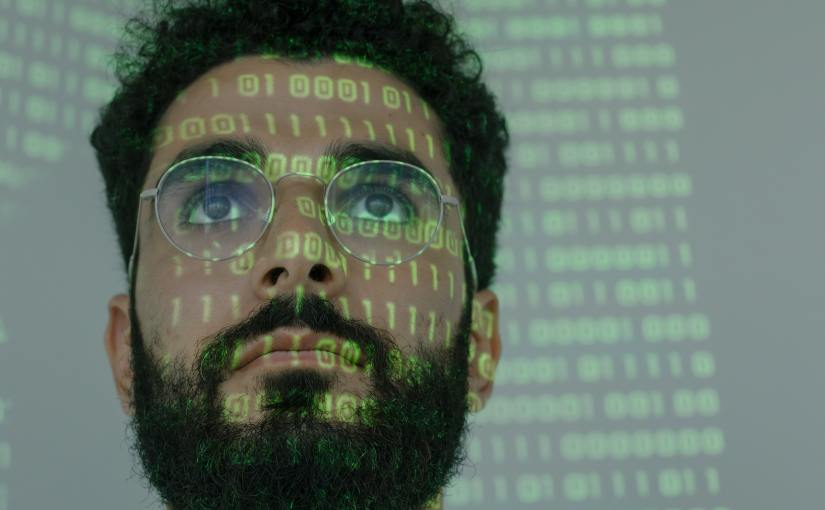
Stanford professor on the AI skills gap and the dangers of exponential innovation

ChatGPT and its ilk represent a welcome quantum leap for productivity, according to eminent AI expert professor Erik Brynjolfsson. But he adds that such rapid developments also present a material risk

Erik Brynjolfsson is in great demand. The US professor whose research focuses on the relationship between digital tech and human productivity is nearing the end of a European speaking tour that’s lasted nearly a month. Despite this, he’s showing no signs of fatigue – quite the opposite, in fact. 

Speaking via Zoom as he prepares for his imminent lecture in Oxford, the director of the Digital Economy Lab at the Stanford Institute for Human-Centered AI is enthused by recent “seminal breakthroughs” in the field.

Brynjolfsson’s tour – which has included appearances at the World Economic Forum in Davos and the Institute for the Future of Work in London – is neatly timed, because the recent arrival of ChatGPT on the scene has been capturing human minds, if not yet hearts. 

The large-scale language model, fed 300 billion words by developer OpenAI, caused a sensation with its powerful capabilities, attracting 1 million users within five days of its release in late November 2022. At the end of January, Microsoft’s announcement of a substantial investment in OpenAI “to accelerate AI breakthroughs” generated yet more headlines. 

ChatGPT’s popularity is likely to trigger an avalanche of similarly extraordinary AI tools, Brynjolfsson predicts, with a possible economic value extending to “trillions of dollars”. But he adds that proper safeguards and a better understanding of how AI can augment – not replace – jobs are urgently required.

What’s next in AI?

“There have been some amazing, seminal breakthroughs in AI lately that are advancing the frontier rapidly,” Brynjolfsson says. “Everyone’s playing with ChatGPT, but this is just part of a larger class of ‘foundation models’ that is becoming very important.”

He points to the image generator DALL-E (another OpenAI creation) and lists similar tools designed for music, coding and more. Such advances are comparable to that of deep learning, which enabled significant leaps in object recognition a decade ago. 

“There’s been a quantum improvement in the past couple of years as these foundational models have been introduced more widely. And this is just the first wave,” Brynjolfsson says. “The folks working on them tell me that there’s far more in the pipeline that we’ll be hearing about in the coming weeks.”

As much as I’m blown away by these technologies, the bottleneck is our human response

When pushed for examples of advances that could shape the future of work, he reveals that Generative Pre-trained Transformer 3 (GPT-3) – the language model that uses deep learning to emulate human writing – will be superseded by GPT-4 “within weeks. This is a ‘phased change of improvement’ compared with the last one, but it’ll be even more capable of solving all sorts of problems.” 

Elsewhere, great strides are being made with “multi-agent systems” designed to enable more effective interactions between AI and humans. In effect, AI tech will gain the social skills required to cooperate and negotiate with other systems and their users. 

“This development is opening up a whole space of new capabilities,” Brynjolfsson declares.

The widening AI skills gap

As thrilling as these pioneering tools may sound, the seemingly exponential rate of innovation presents some dangers, he warns. 

“AI is no longer a laboratory curiosity or something you see in sci-fi movies,” Brynjolfsson says. “It can benefit almost every company. But governments and other organisations haven’t been keeping up with developments – and our skills haven’t either. The gap between our capabilities and what the technology enables and demands has widened. I think that gap will be where most of the big challenges – and opportunities – for society lie over the next decade or so.”

Brynjolfsson, who studied applied maths and decision sciences at Harvard in the 1980s, started in his role at Stanford in July 2020 with the express aim of tackling some of these challenges. 

“We created the Digital Economy Lab because, as much as I’m blown away by these technologies, the bottleneck is our human response,” he says. “What will we do about the economy, jobs and ethics? How will we transform organisations that aren’t changing nearly fast enough? I want to speed up our response.”

Brynjolfsson spoke passionately about this subject at Davos in a session entitled “AI and white-collar jobs”. In it, he advised companies to adopt technology in a controlled manner. Offering a historical analogy, he pointed out that, when electricity infrastructure became available about a century ago, it took at least three decades for most firms to fully realise the productivity gain it offered because they first needed to revamp their workplaces to make the best use of it. 

“We’re in a similar period with AI,” Brynjolfsson told delegates. “What AI is doing is affecting job quality and how we do the work. So we must address to what extent we keep humans in the loop rather than focus on driving down wages.”

Why AI will create winners and losers 

The risk of technology racing too far ahead of humanity for comfort is a familiar topic for Brynjolfsson. In both Race Against the Machine (2011) and The Second Machine Age (2014), he and his co-author, MIT scientist Andrew McAfee, called for greater efforts to update organisations, processes and skills. 

AI can benefit almost every company. But governments and other organisations haven’t been keeping up with developments – and our skills haven’t either

How would he assess the current situation? “When we wrote those books, we were optimistic about the pace of technological change and pessimistic about our ability to adapt,” Brynjolfsson says. “It turns out that we weren’t optimistic enough about the technology or pessimistic enough about our institutions and skills.”

In fact, the surprising acceleration of AI means that the “timeline for when we’ll have artificial general intelligence” should be shortened by decades, he argues. “AGI will be able to do most of the things that humans can. Some predicted that this would be achieved by the 2060s, but now people are talking about the 2030s or even earlier.”

Given the breakneck speed of developments, how many occupations are at risk of obsolescence through automation? 

Brynjolfsson concedes that the range of roles affected is looking “much broader than earlier thought. There will be winners and losers. Jobs will be enhanced in many cases, but some will be eliminated. Routine work will become increasingly automated – and there will also be a flourishing of fantastic creativity. If we use these tools correctly, there will be positive disruption. If we don’t, inequality could deepen, further concentrating wealth and political power.” 

How to apply AI in the workplace

How, then, should businesses integrate AI into their operations? First, they must avoid what Brynjolfsson has labelled the Turing trap

“One of the biggest misconceptions about AI – especially among AI researchers, by the way – is that it needs to do everything that humans do and replace them to be effective,” he explains, arguing that the famous test for machine intelligence, proposed by Alan Turing in 1950, is “an inspiring but misguided vision”.

Brynjolfsson contends that a “mindset shift” at all levels – from scientists and policy-makers to employers and workers – is required to harness AI’s power to shape society for good. “We should ask: ‘What do we want these powerful tools for? And how can we use them to achieve our goals?’ The tools don’t decide; we decide.”

One of the biggest misconceptions about AI is that it needs to do everything that humans do and replace them

He adds that many business leaders have the wrong attitude to applying new tech in general and AI in particular. This amounts to a “pernicious problem”. 

To illustrate this, he cites Waymo’s experiments with self-driving vehicles: “These work 99.9% of the time, but there is a human safety driver overseeing the system and a second safety driver in case the first one falls asleep. People watching each other is not the right path to driverless cars.”

Brynjolfsson commends an alternative route, which has been taken by the Toyota Research Institute, among others. When he was in Davos, the institute’s CEO, Dr Gill Pratt “told me how his team has flipped things around so that the autonomous system is used as the guardian angel. Creating a self-driving car that works in all possible conditions is tough, but humans can handle those exceptions.” 

With a person making most decisions in the driving seat, the AI intervenes “occasionally – for instance, when there’s a looming accident. I think this is a good model, not only for self-driving cars, but for many other applications where humans and machines work together.” 

For similar reasons, Brynjolfsson lauds Cresta, a provider of AI systems for customer contact centres. Its products keep humans “at the forefront” of operations instead of chatbots, whose apparent Turing test failures continue to frustrate most people who deal with them. 

“The AI gives them suggestions about what to mention to customers,” he says. “This system does dramatically better in terms of both productivity and customer satisfaction. It closes the skills gap too.”

Does Brynjolfsson have a final message for business leaders before he heads off to give his next lecture? “We need to catch up and keep control of these technologies,” he says. “If we do that, I think the next 10 years will be the best decade we’ve ever had on this planet.”

This article was first published by Raconteur, as part of the Future of Work special report in The Times, in February 2023


Hybrid working and the trust challenge

Some of the hurdles around identity and productivity have been cleared, but no one has the perfect solution, according to a roundtable of experts

In early 2023, three years since the start of the coronavirus pandemic that spurred work trends already trotting along, the pace of change continues at a frightening gallop. It’s been a bumpy ride for both employer and employee. 

The hurdles of trust and security still loom large and must be cleared to improve Britain’s productivity growth, which has lagged behind G7 peers since the last financial crash. 

The most recent Office for National Statistics, corrected in late January, calculated Britain’s average output per hour or per worker – a vital metric to gauge living standards and future wages – contracted 0.3% between 2020 and 2021 when the economy struggled under pandemic restrictions. Only France’s 0.5% decline was worse during the same period.

Last September, a Microsoft report, which surveyed 20,000 people across 11 countries, discerned a “productivity paranoia” suffered by leaders who worried their workers were underperforming despite increasing hours and meetings. While 87% of employees felt they were productive, 85% of senior leaders said the shift to hybrid work made it challenging to have confidence in staff performance.

However, a new study suggests a corner has been turned on trust, at least in the UK. The research, launched in late January by global identity and access management company Okta, found that of the 500-plus business leaders quizzed, 85% believed remote or hybrid working is not causing disappointing workforce output.

As encouraging as these results are for hybrid working evangelists, doubts linger, says Rachel Phillips, Okta’s vice president in the UK and Ireland. She points out that while 61% of the business leaders surveyed believe that remote workers are more productive, 15% still think that they are less so.

Measuring success

Karen Jacks, chief technology officer at Bird & Bird, whose 1,400 lawyers operate in 31 countries, identifies two critical problems with hybrid working, trust and productivity. She notes that measuring hybrid working output and performance in some industries is tricky, given there are intangible factors, such as brainstorming sessions or virtual check-in meetings. 

“Because we are a professional services organisation, and lawyers record what they are working on, it’s straightforward to monitor productivity,” she says. Notably, throughout the pandemic, Bird & Bird’s productivity level increased. “It continues to be at a high level, with people encouraged to come into the office around 50% of their time.”

Chanuka Weerasinghe, chief technology officer at Hawes & Curtis and engyin.com, agrees that determining either employee engagement or output for a hybrid workforce is complex for many reasons. “There are certain things we can’t measure, or they are hard to measure,” he concedes. “Also, we could use monitoring software, but it is intrusive, and we don’t want to come across like we are spying on employees.”

Nefarious actors might be snooping, though. From a security perspective, hybrid working has multiplied attack vectors, says Andrew Tsonchev, cybersecurity firm Darktrace’s vice president of technology. But most organisations have responded to limited potential cyber threats. “It feels like we are now in a more stable era of hybrid working, and all of the significant changes that needed to happen have been made,” he says. 

Regarding identity, Tsonchev is pleased that many businesses have, finally, embraced a zero trust model – “never trust, always verify” – to cybersecurity. “The conditions of hybrid work make concepts like zero trust non-optional, which is good,” he adds.

Cultural change

Another trust-related issue could be cultural for some organisations, says Jacks. If some leaders are sniffy about people working away from the office, more fool them. “We make sure our people know we trust them,” she says. “People used to say ‘oh, you’re working from home’ with quotation marks, but I think that attitude is changing.”

This insight chimes with Becky Wender, global head of culture, talent and learning at global cosmetics firm Avon. “At times, we have tried to legislate for everyone being bad as opposed to trusting people to do the right thing and then dealing with those who don’t,” she says.

Key to a culture of trust is connection and communication. Wender began her role in April 2020, at the start of the first lockdown. She turned to the company’s learning experience platform, Fuse, to ensure the workforce stayed connected. “Leaders ran events, and we had things like making hand sanitiser with our kids,” she says. 

Buoyed by that early triumph, Wender created a “two-day virtual career festival” attended by 3,400 associates from the 39 markets in which Avon operates. “There were 69 learning sessions, and a huge success,” she says. “Now we are back in the office more, the question is: how do we use technology to help all our markets stay connected?” 

Connection problem

Andy Hepworth, future of work transformation director at consulting and digital services company Sopra Steria, argues that flipping things around and asking employees what’s working, and what’s not, helps reconnect and reinvigorate a hybrid workforce. 

“We invited everyone within the UK business to participate in workshops, one-to-one meetings, questionnaires, or just to drop suggestions through,” he says. “We collated and meticulously catalogued it all to assess where we were as a company. We looked at where the hotspots were and what we needed to prioritise to improve the lives of our colleagues because a one-size-fits-all approach to hybrid doesn’t work.”

Hepworth points out that those earlier on in their careers are often especially keen to be in the office to learn “through osmosis” from more experienced colleagues. But he stresses that managers and leaders have an essential role to play here. “There is a dependency on reciprocation; otherwise, people coming in to learn will be stuck in a vacuum,” he warns.

Again, the solution lies in reframing the potential issue. Hence, lots of in-person events are organised at the Sopra Steria offices around what Hepworth neatly calls the “three Cs”. He explains: “We get together to connect, collaborate or congratulate.”

Similarly, Okta’s Phillips makes herself available to her team members for ask-me-anything sessions and encourages in-office get-togethers for “moments that matter”. She is conscious of how some young or vulnerable employees might struggle without physical interaction with colleagues. 

Additionally, Phillips references Gartner data that reveals the bonds between remote-working teams have strengthened, but relationships outside that bubble are weaker due to infrequent contact. “We are siloed by video-conferencing and tend to engage with the same people daily.” 

Phillips adds: “Hybrid working is not going away, so how do we enable people within that environment to be as impactful as possible?”

No one has the perfect answer, yet.

This article was first published by Raconteur, as part of the Future of Work special report in The Times, in February 2023

‘Protirement’ is trending again – but ageism remains rife

In late January, Jeremy Hunt, chancellor of the U.K. government, invoked the spirit of Uncle Sam, who had implored Americans to enroll for World War I action over a century earlier. “I want YOU for the U.S. Army,” read the caption on the four million recruitment posters – featuring the scowling, pointing, bearded fictitious character – plastered across the country. 

With, at the last count, 1.1 million job vacancies to fill in the U.K., Hunt adopted a similarly commanding tone, this time to persuade troops to rejoin the workforce and ease the war for talent. “To those who retired early after the pandemic or haven’t found the right role after furlough, I say ‘Britain needs you,’” he said. “We will look at the conditions necessary to make work worth your while.”

This plea was part of a campaign to encourage the 630,000 people who left the U.K. workforce between 2019 and 2022 – so-called “protirees” – to return to employment and help the country fight off the recession.

However, more recent research from the Chartered Management Institute (CMI) that surveyed more than 1,000 managers working in U.K. businesses and public services indicated firms are overlooking older people and instead opting for younger workers. Indeed, just 42% of respondents were open “to a large extent” to hiring people aged between 50 and 64 years old.

How, then, can protirees who want to return to employment be better welcomed by organizations so that their considerable talents are not squandered? 

The full version of this article was first published on Digiday’s future-of-work platform, WorkLife, in February 2023 – to read the complete piece, please click HERE.

WTF is learning quotient – and why it matters now

In January, at the World Economic Forum in the Swiss Alps, there was much chat about ChatGPT, OpenAI’s large-scale language model that has been fed 300 billion words to help it generate plausible, passable answers to most questions. An Elon Musk tweet summed up the sentiment for many. “It’s a new world. Goodbye homework!”

With generative AI advanced enough to produce eerily-human text responses, and other related foundational models now able to create music, art, and code, is it time to turn the page on traditional education? Further, is rote learning and cramming for exams, only to forget the key facts instantly afterwards, finished? Granted, it has its place for times tables and languages, but what else, really? 

While some may want to defer answering these uncomfortable puzzlers, speakers on oversubscribed AI-related panels at Davos 2023 heralded LQ as the new IQ.

So what exactly is LQ?

It stands for “learning quotient” – as opposed to intelligence quotient. Essentially, it’s a measure of adaptability and one’s desire and ability to update our skills throughout life.

The full version of this article was first published on Digiday’s future-of-work platform, WorkLife, in February 2023 – to read the complete piece, please click HERE.

How the drive to improve employee experience could trigger a ‘data-privacy crisis’

How much personal information would you feel comfortable with your company knowing, even if it improves the working experience? Where is the line? Also, will that boundary be different for your colleagues?

Right now, it’s all a gray area, but it could darken quickly. Because of that fuzziness and subjectivity, it’s a tricky balance to strike for employers. On the one hand, they are being encouraged — if not urged — to dial up personalization to attract and retain top talent. On the other hand, however, with too much information on staff, they might be accused of taking liberties and trespassing on data privacy issues. 

In 2023, organizations are increasingly using emerging technologies — artificial intelligence (AI) assistants, wearables, and so on — to collect more data on employees’ health, family situations, living conditions, and mental health to respond more effectively to their needs. But embracing these technologies has the potential to trigger a “data-privacy crisis,” warned Emily Rose McRae, senior director of management consultancy Gartner’s human resources practice.

Earlier in January, Gartner identified that “as organizations get more personal with employee support, it will create new data risks” as one of the top nine workplace predictions for chief human resource offices this year.

The full version of this article was first published on DigiDay’s future-of-work platform, WorkLife, in January 2023 – to read the complete piece, please click HERE.

Lack of in-office experience shows many Gen Zers don’t know how to behave at work

London-based banking consultant Amy – an alias to which WorkLife agreed to protect her identity in the highly regulated financial services industry – has managed dozens of Gen Zers in the last couple of years. She has often been frustrated – and at times flabbergasted – by their attitude towards traditional workplace norms. She offered plenty of examples, but overall it’s the sense of entitlement despite a lack of experience that most sticks in the craw. 

“Many started their careers in lockdown, but they are super-ambitious and expect to be calling the shots. Yet when restrictions lifted, it became clear that they were unsure of the right workplace etiquette,” said Amy, who has worked for numerous banks in a 20-year career.

She explained how there was an agreed expectation for everyone to return to the office for one specific day a week to improve face-to-face connection and collaboration. However, Gen Zers would frequently not show up for the brainstorming sessions. “I’d have to call them to see if they were coming in, and they’d say: ‘No, I’m working from home.’”

Amy’s insights tally with recent Gartner data that suggests the rise in remote and hybrid working has meant that many career starters have committed faux pas due to having few in-person experiences. Expressly, this lack of face-to-face time in the office has limited the chances to observe workplace norms or determine what is appropriate and effective within their organizations. 

The full version of this article was first published on DigiDay’s future-of-work platform, WorkLife, in January 2023 – to read the complete piece, please click HERE.

The future of work is not evenly distributed – how employers can prepare

“The future is already here; it’s just not evenly distributed.” U.S.-Canadian writer William Gibson, the father of the cyberpunk sub-genre of science fiction, has had his finger on the pulse of breakthrough innovations for decades. However, in early 2023, this perceptive comment is especially apt for the working world, which is going through the most seismic transformation in our history.

The digital revolution, accelerated by the pandemic fallout, presents challenges and opportunities. For instance, technology has enabled remote working. And yet, employees are clocking up more hours when not in the office, and loneliness that harms mental health is becoming a worrying side effect. Plus, the number of meetings has also shot up, and often people mistake being busy for being productive.

Moreover, while workers demand more time and location flexibility, where does that leave industries in which it isn’t feasible? It’s all very well for those in desk-based jobs to use tech to improve their work-life balance, yet around 80% of global workers are “deskless.” They need to be physically present to do their jobs. 

To help navigate the journey ahead, WorkLife selected nine recent statistics to show the direction of travel, identify the most prominent likely obstacles, and offer advice from experts on how employers can overcome them. In this article, we have included four, and the remaining five will be published separately.

The full version of this article was first published on DigiDay’s future-of-work platform, WorkLife, in December 2022 – to read the complete piece, please click HERE.

WTF is social engineering?

Who can you trust online? Given the surging number of global identity thefts, it seems we are nowhere near cautious enough regarding digital interactions.

Neil Smith, partner success manager for EMEA North at cybersecurity firm Norton, said 55% of people in the U.K. admit that they would have no idea what to do if their identity was stolen. “The biggest worry is that it is often ourselves that is the root cause of identity theft,” he added.

Further, Allen Ohanian, chief information security officer of Los Angeles County said that, alarmingly, 67% of us trust people online more than in the physical world.

In early 2022, the World Economic Forum calculated that 95% of cybersecurity incidents occur due to human error. “Almost every time there’s an attack, it’s down to a mistake by or manipulation of people like you and me,” said Jenny Radcliffe, who goes by the moniker “The People Hacker.”

Indeed, 98% of all cyberattacks involve some form of social engineering, cyber security experts Purplesec worked out.

But what exactly is social engineering?

The full version of this article was first published on DigiDay’s future-of-work platform, WorkLife, in December 2022 – to read the complete piece, please click HERE.

Gen Z workers are not tech-savvy in the workplace – and it’s a growing problem

It turns out Gen Zers have a common secret. They’re not as comfortable with new technology as older generations would typically presume.

Sure, they may have grown up with instant access to information and an affinity for digital devices that older generations had to learn. But that has led to a widespread presumption that Gen Zers are therefore innately good with tech. Now, new research is showing that may not be the case at all when it comes to workplace tech. In fact, this presumption from older generations is leading a larger number of young professionals to experience “tech shame,” according to HP’s “Hybrid Work: Are We There Yet?” report, published in late November.

One in 5 of the 18-to-29-year-olds polled in the report, which surveyed 10,000 office workers in 10 markets including the U.S. and U.K., said they felt judged when experiencing technical issues, compared to only one in 25 for those aged 40 years and over. Further, 25% of the former age group would actively avoid participating in a meeting if they thought their tech tools might cause disruption, whereas it was just 6% for the latter cohort.

The full version of this article was first published on DigiDay’s future-of-work platform, WorkLife, in December 2022 – to read the complete piece, please click HERE.

How organizations can spot future workforce skills gaps

With technology-powered change being the only constant in the digital age, what skills will pay the bills in the next five years? Moreover, how could — and should — organizations identify the potential gaps in the near future and train employees or hire accordingly to plug them?

According to global data analyzed by LinkedIn, the skillsets required for jobs have changed by 25% from 2015 to 2021. “This figure is expected to double by 2027,” said Becky Schnauffer, LinkedIn’s head of global clients in EMEA and LATAM. 

These findings were mirrored by a Boston Consulting Group report published in May, which showed that 37% of the top 20 skills requested for the average U.S. job had changed from 2016. But which industries have been impacted the most, and which others are at risk?

The LinkedIn Future of Skills report calculated that since 2015, the top three sectors to have experienced the most significant change in required skillsets are hardware and networking (31%), energy and mining (27%), and construction (26%). 

The full version of this article was first published on DigiDay’s future-of-work platform, WorkLife, in November 2022 – to read the complete piece, please click HERE.

Organizations are reskilling retired elite professional athletes

At the pinnacle of his rugby sevens career, Philip Burgess won an Olympic silver medal representing Great Britain at Rio 2016. “It was a once-in-a-lifetime experience — I felt so lucky to be there, and it was an unreal sense of achievement,” he said.

However, when he hung up his boots seven years later, at age 32, Burgess struggled. Despite captaining England of the sport and being a prominent leader, he found it initially hard to catch a break in his second career. “The transition from sports to business was hard,” he admitted. “I had spent over a decade building skills and working tirelessly, and had gone from being one of the best players in the rugby sevens [a form of rugby that uses seven players] world to feeling like an overqualified graduate.”

A LinkedIn post, in which Burgess wrote that he was actively looking for opportunities, was spotted by a fellow ex-sportsman working at Salesforce. He contacted Burgess, who in time became an account executive for the software firm. “He and a group of fellow ex-athletes at Salesforce supported me to transition — we have become a community, and it has helped to build the foundation for Athleteforce,” said Burgess.

The full version of this article was first published on DigiDay’s future-of-work platform, WorkLife, in November 2022 – to read the complete piece, please click HERE.

Is long-term employee retention a losing battle?

Is the concept of a job for life dead?

The mass reassessment of careers people have undergone over the past few years – described by many as the Great Resignation, by others as the Great Reshufffle – is showing no signs of calming down. In fact, in the U.K., the trend seems to be accelerating.

More than 6.5 million people (20% of the U.K. workforce) are expected to quit their job in the next 12 months, according to estimates from the Charted Institute of Personnel and Development (CIPD), which published the data in June after surveying more than 6,000 workers. That’s up from 2021, when 16% of the U.K. workforce said they plan to quit within a year, according to the CIPD. Meanwhile, in March Microsoft’s global Work Trend Index found that 52% of Gen Zers and Millennials — the two generations that represent the vast majority of the workforce — were likely to consider changing jobs within the following year.

Tania Garrett, chief people officer at Unit4, a global cloud software provider for services companies, argued that it is time for organizations to get real — they are no longer recruiting people for the long term. Instead, they should embrace this reality, and stop creating rewards that encourage more extended service from employees. 

This article was first published on DigiDay’s future-of-work platform, WorkLife, in October 2022 – to read the complete piece, please click HERE.

The Great Disconnection: People no longer recognize their workplace

Modern workplaces have an employee-disconnection problem. And it’s costing businesses a fortune.

Two-thirds of 2,000 white-collar workers in the U.K. feel disengaged from their workplace, while 53% of 3,000 U.S. workers polled in the same survey, recently published by recruitment firm Robert Walters, said they also feel disengaged. The firm calculated that the cost of that workplace disengagement to the U.K.’s already shaky economy will be £340 billion ($386 billion) this year alone.

It’s a strong indicator that despite having moved past the worst peaks of the coronavirus pandemic, and the long period of enforced remote working that followed, the shift to more flexible-working policies hasn’t solved the issue either. At least, not yet.

More than two years later, it seems that the employee disconnection can is still being kicked down the road. That’s not for lack of trying.

Employers everywhere have brought in new working measures at every turn – whether it’s hybrid models, work-from-anywhere policies, flexible hours, four-day weeks, or even full five-day returns to the office. You name it, it’s being tested. But could it be that there has been so much change that that in itself is adding to the confusion and disconnection? 

This article was first published on DigiDay’s future-of-work platform, WorkLife, in October 2022 – to read the complete piece, please click HERE.

Are employers creating a lost generation of managers?

For all the benefits of flexible working, a stark question remains unanswered: How will no or little in-office experience affect our young and future managers?

To some, the opportunities to learn through osmosis, either in the office or at work socials, are already dwindling. If left unchecked, it could potentially lead to a lost generation of young managers in knowledge-worker industries, they think.

Perhaps employers deserve some sympathy. With the war for talent raging and a gloomy economic outlook, investment in developing young workers could be costly with little return.

Maybe it makes better sense to work backward: What skills will the managers of tomorrow require? UJJI research identified the five skill areas for good managers in the world of modern work as communication, problem-solving, adaptability, leadership, and productivity.

How can these skills be honed if workplace learning is limited?

This article was first published on DigiDay’s future-of-work platform, WorkLife, in September 2022 – to read the complete piece, please click HERE.

How to fix the metaverse’s sexual harassment problem (and make ‘metawork’ a reality)

Since Meta – the tech titan formerly known as Facebook – revealed last year that it would invest heavily in the metaverse, there has been massive enthusiasm about the possibilities of this nascent technology, not least in a future-of-work capacity. 

Indeed, at the end of July, a study by Grand View Research predicted the booming metaverse market will reach $6.8 trillion by 2030. However, alarming recent data indicates that almost two-thirds of adults believe metaverse technologies will enable sexual harassment.

national tracking poll by business-intelligence company Morning Consult, published in March, found that 61% of 4,420 U.S. adults were concerned about this specific subject. Women seem most worried about it, with 41% of female respondents saying they have “major” concerns, compared to 34% of males. 

The same research showed that 79% of adults are worried about the tracking and misuse of personal data in the metaverse. Add in the numerous articles written about people’s personal experiences of harassment in the metaverse, and it’s clear there is a deep-rooted trust issue that business leaders should consider before funding metaverse worlds for employees, whether onboarding staff, hosting events, or meetings.

This article was first published on DigiDay’s future-of-work platform, WorkLife, in August 2022 – to read the complete piece, please click HERE.

How technology can help financial services organisations reach younger generations

Smartphone apps, gamification and proactive support are some of the ways operators can engage the digital natives of today and tomorrow

Baby boomers might have a majority of global wealth today, but tomorrow it will be different. Indeed, by 2030, Europe’s younger generations – millennials and gen z – are due to inherit around £2.3 trillion from their parents, according to recent estimates. How can financial service operators cash in on this great wealth transfer?

In 2022, client-facing teams operating in the financial service industry can – and must – leverage technology to build meaningful relationships with younger generations who are digital natives. 

Indeed, over a third (34%) of 18- to 34-year-olds would choose a different financial services provider if they were expected to visit a branch in person, according to VMware’s recent Digital Frontiers 4.0 report, which surveyed over 2,000 UK consumers. 

Similarly, Marqeta’s 2022 Consumer Money Movement report reveals generational differences. Over half (54%) of gen z – born between 1997 and 2012 – can’t recall their PINs, and more than three-quarters (77%) feel confident enough with contactless payments to leave their wallets at home and just go out with their phones. 

Consider a Chase study from 2021 indicated that 99% of gen z and 98% of Millennials use mobile banking apps, compared to 86.5% of gen x and 69.5% of Boomers.

“Younger markets live on their smartphones,” says Ben Johnson, CEO of digital transformation consultants BML Digital. “Everything needs to be available via the app, and the mobile experience has to match the ease of something like Snapchat or Pinterest.” 

Prakash Pattni, managing director of financial services digital transformation in EMEA for IBM, agrees. “Ultimately, younger consumers want to access their accounts, lock missing cards, make virtual payments and transfer money to others swiftly and securely,” he says. “Financial institutions must develop easy-to-use applications with superior uptime that can easily integrate with other apps.”

Gamification and proactive support

How can financial services operators generate trust with younger generations? “Technology is the answer,” posits Somya Patnaik, a market product manager specialising in real-time payments at ACI Worldwide. “They must bring more innovative features that will engage young people and improve their consumer experience.”

Gamification in financial services is winning a lot of trust among young consumers, suggests Patnaik. So, for instance, insurance companies might build an app that tracks fitness activities against pre-agreed goals, which, if hit, unlock rewards like cheaper insurance or gym memberships. This insight chimes with George Ioannou, managing partner at design experience company Foolproof. Learning patterns around digital activities differ according to age. Where the older generations turn to Facebook for information, younger generations are growing up using gaming platforms such as Fortnite and Discord servers. 

“This may speak to using gamified models of education within financial applications to facilitate learning, perhaps even in a sandbox, and therefore a safe environment,” says Ioannou. 

Ioannou argues that technology enables financial services organisations to become more proactive in supporting customers, and younger generations want more advice about money matters now than ever. “Operators need to step up and actively educate their users,” he adds. 

Research from Personetics, a global fintech, published at the end of June shows in the past three months only 22% of UK customers feel their primary bank has communicated with them about dealing with the cost-of-living crisis. Further, over half (53%) would consider moving banks if a rival offered better money management support and personalised advice.

Reliable source of truth 

Financial education is now starting young. NatWest is currently offering a children’s pocket-money application for free to customers. “Last year, we acquired Rooster Money, a children’s prepaid debit card and app,” explains Fay Wood, head of acquisition and digital security authentication. “We wanted to do more in the space for children.”  

She also stresses the importance of working with expert partners to provide access to apps at speed. “Five or ten years ago, we would have built something like Rooster Money in-house.”

Alongside proactive apps, social media is an invaluable tool for sales and marketing teams in the financial service industry looking to use tech to appeal to younger customers. Here, states Amanda Le Brocq, head of strategy at Marcus by Goldman Sachs, is where organisations can add value. 

“Young people are increasingly getting financial information from social media platforms such as TikTok and Instagram,” she says. “But with so much content available, people can easily get the wrong information. Today, it is essential that financial services companies provide a compelling digital offering, so young people can consume content online and know it is coming from a reliable source.”

Operators wanting to engage younger customers must look further and deeper, says Meghana Nile, insurance CTO at Fujitsu. “Social media and peers influence a lot of the purchasing decisions, meaning financial services companies that have a reputation for having ethical and sustainable practices will attract buyers from gen z, who in 2030 will be the dominant purchasing demographic.”

This article was first published in Raconteur’s The new financial services client experience insights report, sponsored by Seismic, in August 2022

Is retirement dead?

The age-old concept of a three-stage life – education, employment, and retirement – needs rethinking. To make the most of the opportunity requires a shift in mindset and a change in investment strategy

Ageing was much simpler in the olden days. For centuries – if not millennia – most people’s lives have been accomplished in three stages: learning, which leads to employment, then retirement. 

But in 2022, largely thanks to the wonders of technology and improved healthcare, the traditional notion of old age is evolving. As a result, life is all the more thrilling. Now, the supposed retirement age could – and should – be embraced as an additional phase of life, one of newfound freedoms, whether hobbies, businesses or passions. 

Retirement is no longer a period of winding down or dependence. On the contrary, the concept will soon expire, contends Andrew Scott, a world-leading expert on longevity and professor of economics at London Business School. 

There’s no need for pipe and slippers in the 21st century. The latest Office for National Statistics (ONS) data shows the number of people in the UK aged 85 and over was a record 1.7 million in 2020. That amount is projected to almost double to 3.1 million by 2045. 

Additionally, the ONS calculates that life expectancy at birth in 2020 was 87.3 years for males and 90.2 years for females. Consider, at the start of the 1980s these figures were 70.8 and 76.8 years, respectively.

Rising life expectancy and population age go hand in hand. And this trend is global: the world population’s median age in 1970 was 21.5 years, and almost 31 in 2020, according to the United Nations Population Division.

Taking actions for a more rewarding retirement

However, to make the most of the possibilities of old age, it’s critical to take action today for a more rewarding tomorrow, urges Scott.

“Now there is a greater risk you may outlive your wealth,” he says, referring to squirrelled-away savings and pension pots that have been the typical source of funds for retirees. “So you need to invest more in your future self. One of those key investments is finance, but health, relationships, and engagement – developing good health, skills and relationships all play important parts. Any financial plan, though, should be dictated around your life plan.”

In 2016, The 100-Year Life – a book authored by Scott and Lynda Gratton, a professor of management practice at London Business School – was published. And while it’s often said “age is just a number”, could it be that we have been using the wrong measurement all along?

“It was randomly decided that 65 is ‘old’,” continues Scott, “and the older I get – I’m in my 50s – the more I dislike that as a starting point. While more people live for longer, that doesn’t consider changes in how we age, either our health or our behaviour.”

The average Brit has never been so old but never had so long left to live

He believes how we define old age “requires a rethink because traditional age, measured chronologically, is confusing” and often misleading regarding life expectancy. “We need to focus on biological age rather than chronological age,” says Scott. “And we also need to consider prospective age more – that is, the number of years we have left to live. For instance, the average Brit has never been so old but never had so long left to live – this is how we have to adjust our thinking.”

Clearly, good health and good wealth are mutually reinforcing for a life lived as long and as fully as possible. But does this require both a shift in mindset and a change in investment strategy? For instance, Tony Müdd, divisional director for St. James’s Place development and technical consultancy, suggests pension schemes are a good idea, but that you can tailor contributions to match your earning potential. In your 50s, you are likely to be in a better financial position than in your 20s, so why not bump up your input?

Thinking beyond pensions

And while a pension will provide a decent chunk of income for many people in later life, it’s far from the only source. Müdd stresses the benefits of a diversified portfolio of tax-efficient investments, maybe in property or other assets.

He notes, though, that while a later life packed with adventure, excitement and new opportunities is the ultimate goal for most of us, the reality is that dream can be killed by poor health. Müdd worries people often take a “head-in-the-sand approach” to monitoring their health. He points out that a quarter of people in the UK over the age of 70 will require lengthy healthcare.

“It’s a subject that people don’t like to think about, but long-term care can be very expensive, costing hundreds of thousands of pounds,” he warns. “Lots of people in the UK are sleepwalking into a position where they will not get the level of care they think they should receive from the local authority, so will have to pay for it themselves. That could drain their children’s inheritance. You can take out insurance, but people tend not to do that. The only way, then, to deal with long-term care is effectively to save money.”

Moving swiftly away from the gloomy topic of impending death is Michael Clinton, the longtime president and publishing director of Hearst Magazines. His book, ROAR: Into the Second Half of Your Life was recently published, in September 2021. And two years shy of becoming a septuagenarian, he is accelerating, not pumping the brakes. 

He counters the thinking that people have midlife crises but rather “awakenings”. Clinton explains: “At 50, you know a lot about yourself. Now is the time to tap into your awakened self and move forward. If you are 50 and healthy, you will have a pretty good shot of living to be 90. That will mean second and third careers, new relationships and lifestyles. Suddenly, people are saying: ‘I don’t want to retire; I want to rewire. I want to wind up, not wind down.’”

“Retirement is no longer seen as a binary outcome – namely, you don’t stop working when you retire now,” Scott says. “Retirement used to be like a cold shower, and now people want more of a warm bath. Supposed retirees often work part time with their existing employer or start up something themselves. Also, within two years of retiring, one in five people ‘un-retire’.”

He concludes by predicting the demise of retirement. “If you think about the 100-year life, there must be a movement away from a three-stage life – education, work, retirement – to a multistage life.” Scott adds: “Before long, we will reach the point where the concept of retirement itself – if you define it as the permanent cessation of work – will be retired.”

This article was first published in Raconteur’s Wealth & Asset Management report in May 2022

EY and others are offering employees MBAs and masters degrees – but is it a good investment?

When global accountancy firm EY discovered, through an internal survey, that almost three-quarters (74%) of its 312,000 staff in over 150 countries wanted to “participate in activities that help communities and the environment,” action was swiftly taken.

In late February, a unique course was launched: the EY Masters in Sustainability, in association with Hult International Business School in the U.K. The best part? It is free for all EY employees, regardless of rank, tenure or location.

The online-only learning program, which students can work through at their own pace, is designed to expand sustainability and climate literacy among EY workers. The hope is that these newly acquired skills will accelerate innovative sustainability services for clients.

EY’s budget for staff training is likely to be significantly larger than most other organizations. But as the Great Resignation trend drags on, more companies realize that investing in employee education – even if it’s not directly related to work – is good value. It can boost morale, generate fresh thinking, accelerate innovation, and – possibly most importantly right now – help attract and retain the best people.

This article was first published on DigiDay’s future-of-work platform, WorkLife, in July 2022 – to read the complete piece, please click HERE.

Managers are not being trained to run hybrid teams – and it’s a big problem

Hands up, who really wants to be a manager today, in an uncertain and fast-paced, post-pandemic world, where organizations worldwide are shifting to hybrid working and struggling to attract and retain talent, plus employees are demanding more attention than ever? 

At the heart of operations, trusted to pull the strings, are managers, many of whom are promoted to their positions after excelling in non-management roles. “Managers often have the most accountability to the largest proportion of the workforce,” said Emma Price, head of customer success at management process automation company ActiveOps. “They are responsible for delivering against cost, quality, and service and managing customer outcomes.”

However, many would-be puppet masters are now tied up in additional, complex tasks that weren’t part of their already stacked workload in early 2020. They are crying out to be untangled by their bosses, yet evidence suggests the critical training and tools they require are not being made available. This lack of support is baffling when one considers the cost of the great resignation alongside the truism that “people leave managers, not companies.”

Microsoft’s Work Trend Index, published in March, concluded that “managers feel wedged between leadership and employee expectations.” The survey, featuring responses from over 30,000 workers across 31 markets, revealed that 54% of managers say company leadership is out of touch with employees, and almost three-quarters (74%) lament not having the influence or resources to implement the necessary changes for their teams.

This article was first published on DigiDay’s future-of-work platform, WorkLife, in July 2022 – to read the complete piece, please click HERE.

Professor Scott Galloway on why recruiters should stop ‘fetishising’ elite universities

While walking and talking on a videoconferencing call, professor Scott Galloway articulates why higher education organisations in the United States and elsewhere failed during the pandemic, and argues a more inclusive system that embraces a hybrid-teaching model is the only direction to take

Picture credit: Nick Rogers

No interviewee has accused me of being “full of shit” before. So when professor Scott Galloway, speaking to me via a transatlantic videoconferencing call while pacing around his spacious home, smartphone at arm’s length – the walking helps him articulate thoughts, he says, but the jerky, facial profile view is unorthodox and intense – labels me in those profane terms, I’m shocked.

And yet, given the 57-year old’s venerated standing as a pioneering thinker and controversial truth-speaker, his candour should have come as no surprise. Indeed, after completing an MBA from the UC Berkeley Haas School of Business in 1992, Galloway has, one way or another, been calling out BS, predicting future trends, and rallying against socially damaging systems and organisations.

First, he founded Prophet, a brand and marketing consultancy firm. Then, five years later, in 1997, RedEnvelope, one of the world’s first e-commerce websites, was launched. Along the way, the entrepreneurial Galloway has also established a digital intelligence company and an activist hedge fund, among other ventures. More recently, there have been influential books, podcasts, and digital newsletters, and, in 2019, he opened an online higher education startup, Section4.

Additionally, since 2002, Galloway has been clinical professor of marketing at New York University Stern School of Business. There, ‘Prof G’ teaches MBA students about brand management and digital marketing. A considerable amount of his research arrows in on the ‘Big Four’ – Apple, Facebook, Google and Amazon – and specifically how the ambition and rapaciousness of those tech titans have triggered a seismic social and economic change. 

Unquestionably, business leaders can learn a lot from Galloway’s forceful opinions and predictions. Today I’m seeking his latest thoughts on what’s wrong with higher education, which – as he wrote in a contentious No Mercy/No Malice newsletter post in April 2021 – is “the most important industry in America. It’s the vaccine against the inequities of capitalism, the lubricant of upward economic mobility, and the midwife of gene therapies and search engines.”

Doubling down on positioning as luxury brands

Now, post-pandemic, he laments a “huge missed opportunity”. The top American universities have largely refused to pursue a hybrid-teaching model that would enable intake numbers to swell, therefore affording more students a better education and greater career opportunities. 

“The most disappointing thing is the elite universities have decided to double down on their luxury positioning, and constrained supply,” Galloway says. “If they embraced technology, they could put half of their sessions online, and theoretically multiply supply overnight. However, they found out early on that online learning looks and smells the same, meaning differentiation doesn’t exist.”

He posits that American elite universities are “the ultimate luxury brand for wealthy people in China, the Gulf, and Europe”, who will pay massive sums of money to boost their children’s chances of attending. “By creating the illusion that an association with a brand – such as Bottega Veneta, Ferrari, or Tequila Ley – makes someone a better, more successful person, you can make irrational margins. The strongest brands in the world are not Amazon or Apple, but the likes of Oxford, Stanford, or MIT, because nobody pays $300 million to put their name on the side of Apple’s headquarters.”

These munificent endowments have led to what Galloway calls the ‘Rolexification’ of some university campuses, with higher wages attracting supposedly better teaching staff and no expense spared on facilities. Further, to maintain that exclusivity, admission rates have eroded in recent years, he contends. “When I applied to the University of California, Los Angeles (UCLA), in the 1980s, the acceptance rate was 74%, and this year it is likely to be around 6%,” Galloway continues. “I thought universities would leverage their brands, resources and technology during the pandemic to soak up the market. But I could not have been more wrong.”

He points out a worrying knock-on effect. “Now, there is so much overflow from people rejected from elite universities that the second-tier universities are demanding similar prices, effectively charging a Mercedes price for a Hyundai.”

Paying a heavy price for university education

Galloway, who donates all of his NYU salary back to the university and has contributed millions of dollars to both NYU and Berkeley for immigrant student fellowships, is gathering pace, physically and mentally. His side-on head lurches from left to right on the videoconferencing screen, the background a blur. “Here’s the thing,” he says, turning slightly to his smartphone camera, mid-stride, “these universities are technically private organisations, but they are non-profits. And non-profits usually have a societal, public-serving mission. 

“I would argue that these companies no longer have a public mission because they are not growing their first-year-student intake despite the money coming in. Therefore, they should lose their non-profit status. It’s like a homeless shelter rejecting 90% of people because it’s decided to constrain the number of beds despite having the resources and skills to accommodate everyone.”

Pleasingly, with greater diversity increasingly prioritised by business leaders, a growing list of organisations, in the United States and elsewhere, have identified the modern problem with a university degree – most graduates will be laden with debt and need training up anyway – and sought alternative routes to tap into a much larger talent pool.

“The most significant thing to happen in higher education in recent years didn’t actually happen in higher education,” says Galloway. “Companies ranging from Google to Apollo, the big private equity firm, to Xerox have said: ‘We’re going to carve out a significant number of job positions for people who don’t have traditional college certification.’

“Encouragingly, a lot of great companies have recognised that if they’re only going to recruit at elite universities they have effectively decided they are not, for example, going to hire single mothers – there just aren’t a lot of single mothers collecting diplomas and walking across the stage at Harvard or MIT.”

Urging business leaders to be more open-minded about their approach to hiring, Galloway admits that he, too, was “guilty of fetishising and recruiting from the elite universities” early in his career. “We loved it, it made us feel good about ourselves. But as long as the best organisations continue to fetishise those places we are never going to break this cycle.”

Stunned to silence

At this juncture in the interview, I comment that I’m unconvinced my two young children will attend university. Suddenly, Galloway stops walking and looks directly at his phone screen. He calmly asks a series of questions, including whether I’m married and whether my wife and I attended university. Having answered “yes” to his queries, he raises the volume and picks up the pace again.

“OK,” Galloway starts, “so you’re full of shit. Both of your kids are going to university. While you pretend to be thinking avant-garde, the odds are that by the time they start secondary school, you will recognise the power of certification and begin creating landing lights and guardrails, putting your kids on track to university.”

Seeing I have been stunned to silence, he goes on. “I think you are expressing the general sentiment that university is slowly but surely not the return on investment it once was. My seven years of college education cost $7,000, so it was a no-brainer for me, the son of a single immigrant mother. It meant an unremarkable kid gained a remarkable certification and has resulted in prosperity and opportunity that I didn’t have access to previously. 

“Now, an outrageous cost is attached to attending an elite university, but the certification that sets you up for life, making you more attractive to potential mates and employers, is still very powerful. And while people like you are starting to do the math, statistics based on your demographic, your profession, and the home environment you will create, your kids are college-bound, full stop.”

Mindset change required by those in charge

Desperate to shift the conversation, I ask whether Section4, which provides “unlimited, MBA-quality online business education”, according to its website, could be a viable and cheaper alternative to university. Certainly, it scores well on the cost and acceptance fronts, says Galloway, offering “courses at 10% of the price of an MBA, and with 1% of the friction, as there is no complicated application process”. 

And although Section4 thrived during the pandemic, when people had more time to study online, he concedes that the platform has become more suited to “mid-career professionals” looking to expand their skills alongside colleagues, virtually. “We’ve transitioned from a B2C to B2B company, and have found, post-pandemic, that universities have become more proprietary about their professors doing talks for us.”

Bracing myself for more Prof G profanity, I pose a final question. What is Galloway’s key message? “There is a larger issue here in the US and Europe about whether we want to continue to embrace this rejectionist – almost nimbyist – mindset,” he says. “Regulators and university leaders need to start planting trees the shade of which we might not enjoy. Admission rates must be expanded, as must housing opportunities for young people.”

Turning to the camera once more and slowing his walk, he adds: “My generation has decided that it’s awesome not to provide younger people with the opportunities we had because it makes our assets, our houses, our diplomas, our shares all more valuable. It is bad for society and reflects poorly on the generation in charge. What’s happening in higher education is just a manifestation of that selfish mindset.” 

Business leaders would do well to heed Galloway’s warning.

A (sanitised) version of this article was published by Raconteur in July 2022 – you can read that here