Blog

Unpacking which harmful work practices the pandemic exposed, and which are — hopefully — banished for good

It’s crass to argue “the pandemic has been good for humanity.” It has, though, effectively taken an X-ray of society and highlighted where sickness lies. And, most agree, much remedial work is required to restore total health.

Whether acute areas are treated — or, indeed, treatable — is a matter for incumbent politicians and business leaders. In this article, we turned to the latter cohort to reflect on what harmful work practices were exposed by the coronavirus crisis and how they’ve evolved as a result, for the better.

This article was first published on DigiDay’s WorkLife platform in February 2022 – to continue reading please click here.

How the court of public opinion is striking fear into businesses

Consumers have gained tremendous power over businesses that meet their disapproval. Many firms should have more to fear from concerted activism on social media than they do from a regulator’s knuckle-rap

The closing lyrics of Beyond the Son, a song by Swedish electro-jazz duo Koop, offer the perfect sign-off for any cordial correspondence: “May the winds be at your back, the dice be kind and the gods turn the occasional blind eye.” 

The track was released in 2006, the year of Twitter’s birth. To brands, the millions of consumers who use the social network have become the gods who never turn a blind eye. They constantly demand transparency from organisations and are incredibly quick to upbraid any firm or sector whose behaviour falls short of their expectations. 

If the online clamour isn’t handled adroitly by those on the receiving end, it can soon turn into hysteria. At that point, the traditional media will often notice and pile on too. Eventually, if the furore is sufficient, an industry regulator may get involved. But the serious reputational damage will already have been done by then. Boohoo, Nestlé and Zara are among a number of brands that have been shamed on social media for various reasons and boycotted by consumers in recent years.

“Social media is vital in bringing bad business practices to a wider audience, including regulators,” says Rick Evans, strategy director at marketing company R/GA London. “Because social media allows the impact of consumer action to be amplified, companies will often change before the slow wheels of regulation and legislation move.”

Evans cites the case of buy-now-pay-later (BNPL) finance as an example of how public pressure can help to trigger legislative action. The £2.7bn sector had attracted a storm of criticism on social media for failing to prevent vulnerable consumers from running up high levels of debt. In October 2021, the Treasury published a consultation paper setting out its plans to impose tight regulations on BNPL credit agreements and put the Financial Conduct Authority (FCA) in control of the UK market.

Social media is vital in bringing bad business practices to a wider audience, including regulators

Abbie Morris is the co-founder and CEO of Compare Ethics, a search platform that helps eco-conscious consumers to find brands that match their values. She is pleased that the authorities have started catching up with organisations that have been publicly criticised as exponents of so-called greenwashing. Only recently have “governments started to impose tougher legislation following the reaction of consumers”, she says, citing BP’s “Possibilities Everywhere” TV advertising campaign as a recent example.

“The energy firm caused public outrage when it highlighted its solar and wind energy projects, having also revealed that about 96% of its annual spending went on fossil fuels. This prompted authorities to step in and present the case that ‘fossil-fuel companies’ should not be able to buy a good reputation for their climate-damaging products through advertising,” Morris says.

In terms of consumer pressure prompting both companies and legislators to act, advertising is an interesting topic, suggests Vikki Williams, customer experience officer at Starling Bank. “Phishing attacks are on the increase”, she says, “and many of these attempted frauds are generated through ads on social media platforms such as Meta’s Facebook and Instagram, which don’t require financial services providers such as crypto platforms to be regulated by the FCA.”

Starling Bank has recognised that this lack of regulation is problematic, which is why it no longer pays Meta for advertising. Moreover, Williams and her colleagues have lobbied the government to extend its online safety bill to cover fraudulent adverts. They have also spoken to “tech giants directly, to encourage them to follow in Google’s footsteps and rethink their advertising practices”.

Williams has noted “encouraging signs of progress” on both fronts. A recent parliamentary report strongly advised amendments to the draft legislation, while Meta has announced that it will alter its advertising policies and procedures. “It’s proof that businesses and their customers working together can achieve real change,” she says.

The court of public opinion has never been so busy in the digital era. Consumers are more willing than ever to praise good experiences and carp about bad ones on social media. Recent research by reviews platform Feefo indicates that we are 29% more likely to leave feedback about our dealings with businesses than we were before the pandemic. 

Businesses and regulators alike have little choice but to listen as the public become increasingly vociferous about a range of key topics. This year, data privacy will be one such topic, predicts Rafi Azim-Khan, partner at law firm Pillsbury Winthrop Shaw Pittman and leader of its data privacy and cybersecurity practice in Europe. 

“In the digital economy, even if a regulator in one country is slow to respond to a complaint, regulators in other nations will take direct action. For instance, France’s data privacy regulator has recently fined Google and Facebook in the US,” he says. 

We appear to be at the start of a new phase of increased liability for businesses

In addition, more “US-style class actions” are being brought in jurisdictions where previously such cases were rarities. Take Lloyd v Google, for instance, which reached the UK Supreme Court in November. Richard Lloyd, a former director at the Consumers’ Association, brought a representative compensation claim under the Data Protection Act 1998 on behalf of about 4 million people who, he argued, had been affected by a workaround enabling Google to collect browser-generated data from their iPhones in 2011-12. The Supreme Court found unanimously for Google, overturning the Court of Appeal’s landmark decision, but Azim-Khan argues that the direction of travel is now clear.

“The trading and compliance landscape has changed dramatically. Companies must wake up to this fact and respond accordingly,” he says. “When the court gave its verdict, several newspapers and commentators trumpeted that it slammed the door on the possibility of US-style class actions in the UK. But they were missing an important point: even though Google was victorious on the facts before the court on this occasion, the verdict wasn’t a bar to anyone bringing representative actions that take a different approach.”

Stressing the significance of the case, Azim-Khan warns: “The upshot is that businesses are facing a kind of double jeopardy: if regulators don’t punish their missteps, customers could still do so through the courts. We appear to be at the start of a new phase of increased liability for businesses. It’s the calm before the storm – and companies are sailing into dangerous waters.”

Given that the consumer gods are becoming even less inclined to turn a blind eye to any firm that veers off the approved course, businesses will be hoping that they’ll at least have the winds at their backs.

This article was first published in Raconteur’s Future Customer report in February 2022

Mojitos in the metaverse? More companies take to hosting team happy hours via virtual reality headsets

Before the pandemic, U.S. marketing agency The Starr Conspiracy’s employees would enjoy Olympic-like competitions in the office car parks and revel in regular in-person, happy-hour meetings. However, with the fun tap turned off by the coronavirus-induced restrictions, company bosses sensed disconnection and isolation were growing for remote-working staff. So they reached for virtual reality headsets.

Now, all 72 employees have Oculus Quest 2s, which cost about $300 per set, and join in for happy hours and quiz nights in the metaverse. But, aside from the obvious practical issues — it’s hard first to locate and then swig a mojito while wearing an obstructive plastic mask — will employees swallow such activities, and can they genuinely re-engage staff?

This article was first published on DigiDay’s WorkLife platform in February 2022 – to continue reading please click here.

‘Remote managers are killing company culture’: How to avoid common hybrid-working mistakes and engage increasingly disparate workforces

The general consensus in the corporate world is that hybrid working is here to stay. Yet, without a blueprint for what good looks like a period of trial and error is inevitable.

What is more clear: the role of managers will be critical in making whatever model a company adopts a success and ensuring people feel valued enough not to jump ship. So far, it’s not looking good.

This article was first published on DigiDay’s WorkLife platform in February 2022 – to continue reading please click here.

The war for talent is raging: Here’s how to make your LinkedIn profile sparkle

Some call it the Great Resignation. LinkedIn, the world’s largest professional network with almost 800 million users, labels it the Great Reshuffle. Whichever phrase you use, it’s clear: the war for talent is raging like never before. More people than ever, spurred by the coronavirus crisis, are seeking to change their course of life, which translates to curriculum vitae in Latin, fittingly.

“We are experiencing unprecedented change when it comes to work,” Charlotte Davies, careers expert at LinkedIn, told WorkLife. “The coronavirus crisis has driven people to consider what they truly want from work and life. Because of this, companies are rethinking their entire working models, culture, and values.”

While employers must do more to attract and retain skilled workers, employees should update and polish their resumés. That said — perhaps it’s more worthwhile to buff one’s LinkedIn profile, given that research from last April suggests a person is hired via the platform every 15 seconds. 

This article was first published on DigiDay’s WorkLife platform in January 2022 – to continue reading please click here.

‘Cash is no longer king’: the rapid shift to e-commerce

Customer shopping habits have been completely reshaped in recent years, with the boom in global e-commerce market sales predicted to be here to stay. So what can retail businesses do to adapt?

The retail industry has undergone a radical transformation. Even before the Covid pandemic, the shift to e-commerce was completely reshaping how the industry operates and how customers shop.

But lockdowns made these shifts more rapid and seismic, forcing businesses and consumers to shop online at record levels. The pandemic also expedited the adoption of in-store contactless payments. Research from UK Finance, which represents the banking and finance industry, found that 27% of all payments in 2020 were contactless, up from 7% five years ago.

While people have been talking about the shift to e-commerce for decades, we are now getting a much more definitive and enduring sense of what that transformation actually looks like, and what it means for retail businesses.

“Finally, cash is no longer king,” says Jacob Rider, senior programme manager at Projective, a financial business, technology and innovation consulting firm. “Notes and coins went out of widespread use during the pandemic, while payments innovation in the contactless space – and the relaxing of regulations allowing the upping of limits – means digital and contactless payment with card or phone, or wear[able] tech, is now the preferred method of payment for many.”

This means that trust is now of paramount importance – for both retailers and consumers alike. “Businesses are frantically working on recovering from the pandemic disruption, and they need to instil trust,” says Harshna Cayley, managing director, gateway products at Barclaycard Business. “Comfort and security is top of mind for a range of businesses, whether large or small.”

Another effect of these trends is the way physical and online retail shopping have increasingly blended into one experience. However customers choose to shop, they expect the benefits of both approaches. For instance, some might wish to order online and then pick up in store, or they want to try out products in store and then have the purchase fulfilled online.

Alternatively, they might expect their in-person shopping experiences to be more personalised. Retailers have often found themselves having to shapeshift in response to this demand for seamlessness and ease – and key to this are so-called omnichannel payments systems, which allow retailers to offer near-frictionless online payments regardless of whether customers are shopping in person, online or via mobile.

Analysts suggest that the ability to offer frictionless payments is critical in business. “A flawless digital experience is now required to compete,” says Rider. “Brands need to innovate again if they want a customer payments experience advantage.”

For example, regardless of how smoothly a customer progresses on their e-commerce purchasing journey – browsing, comparing and choosing an item – it is likely to come to a shuddering halt if the payment experience is challenging.

According to Barclaycard research, £39bn worth of online shopping baskets have been abandoned since the start of the pandemic. Typical reasons for customers abandoning their cart include delivery fees, concerns about cybersecurity, and the absence of their chosen payment method.

These stats don’t surprise Nick Maynard, head of research at Juniper Research, which specialises in financial and payment technologies. “Generally, friction is the main reason for cart abandonment,” he says. “This can come in many shapes or forms, including the inability to use a preferred payment method, poor design, or onerous security steps.”

Cayley argues that a robust payment gateway is crucial for online retailers. A payment gateway is essentially a communication layer that sends payment information securely from the acquirer to the customer’s issuing bank, and back again. “Barclaycard payment gateway seamlessly connects the customer’s website with our payment system,” she says. “Then it securely captures and encrypts transactions, passing the necessary information between the end customer, the merchant, and the acquiring bank.”

She notes that Barclaycard payment gateway is easy to integrate and scales depending on business needs, adding that it can improve the customer experience while helping companies comply with regulations and meet their legal obligations.

Recent global events have brought into focus other shifts in the e-commerce landscape, such as the entry of more manufacturers into the direct-to-consumer retail space. Likewise, international sales have become an increasingly important way for retailers to plug the gaps left by supply chain problems and the decline of bricks and mortar trading.

In a sense, omnichannel payments are evolving into omnipresent experiences and, as such, we can expect further rapid developments in this space, according to Jeroen Hölscher, head of global payments and cards practice at Capgemini, an IT services and consulting company. “Customers and businesses are undergoing a radical shift to digital wallets, mobile payments, virtual cards and other advanced payment solutions, which offer feature-rich, hyper-personalised digital payments experience,” he says. 

“Already, digital wallets are one of the most preferred payment methods for e-commerce purchases. Global e-commerce market sales are predicted to surpass $7tn (£5tn) by 2024, and digital wallets are expected to account for more than 50% of all the e-commerce payments.”

More recently, e-commerce merchants were once again buoyed up by Black Friday last year, with the number of payments made via Barclaycard up by 23% between midnight and 5pm compared with the same period in 2020, and up 2.4% on 2019.

“The prize for retailers is huge, with the bounce-back of the economy and consumers looking to spend,” says Cayley. “There is a massive opportunity to drive e-commerce.”

This article, sponsored by Barclaycard, was first published by Guardian Labs in January 2022

‘It’s central to the future of work’: World’s first coordinated 4-day week pilot begins

Determining what successful hybrid working looks like is a priority for most business leaders in 2022. But as employers grapple with shaping a system that works for both them and their employees, could it be that a better solution is operating a four-day working week?

A growing number of people seem to think so. In the U.S., 30 businesses will kick off four-day week trials across industries including manufacturing, hospitality, healthcare, recruitment, and technology, on February 1. The six-month trials will be overseen by not-for-profit 4 Day Week Global — a community created to support employers that want to shift to the shorter workweek and ensure productivity remains high.

This article was first published on DigiDay’s WorkLife platform in January 2022 – to continue reading please click here.

‘Imagine a corporation without a CEO’: Why the concept of a DAO is gaining traction in the business world

Until recently, the only time most people had heard of “dao” was in the context of East Asian philosophy. The word translates from Chinese as the “way.” Now, though, another DAO — an acronym for a decentralized autonomous organization — is entering the mainstream of business consciousness. Many progressive people, especially cryptocurrency supporters, believe it might even be the way to a more equitable world.

ConstitutionDAO sparked global headlines in November 2021 when it tried to buy an original copy of the U.S. Constitution at a Sotheby’s auction. For the bid, more than 17,000 donors had contributed to raising $47 million worth of Ether, the second-largest cryptocurrency by market capitalization. Ultimately, the group failed in its attempt, with a cash offer of $43.2 million preferred. 

This article was first published on DigiDay’s WorkLife platform in January 2022 – to continue reading please click here.

Meet Homeboy Industries: the California not-for-profit providing jobs to former gang members and incarcerated people

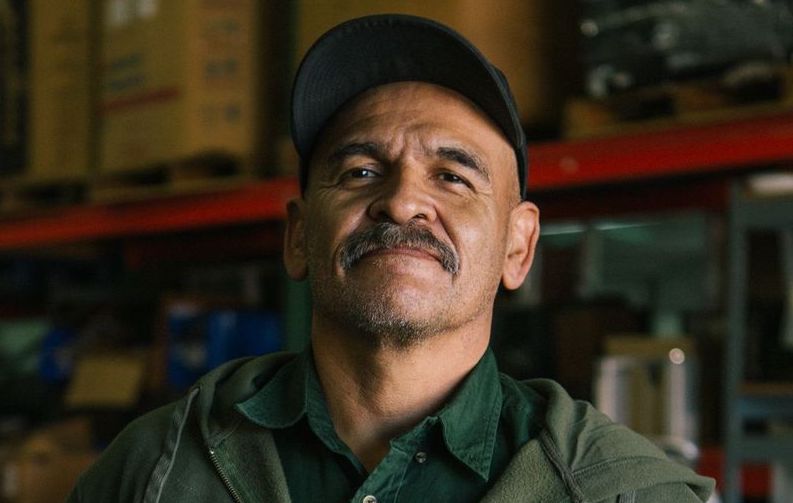
Jose Guevara — aka Manny — has been incarcerated five times and in all, has served about 25 years. However, in recent years, Guevara, now 62, has steered clear of trouble, which he credits to his employer, Homeboy Electronics Recycling, where he works as a long-haul driver. 

“I’m the main driver of the big truck,” he says with a grin. “I’ve been to Utah, San Francisco, and Sacramento, and I love that this company trusts me with its truck and merchandise. We are growing, and I’m so proud to be part of it. Without my work here, there is a high chance I would be back in prison right now.”

This article was first published on DigiDay’s WorkLife platform in December 2021 – to continue reading please click here.

Employers should focus on improving employees’ experiences in 2022, say experts

People are at odds with their employers on what makes a great employee experience — a disconnect that will need to be swiftly rectified in 2022 if businesses are to retain their talent, according to analysts and workplace experts.

We asked a range of execs what they predict will be the top priorities for business leaders in 2022, and alongside finessing what the right hybrid models are, fixing the employee experience emerged as another major theme.

This article was first published on DigiDay’s WorkLife platform in December 2021 – to continue reading please click here.

‘It’s just another 9 to 5’: Employers assess productivity levels after introducing 4-day work week

As organizations tiptoe into the post-pandemic world of hybrid working, the idea of a four-day week is gaining popularity. Little surprise, if working one fewer day and not being docked any pay is in the offing, which is precisely what some businesses are already offering. 

For smaller businesses that can’t afford to pay staff 20% extra, a four-day week is still an appealing proposition. Many leaders acknowledge that working 9 to 5 is, in 2021, only heard of in Dolly Parton’s classic tune. More flexibility, trust, and autonomy are the vital factors that will count to attracting and retaining top talent. 

Indeed, in the U.K., 38% of small- and medium-sized enterprises leaders recently indicated they plan to forge ahead with four-day-week plans. It’s a concept that works in theory, but does it work in practice?

This article was first published on DigiDay’s WorkLife platform in October 2021 – to continue reading please click here.

‘Old maps don’t apply to new worlds’: Experts predict what’s in store for 2022

Toward the end of 2019, business leaders discussed the likely trends in the next year, claiming to have a “20/20 vision.” No one had the foresight, however, to spot a once-in-a-lifetime global pandemic that would alter every aspect of the “old normal.”

To begin with, organizations and governments blindly battled the coronavirus crisis. It is only now we can blink into the light and see more clearly what factors might shape the future of work in the coming year.

Given the U.S. military phrase VUCA — an acronym for volatility, uncertainty, complexity, and ambiguity — encapsulates the world in which companies now operate, long-term plans are so last year. So instead, more immediate, tangible, and attainable goals are recommended. And it is in this spirit that a raft of business leaders offered bold future-of-work predictions for 2022.

This article was first published on DigiDay’s WorkLife platform in December 2021 – to continue reading please click here.

Why in-demand freelancers are looking to Singapore and other countries to ply their trades

The first mention of “freelancers” can be found in Sir Walter Scott’s Ivanhoe, published in 1819, about an army of medieval mercenaries who would fight for whichever nation or person paid them the most. Not much has changed since, save for the lances being swapped for laptops and smartphones. Oh, and many freelancers can fight their 21st-century battles virtually, from anywhere on the planet.

The modern weapons wielded by freelancers means they can, theoretically, work from anywhere with a decent internet connection. According to a new study from Tide, a U.K. financial technology company offering mobile-first banking services for small and medium-sized enterprises, Singapore tops the list of desirable places for freelancers to operate.

This article was first published on DigiDay’s WorkLife platform in December 2021 – to continue reading please click here.

How companies are tapping avatars, virtual spaces to introduce new hires to their colleagues and cultures

The digital world, where hybrid working is increasingly the norm, can be a lonely place — especially when joining an organization or learning a new skill for career development. To solve this challenge, companies are reaching for their virtual and augmented reality headsets and taking the plunge with immersive training.

One such organization is HubSpot. The customer relationship management company is trialing VR remote office tours and using it to present employees with an “immersive and unique look” into HubSpot’s remote community. “The VR platform allows employees to build an avatar, walk around the virtual space, and even hear other employee voices — connecting in real-time, as you would in an office setting,” said Hubspot’s Boston-based culture manager Meaghan Williams.

This article was first published on DigiDay’s WorkLife platform in December 2021 – to continue reading please click here.

Web creator Sir Tim Berners-Lee on the future of data

Data literacy will drive innovation, easing global warming and empowering citizens, according to Sir Tim Berners-Lee and Sir Nigel Shadbolt

Billions of us use the World Wide Web as our primary tool to interact online. Today, its creator Sir Tim Berners-Lee is on a new mission: to ensure data is used appropriately to create the public sector of the future.

Berners-Lee partnered with artificial intelligence (AI) expert Sir Nigel Shadbolt in 2012 to found the Open Data Institute (ODI). At the ODI Summit in early November, the pair of computer scientists warned that now is a pivotal moment. As we hurtle into the digital era powered by data-hungry algorithms and AI, it’s critical to collaborate with good intentions and maximise the potential of technology, for the sake of the planet and its inhabitants. 

The acceleration of digital transformation necessitated by the coronavirus chaos is exciting, but there’s a responsibility for authorities around the world to keep pace with this incredible change. Those in power must set standards, encourage data to be opened and shared responsibly, and narrow the ever-widening skills gap. The quicker that data literacy in both private and public sectors can be improved, the better for everyone.

As Berners-Lee points out, the pandemic has unconsciously boosted public awareness of how data can save and enrich lives. “Something that took off hugely was communication through data, with the government telling us to ‘flatten the curve’ [and limit the spread of the virus],” he says. “I would imagine that the data literacy of the general population has gone up a chunk.” 

Driving change 

By improving their data literacy, leaders and members of the public could understand and challenge how data is presented, Shadbolt suggests. As public sector technology and its application develops in the coming years, fuelled by more and better-quality data, greater scrutiny will help shape products and services for the digital era. 

The opening of more data sources will super-charge the public sector of the future and drive innovation, says Shadbolt. The chair of the ODI – who’s been principal of Jesus College at Oxford University since 2015, among other roles – points to the success of open data pioneer Transport for London (TfL). Often held up as an exemplar of open data, TfL offers data feeds and guidelines about air quality, cycling, walking, planning and more. 

In 2017, Deloitte calculated that TfL’s release of open data generated annual economic benefits and savings of up to £130 million for travellers, the capital and the organisation itself. Additionally, many private businesses have taken advantage and cashed in on the open application programming interfaces (APIs).

“Imagine that a lot of data relevant to everything climate-related was just being routinely published using standard APIs,” Shadbolt continues. “It’s what we saw happen with TfL. And there’s just a bunch of sectors and areas to go for.”

However, it can be dangerous to blindly follow data. Shadbolt wonders whether Boris Johnson’s refrain during the pandemic that the government would “follow the data” to justify its pandemic-related decisions coronavirus sent out the wrong message. “It was quite a bad phrase, in some respects,” he says, “because while there should be a basic ability to understand the data, we need to interrogate and critique that data.”

Data can be good, but it never gives a complete picture

Questioning data sources is not just essential to fight fake news on social media and elsewhere – it will also enable public sector organisations to build greater trust, Berners-Lee says. With more connected data, they could trigger a shift from reactive to proactive services. 

It’s a virtuous circle, because trusted and quality datasets will widen the possibilities and reach of public sector technology and empower citizens. “Provenance is important for data quality, and provenance is important for trust,” he says.

Building trust

For example, Berners-Lee says a doctor should be able to look at the digital notes of a person with diabetes and open a data narrative explaining how this diagnosis was made and other relevant history. Public trust in the data used by the public sector is central to the adoption of technologies and services, he points out.

The general public seemed to go into different categories regarding coronavirus data, Berners-Lee says. Some accepted recommendations for pushing the curve down, but others “don’t listen to the same people as we might. Instead, they find groups of people –

the conspiracy theorists – usually on social media, who make up all kinds of strange things about the pandemic, vaccines or climate change, for that matter.”

Shadbolt says experts act in good faith with the information available at a specific time, but their visibility is limited if they have scant amounts of data. The wider the variety of good quality data sources, the fuller the picture. “We’ve talked a lot about how it’s important, particularly during the pandemic, not to regard the scientists, medics and people in white coats as telling you the whole truth,” he says. “They’re trying to give the best information, very often under conditions of considerable uncertainty.” We must take a nuanced approach, he argues, understanding that “the data can be good, but it never gives a complete picture.”

Those in the public sector and beyond must be “critically reflective” of data. “All our responses are made, in a sense, standing on the edge of error. But that’s what science is: it can believe something is wrong and can revise what we believe as these things unfold.” 

While the collaborative use of data will create smarter public services in the UK, this approach is crucial on a larger scale if humanity is to overcome its biggest challenges. It’s been vital in the response to coronavirus, while a cooperative, non-competitive and can-do attitude is also essential to reduce global warming.

“We’ve just been living through an existential crisis – a global pandemic – and we’re in the midst of another one unfolding, with the climate challenge,” says Shadbolt. “Data will be an essential part of [solving this]: the infrastructure, the institutions we might need, the trust we have [in its use], and our literacy.”

Sir Patrick Vallance, the UK’s chief scientific advisor, echoed this view at the 2021 United Nations Climate Change Conference (COP26). He warned that the challenge of global warming is a greater risk than Covid-19 and more people will die from it than the pandemic if the public sector doesn’t act quickly. Vallance also said the climate crisis could last 100 years and require “a combination of technology and behavioural change”.

Provenance is important for data quality, and provenance is important for trust

Shadbolt concurs but stresses that opening data and boosting cross-sector collaboration will accelerate meaningful change on a macro and micro scale and increase the capabilities of public sector technology. “While environment data is in the news because of COP26, there is other information that can help spur action,” he says, hinting that greater transparency from public sector organisations will ratchet up pressure on private companies to keep clean. For example, he notes that data on utility companies discharging sewage will help the Environment Agency, which struggles with funds and support. 

“We are starting to gain a sense of what data’s going to make a difference – everything from emissions to insulation. There’s a whole network of interconnected data types that we can bring together, much of it held in the public sector, and some of it held in the private sector,” he says. “We need to begin that work on joint public-private enterprises, though we are beginning to see the private sector, with its commitments to ESG, saying ‘we now have to have a public purpose as well as a private one.’” Publishing some of this data “would be a great first step”, he adds. 

Information advantage

Berners-Lee and Shadbolt were appointed as information advisors to the government in June 2009. The duo led the team that developed data.gov.uk, a single point of access for UK non-personal governmental public data. This offers real-time information on a range of topics, such as government spending, digital service performance, crime and justice, transport and more.

When the pair founded the not-for-profit ODI nine years ago, the mission was to “connect, equip and inspire people around the world to innovate with data”. Almost a decade later, the ODI continues to provide free and paid-for training courses and learning materials both in-house and online. These cover theory and practice surrounding data publishing and use. The ODI has long championed open data as a public good, but always emphasised that effective governance models are necessary to protect citizens.

Some 20 months since the start of the coronavirus crisis, people are beginning to appreciate the ODI’s work and concerns around data standards. “When the pandemic began we provided a data publication template,” says Shadbolt. “The challenge was so many people wanted to contribute data. It needed sorting and we had to determine what was helpful. If there was just a little more awareness around open standards to publish data, so that it is in a more interoperable format, it would be better for everyone.”

For public sector technology to thrive, however, public trust is critical, says Berners-Lee, who notes a difference in attitudes to tech in the UK compared to the US. “Typically in the UK people trust the government and don’t trust [the tech] industry, and in the US people trust industry and don’t trust the government,” he says. More should be done to assuage fears about how tech giants handle user data, he adds. “To an extent, it’s how people are brought up and therefore cultural. But for people in the UK to trust these large American companies then you need to have serious legislation and regulation.”

The backlash against the allegedly avaricious Facebook, which according to a recent whistleblower puts user engagement ahead of safety, is a cautionary tale for public sector organisations seeking to embrace technology solutions and partner with companies without fully knowing their policies on data privacy and other questionable values, suggests Berners-Lee. More than ever, at the outset, digital products must be “good by design”.

Data management is integral to these processes. Here too the coronavirus has proven useful, testing the robustness of so-called ‘trusted research environments’. “In these environments, the data stays behind a firewall and it’s modelled and analysed with tools that can go behind the firewall,” Shadbolt explains. “The data never actually leaves the highly secure data storage areas where 47 million patient records are linked, but incredible insights are gained.”

Offering an alternative, he says: “The other solution is to leave the data with the people who generate it, which is very local. There are different technical solutions there and there are different institutions we can build to share this. It’s a complicated area, but the ODI is looking very carefully at making data sharing more effective.”

Unfinished business

What does the future hold for the ODI as it nears its 10-year anniversary? “We started off explaining to people working in the public sector how to put your data on the web,” says Berners-Lee. Now, however, “we realise it’s important to cover the whole spectrum, from public to private, but it’s also about developing policies as well.”

This assessment chimes with Shadbolt. “There is unfinished business,” he says. “The whole commitment to getting data out there was started with open data initiatives that were very much focused around the public sector – everything from hospital data to educational data to transport data. That work has gone well. We’re now looking at extending those learnings. As governments move on [in their digital transformation journeys], you want to ensure that momentum is kept up and that the infrastructure is there to help sustain publishing the data out.”

Returning to the global climate crisis, he says of the ODI’s mission: “We did anticipate that in trying to build a trusted research data ecosystem it would become one of the consequential questions for the future of the planet and the future of our wellbeing. There’s a huge amount of work to do. We’re trying to make sense of it in terms of programmes of work, from data literacy to institutions, from ethics to infrastructure.”

Shadbolt adds: “Fundamentally the ODI’s work is about listening, it’s about trying to take ideas and put them in a format that allows that to scale. We may be an organisation of 60-odd people but we think we can have a fantastic impact and so we need to reach out and sustain ourselves to make a better future.”

This article was first published in Raconteur’s Public Sector Technology report in December 2021

Enriching and empowering: realising the potential of data-enabled public services

Out of necessity, public bodies dialled up their digital services during the pandemic, but now is a pivotal moment to consider how to achieve a joined-up, secure, frictionless citizen experience

When considering the rapid and radical shift to digital services in the public sector during the coronavirus crisis, Ernest Hemingway’s line from The Sun Also Rises of bankruptcy happening “gradually, then suddenly” comes to mind. In this case, though, the prognosis is somewhat more optimistic.

The hurried but necessary jump into the digital era has enabled people to be empowered and enriched by data-driven public services. Now the leap has been made, the direction of travel is clear. However, there is still work to be done before achieving a connected, frictionless digital experience that benefits the state and its citizens.

“Data-driven, smart digital technologies have provided crucial support to public bodies through the pandemic, but they’ve also allowed our under-pressure services to become smarter and more responsive to our needs as citizens,” says Steve Thorn, executive director at Civica, whose software helps sustain and enhance public services around the world.

“For some public services, the digital journey was already well underway, and the pandemic catalysed this journey. For others, such as our schools, the pandemic required a more fundamental change, with face-to-face teaching giving way to online classrooms.”

Thorn singles out the track and trace applications and vaccination certificates as “prime examples of the power of data-driven, smart technologies to deliver better outcomes for citizens,” and says that more outstanding capabilities are within reach. But, he warns, the government must take its next steps carefully. 

“Public bodies across Britain and the rest of the world already sit on rich seams of data, which are growing by the day as our society becomes more digitised,” he says. “Raw data is, though, of little value. Data must be collected, managed, used and shared effectively if it is to deliver any real benefits.”

Standards, skills and sharing

To better navigate the route ahead, with the ultimate goal of providing a connected, frictionless customer experience to citizens, Civica works with the public sector on what it calls the three ‘Ss’ – namely standards, skills and sharing. 

Thorn says: “Any public body, be it a parish council or Whitehall department, must ensure that it has robust standards in place for managing data, the right people with the right skills to use that data and finally, processes in place to share data safely and effectively, so it is it is delivering the best outcomes for the greater number of people.”

Andrew Hood, chief executive of Edinburgh-based analytics consultancy Lynchpin, agrees that now is a good time for the public sector to reflect on the good and the bad digital offerings throughout the coronavirus crisis. He sees great potential in Internet of Things (IoT) technology but similarly urges caution. “The pandemic has surfaced a lot of the practical opportunities and threats around data sharing and IoT in obvious terms when viewed through the lens of things like contact tracing apps and digital vaccine passports,” Hood says.

For some public services, the digital journey was already well underway, and the pandemic catalysed this journey. For others, such as our schools, the pandemic required a more fundamental change, with face-to-face teaching giving way to online classrooms

He points to the different strategies taken by the UK’s four nations in terms of deploying open source versus proprietary solutions. “There is potentially much to learn from what has worked well and less well when considering other similar applications outside of the pandemic,” he says.

“Whether to centralise or decentralise how data is shared across millions of devices became a very key consideration for contact-tracing apps. How [do we] achieve enough sharing to enable the outcome of alerting those that had been nearby others without creating Minority Report-style databases of the movements of the entire population?”

The software robot revolution 

For David Burrows, public sector industries leader at UiPath, a robotic process automation dollar unicorn, the benefits of the public sector doubling down on automation and IoT technologies to create a more streamlined physical service for citizens – for example, with smart roads, touch-fre metering and much more – are compelling. 

Further, with the UK effectively gaining data sovereignty post-Brexit, the government is perfectly positioned to speed ahead of other European nations if all key stakeholders use the exact strategy roadmap and collaborate.

But to improve citizens’ experiences and public services, alike, and to make use of better infrastructure, it comes back to managing data. “Automation is one tool being used by UK government to achieve the frictionless digital experience needed to improve public services and more effectively serve citizens,” says Burrows. “As software robots can handle huge volumes of data more quickly and efficiently than humans can, it can significantly streamline back-office activity and reduce the risk of administrative bottlenecks.”

He points to the recent work UiPath has done with the Department for Environment, Food and Rural Affairs’ National Licencing and Permitting Service for water abstraction – taking water from an underground or surface source, such as a river, stream or canal. “Once the team has made the technical expert decision on whether a licence should be issued or rejected, there is significant administration to be done to inform the applicant and to update internal and external consultees and the IT system,” says Burrows.

Now, software robots can handle this admin work, cutting the non-decision-making admin down from 65 minutes per transaction to just shy of seven minutes. “The result,” he says, “is that citizens can have their licenses in a fraction of the time, all while public servants can concentrate on more valuable work.”

Looking further ahead, Burrows adds: “With some 22% of government infrastructure decision makers recently telling Forrester that their departments will implement RPA in some shape or form by the end of this year, there is no doubt that automation will continue to play a significant role in government customer strategy.”

Also scanning the horizon and hoping for more joined-up public services and tools that will enrich the lives of citizens, is Thorn. “The pandemic has provided many great examples of how digital technologies can solve individual challenges – be that supporting homeschooling or allowing GPs to interact with patients at a distance. But digital transformation is more than solutions to individual problems.”

Offering a final word of advice, he adds: “Digital transformation is a wider journey towards a future where our public services are ultimately better able to anticipate and respond to our changing needs as citizens and as a society.”

And, as encouraging as the progress that has been made in the last two years especially has been, we are at a pivotal moment. As such, the potential of connected public services is likely to be realised gradually, not suddenly – and that’s no bad thing.

This article, sponsored by Vonage, was first published on Raconteur in December 2021

How has the pandemic transformed digital healthcare for patients and practitioners?

Public and private healthcare providers have been encouraged by the digital maturity of customers, and now are using data to shift to more proactive rather than reactive services

As the UK braces itself again due to the emergence of the omicron variant, and with a record 5.83 million people awaiting non-emergency hospital treatment – according to official figures from the end of September – the continued development of digital healthcare services is critical.

The pandemic necessitated the acceleration of digital transformation across the healthcare sector. For example, the National Health Service embraced digital solutions to track and trace, rollout vaccine programmes, and implement various smartphone apps, all of which have been well received.

From a customer experience perspective, there is obviously an appetite for digital healthcare. Granted, this has been fed by the pandemic-induced lockdowns. But it’s telling that the NHS is now seeking to build out its video consultation provision and move to a hybrid offering, using face-to-face consultations when appropriate. This approach reduces costs and is more convenient for patients.

To keep pace with customer expectations, private healthcare providers have also undergone seismic change in the last two years. “It’s been a crazy time,” says James Elliott, head of customer and commercial experience at Bupa Global. “We’ve seen a massive digital transformation, and there is a big opportunity in private healthcare as we move to proactive health management.”

However, legacy problems are halting progress in the digital era, he concedes. “For a long time, we thought that the best thing to do was plaster our telephone number on every piece of paper and membership card, but that has come back to bite us,” says Elliott. Furthermore, 40% of customers contact the organisation via email, an admittedly “horrible experience.”

He adds: “We are trying not to make the mistake of creating infinite loops for customers to fall into, and we want to educate them to make the right choice. We have created a digital-first portal to triage their contact, and that could involve an urgent phone call or an outbound scheduled call.”

We’ve seen a massive digital transformation, and there is a big opportunity in private healthcare as we move to proactive health management

Bupa Global’s LivePerson platform, established before the pandemic, has enhanced its connection with customers leading to a tenfold increase in satisfaction levels. But, as live interactions – even phone calls – are “hard to manage,” Elliott says digital chat “is the answer,” whether via WhatsApp or WeChat in China. “It has to be asynchronous,” he argues.

To better organise the urgency of customer needs, Bupa Global has “put a lot of time and money” into automated systems and conversational artificial intelligence. “We want to build a trusted relationship with our customers, and so improving natural language processing capabilities is key,” adds Elliot.

Alice Pan, chief medical officer and global head of health operations at Bima, a Swedish company that delivers health and insurance services in emerging markets, agrees that developing digital services is what patients and practitioners want. Bima is creating an asynchronous chat function, having been encouraged by the digital maturity of its customers.

The organisation, which operates in nine markets in Asia and Africa, offered a telemedicine service during the pandemic, and it quickly became customers’ preferred channel for first contact, with over half (58%) ranking it top.

While this was a surprise for Pan and her team, completely “shattering preconceptions,” it validated a shift to more digital solutions. And in time, with the customer data gathered from digital interactions, Bima is aiming to provide a more preventative, proactive and personalised service.

“We are getting to know our customers better, and we are collecting data to serve them better,” says Pan. “For the first six months of the pandemic, we learnt a lot, and it was tough; it was all reactive.

“It wasn’t until the latter half of 2020 that we started to think more strategically about what the pandemic meant for mobile health and Bima. Now, though, we have a clear plan of how we can grow in the next five years. “And,” she adds, “it’s exciting, especially for our customers.”

This article, sponsored by Vonage, was first published on Raconteur in December 2021

Employees and their employers can’t seem to agree on which flexible work perks will make them stay

For decades, the majority of organizations have, in one way or another, told anyone who would listen that “people are our greatest asset.” Clichéd as the phrase may be, its veracity is being tested as this hybrid-working world has shifted the balance of power away from leaders toward staff. 

For some people, watching efforts other employers have made to offer flexible-working perks to attract and retain talent has made the meager efforts of their own employer even more grating.

This article was first published on DigiDay’s WorkLife platform in December 2021 – to continue reading please click here.

Leading for the future: how has the pandemic changed those in charge?

In a world where change is the only constant, leaders must be authentic, tech-savvy and human. They have to prepare for the next crisis by empowering employees so their businesses are more agile and resilient

Be honest, how has the coronavirus pandemic changed you?

For most of us, it is only now – more than 18 months after the pandemic hit and as some semblance of normality returns – that we finally have the headspace to reflect properly on this question, answer it truthfully and inspect the mental scars, having been in survival mode for so very long.

Spare a thought, then, for business leaders who, alongside any personal struggles, have been forced to steer their organisations out of choppy waters while faced with cascades of disruption.

The list includes supply chain problems, geopolitical issues, increased pressure to recruit and retain top talent in the so-called ‘great resignation’ age, and the need to engage with a range of stakeholders to facilitate an accelerated digital transformation. They don’t teach this stuff at business school and many will have felt out of their depth, understandably.

The torrents of chaos have eroded everyone to a degree. And businesses and laggard leaders who have not kept up with the waves of change have, alas, been swept away. The response to Covid-19 necessitated the locking down of people, but paradoxically it opened minds. As a result, in the post-pandemic wash-up, the world looks and feels different. 

For instance, videoconferencing technology’s rapid advancement or adoption has enabled businesses to communicate to colleagues and customers, and somehow brought people closer together. Moreover, there is something thrillingly democratising about everyone having the same-size square box on Zoom, Teams or Google Meet, whether a chief executive or a 21-year old, fresh out of university.

New normal: mindset change required

Cybersecurity and global warming have leapfrogged other concerns for boards and consumers alike. In the afterglow of COP26, ‘ESG strategy’ has become a business buzzword, while actions and transparency speak louder than words. And as many are focused on the environment and governance, is the social element the squeezed middle?

As we tiptoe hopefully out of the worst of the coronavirus crisis, leaders have many important questions to answer. How will hybrid working actually work? What business models need evolving or binning? And, most fundamentally, in a world of constant change, how can greater agility and resilience be achieved?

“The US military phrase VUCA – an acronym for volatility, uncertainty, complexity and ambiguity – captures the world in which we now operate,” says Alan Patefield-Smith, chief information officer of insurers Admiral Group. “Everyone has their favourite worry.”

Paul Szumilewicz, programme director for retail in continental Europe at HSBC, bristles at the concept of ‘resilience.’ He says: “What I’ve seen in the last few years, especially during the pandemic, is that ‘resilience’ is overrated. Too often, we have unrealistic expectations of people and particularly leaders.”

Szumilewicz argues that admitting “we don’t know the answer, but we are working on it” shows strength. “There is a positive shift in leaders to accept that being vulnerable makes us more real, more relatable,” he says.

Citing a 2017 Harvard Business Review paper, he continues: “The single biggest factor that triggers oxytocin [a hormone that plays a role in social bonding] in the brain at work is when a leader, manager or colleague shows vulnerability. Resilience is sometimes not as powerful as we think. Being honest about that can have an even more powerful impact.”

Invest in technology but don’t forget people

Simon Finch, supply chain director at Harrods, concedes that “there was a lot of scrambling around to make things work” when the coronavirus crisis and, more recently, Brexit fallout exposed operational weaknesses. He posits that businesses were “obsessed with making supply chains as lean as possible” before Covid, moving items around quickly, with minimal stock and expense. 

“Coronavirus completely screwed up that approach,” says Finch. “From now on, the supply chain must be more about agility, to cope with volatility and uncertainty, and less about being lean. However, that agility has to be fully supported by technology and data insights.” 

Technology alone, though, is not enough. If leaders fail to invest in their people, and that includes themselves, then the much-maligned skills gap will gape even wider. Consider the World Economic Forum estimates that technology will subsume 85m human jobs and 97m new roles will be created in just the next four years. As man, woman and machine work together, leaders should become less robotic and more human.

Indeed, according to Wayne Clarke, founding partner of the Global Growth Institute: “The most essential leadership trait of the 21st century, without a doubt, is empathy. The leaders with the most emotional intelligence will stand out. To better engage staff and improve the employee experience, the most critical question to ask is ‘How do you feel?’”

So go on, be honest.

This article was first published by Raconteur as part of a long-scroll project sponsored by Oliver Wight in November 2021

Seven key steps to improving the digital customer experience

Country manager of UK and Ireland, Matthew Parker from Vonage, a global business cloud communications leader, shares his thoughts on the key lessons from the recent ‘Reimagining digital customer experience and brand engagement’ roundtable event

At the roundtable (written up here), the passion for customer experience came across from everyone, loud and clear. There were plenty of great statistics in there, too; I love stats. I wrote down seven things during the discussion, and these are my key takeaways.

Humans: We discussed the evolution of humans and how technology has to be intuitive. I think there is a link between humans and smart automation. Certainly, natural language processing and understanding sentiments in emails and messages is an area of investment and innovation. As another classic example, though, you want to know where your parcel is on its journey to your door. It’s a commonly asked, simple question that can be solved by automation. Tracking technology means that humans are not needed, but there are plenty of other things that do require human input and touch.

Trust: Someone mentioned trust. And a few people had different definitions of trust, but the two words I took away, linked to developing consumer trust and loyalty, were security and integrity.

The ecommerce journey:  This was another subject. There was a great stat on ecommerce growth: the pandemic spurred a 130% increase in ecommerce adoption. But looking at the ecommerce journey is so important, especially when working out where to remove friction.

Experimentation: Someone said: “Have a go and try digital transformation.” I love that. I attended an Amazon Web Services (AWS) summit a few years ago, and despite that digital transformation had been around for a long time, thousands of people there were wondering where to start. The speaker on stage, from AWS, said: “Just have a go, just have a go, pick your burning platform and just have a go.” In many ways, that’s still going on, which is great to hear.

Brand connection and value exchange: Together these make a potent combination. There has to be something for the customer in return for their data. 

The use of data: This final point wraps the session up nicely. Collecting data in itself is not necessarily a bad thing, but it has to have a context in terms of how an organisation will use the data. That’s the essential bit. Then there is the integration of that data in the customer journey. For example, we all get driven mad if we are on an interactive voice response for 20 minutes and then, having filled out the information, the human customer support person asks us the same questions.

This article, sponsored by Vonage, was first published on Raconteur in November 2021