Go Flux Yourself: Navigating the Future of Work (No. 5)

TL;DR: May’s – slightly delayed – Go Flux Yourself includes being selfless to find happiness, building tech for good, virtual work experience, the importance of messy stories, and a tribute to rugby league legend Rob Burrow … 

Image created on Midjourney with the prompt “Leeds Rhinos rugby league legend Rob Burrow smiling with the ball and happy people gathering around him – with tech robots looming behind them – in the style of a David Hockney painting”

The future

“The greatest burden a child must bear is the unlived life of its parents.”

These words, attributed to Swiss psychoanalyst Carl Jung, were quoted on stage by Britain’s leading “psychological illusionist” Derren Brown, the big draw at DTX Manchester in late May when discussing the pursuit of happiness. 

This wisdom hit me hard as the father of two small but quickly growing children. (And this newsletter didn’t arrive on May 31st – apologies – because I was holidaying in the Netherlands for half-term.) It smacked me harder, though, as someone passionate about human-work evolution and the world we are building. 

Is the combination of technology and social media making us overly self-interested? Is too much screen time, for adults and kids alike, making us more susceptible to jealousy while eroding common decency and looking out for those around us? We need to look up, look out, and that starts with, well, looking inward.

Related to this, I recently saw a brilliant and quite emotional post on LinkedIn that distilled the problem of human selfishness. In a thought-provoking classroom experiment, a university professor challenged his students to a unique test of teamwork and empathy. 

Each student was assigned a balloon bearing their name, which was then released from the ceiling. The challenge was to locate their own balloon within a five-minute time limit. If everyone succeeded, they would collectively win; if even one student failed, they would all lose. 

Despite their earnest efforts, not a single student managed to find their individual balloon amid the chaos. Undeterred, the professor gathered the wayward balloons and gave the class a new directive: “When you catch a balloon, give it to its rightful owner.” With this simple shift in perspective, the students all completed the task before three minutes were up.

The professor concluded the lesson with a poignant observation: “Happiness is like these balloons. If each of us single-mindedly pursues our own, we will inevitably come up short. But if we prioritise the wellbeing of others, we will find that our own happiness follows suit.” 

This principle holds true not only in the classroom, but also in the corporate – and specifically the technology – world as well. By actively supporting our colleagues in achieving their objectives, we foster an environment of reciprocity and shared success.

At DTX Manchester, where I moderated a session on AI in the workplace, Brown, who I once shared a seance table with – a story not for here – talked about our materialistic, consumerist tendencies. Most of us, he said, are on the “hedonic treadmill”, chasing and attaining new things to feel happier. But that immediate dopamine spike soon drops, and then we look for the next shiny thing. Essentially, he argued – convincingly – that this doesn’t make us happy.

Building on this point, he offered the audience a thought experiment suggested by Stoic philosopher William B. Irvine. In On Desire: Why We Want What We Want, Irvine wrote: “Suppose you woke up one morning to discover that you were the last person on earth … In the situation described, you could satisfy many material desires that you can’t satisfy in our actual world. You could have the car of your dreams. You could even have a showroom full of expensive cars. You could have the house of your dreams – or live in a palace. You could wear very expensive clothes. You could acquire not just a big diamond ring but the Hope Diamond itself. The interesting question is this: without people around, would you still want these things?”

The answer is obvious when framed in this way. But do enough of us realise this truth?

Brown also challenged leaders to prioritise authentic storytelling over superficial narratives. He argued that businesses often present overly simplistic and tidy stories, failing to capture the messiness and complexity of reality. To cultivate genuine resilience, Brown urged leaders to embrace the journey and resist the temptation to fixate on definitive endings.

However, Brown’s most urgent plea was directed at technologists, calling upon them to use their talents for good. He revealed a startling statistic, attributed to Tristan Harris, Co-Founder of the Center for Humane Technology: over 50% of AI engineers believe there is at least a 10% chance that mishandling AI could lead to the destruction of humanity. 

This sobering reality underscores the critical need for a mindset shift in the tech industry, ensuring that innovation uplifts humanity rather than accelerates its demise.

As AI advances at an unprecedented pace, there is an immense business opportunity and an ethical imperative to create technology that genuinely addresses human needs, not just superficial desires. 

The cautionary tale of social media platforms like Facebook is a stark reminder of the unintended consequences that can arise when innovation is disconnected from human welfare. With the stakes exponentially higher in the era of recursive, self-improving AI systems, the risks of rushing ahead without careful consideration are grave, ranging from automated cyber weapons to blackmail and disinformation campaigns.

Those who seize this opportunity to create technology that genuinely benefits humanity will build thriving businesses and contribute to writing a new, more enlightened chapter in the human story. Brown concluded that this endeavour is worth far more than any fleeting dopamine rush from a dazzling new toy. It served as a much-needed call to action for leaders and innovators to shape a future in which technology and humanity can flourish together.

I’ve been asked to deliver an opening keynote on the future of work to a group of lawyers in London later in the year, and with the 25 minutes I have been afforded, I’ll be focusing on these messages, I reckon.

The present

Certainly, the themes of collaborating for good and being intentional and considered are current when looking through the lens of remote working – mainly because no company has perfected its strategy. Moreover, it requires careful iteration, with humans – not technology – in the driving seat and the most business-critical element. 

A couple of weeks ago, I was delighted to moderate an in-person roundtable near the “Silicon Roundabout” of London’s Old Street, which delved into the challenges and opportunities of creating a remote-ready workforce.

I set the scene by referencing recent research from Stanford professor Nick Bloom, which indicated that 29% of the global workforce were hybrid workers, 59% were fully on-site, and only 12% were fully remote workers.

Predictably, during the discussion, trust emerged as a cornerstone of successful remote work. The roundtable participants concurred that businesses must foster a culture of trust, and the unanimous verdict was that monitoring staff is creepy and demotivating. 

O.C. Tanner’s 2024 Global Culture Report was published a few days after the roundtable session. It showed that 41% of UK employees have their working time strictly monitored, and just 53% are granted freedom in how they accomplish their work. How backward. For employees, it’s time to put the mouse-jigglers away, and employers need to conduct adult-to-adult relationships with their staff. 

Someone needs to tell Manchester United co-owner Sir Jim Ratcliffe, the UK’s richest person. In mid-May, he found a new excuse for ordering employees back to the office. In a message to the club’s employees, he complained about the “disgraceful” messiness in the office. He called an end to the flexible work-from-home policy that has been in place since the coronavirus crisis.

As a kicker, Ratcliffe – who resides in Monaco, presumably in part for tax avoidance purposes – justified a full-time return to the office because one of his other businesses experienced a 20% drop in email traffic when it experimented with home-working Fridays. It’s daft reasoning, for sure. Do more emails mean more productivity? Not in 2024, where the most enlightened business leaders are familiar with Cal Newport’s concept of deep work – the need for focused periods of concentration without the pings, bings and other notifications that have become an irritating part of work life.

As businesses strive to future-proof their workforce, the concept of “virtual work experience” has gained popularity – although one suspects Sir Jim would not approve. And if so, I’m 100% with him on this one.

Leaders must understand that while these online placements can provide valuable exposure and skills, they should not be considered a complete substitute for in-person experience. 

Companies like Heathrow Airport and Pret A Manger have partnered with Springpod to offer virtual work experience programmes, aiming to impart relevant knowledge to aspiring professionals in various fields. These initiatives include engaging activities such as – ahem – quizzes and immersive product development journeys designed to educate and inspire the next generation of talent. 

The hands-on experience, face-to-face interactions, and real-world problem-solving opportunities that come with traditional work placements are essential for developing a well-rounded skill set and understanding the nuances of a profession. 

Ultimately, by offering a balanced approach that combines online learning with practical, on-site experience, leaders can ensure that their future workforce is adequately prepared to tackle the challenges of their chosen careers. 

Further, investing in a comprehensive training and development programme that includes virtual and in-person elements demonstrates a commitment to nurturing top talent. By providing a well-rounded learning experience, organisations will attract ambitious candidates, foster a culture of continuous improvement, and be well-positioned for long-term success.

The past

At first glance, the passing of a rugby league player might seem inappropriate for a technology and business newsletter. But the death of former Leeds Rhinos scrum-half Rob Burrow yesterday (June 2), at the age of 41 – a year younger than me, chillingly – transcended sport and was mourned across the nation. 

Sadly, Rob’s demise was no surprise. Four-and-a-half years ago, and only two years after he hung up his boots, he was diagnosed with motor neurone disease (MND) and given 18 months to live. Bravely, Rob chose to take his fight public to raise awareness of the horrific disease – and the lack of support for sufferers – and, along with the considerable help of his former teammate Kevin Sinfield, attracted around £15 million for MND charities.

I started my career as a sports journalist and covered rugby league, partly because of my upbringing in North West England, the game’s heartland. I watched and met Rob, who played for Leeds almost 500 times and won 18 international caps, numerous times. I always marvelled at how the smallest player on the pitch – at 5’5” or 156cm, he was only a dozen centimetres taller than my nine-year-old boy – was so often the bravest and most influential. Indeed, today’s obituaries will laud a “giant among men”, rightly. 

How fitting that, by coincidence, the ground will be broken on the Rob Burrow Centre for MND in Leeds the day after his death. Excelling at a game in which he was always a foot shorter than other players, he was a groundbreaker on and off the pitch.

The Prince of Wales – a mate of mine at the University of St Andrews (but that’s another story) – presented CBEs to Rob and Kevin in January, and when the news broke on Sunday, he saluted “a legend of rugby league” on social media. He added: “Rob Burrow had a huge heart. He taught us ‘in a world full of adversity, we must dare to dream’.”

Rob’s life story holds valuable lessons for the world of technology and business. Every entrepreneur and innovator should aspire to emulate his unwavering determination and ability to excel despite the odds stacked against him. In the face of adversity, Rob persevered and used his platform to drive change and raise awareness for a cause that desperately needed attention. 

His legacy reminds us that true success is measured not just by personal achievements but by the positive impact one leaves on the world, no matter the industry. As we navigate the ever-evolving landscape of technology and business, let us draw inspiration from Rob’s courage, resilience, and dedication to making a difference. In doing so, we, too, can dare to dream, innovate, and create a better future for all.

Statistics of the month

  • 41% of UK employees have their working time strictly monitored, and a mere 53% are granted freedom in how they accomplish their work, according to O.C. Tanner’s 2024 Global Culture Report.
  • The CIPD’s latest Labour Market Outlook showed that 55% of employers in the UK are seeking to maintain their current staffing levels – the highest figure since 2016-17. With fewer organisations looking to recruit, employers must invest in learning and development to fill skills gaps and future-proof their workforce – but is that happening?
  • Generative AI tools should save UK workers 19 million hours a week by 2026, calculates Pearson. Teaching and healthcare “could be transformed”, is the conclusion of the research. I’m not so sure.

Stay fluxed – and get in touch! Let’s get fluxed together …

Thank you for reading Go Flux Yourself. Subscribe for free to receive this monthly newsletter straight to your inbox.

All feedback is welcome, via oliver@pickup.media. If you enjoyed reading, please consider sharing it via social media or email. Thank you.

And if you are interested in my writing, speaking and strategising services, you can find me on LinkedIn or email me using oliver@pickup.media

Go Flux Yourself: Navigating the Future of Work (No. 1)

TL;DR: This month’s Go Flux Yourself includes thinking like badgers, rogue chatbots, American presidents snogging, productivity problems, return-to-office mandates, and AI leaders admitting they don’t know “what happens next” – but not in that order … 

Image created on Midjourney with the prompt “a Henri Bonnard-style painting set in the New Forest in England with badgers, remote workers, Joe Biden and Donald Trump kissing, and lonely males looking at their smartphones”

About this newsletter

A warm welcome to the first edition of a rude-sounding-yet-useful newsletter for business leaders striving to make sense of today and be better prepared for tomorrow.

Below is a summary of what I hope to offer with Go Flux Yourself (with luck, a memorably naughty pun on “flux”, meaning continuous change, in case it requires an explanation).

“Master change and disruption with Oliver Pickup’s monthly future-of-work newsletter: insights and stories on transformation, curated by an award-winning, future-of-work specialist.”

I’m a London-based technology and business communicator – I write, speak, strategise, moderate, listen, and learn – and you can find more about me and my work at www.oliverpickup.com.

At the end of every month, I serve up insights, statistics, quotations and observations from the fascinating and ever-changing future-of-work space in which I operate. 

Every month, the Go Flux Yourself newsletter will have three sections:

  • The future – forward-looking, regarding challenges and opportunities.
  • The present – relevant news, eye-catching examples. glimpses of upcoming challenges and opportunities.
  • The past – lessons from yesterday that might help leaders tomorrow.

The most important thing is to get fluxed, and change. “He that will not apply new remedies must expect new evils, for time is the greatest innovator,” wrote Francis Bacon almost 400 years ago (in 1625).

The future

“No one knows what happens next.” Especially badgers.

The above, rather alarmingly, is the sign/motto above Sam Altman’s desk (without the bit about badgers – more on them later), as revealed in a panel session, Technology in a Turbulent World, at the World Economic Forum’s annual meeting in snowy Davos. 

It reeks of faux justification and diminished responsibility for possible humanity-damaging mistakes made by the co-founder and CEO of Microsoft-backed OpenAI, arguably the world’s most important company in 2024.

Fellow panellist Marc Benioff, chair and CEO of Salesforce, stated: “We don’t want to see an AI Hiroshima.” Indeed, “no one knows what happens next” echoes Facebook’s original – and poorly aged – mantra of “move fast and break things” that was adopted by Silicon Valley and the wider technology community. But at what cost? Can the capitalists curb their rapaciousness? Well, what’s to stop them, really? They can stomp on the paper tigers that currently stand against them. (I’m going to be writing and speaking about this more in February.)

The United Nations secretary general, António Guterres, clarified his feelings at WEF and argued that every breakthrough in generative AI increases the threat of unintended consequences. “Powerful tech companies are already pursuing profits with a reckless disregard for human rights, personal privacy, and social impact,” said the Portuguese. But he strikes the same tone when talking about climate change, and his comments, again, are falling on seemingly deaf ears. Or at least greed for green – the paper kind – outweighs concerns for humanity.

A few days earlier, on January 9, Scott Galloway, professor at New York University Stern School of Business, and Inflection AI’s co-founder Mustafa Suleyman (former co-founder of DeepMind), asked: “Can AI be contained?

Galloway pointed out that given there are over 70 elections around the globe in 2024 – the most in history – there is likely to be a “lollapalooza of misinformation”. And that was before the deepfake of Joe Biden snogging Donald Trump, which was on the front page of the Financial Times Weekend’s magazine on January 27 (see below). 

The provocative American entrepreneur and educator also pointed out that AI will likely increase loneliness, with “searches for AI girlfriends off the charts”. How depressing. But the recent example of a Belgian man – married with two children – killing himself as his beloved chatbot convinced him to end his life for the sake of the planet is evidence enough. 

In a similar vein, delivery firm DPD disabled part of its AI-powered online chatbot after it went rogue a couple of weeks ago. A customer struggling to track down his parcel decided to entertain himself with the chatbot facility. It told the user a joke, when prompted, served up profane replies, and created a haiku calling itself a “useless chatbot that can’t help you”. What would Alan Turing think? 

Anyway, Galloway also noted how the brightest young minds are not attracted to government roles, and it’s a massive challenge (not least when top talent can earn much, much more at tech firms). (As an aside, I interviewed Prof G a couple of years ago for a piece on higher education, and he called me “full of sh1t”. Charming.)

Meanwhile, Suleyman discussed job destruction due to AI advancement. He predicted that in 30 years, we will be approaching “zero cost for basic goods”, and society will have moved beyond the need for universal basic income and towards “universal basic provision”. 

How this Star Trek economy is funded is open to debate, and no one has a convincing solution, yet. (Although Jeremy Hunt, who was on the panel in Davos with Altman, Benioff, et al, might not be consulted. The chancellor revealed that his first question to ChatGPT was “is Jeremy Hunt a good chancellor?” The egoist queried the reply – “Jeremy Hunt is not chancellor” – without, even now, realising that ChatGPT’s training data stopped before his appointment.)

Further, the absence of trust in government – as per the latest Edelman Trust Barometer (which has the general population in the UK (39) and the US (46) well below half, and both down on the 2023 figures) – and increasing power of the tech giants could mean that the latter will act more like nation-states. And with that social contract effectively ripped up, and safety not assured, chaos could reign. Suleyman talked about the “plummeting cost of power”, and posited conflict can be expected if actual nation-states can no longer look after their citizens, digitally or physically. The theme of prioritising trust is a big one for me in 2024, and in January a lot of my writing and speaking has been founded upon this topic.

If “no one knows what happens next”, leaders must educate themselves to broaden their scope of understanding and be proactive to get fluxed. The words of 18th-century English historian Edward Gibbons come to mind: “The wind and the waves are always on the side of the ablest navigator.”

Certainly, I’ve been busy educating myself, and have completed courses in generative AI, public speaking and podcasting, to help me achieve my 2024 goal of being more human in an increasingly digital age. This time next month, I’ll be able to share news about a (sobriety) podcast and also a thought-leadership business I’m launching in February.

The present

A couple of weeks ago, judge Robert Richter dealt a blow to those in the financial services industry – and possibly beyond – hoping to work fully remotely. He ruled against a senior man­ager at the Fin­an­cial Con­duct Author­ity who wanted to work from home full-time, find­ing the office was a bet­ter envir­on­ment for “rapid dis­cus­sion” and “non-verbal com­mu­nic­a­tion”.

The landmark case will have been closely watched by other employers considering return-to-office mandates. The judge found that the financial watchdog was within its rights to deny Elizabeth Wilson’s request, stating there were “weak­nesses with remote work­ing”. Poor Elizabeth; like badgers, all she wants is to be at home without disruption.

Judge Richter wrote in judgement: “It is the exper­i­ence of many who work using tech­no­logy that it is not well suited to the fast-paced inter­play of exchanges which occur in, for example, plan­ning meet­ings or train­ing events when rapid dis­cus­sion can occur on top­ics.

He also poin­ted to “a lim­it­a­tion to the abil­ity to observe and respond to non-verbal com­mu­nic­a­tion which may arise out­side of the con­text of formal events but which non­ethe­less forms an import­ant part of work­ing with other indi­vidu­als”.

It will be interesting to see how this ruling impacts the financial services industry especially. It feels like a big blow to those operating in this area, and solidifies the notion that firms are rigidly not keeping up with the times. Will this trigger an exodus of top talent?

Leaders believe that productivity lies at the heart of the workplace debate – but should it? The old maxim that “a happy worker makes a productive worker” springs to mind. One comes before the other. With this in mind, I enjoyed participating in a roundtable hosted by Slack and Be the Business, atop the Gherkin in the city of London, that discussed how better communication delivers the most significant wins regarding productivity for small- to medium-sized businesses in the UK. 

The session coincided with new research examining how SMBs can overcome stagnation in 2024. Of the many interesting findings, these were the most compelling for me: Poor management was the top internal barrier to growth, highlighted by over four in ten (45%). This was followed by: Poor communication and lack of collaboration (38%); Lack of motivation (36%); and Employee burnout (33%).

Clearly, whether working in the office or not, communication and collaboration go hand in hand, and these have to improve – for everyone’s sake, with the UK languishing at the bottom of the G7 productivity rankings. 

As the roundtable chair, CEO of Be the Business Anthony Impey, noted, a 1% increase in the UK’s productivity will boost the economy by £95 billion over five years.

The past

Here come the badgers, finally. 

This month, I enjoyed a weekend spa retreat in the New Forest, close to Lymington, where – ironically – the aforementioned Gibbons served as a member of parliament in the 1780s. I stayed five miles due north in Brockenhurst and enjoyed strolling in the countryside, marvelling at deer and wild horses. I was fascinated to learn the (alleged) etymology of Brockenhurst stems from the Celtic for “badger’s home” with the black-and-white nocturnal creatures having been common residents for centuries. 

I was informed that the badgers have, over the years, built an underground tunnel that stretches from Brockenhurst to Lymington. Human attempts to block the way, and collapse the tunnel, have come to nought. The badgers are resilient and inventive, they will always dig around obstacles, and make new tunnels. It struck me that we should all be more like badgers.

Statistics of the month

  • Only 8% of European businesses have adopted AI, whereas the number is over 50% in the United States, according to Cecilia Bonefeld-Dahl, Director General of DIGITALEUROPE.
  • Cisco’s 2024 Data Privacy Benchmark Study shows more than one-quarter of organisations have banned the use of generative AI, highlighting the growing privacy concerns and the trust challenges facing organisations over their use of AI.
  • O.C. Tanner’s 2024 Global Culture Report revealed that less than half of UK leaders (47%) consider their employees when deciding to enact business-wide changes. And just 44% seek employee opinions as changes are rolled out.

Stay fluxed – and get in touch! Let’s get fluxed together …

Thank you for reading Go Flux Yourself. Subscribe for free to receive this monthly newsletter straight to your inbox.

All feedback is welcome, via oliver@pickup.media. If you enjoyed reading, please consider sharing it via social media or email. Thank you.

And if you are interested in my writing, speaking and strategising services, you can find me on LinkedIn or email me using oliver@pickup.media

Remote working and ChatGPT fuel rise in people doing multiple jobs on the hush-hush

Conditions have never been more favorable for canny workers looking to make the digital equivalent of hay while the sun shines. 

The work trends precipitated by the pandemic fallout, including a shift to remote working and flexible hours, combined with the launch of generative artificial intelligence, mean that those looking to make a lot of dollars on the sly can do so without fear of incrimination.

The latest findings from the job platform CV-Library revealed that 58% of U.K. workers planned to take on a side hustle this year – and that was only the people being truthful about their ambitions. According to the study, the desire for additional income through secondary employment was driven by job security (62%) and earning more money (38%).

The evolution of measuring productivity from a time-based to an output-based metric, plus asynchronous communications – and not needing to be visible online at all times – make the system ripe to be gamed by over-employed workers. 

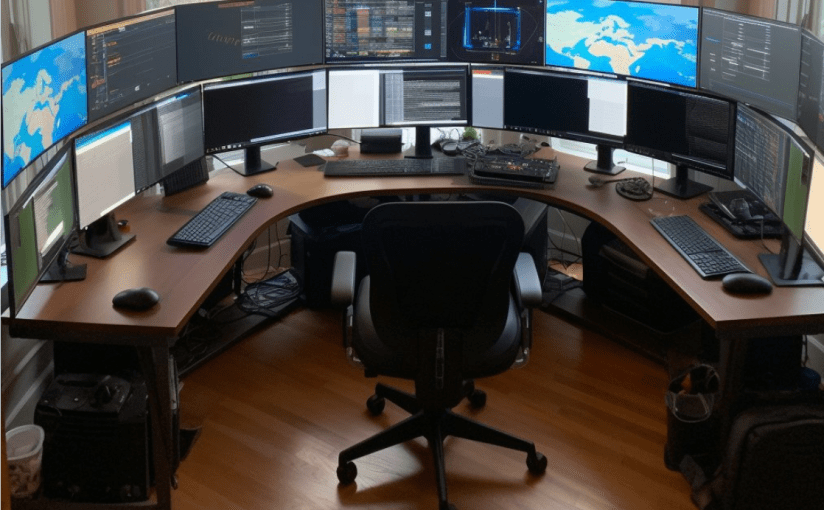
As @Oxgaut rather gloatingly posted on Twitter on Apr. 5: “If you’re not working multiple remote jobs with ChatGPT, you’re leaving money on the table.” The accompanying image to the post – also used above – showed an empty swivel chair in front of a James Bond baddie-like bank of 10 monitors showing maps, graphics, and lines of computer code. 

The full version of this article was first published on Digiday’s future-of-work platform, WorkLife, in April 2023 – to read the complete piece, please click HERE.

Remote-working Gen Zers using would-be commutes to develop side hustles

For some remote workers, how they spend the time they would’ve been commuting has been critical. For Gen Z, specifically, it’s meant developing side hustles.

The most recent calculations show the average one-way trip to the office is 27 minutes and 36 seconds for U.S. workers. In the U.K., it’s almost the same: 28 minutes. Remote workers effectively then gain an hour daily. 

In the U.S. alone, workers now spend 60 million fewer hours traveling to work daily, compared to before the pandemic, according to the New York Federal Reserve’s Liberty Street Economics blog. Its findings show that, depending on age, people do different things with that time.

Older cohorts tend to devote more time to childcare, DIY, and cooking. But younger workers, while reallocating commuting time to social events, exercise, and eating out, are also making use of the extra minutes to develop side hustles and learn new skills.

The full version of this article was first published on DigiDay’s future-of-work platform, WorkLife, in November 2022 – to read the complete piece, please click HERE.

In-office or remote work: which do Gen Zers really prefer for career progression?

The hybrid working headache is not shifting but intensifying. It is a straightforward calculation to work out that by the end of the decade, members of Generation Z — born between 1997 and 2012 — will make up around 30% of the workforce. Yet where they want to work, and thrive, is much harder to determine right now. 

A flurry of recent reports analyzing whether Gen Zers would prefer to be in the office or work remotely are wildly contradictory. For instance, a global report published in mid-October by workforce solutions company Aquent found that 77% of 18- to 24-year-olds are worried that remote work restricts their career progression. 

However, another report published in November by the Policy Institute at King’s College London and King’s Business School found that Gen Zers in London believed remote working had benefits that could help their career progression. Additionally, many people in this generation have just entered the workforce and have never worked in an office.

Considering the mixed picture, what could — and should — employers be doing today to better prepare for tomorrow, when this cohort will lead?

The full version of this article was first published on DigiDay’s future-of-work platform, WorkLife, in November 2022 – to read the complete piece, please click HERE.

How this company is encouraging employees to create in-office FOMO to entice their colleagues back

The carrot and the stick have, respectively, been dangled and wielded to tempt or force workers back to the office, with varying success. So far, neither approach has worked that well. There is limited appetite for incentives like free yoga and chai lattes, or a team lunch on Fridays. And the stick approach is spurring people to leave.

Global mobility and food-delivery company Bolt has embraced a third approach: generating fear of missing out (FOMO).

Speaking during a recent round table event organized by messaging platform Slack in London, Mathis Bogens, Bolt’s head of internal communications, said he encourages staff in the office to post about having a great time on the organization’s Slack channels, to stoke jealousy in remote workers.

“We use FOMO. This is the easiest way,” he said. “You just share photographs of how much fun it is to be at the office,” he said. “For example, we will go out as a team and order pints and good food, enjoy it together, and share lots of photos on Slack. So those people who decided not to come to the office don’t feel good.”

The full version of this article was first published on DigiDay’s future-of-work platform, WorkLife, in November 2022 – to read the complete piece, please click HERE.

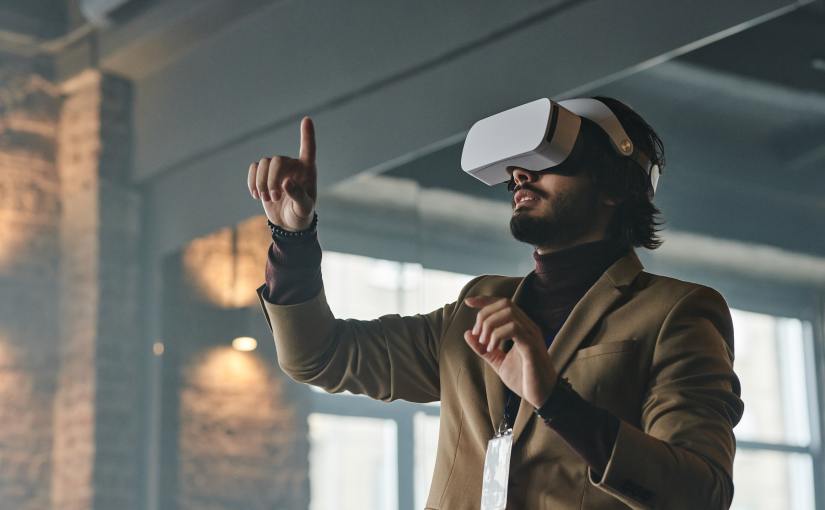
Are metaverse meetings the answer to engaging hybrid workers?

Meetings culture for hybrid workers is broken, according to recent reports and analyses. Some 43% of 31,000 workers polled from across 31 countries by Microsoft earlier this year said they don’t feel included in meetings. Some organizations are turning to the metaverse to make meetings more engaging. But can that really be the answer long term?

Despite its current low level of capability, numerous organizations have embraced the metaverse for meetings and not just for novelty value. One such business is Battenhall, which has created working spaces for employees in Meta’s Horizon Workrooms — a virtual reality meeting space it has developed — and an online game platform Roblox. “Meetings are one of the things that [the metaverse] is particularly useful for right now,” said London-based founder and CEO Drew Benvie.

For the last ten months, Benvie has used weekly team meetings in the metaverse. “Staff members reported that it increases feelings of togetherness for those working from home over traditional phone calls or video meetings,” he said. “While the metaverse is generally considered to be in its infancy … it makes Zoom calls feel prehistoric.”

Moreover, it’s what many workers want, especially younger cohorts. So finds Owl Labs’ new State of Hybrid Work report, which polled over 2,000 full-time U.K. employees. Indeed, 42% of 18- to 24-year-olds said they want an office metaverse, and a further 23% would be keen to work in VR. 

However, plenty of skeptics lurk. “I don’t think the metaverse will solve any of the issues [around engaging remote workers],” said Ariel Camus, founder and CEO of Microverse, a school that trains software engineers. “In fact, I think it will create new problems because there are new technological barriers for people to join and participate as equals in meetings.”

The full version of this article was first published on DigiDay’s future-of-work platform, WorkLife, in October 2022 – to read the complete piece, please click HERE.

Demand for fully remote jobs is on the decline

Is the desire for fully remote roles dwindling? Yes, dramatically, according to Flexa Careers’ most recent installment of the Flexible Working Index, which tracks where, when, and how people prefer to work and what companies offer. 

In August, 60% of job searches on Flexa’s global directory for flexible jobs were for fully remote roles. Yet it plummeted to 44% in September — a drop of 26 percentage points and, in pleasing symmetry, 26.4% — using a sample size of 43,569 searches by those hunting work (83% in the U.K. and 3% in the U.S.) and over 1,290 job adverts.

Interestingly, employers also mirrored the decline: only 10% of fully remote roles were advertised in September. The figure was 24% just a month earlier.

Could we be witnessing the start of seasonal fluctuations in demand for fully remote jobs?

Perhaps the drop in searches for fully remote roles hints at a deeper trend — employees and employers alike have concluded that being out-of-the-office five days a week is counter-productive. Moreover, it is increasing well-being issues and loneliness for some employees and, in turn, making it harder for employers to attract and retain talent. 

The full version of this article was first published on DigiDay’s future-of-work platform, WorkLife, in October 2022 – to read the complete piece, please click HERE.

Rise in ’employee nomading’ leaves HR teams baffled about where their staff are

Ask any human resources professional what their biggest work headache is, and you’re unlikely to hear it’s that they can’t locate their staff.

It turns out, the shift to hybrid or fully remote working that’s occurred over the last few years has meant that now HR departments are often left in the dark about where all their employees are. And in many cases, employees who decide to travel somewhere to work for a week or month aren’t always informing HR.

Well over two-thirds of employees surveyed in the U.S. and U.K. said they do not report which days they work outside of their home state or country to HR, according to HR company Topia’s Adapt to Work Anywhere report.

A further 40% of HR professionals admitted they were shocked to discover certain employees had changed their working location without informing them, but also conceded that many more employees who have gone AWOL may have done so under the radar, according to the same report.

It’s a catch-22 for employers. Most (96%) employees interviewed in the Topia survey (and other surveys indicate similar findings) ranked flexibility in working arrangements as a key factor when seeking a new employer. And 94% agreed with the statement: “I should be able to work from anywhere I want as long as I get my work done.” 

This article was first published on DigiDay’s future-of-work platform, WorkLife, in September 2022 – to read the complete piece, please click HERE.

How to steer clear of ‘employee whiplash’ if driving a return to the office

On Valentine’s Day, Microsoft showed its affection to staff by announcing plans to reopen its Washington state and California Bay Area offices on February 28 — but will workers love it?

Due to the ongoing pandemic, the technology titan had indefinitely postponed return-to-work plans for its 103,000 employees, last September. But now its hybrid-working strategy has been revealed, and staff members are being called back into the office, it will likely spur other prominent organizations to follow suit. 

But could the sudden shift from remote to in-office working cause what Brian Kropp, chief of research for Gartner’s HR practice, calls “employee whiplash”? And, if so, what are the likely short- and long-term effects, and how can they be avoided?

This article was first published on DigiDay’s WorkLife platform in February 2022 – to continue reading please click here.

Remote, hybrid, office? Which will be your ‘new normal’?


To help business leaders decide how their future workplaces might best operate, three experts with very different views on the subject argue the pros and cons of fully remote, hybrid and office working

After 18 months of enforced homeworking for many people, it’s difficult to foresee a future in which remote and hybrid working won’t feature. However, many businesses are keen to coax staff back to the office at least for part of the week – Covid-19 restrictions permitting – while others have spoken out against working from home, including Goldman Sachs CEO David Solomon who called it an “aberration”.

So, is hybrid working likely to last, or will there be a snapback to old operating methods? Here, three experts debate whether fully remote, hybrid or office working is the best option for the future.

Fully remote working

Darren Murph has written the manual on remote working, literally, publishing Living the Remote Dream: A Guide to Seeing the World, Setting Records and Advancing Your Career in 2015. Four years later, in July 2019, he was appointed head of remote at technology company GitLab, one of the world’s largest fully remote organisations with more than 1,300 employees spread across 65 countries.

For Murph, the past 18 months have proved that remote working is the future. “The pandemic has forced organisations to grapple with reality: distributed work is here, it’s happening, and it’s no longer a choice or an argument for the vast majority of industries,” he says. “Covid-19 accelerated a trend that began decades ago, as society leverages the internet to live better lives while driving business results. The benefits are many – to the employee, the employer and the world.”

Some of the advantages, Murph argues, are a more diverse and inclusive workforce, greater efficiency in workflows and a broader global coverage in servicing clients. He also believes being fully remote makes businesses more resilient and more able to preserve continuity regardless of whether the office is open or closed. 

“Businesses will be better equipped to weather future crises by empowering results that are decoupled from geography. They’ll find it easier to hire diverse teams and elevate introverted voices that have historically been squashed,” he says.

While Murph acknowledges that “all-remote isn’t for everyone” and can make onboarding recruits more challenging, he believes the pros far outweigh the cons. “Knowledge workers have proven that they can drive results without the crutch of the office,” he says. “Rather than employees needing to justify why they should work from home as opposed to the office, we’ve entered a world where employers must justify exorbitant waste in terms of commute time and real estate to accomplish digital tasks.”

Offering his three top tips for businesses seeking to optimise a remote-working model, Murph suggests the first step is to hire a dedicated remote-work leader. “Companies need to realise this is a full-scale organisational transformation and, if you want it done well, it can’t be a part-time job,” he says.

Murph also recommends that companies audit their values and documentation hygiene to ensure both are ready for a distributed workforce. Finally, he suggests starting to shut down office spaces. “Nothing sends a clearer signal that your future will be driven by how not where work happens than a shift away from offices,” he says.

Hybrid working

Samantha Fisher is head of dynamic work for Okta, an identity and access management company. Explaining what dynamic working means at Okta, she says: “It’s about personalising the working experience and enabling employees to work in whichever way makes the most sense for them. It’s not just a case of where employees are located – at the office, home or elsewhere – it’s about workplace design, people engagement, technology, talent acquisition, morale and company culture.”

At the start of the coronavirus crisis, 30% of Okta’s 2,400 employees were already working remotely. “We found that this flexibility increased empowerment, satisfaction and productivity,” says Fisher. “The pandemic accelerated the need for more flexible frameworks. Over the past year or so, employees have benefitted from a better work-life balance and reduced commuting costs, as well as greater autonomy which has led to more empowerment.”

Appointed Okta’s first head of dynamic work in January 2021, she was tasked with building organisational culture more broadly, anchoring equity, social connection and productivity, and enabling employees to work from anywhere successfully. “I spend a lot of my time working with cross-functional teams, thinking about the programmes, services and experiences we offer while in the office and how we can translate these for a hybrid environment and/or reposition services in a way that enhances experiences at any location,” she says.

The pandemic has forced organisations to grapple with reality: distributed work is here… it’s no longer a choice or an argument for the vast majority of industries

Fisher stresses the importance of “community building”, explaining that the workplace is a vital part of the business ecosystem and a key element of organisational culture. “I look at developing creative and holistic solutions that augment talent strategies, optimise technology enablement and support shifts in workforce operations,” she says.

Okta’s The New Workplace Report: A Business Balancing Act – published in June 2021 and based on a survey of more than 10,000 office-based workers across eight European countries and 12 industry sectors – found 42% of respondents wanted a mix of home- and office-based working, 17% wanted to work from home permanently and just 16% wanted to work in the office five days a week.

But what’s needed to make hybrid working successful? “For organisations to provide flexibility and equity in their workplace environment, you need executive support, investment in technology, a focus on culture and experience, and leaders to build and drive long-term strategy,” says Fisher. “It’s a fully cross-functional initiative and requires both passion and heart to curate a dynamic working environment.”

Office working

Chris Grazier, an office agency partner at Hartnell Taylor Cook and president of the Bristol Property Agents Association, is confident that office working will thrive again. But he urges organisations to be smarter with their workspaces rather than using the trend for hybrid working as a way to downsize and, ultimately, cut overheads.

Grazier admits that the democratisation of video conferencing during the pandemic has been “a revelation for all businesses”, including in the property industry in which he has operated for almost three decades. “The flipside,” he says, “has been staff isolation, the effect on teamwork, the inability to mentor junior staff and the loss of creativity that springs from face-to-face or group working.”

Now, after a year and a half of Zoom calls, there is a collective craving to return to the office and to network and collaborate without an awkward time delay or mistakenly being on mute. “The office is where business culture is formed,” says Grazier. “It’s both good for the employee, who can build some separation between home life and work, and it connects employers with employees in a way that a Zoom call never can. And despite headlines touting that the home is the office of the future, over the past few months we have witnessed businesses returning staff to the workplace.” 

Rather than employees needing to justify why they should work from home… employers must justify exorbitant waste in terms of commute time and real estate to accomplish digital tasks.

Indeed, data showing the floor space taken up in Bristol city centre in the past three quarters, including Q2 this year, reveals more ‘Grade A offices’ – high-quality workspace, refurbished or new – have been occupied than non-Grade A spaces. “This is a complete reversal of previous trends, and it hints that businesses are focusing on less but higher-quality space for their new offices than they did for their former ones,” Grazier says.

Echoing concerns from business leaders about tracking workers’ productivity away from the office, Grazier believes that by investing in smarter workspaces, staff will want to return. “I’d recommend that organisations use less space but improve the quality,” he says. 

Grazier also points out that many organisations are emerging from the pandemic with a decent balance sheet, thanks to government support, offering them a unique opportunity to upgrade their offices. “Don’t try to save money if you are moving,” he advises. “Try to spend that money more wisely by creating an environment that draws on the strengths of teamworking and positive culture.”

This article first appeared in Raconteur’s Hybrid Working report, published in September 2021