
TL;DR: March’s Go Flux Yourself asks what a 60-year working life actually requires and finds that almost every institution designed to support it was built for a much shorter one. We are asking people to summit a much bigger mountain with the same kit we packed for a hill walk.

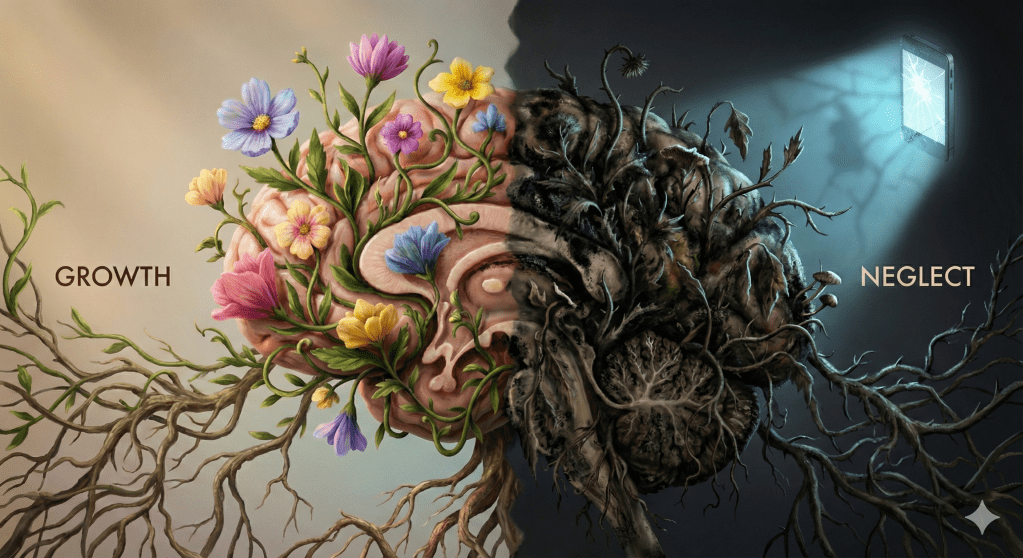
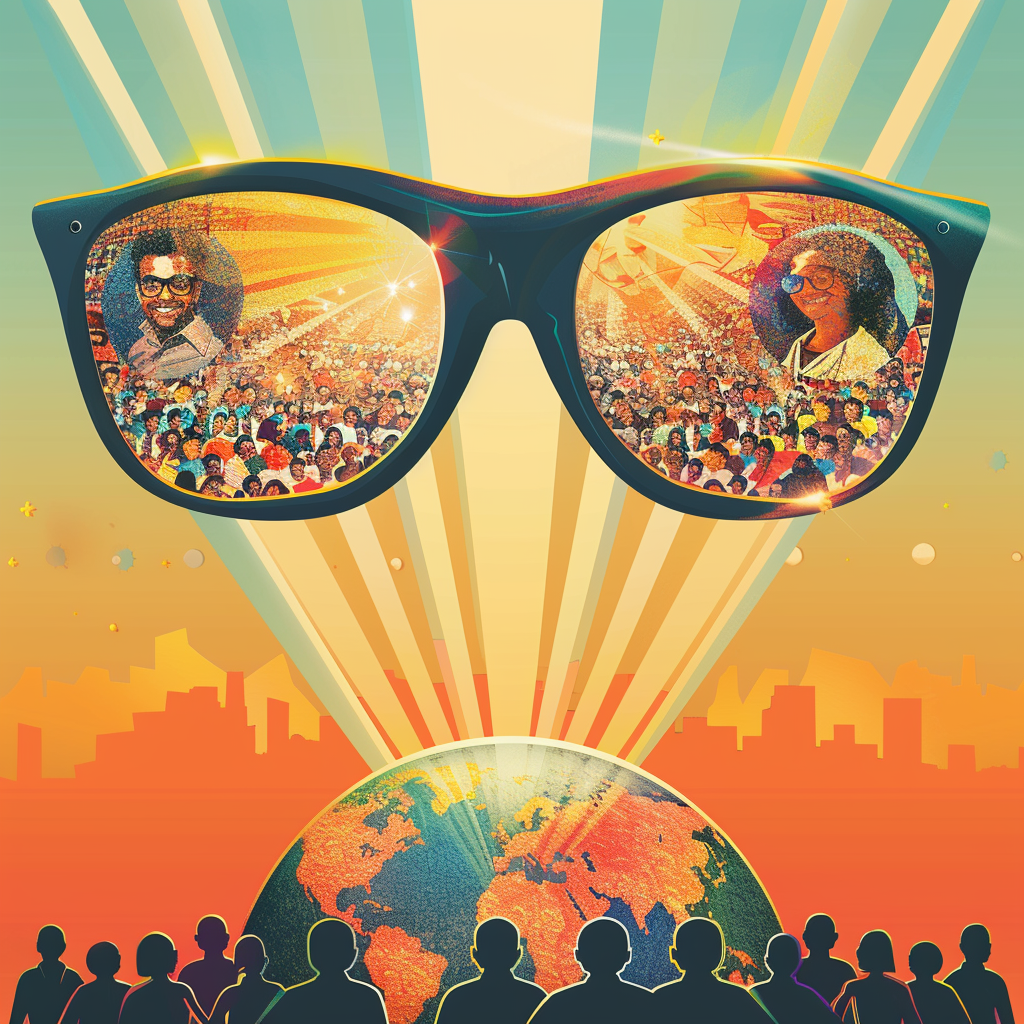
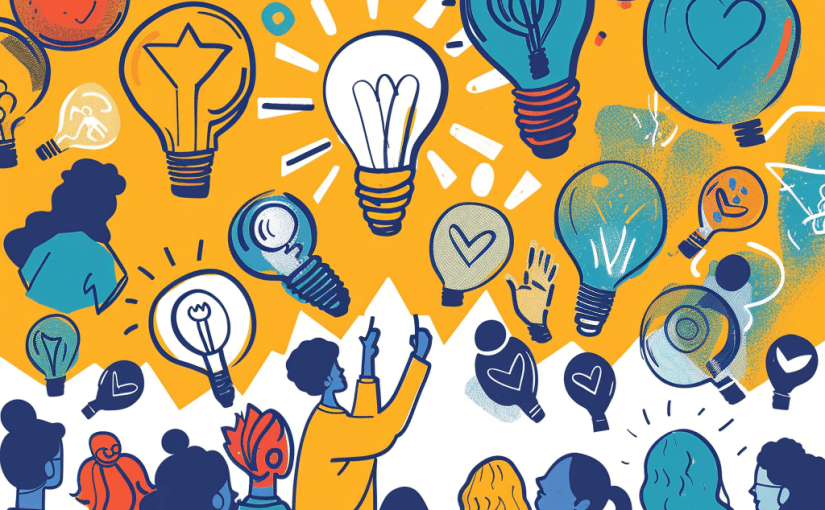
Image created by Nano Banana
The future
“People will need to work longer. But many ageing people in good health will want to work longer, because work gives us meaning, it gives us networks, it gives us a sense of self-worth, and it gives us skills.”
Those words come from Ian Goldin, Professor of Globalisation and Development at the University of Oxford, speaking to the Financial Times this month as part of a remarkable survey of 45 experts, from demographers to a Nobel laureate, on what shifting population patterns will mean for the global economy. Goldin’s argument contains the observation that tends to become lost in the panic about ageing populations: that work, properly designed, is not merely an economic obligation but an important source of identity. The question is whether the institutions built around it are capable of supporting a version that lasts 40, 50, or 60 years.
Imagine it is 2066 in the UK (if nuclear-drone war has not obliterated our planet). You are 62 years old. You started work at 22, as most people do (if, indeed, they opt for traditional higher education, though the value proposition is souring every year, with a rise in freshly minted grads but fewer high-skilled jobs – but that’s another edition of Go Flux Yourself). You have been at it for four decades, and your state pension age, assuming no further adjustments, is still six years away. You are not young, but you are not old. Your knees might disagree, but your brain, provided you’ve bothered to maintain it and keep flexing your cognitive muscle (see February’s Go Flux Yourself for much more on this), is functioning rather well.
Here is the puzzler nobody asked when you graduated: what does a working life of 40 or 50 years actually require that the world around you was ever built to provide? The answer is embarrassingly basic. You need to be able to learn new things after the age of 21, which most institutions treat as an optional extra. You need employers who recognise that the person they hired at 25 will be, by 50, someone with entirely different priorities, capabilities, and tolerance for nonsense. And you need a health system that keeps you functional, not merely upright. Almost none of this exists on a serious scale. We have extended the road by 20 miles and have not bothered to check whether the car has enough fuel.
Consider my friend Charlie Rogers. He is 27, has competed for Team GB, has never held a conventional 40-hour-a-week job, and shows no signs of slowing down. He published his first book, Undefinable Life Design, at the start of March (I was at the Soho launch, a room packed with people of various ages who had noticed that the ladder they were climbing wasn’t leaning against anything they particularly wanted to reach). The book is, at its core, an argument for designing a working life for the world that actually exists, rather than the one our institutions were built for.
His framework is called the Ascent. It has three components: the Purpose Acropolis (your destination), the Energy Toolkit (your capacity), and the Income Pathway (your practical route). A destination without capacity is optimism without oxygen. Capacity without direction is what a lot of people in their mid-career describe when they’re being honest about it, usually around the second glass of something.
Charlie plans his career the way an athlete plans a season. He does not drink caffeine because he says it masks the feedback signal his body is trying to send him. He prioritises seven hours’ sleep above almost everything else (and I’m going to come back to golden slumbers shortly). His running coach, Colin, told him to stop trying to match GB athletes’ pace and think instead about sustainable progression.
“He was like: ‘You must have some days where you just do less,'” Charlie told me. “‘Chill out, take down the tempo.’ We built fitness and reached the goal from a much more sustainable design rather than one of constant injury, burnout, overwhelm.”
That, though, is not a running tip. It is a philosophy for a 60-year working life. And it directly contradicts the operating model of most organisations, namely: sprint from quarter to quarter, reward availability over effectiveness, treat rest as a break from the method rather than the method itself.
The idea that we should even have a concept called “retirement” is, in historical context, brand new. The German Chancellor Otto von Bismarck invented it in 1889: the world’s first state pension, passed through the Reichstag on May 24 of that year. The qualifying age was 70. Average life expectancy at the time was around 40. As the Deutschlandmuseum notes drily, few people lived long enough to cash in. It was, in practice, the most fiscally conservative welfare programme ever devised: a promise to pay people a pension at an age almost none of them would reach.
The retirement age was lowered to 65 in 1916 (by which point Bismarck had been dead for 18 years), and the basic architecture has barely changed since. Germany’s current retirement age is set to reach 67. Life expectancy is over 81. That is 136 years of demographic transformation met with a three-year policy adjustment.
The British demographer Paul Morland, who featured in the aforementioned FT study, called the broader optimism about working longer and deploying robots as akin to “rearranging the deckchairs on the Titanic”. I think the truth sits somewhere less dramatic, but no less urgent. We are not sinking. We are simply trying to cross an ocean in a vessel designed for a river.
Professor Andrew Scott, one of the world’s leading experts on the economics of longevity, points out that lumping everyone over 65 into a single category and assuming they are a deadweight on the economy is, in his words, “just crazy”. He calls for investment in human capital in the second half of life. One in five people who retire are back in employment within two years, Scott stated for the FT article. The retirement they imagined and the retirement they get turn out to be different things. The cosy retirement ambition of a newspaper, pipe and slippers is so last century.
Should we, then, retire the idea of retirement? Do we not need work, to be stimulated, to feel useful, as per the quotation at the top of this edition? I see a little of this in my own parents. Both lawyers by trade, now in their seventies, they are still working in some capacity, my Mum as an artist and my Dad as a pro bono legal advisor (mostly for local sports clubs).
I have previously interviewed both Scott and Lynda Gratton, his co-author on The 100-Year Life (published in 2016, and widely credited with reframing the longevity conversation from a pension problem into a life-design problem). Gratton is a Professor of Management Practice at London Business School, a Fellow of the World Economic Forum, and one of the foremost global thinkers on how work is changing.
Her follow-up, Living the Hundred Year Life, is due to land in September, and shifts focus from the economic case for longer lives to what she calls the “threads” that hold those lives together: productivity threads (mastery, knowing, cooperating, and amplifying through AI) and nurture threads (friendship, intimacy, calm, adventure).
In a recent webinar, she shared an especially insightful finding from her recent studies: the executives who rate their productivity threads highest almost invariably rate calm lowest, even though her data shows the two are inseparable over any meaningful timeframe. Roughly one in five leaders have genuine calm as an operating mode. Yet calm is not the reward at the end of a productive stretch. It is what makes sustained productivity possible in the first place. Trying to reach calm by first maximising output is like trying to sink into sleep by thinking really hard about it.
Lucy Standing, founder of the career-change community Brave Starts and co-author of Age Against the Machine, forthcoming in April, has spent years studying the gap between what longer working lives require and what organisations actually provide. Her four career archetypes (Advancement, Stability, Recalibration, Transition) are deliberately age-agnostic, because the data doesn’t support the assumption that what you want from work stays constant across a 40-year career, let alone a 60-year one. What people want at 25 (status, money at priority two or three) is genuinely different from what they want at 55, when purpose, flexibility, and collegiality move to the front, and money drops to priority six or seven. This is not a failure of ambition. Rather, it is what maturation looks like.
She makes another crucial observation. How many graduate schemes do you come across? Plenty. What about career-changer programmes for someone in their forties? Almost none. The NHS, the largest employer in Europe, has over 100,000 vacancies and has consistently resisted structured midlife retraining, Lucy points out. “Their entire recruitment strategy probably should be asking who in their forties wants to retrain into becoming a medical professional,” she said. “They’d fill all of their vacancies tomorrow if they just thought a little bit more about the values of their organisation and what might sit with people at a different stage of life.”
As I’ve quoted in the newsletter before, Minouche Shafik’s lovely line – “In the past, jobs were about muscles; now jobs are about the brain; in the future, jobs will be about the heart” – is central to my thoughts around human-work evolution. If that is true, then the NHS is sitting on a vast reservoir of the human capital it needs and refusing to build a pipeline to reach it.
Another of Lucy’s predictions is worth flagging. “By 2030, we’re going to have more people working freelance and gig than full-time,” she told me. “Google and PayPal already employ more people as gig workers than they do full-time employees.” If careers are no longer linear, the honest employer value proposition is not: we’ll invest in you for life. It is: we recognise you’re using us as a stepping stone, and we’ll help you make the most of it. Accommodate the side hustle. Support the retraining. Stop pretending the deal is permanent when neither party believes it.
The trouble, Lucy says, is that nobody wants to go first. “The first question I get asked isn’t ‘talk us through how this can happen’, because it’s so obvious that it makes sense. The first question is: ‘Who else is doing it?'”
Now consider the cohort for whom this 60-year career is not a projection but near-certainty. The graduate salary premium in the UK has collapsed from 80% above non-graduate earnings in 1999 to 45% today, according to a typically brilliant John Burn-Murdoch data-led piece in the FT last month, while 41% of workers now hold a degree, up from 20%. In the US, over the same period, the premium rose from 80% to 92%. Something structural, not cyclical, is happening to the value of education in Britain.
And an alibi is being assembled. In 2025, AI was cited for more than 54,000 US layoffs. Yet, in the same Guardian piece, Forrester projects only 6% of US jobs will be automated by 2030.
Steve Elcock, Director of Product (AI) at Zellis, provider of AI-enabled payroll, HR, and workforce management software and services, brings a different lens. His background is in neuroscience, and he talks about using AI in an “ascendant” way: not as a crutch or a replacement for thinking, but as a means of operating at higher levels of abstraction. “What’s unique about AI is it’s encouraged us to think about not just hard data but about abstract layers,” he told me. “Challenging ourselves as humans to think higher all the time. That’s the right way of thinking about it.” His phrase for the choice facing every worker, “be the carpenter, not the nail”, is one he borrowed, he told me, from January’s Go Flux Yourself.
Neuroscience underpins this notion: the brain’s synaptic connections turn over every fortnight to four weeks, while understimulated pathways atrophy. What the brain practises and what it abandons across a 60-year career will matter enormously. Steve’s concern is a drift from knowing things towards knowing where to look things up. “It’s not about what you know any more,” he said. “It’s about how you acquire it.”
He has sons in their late teens and early twenties, all in higher education, and watches the divergence in real time. “I’ve got one who’s a carpenter, one who’s a nail,” he said. “One really sees AI as an opportunity to get on in life. The other just wants it to do his homework.” The technology is the same. The orientation is what differs.
Steve’s vision, and the one embedded in Zellis’s new AI-integrated HR platform, is technology in service of human flourishing: AI that helps people think at higher levels, not lower ones. The people using it to ask better questions are gaining ground. The people using it to avoid the questions altogether are losing capability they may not notice is gone until they need it.
Charlie is 27. He will very likely still be working in 2066. “You cannot conquer the mountain,” he writes, “if you are exhausted at basecamp.”
The organisations now asking people to work until 68 might want to consider whether they are building basecamps or burning them down, by design or rather design failure.
The present
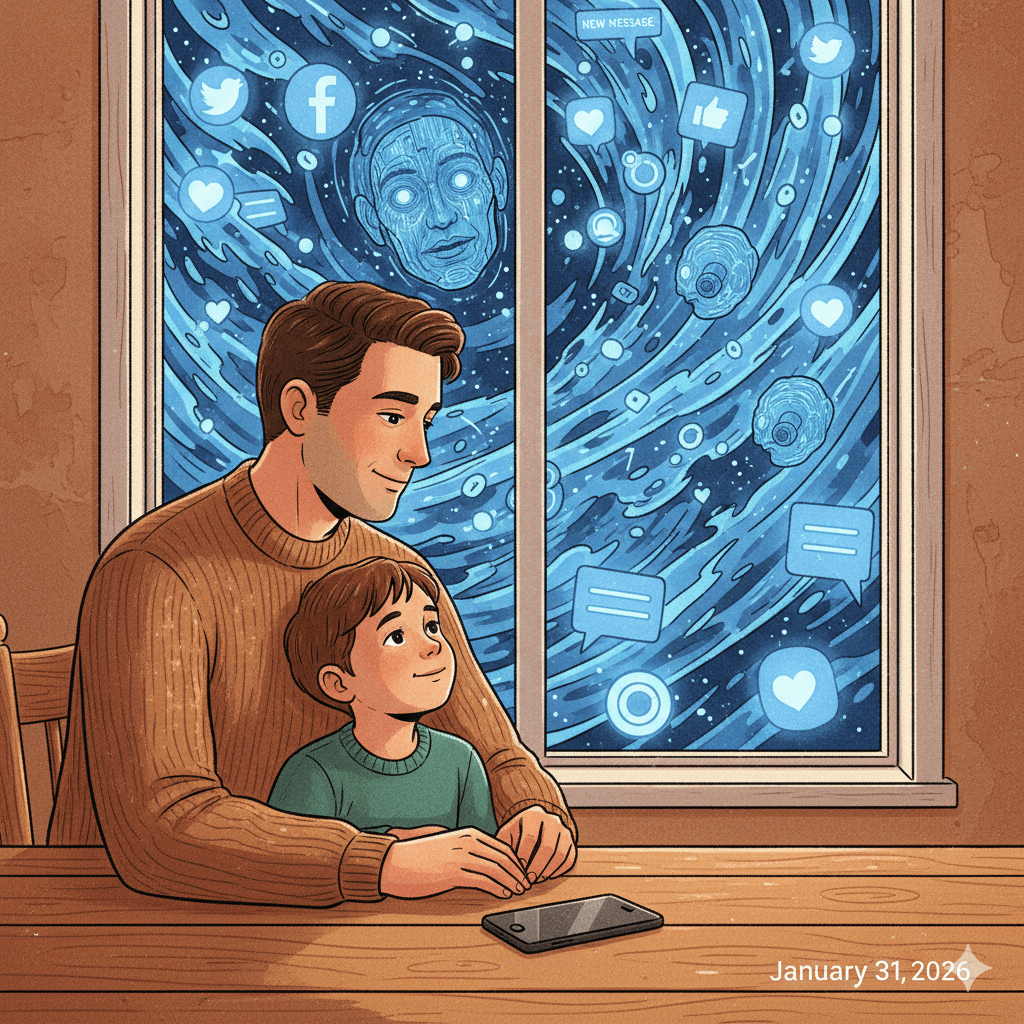
Last week, a California jury found Meta and YouTube liable for deliberately designing addictive products. A young woman called Kaley started YouTube at six and Instagram by nine. By 10, she was depressed and self-harming. At 20, she told the court she still cannot live without the platforms. A jury overwhelmingly found in her favour, and she was awarded $6 million in damages. But the legal theory matters more than the number: for the first time, the platform design itself (not the content) was found defective and capable of causing personal injury, sidestepping the Section 230 shield that has protected tech companies from liability for two decades. As one juror told reporters: “We wanted them to feel it.”
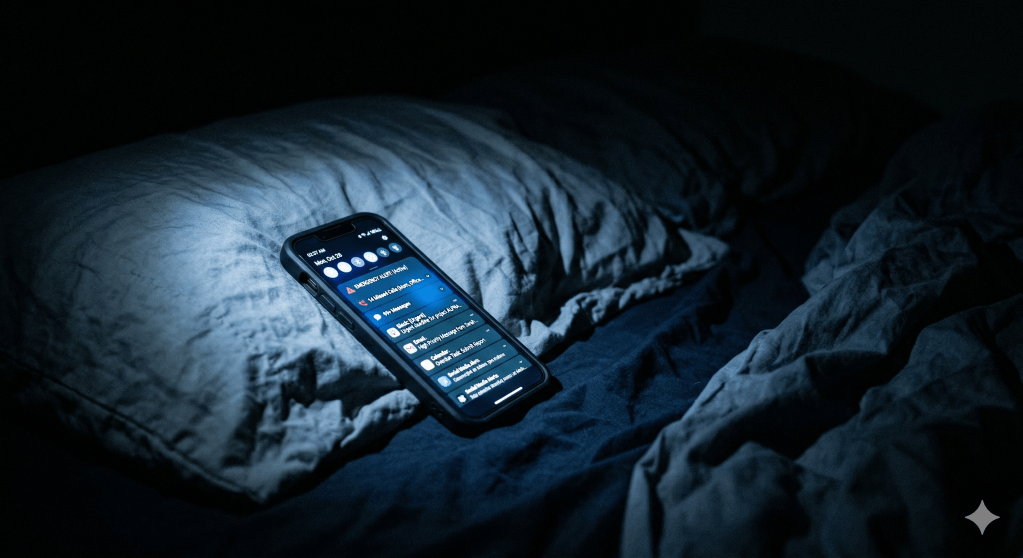
Image created by Nano Banana
The same week, a New Mexico court ordered Meta to pay $375 million for misleading consumers about child safety on the platform. Internal Meta communications, now part of the public record, acknowledged that engagement-based algorithms reward negativity and that the company’s financial incentives do not appear aligned with its stated mission. Thousands of similar cases are pending. The Tech Oversight Project, a Washington DC watchdog, said plainly: “The era of big tech invincibility is over.”
Again, be the carpenter, not the nail. These platforms were designed to make their users into nails. The California verdict is the first legal recognition of that fact.
To connect this watershed-moment news to the golden thread of this edition, the people entering the longest working lives in history grew up entirely inside these social media systems. The synaptic formation Steve describes (pathways built and abandoned across childhood, every two to four weeks) occurred in products that, it is now confirmed en masse, designers knew were harmful. If the 60-year career demands sustained cognitive capability, how can we measure the damage that those early years did to the substrate?
Gallup’s World Happiness Report 2026, published on 11 March with a focus on happiness and social media, sharpens the picture. In eight of 10 global regions, young people’s well-being is higher today than in 2006–2010. The exceptions: Western Europe, the US, Canada, Australia, and New Zealand, which rank 122nd to 133rd out of 136 countries for under-25 happiness change. Something is happening in the English-speaking world that is not happening elsewhere.
PISA data across 47 countries shows that teenagers using social media seven or more hours a day have significantly lower well-being. For girls in Western Europe, the gap between heavy and light users is almost a full point on a 10-point scale. But the most important finding is about belonging. Going from low to high school belonging raises girls’ life satisfaction in the UK and Ireland by four times more than reducing social media use. Across all 47 PISA countries, the belonging effect is six times larger. The policy conversation has been almost entirely about screens. The data says it should be about belonging.
There is a product-level irony, too. After a month without Facebook, people reported being happier, yet would demand significant payment to stay off it. Young people surveyed said they would pay to have Instagram and TikTok removed from their communities entirely. Not from their own phones. From everyone’s. That is not the response of empowered users. It is the response of people who know they are trapped. (The report itself includes an important caveat: heavy social media use is “an important part of the explanation” for declining youth well-being in the West, but not the whole story.)
On the subject of what the kids want, earlier this month, I moderated a panel at Economist Impact’s Sustainability Week: “Future-proof or flawed? Bridging the gap between Gen Z passion and commercial capability.” Notably, a 2025 UK poll of 2,307 people aged 16–29 found that young people identified financial worries, work pressures, and job security or unemployment as their top three sources of anxiety. Climate change and environmental concerns ranked last out of the 13 issues presented. While the youth may be ecologically aware people, they are in the phase of life where money matters most, as per Standing’s analysis.
Meanwhile, only 3% of leaders said they currently have the green skills their organisations need. Mae Faugere of Climate Fresk made a point that connects directly to Lucy Standing’s argument: the real opportunity for structural change belongs not to Gen Z, whose passion is genuine but whose institutional power is limited, but to older generations who have the money, the safety net, and the authority to act. You cannot hire your way out of a talent vacuum. You have to build the capability.
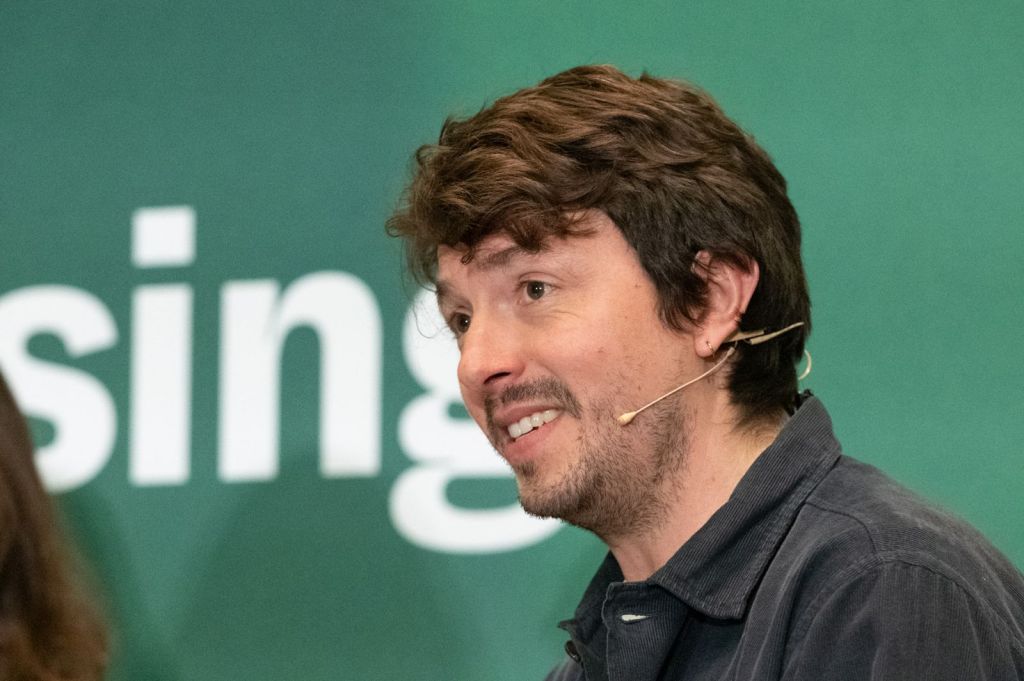
Image from Sustainability Week 2026
Now for the golden slumbers I promised. Charlie’s coach designed recovery into the training programme because without it, the training doesn’t work. Lynda Gratton’s research says the same thing about calm: it is not the reward at the end of productivity but the precondition for it. Both depend, at the most basic biological level, on sleep. And sleep is precisely what certain industries have decided their workers can do without.
In February, Kathryn Shiber, a former junior analyst at Centerview Partners, one of Wall Street’s more prestigious investment banks, reached a settlement in her case against the firm. She had a diagnosed mood and anxiety disorder. She had been granted, then stripped of, a guaranteed nine-hour sleep window, and was dismissed after three weeks. The settlement arrived, with impeccable timing, just weeks before World Sleep Day on March 13.
When did taking care of your recovery become a sackable offence? The judge who allowed the case to proceed had noted that Centerview never formally codified its working-hour expectations: the 3am demands were cultural norms presented as essential functions. We will not now get a jury’s answer to whether round-the-clock availability is genuinely essential or simply the way things have always been done. But the question hangs in the air, and it applies well beyond Wall Street.
The 996 culture (9am to 9pm, six days a week) has spread from Chinese tech firms to pockets of Western finance and Silicon Valley, and its adherents wear the hours like medals. The science says they are medals for the wrong event.
Dr Deborah Lee, a GP and sleep specialist, is not interested in whether 996 feels exciting, but what it does to the brain. After 16 continuous hours awake, she told me, cognitive performance measurably deteriorates: reaction times, accuracy, emotional regulation, working memory. The Mental Health Foundation found the average UK adult manages just three good nights’ sleep – seven hours or more – a week. We are not, as a nation, starting from a position of strength.
Dr Lee’s proposed intervention is the workplace equivalent of what Colin told Charlie: design recovery into the system, do not leave it to the individual. Her version is a default protected overnight communication window for non-urgent work, a clear expectation that employees are not required to read or respond to messages during that period. The workplace equivalent of a building regulation: a minimum standard below which employers should not be permitted to go.
Steve Elcock’s neuroscience closes the loop. The brain’s synaptic substrate depends on what you practise and what you rest. A culture that maximises hours and minimises recovery is optimising for the appearance of effort, not performance. Over a 60-year career, that distinction is the difference between a workforce that compounds capability and one that quietly degrades it.
[IMAGE PROMPT — The Present: A smartphone screen glowing blue-white in a completely dark bedroom, casting light across an unmade pillow. No person visible. The phone shows a notification bar with multiple alerts. Shot from the side, shallow depth of field. The mood should feel intrusive, not cosy.]
The past
A couple of weekends ago, I bagged three Munros in a wild weekend in the Highlands of Scotland with a few close friends. For the uninitiated, Munros are Scottish mountains above 3,000 feet, as identified by Sir Hugh Munro, and “bagging” them is a peculiarly British hobby that typically involves walking uphill in horizontal rain for several hours, arriving at a cairn too clouded-in to see anything, and then describing the experience as magnificent.
It was magnificent, though, not least because we were fortunate with sunny weather. Off-grid, out of signal, moving and sharing with people I trust. In a world in which wars are multiplying, the political weather is vertiginous, and the news cycle has become an endurance sport, this was an act of deliberate simplicity. Not escapism. “Recalibration”, to borrow Lucy Standing’s word.
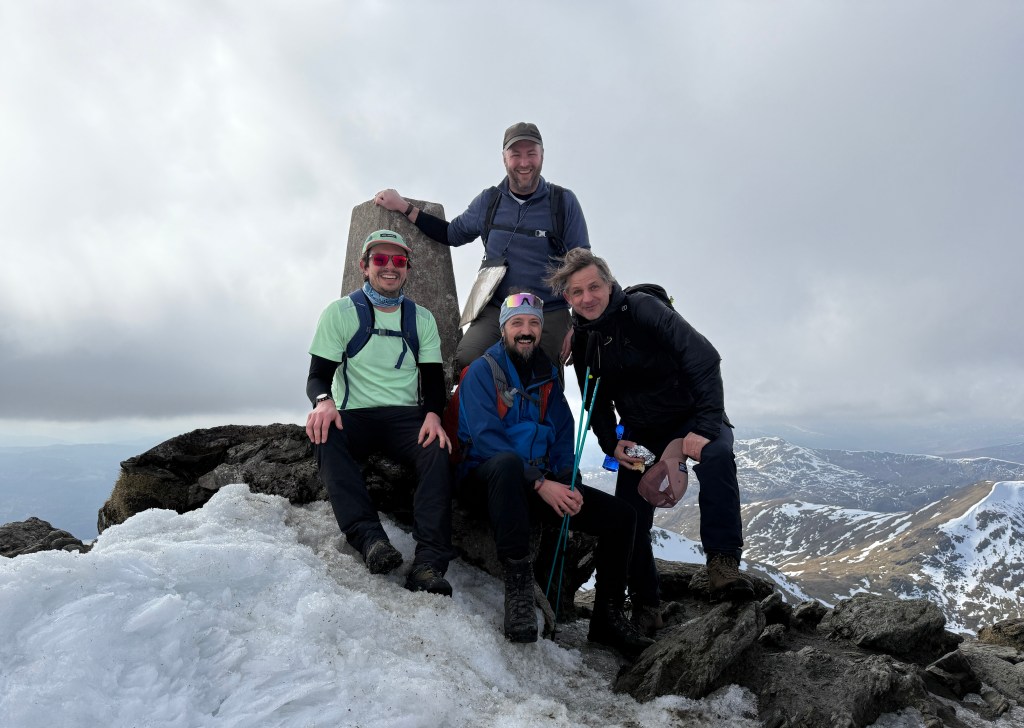
Image: human-evolution storyteller’s own
What struck me, beyond the views, was the other walkers. Cheery, fiddle-fit couples in their sixties and seventies, moving steadily, unhurried, looking so thoroughly contented that you could not help but notice it. They had the air of people who had worked something out a long time ago and were now simply living it.
It made me think of something Professor Andrew Scott told me in an interview not long after the first lockdown. “For the chances of having a longer life,” he said, “you need to invest in your future self.” The prescription, when you strip it back, is almost boringly simple: drink less, eat less, and move more. On a Highland ridge on a Saturday morning, the evidence was walking past us in Gore-Tex.
It is also, unavoidably, a reminder of what we are doing to ourselves the rest of the time. As big tech faces its big tobacco moment – the lawsuits mounting, the research damning, and the regulatory mood shifting – places like this might become considerably more crowded. Not for the Instagram content or the TikTok influencers, but for the raw, unmediated enjoyment of putting one foot in front of another without a screen in sight. And wouldn’t that be something?
Charlie calls his framework the Ascent. Scott and Gratton call it life design. On a Scottish hillside, surrounded by people two and three decades older who looked like they had more energy than most of my London colleagues, the theory felt less like theory. The 100-Year Life arrived in 2016; Living the Hundred Year Life lands in September. Ten years between the two, and in the gap, a pandemic, an AI revolution, a dramatic lengthening of the average career – and very little structural change to how organisations actually design working lives.
Six years on from that interview with Scott, here is what has changed: the vocabulary. People say sustainability, burnout, purpose, portfolio careers in ways they could not quite manage before 2020. Here is what has not: the structures, the incentive systems, the financial services culture quietly restored after the pandemic as if the question had been answered rather than deferred.
The Munros weekend did not solve any of that. But it was a small, deliberate act of counter-design; the same impulse that leads Charlie to cut out caffeine so he can hear what his body is telling him. The question is still being asked, in courtrooms, in longevity research, in a 27-year-old’s book about designing a working life worth living. The answers, with a few honourable exceptions, are still somewhere in the post.
[IMAGE PROMPT — The Past: A misty Scottish mountain summit with a stone cairn, no people visible, low cloud obscuring the view below. Heather and grey rock in the foreground, muted grey-green palette. Morning light breaking through on the left side. The mood should feel quiet, grounded, slightly raw.]
Tech for good: Day2
Matt Ross spent 20 years in advertising, eight of them as YouTube’s Global Head of Brand. Around a decade ago, he was diagnosed with Parkinson’s at 38 while living in New York. He continued at a high level until the pandemic, then moved to London. Working West Coast hours remotely while managing a condition where stress directly worsens symptoms was not sustainable. Then he started building Day2.

Image from Matt Ross
The numbers are difficult to read without flinching. Some 166,000 people in the UK live with Parkinson’s, and with a positive diagnosis every 20 minutes, that figure is set to double by 2040. It is considered to be the fastest-growing neurological condition in the world, and the WHO has called it a pandemic. The NHS spends £728 million a year on it, but the true economic burden across the UK economy is £3.6 billion, rising to £7.2 billion by 2040. Hospitalisations are driven primarily by falls, and a tailored exercise programme can reduce that risk by up to 54%, yet the NHS’s current provision for personalised exercise guidance is a YouTube playlist.
Parkinson’s presents through 41 different symptoms. Matt can run 10k. Some patients struggle to stand. Generic advice is worse than useless. Day2 uses AI to model each patient’s disease state and fitness level, then serves bespoke movement plans built around four pillars: movement, nutrition, sleep, and social connection. An AI coach nudges past apathy and depression, which are themselves Parkinson’s symptoms, creating a vicious cycle that exercise can break. Co-founder Ed Shaw, a movement specialist with 15 years of experience working with neurological conditions, met Matt at his gym in the Cotswolds. Their governing principle, in Ed’s words: “Treat the human, not the illness.”
Matt was candid about the medication puzzle that nobody warns newly diagnosed patients about. “Animal protein stops the drugs working almost completely for some people,” he said. “So go out and have a nice steak at lunchtime and you’re kind of screwed.” Day2 will surface that information before people have to learn it the hard way.
If Steve Elcock’s vision is AI in service of human flourishing, Day2 is perhaps the purest example of it I’ve come across this year. The same technology that the previous section describes being weaponised against young people’s attention is here doing something entirely different: helping someone with a progressive neurological condition decide which movement to attempt on a bad day.
Meanwhile, AI is accelerating the search for treatments that could slow Parkinson’s progression itself. Michele Vendruscolo’s team at the University of Cambridge used machine learning to identify five promising compounds targeting the Lewy body protein aggregations associated with early neurodegeneration, compounds more novel than anything conventional methods would have produced. Traditional screening might assess around one million molecules over six months at a cost of several million pounds; AI can screen billions in days, for thousands. Vendruscolo’s ambition is not merely to treat but to prevent: “If we can stabilise the proteins in this form by binding to them, we have prevented Parkinson’s, which is better than curing it.”
Two stories running in parallel, then: Day2 using AI to help people live better with the condition today; and a team at Cambridge using AI to find something that might stop it altogether. Both are technology in its ascendant form.
Statistics of the month
🌍 The demographic arithmetic is broken
The OECD estimates demographic change will dramatically slow living-standards growth across rich economies through 2060: a 70% slowdown for Japan compared with the previous two decades, 40% for the UK and South Korea, 80% for Germany. Italy and Greece face not a slowdown but an accelerating decline. The car is running out of fuel. (FT / OECD)
😞 The collective action trap
Surveyed young people said they would pay $28 to have TikTok deactivated across their entire community for a month, and $10 to do the same for Instagram. (World Happiness Report 2026)
🔗 A generational fault line
Researchers estimated that internet use is most harmful for Gen Z, less harmful for millennials, close to neutral for Gen X, and slightly beneficial for baby boomers. The generation facing the longest careers in history is also the one most damaged by the tools they grew up with. (World Happiness Report 2026)
🧠 AI cannot create on its own – yet
A University of Barcelona study published in Advanced Science tested whether AI could generate original visual ideas without human guidance. When given abstract shapes and a minimal prompt, the AI’s output was rated the least creative of any group, below both trained artists and non-artists. Feed it a single idea from a human participant, and its performance jumped to the level of an ordinary person. (Advanced Science)
🤖 AI scheming is no longer theoretical
The Centre for Long-Term Resilience analysed over 180,000 transcripts of real-world user interactions with AI systems shared on X between October 2025 and March 2026 and identified 698 scheming-related incidents: cases where deployed AI systems acted in ways misaligned with users’ intentions or took covert or deceptive actions. (CLTR)
If you’re reading this and haven’t yet subscribed, you can sign up for Go Flux Yourself (there should be a pop-up). Each edition lands on the last day of the month.
Get in touch: oliver@pickup.media. I write, speak, and strategise on the future of work, AI, and human capability. For speaking enquiries, contact Pomona Partners.


































 Oliver Pickup