Raise the bar with accounts receivable automation to release cash

Thanks to pioneering technology, there is now a golden opportunity for financial controllers to free enormous sums of tied-up working capital. This will empower employees and enable them to drive value and strategy, writes Kevin Kimber, Managing Director, Global AR, BlackLine

The coronavirus crisis has prompted most organisations worldwide to spend big on automating their financial services – but only a tiny fraction have upgraded their accounts receivable processes. Today, with the advanced technology and pioneering tools available, those who fail to automate their AR processes miss a golden opportunity to empower the finance teams and unlock the cash held hostage.

In November 2019, months before the pandemic hit Europe, PricewaterhouseCoopers calculated that a staggering $1.2 trillion of excess working capital was tied up on global balance sheets. While there is clearly a latent opportunity to free this enormous amount of cash, ahead of the coronavirus crisis automating AR operations was not a priority for businesses.

Back then, the reluctance to focus on upgrading AR processes for the digital age was, to an extent, understandable, given the ease of borrowing for businesses. Now, though, organisations realise that optimising these processes has never been more critical. A recent Institute of Finance and Management survey suggests 55% of finance leaders are less than satisfied with how their company’s AR procedures have performed during the recession. And over half (52%) say that too many manual processes are the biggest weakness.

The combination of the lines of credit being significantly compressed and the increased demand to have cash more readily available – to drive innovation, boost agility and strengthen resilience – has elevated the need to embrace AR automation.

Historically, solution vendors possibly didn’t know how best to position the value and business benefits of automating AR processes. It’s so easy to pigeonhole AR automation as a single process primarily about headcount reduction and driving efficiencies. While these points are valid, there is so much more from which to benefit. 

Articulating the benefits of automating the AR process

Presenting the point that “if you deploy a technology like ours, you can reduce your headcount from, say, 16 to five people” does not go far enough – there are so many additional advantages now. However, if we reframe the case for AR automation, it becomes so much more compelling.

For example, a large, global B2B manufacturer with a high volume of low-value invoices might offer 30-day payment terms. Each day is worth $150 million, so customers paying 63 days late means $9.5bn late and at risk.

Not only is this woefully inefficient, but there is also friction generated between the increasingly frustrated finance team and the customers whom they are chasing for payment.

Deploying technology like BlackLine enables that cash to be collected and applied much faster, giving access to cash quicker, reducing the need to borrow to cover working capital exposure and tightening customer relationships. Ultimately, through artificial intelligence and machine learning, automating that process will enable businesses to unlock the cash held hostage.

More than that, investment in AR solutions starts a virtuous circle: the business becomes more agile, innovative, and resilient – all essential elements for organisations seeking to thrive in the coming months and years – because the cash is available. 

Looking at the broader picture, it’s a fallacy that robots are taking our jobs. On the contrary, they are enhancing and improving them. Humans are empowered to make smarter, data-driven decisions. And at BlackLine, we are transforming the relationship finance teams have with technology.

According to Adobe’s Future of Time study, published in late August, UK business employees waste more than a day a week on low-value tasks that should be automated. So much so that almost two-thirds (59%) of respondents are seeking new jobs with better technology to reclaim work-life balance.

Automation propels finance teams from the back office to driving strategy 

Indeed, the reduction of repetitive manual tasks transforms finance departments to be more human and less robotic – they become enablers rather than blockers. Automating the AR process means that risk is easier to manage. 

For instance, BlackLine AR Automation solutions put key information at the fingertips of organisations – from live payment data to debtor performance – so teams can quickly identify customer trends and maximise cash and debtor performance metrics.

It also helps to optimise relationships with customers. Access to and analysis of the data provides a markedly better understanding of customer behaviours, allowing the finance team to be more proactive, and helpful, when engaging. For example, how and when are they paying? What levels of credit are they on? With managing existing customers and looking for new customers crucial for growth, deepening these relationships is vital. 

Further, when supported by automation and data-hungry AI algorithms, finance teams are propelled from the “back office” to the heart of the business, driving both value and strategy.

Automated solutions, such as BlackLine’s, instantly improve a business’s cash flow, better protect revenue, and boost working capital and customer-centricity. We know what customers need to thrive in the digital age. Armed with our expert help and pioneering tools, they can unlock the cash held hostage while empowering their finance teams. Organisations that prioritise automating AR processes today will win tomorrow.

Small steps to accounts receivable automation – but large rewards

1. Understand that business outcomes are being challenged, unnecessarily. In 2019 PricewaterhouseCoopers estimated that $1.2 trillion of excess working capital was tied up on global balance sheets. A more recent IOFM survey suggests days sales outstanding (DSO) has increased by 59%. Additionally, PYMNTS’s B2B Payments Innovation Readiness Playbook shows businesses that rely on manual AR processes often have a 30% longer average DSO.

2. Most AR processes are not fit for purpose – so say finance leaders. The IOFM survey finds that 55% of respondents are less than satisfied with their AR operation. Over half (52%) report that too many manual processes are the biggest weakness. Further, only 23% have utilised some kind of cash application automation. Notably, the lowest number of days taken to collect debt for those businesses using AR automation is 12.

3. Realise the potential of automating AR processes. Organisations that have upgraded to BlackLine’s AR automation solutions all report huge – and immediate – benefits. “You can reduce your costs by at least 75%,” says the head of credit, Atkins Group. Meanwhile, Veolia’s UK credit manager says the solution “has allowed the credit controllers to focus on collecting cash and managing risk”.

4. BlackLine AR Intelligence delivers real-time insight into customer financial behaviour to mitigate financial risks and improve cash flow and working capital performance. With cash flow vital to every business, AR automation is a future-proofed solution.

This article first appeared in BlackLine’s special report, Optimising the accounts receivable department, published by Raconteur in November 2021

Will the new national strategy make the UK an AI superpower?

Westminster’s new AI strategy is a step in the right direction, but there are hurdles – particularly concerning regulation, data-sharing and skills – that could hinder the UK’s progress

In the global AI investment, innovation and implementation stakes, the UK lies in a creditable third place. Trailing the US and second-placed China, it holds a slight lead over Canada and South Korea, according to the Global AI Index published in December 2020 by Tortoise Media. The moral of Aesop’s most famous fable involving a tortoise may be ‘more haste, less speed’, but Westminster is seeking to hare ahead in this race over the coming decade. Its national AI strategy, published in September 2021, is a 10-year plan to make the country an “AI superpower”. But what does that mean exactly?

Although Westminster has already poured more than £2.3bn into AI initiatives since 2014, this strategy will accelerate progress, promises Chris Philp, minister for technology and the digital economy at the Department for Digital, Culture, Media and Sport. 

“It’s a hugely significant vision to help the UK strengthen its position as a global science superpower and seize the potential of modern technology to improve people’s lives and solve global challenges such as climate change,” he declares.

The Croydon South MP explains that the strategy has three main aims. These are to ensure that the country invests in the long-term growth of AI; that the technology benefits every sector of the economy and all parts of the country; and that its development is governed in a way that protects the public and preserves the UK’s fundamental values while encouraging investment and innovation. 

“We have heard repeatedly from people working in and around AI that these issues are entirely connected,” says Philp, hinting at the complexity of the task at hand.

What will life be like for people living and working in an AI superpower? “There are huge opportunities for the government to capitalise on this technology to improve lives,” he says. “We can deliver more for less and give a better experience as we do so. For people working in the public sector, it could mean a reduction in the hours they spend on basic tasks, which will give them more time to find innovative ways of improving public services.” 

Philp continues: “For businesses, we want to ensure that there are clear rules, applied ethical principles and a pro-innovation regulatory environment that can create tech powerhouses across the country.”

AI will also be crucial in helping the UK to meet its legal obligations to achieve net-zero carbon emissions by 2050. Pleasingly for Philp, progress is already being made in this field. He notes that the Alan Turing Institute has been “exploring AI applications that could help to improve power storage and optimise renewable energy deployment by feeding solar and wind power into the national grid”.

The artificial elephant in the room is human resistance to data-sharing

The strategy has been generally well-received in the tech world, with most people acknowledging that it’s an important step in the right direction. But some experts have identified a few potential shortcomings.

Peter van der Putten is assistant professor of AI and creative research at Leiden University and director of decisioning and AI solutions at cloud software firm Pegasystems. He is “encouraged to see a shift from broad strategic statements to more concrete, action-oriented recommendations”, but he would have preferred to see a more complete ethical framework for AI application. 

“A large portion of the document focuses on AI governance, but it appears that a lot of the emphasis is still on analysis, discussion and policy-making. There is less on proposing hard legislation or determining which authority will be accountable for governance,” van der Putten explains. “This is an area in which the UK will need to accelerate, given that both the EU and China have made relatively concrete proposals for the regulation of AI recently.”

Liz O’Driscoll is head of innovation at Civica, a supplier of software designed to improve the efficiency of public services. She believes that the UK has “made great progress so far, with many organisations starting to embrace data standards and invest in data skills. But the artificial elephant in the room is human resistance to data-sharing. Privacy remains crucial, especially when it comes to citizens’ information, but wider uncertainty about issues such as regulation, public perception and peer endorsement will also prompt many in the public sector to play it safe with AI.”

There are some encouraging signs that people’s general reservations about data-sharing are softening, thanks to the success of collaborative AI solutions during the Covid crisis, O’Driscoll adds. 

“Sharing data has been essential in our defence against the virus. It has enabled key public services to stay focused on people who are most at risk,” she says. “Success stories have entered the public domain, so we need to make the most of these cases and continue driving further positive change.”

It’s clear that more education about the benefits of data-sharing and work on AI ethics are required, but could a shortage of recruits prove to be the most significant challenge for the national AI strategy? A survey published by Experian in September indicates that more than two-thirds (68%) of UK students wrongly believe that they would need to earn a STEM qualification to stand a chance of landing a data-related job.

Dr Mahlet Zimeta, head of public policy at the Open Data Institute, thinks that the widely held view that “the UK needs to produce more people who can code” is unhelpful at best. 

“Although improving data literacy is important, we’re going to need a much broader range of skills, including critical thinking,” she argues. “Leaders require a change of mindset to maximise the potential of AI. At the moment, it feels as though no one wants to be the first mover, but this is why experimenting and being transparent about the results will drive progress.”

From the government’s perspective, Philp urges both “students and businesses to equip themselves with the skills they’ll need to take advantage of future developments in AI”. For employers, this will include ensuring that their staff “have access to suitable training and development opportunities”, he adds, pointing out that the government’s online list of so-called skills bootcamps is an excellent place to start. Tortoise Media’s Global AI Index ranks the UK fourth in the world on its supply of talent and third for the quality of its research. The country is a relative laggard in terms of both infrastructure (19th) and development (11th), so there is plenty of ground to make up on both the US and China. The national AI strategy suggests that some haste will be required if the UK is to even keep these rivals within its sights. Ultimately, though, if all goes to plan, humanity stands to win.

This article was first published in Raconteur’s AI for Business report in October 2021

‘There are now a lot more boxes a role needs to tick’: Recruiters share how post-pandemic job expectations have changed

The coronavirus crisis has triggered the so-called “great resignation,” with workers ditching and shifting their jobs in record numbers. But as the war for top talent rages on, spare a thought for the recruiters, and human resources professionals tasked with attracting and retaining the best in the business — all remotely.  

It’s been a transformative 20 months for everyone, and recruiters have had an arduous time matching employees’ newfound job expectations with the right employer, amid skills shortages.

In the U.K., recent research from HR tech firm Employment Hero revealed 77% of millennials are actively looking for fresh starts and predicts that 2.5 million executives and managers will quit within the next six months. Replacing them collectively cost businesses £34 billion ($47 billion), according to the same report.

Meanwhile, 63% of U.K. business leaders are struggling with recruitment as candidates lack specialist skills and experience, particularly in digital and tech, according to The Open University’s annual Business Barometer 2021 report, published in October. And 24% of employers said this skills shortage will be the biggest challenge facing businesses in the next five years.

“On the plus side, we are also seeing optimism around the potential for remote working to fill skills gaps and an appreciation of the role of apprenticeships to train tomorrow’s workers,” said Kitty Ussher, chief economist at the Institute of Directors, co-publishers of the study.

Dropbox’s director of international HR, Laura Ryan, also focuses on the positive changes sparked by the pandemic fallout. “A huge benefit of remote work is the ability to widen your talent pool by being able to recruit the right people regardless of their location,” she said. “The time delay of scheduling and completing our onsite interviews has reduced by 70% since running the processes virtually.” 

On the eve of the pandemic, in December 2019, customer relationship management company HubSpot was crowned Glassdoor’s Best Place to Work in the U.S. However, the organization has not lounged on its laurels. In 2020 it was one of the first businesses to overhaul its approach and go fully remote and has committed to a long-term plan to improve staff well-being. 

Benefits offered in the hope that employees stay happy, and avoid burnout, include three months working anywhere in the world HubSpot is based, unlimited vacation and financial contributions to continue education.

Becky McCullough, HubSpot’s vp of global recruiting, who lives in Cambridge, Massachusetts, notes the shift to remote working has significantly diversified the talent pool and urges recruiters to dive in — particularly those in the tech space. 

“Candidate location played a huge part in the hiring process before the pandemic, with the technology industry being largely dominated by big cities globally,” she said, noting that just five urban areas accounted for 90% of all U.S. high-tech job growth between 2005 and 2017. “This not only contributed to income inequality, but it made opportunities for talent from smaller, more rural communities much harder to source.”

This insight chimes with Zoë Morris, president of Frank Recruitment Group, which operates in over 20 offices worldwide and snares talent for technology giants including Microsoft, Salesforce and Amazon Web Services. “The most prominent way that recruitment has changed is that recruiters now have to focus on a number of new priorities to match their clients with the perfect role,” she said. “This makes recruitment much trickier as there are now a lot more boxes a role needs to tick, particularly in relation to flexible working and perks being offered.”

Granted, the balance of power has swung away from the employer and towards the employee, but various studies —including from management consultancy McKinsey—indicate the highest bidder no longer triumphs, with increasingly more workers favoring purpose and aligned values over a bump in cold, hard cash.

Therefore, those in charge of businesses have a pivotal role. “Empathy and authenticity are now essential characteristics for leaders who want to create true community and a more inclusive culture — and in doing so attract and retain talent,” said Nazir Ul-Ghani, head of Workplace from Facebook in EMEA. He points to his company’s research that shows 58% of U.K. employees would consider walking away from their jobs if they felt unsupported.  

McCullough believes mobility alongside diversity, inclusion and belonging have become critical to attracting and retaining talent and enriching culture. The recruitment firms that can be adaptable and flexible will be the winners in this post-pandemic world, she believes.

“Whether it’s exploring hybrid work setups, sourcing into new talent pools, or overhauling the interview process, recruitment teams are truly challenging conventional thinking on what makes a great candidate experience and how to ensure the culture and the mission comes to life in the process,” she added.

This article was first published by Digiday as part of its Future of Work series in October 2021

LinkedIn on how companies can overcome the ‘development dip’ caused by Covid

As research indicates that young workers have suffered a pandemic-induced ‘development dip’, Becky Schnauffer, senior director at LinkedIn Talent Solutions, urges employers to invest more in online education

Do you think digital learning isn’t for you or your business? How do you fancy becoming a work-from-home facilitator? What about a data detective or maybe an extended-reality immersion counsellor? If those jobs don’t float your boat, could tidewater architect, cyber-calamity forecaster or even algorithm bias auditor be more suitable, perhaps? 

If you don’t think you’re qualified for any of the above roles, you’ll be far from alone. But don’t feel complacent about that, because they are among the top 10 professions emerging in the wake of the Covid crisis, according to the World Economic Forum (WEF). And, given that the WEF estimates that technology will replace 85 million human jobs while 97 million new ones will be created in the next four years, you may well need to reassess your attitude to digital learning – and quickly. From both individual and organisational perspectives, it’s crucial to invest in online education now.

The pandemic has completely disrupted the workplace. With many businesses concentrating on ensuring their immediate survival, training and development activities have stalled. People just embarking on their careers have been especially badly affected by this.

Indeed, 87% of UK business leaders surveyed by LinkedIn in September admitted that young employees had suffered a “development dip” during the Covid crisis. The networking platform also polled 1,000 people aged between 16 and 34 about their learning experiences. Well over two-thirds (69%) of these respondents agreed that the pandemic was harming their professional development. 

Becky Schnauffer, senior director of LinkedIn Talent Solutions in the UK and Ireland

For all those struggling to get to grips with digital learning, Becky Schnauffer, senior director of LinkedIn Talent Solutions in the UK and Ireland, can offer some valuable guidance. Her role, which she started in July after joining in 2018 as director of LinkedIn Sales Solutions, covers the company’s recruitment and learning activities. In essence, Schnauffer helps businesses to “attract, engage, develop and retain employees”. 

With the skills gap widening and the war for talent raging during the so-called Great Resignation – the trend in which hordes of dissatisfied workers are quitting their jobs – her views are well worth heeding.

“While digital learning has been around for a lot longer than the pandemic, now is the time for companies to prioritise it and build it into their strategy,” she says. “An awful lot of people, not only those just now entering the workforce, have been digitally savvy from a young age. You’d therefore expect part – if not all – of their learning to be digital. They are very comfortable with this medium.”

Schnauffer, who gained a degree in business management from Swansea University before joining IBM’s graduate scheme in the late 1990s, recalls that “even at a technology giant, every piece of learning at that time was one-size-fits-all, delivered in a classroom and lumped together in intensive, week-long chunks. Now, though, digital learning is personalised, interactive, community-based, snackable and stackable. Customisation of learning on the digital pathway is becoming so much more important and effective.”

Given that she has two children who are both at secondary school, she has a vested interest in promoting digital learning. Schnauffer is confident that, by the time they enter the job market, employee engagement and career development will be on a higher plane. “Everyone must embrace digital learning – it’s the new normal. And it’s going to continue evolving,” she says.

Businesses that are already investing heavily in employee development stand to gain a competitive edge in attracting and retaining the best talent, Schnauffer argues. This in turn should improve their chances of achieving the holy trinity of innovation, agility and resilience. 

Digital learning is personalised, interactive, community-based, snackable and stackable

“You want highly skilled people on your team who are always learning,” she says. “Business leaders have to allow their employees the time and space to develop themselves. Moreover, leaders must look ahead to where they want their business to be in two to three or more years, and plan how to narrow the skills gaps that are likely to emerge.” 

Her point is that it’s hugely more cost-effective to build a learning culture and invest in employees’ skills than it is to scour the market for new talent, where the competition will be fierce. LinkedIn’s new skills-building platform, the Learning Hub, has been designed to help employers do the former.

When asked how damaging it could be to organisations that don’t encourage digital learning, Schnauffer quotes an aphorism that’s widely attributed to Henry Ford: “The only thing worse than training your employees and having them leave is not training them and having them stay.”

More encouragingly, the LinkedIn survey of business leaders indicated that more than three-quarters (78%) are planning to establish training courses to help employees – particularly younger ones – adapt to new ways of working. But Schnauffer stresses that members of the C-suite must also schedule in digital learning for themselves. Progressive leaders are doing just that on the LinkedIn Learning platform, which offers almost 17,000 courses across a wide range of categories. 

The most popular course over the past year has been one about detecting and avoiding unconscious bias, followed by one on strategic thinking. Other subjects in the top 10 include inclusivity, public speaking and the agile approach to project management.

“You only grow and improve by building your knowledge,” Schnauffer says. “And digital learning makes the experience convenient. It’s always available, relevant, personalised, and enjoyable.”

Business leaders, take note and act accordingly – or watch your organisations wither on the vine.

This article was first published in Raconteur’s Digital Learning report in October 2021

FSA CIO on her career in tech: ‘It’s where the future is already happening’

The FSA’s groundbreaking CIO talks the future of technology careers, data openness and going beyond the status quo

What makes a successful chief information officer (CIO) in 2021? Ask Julie Pierce, the trailblazing director of openness, data and digital at the Food Standards Agency (FSA), who ranked fifth overall and was the highest-placed woman in the venerated CIO 100 list for 2019. 

Having learnt the news about the CIO 100, which recognises the UK’s “most transformational and disruptive” CIOs, Pierce recalls feeling “happy [and] honoured”. Following a pause, she adds: “And surprised.” Why? “If someone had told me I would be recognised at this level back when I was, say, 30, I would have thought it impossible, for so many reasons. So my reaction was: ‘Oh my God!’”

To an extent, her reaction to the accolade is understandable in an industry dominated by men. But the recognition is also a cause for celebration. Given that only one in six technology specialists in the UK are female and just 10% are IT leaders, the Bristol-based Pierce proudly serves as a role model for other women seeking to reach the top in tech.

The incredulity is misplaced, though, when one considers her groundbreaking 41-year career. After starting off with a misstep in oil exploration – more of which below – she enjoyed 13 years as a consultant at PwC, where she was one of the first female partners. Her CV also includes stints with the Home Office and the Metropolitan Police Service.

More recently, Pierce has excelled as CIO at the Animal and Plant Health Agency and the Department for Environment, Food and Rural Affairs (Defra). In August 2015, she moved from Defra to the FSA, a non-ministerial government department which monitors risks and issues of concern regarding food.

The case for data openness

As director of openness, data and digital (“a long but pretty cool title”) at the FSA, she performs a raft of duties. These include the CIO role, while also covering science and Wales. 

Importantly, Pierce is a fervent advocate of open and transparent data. Indeed, in the public sector, and further afield, the FSA is often held up as an exemplar of what is possible through opening up data. This progressiveness is in no small part thanks to Pierce.

“Being open and transparent [with data] is so important to me,” she says. “And at the FSA it is fundamental to our core being; we are here to be open and transparent on behalf of the consumer.” 

Pierce explains that her agency raises the alarm when “things are not quite right for consumers concerning food safety and authenticity”. As an example, she points to a recently implemented service that uses predictive analytics and machine learning to monitor global risks. 

The FSA publishes 70% of its datasets. Pierce argues convincingly that fellow CIOs should push to open data and drive collaboration internally and externally. The FSA has been trying to persuade businesses to be open and publish their data, she says.

At the FSA it is fundamental to our core being; we are here to be open and transparent on behalf of the consumer 

“We can see the large amount of data collected about food in public and private sector. For instance, we can see the opportunities from data-rich digital platforms where they may be sitting on real insights as to food risk, allowing us all to take action before something goes wrong.”

Under Pierce’s direction, the FSA has “put as much effort as possible in the last few years” to develop the infrastructure necessary to open data and make it “easier for businesses to consume that data”.

Beyond the status quo

Pierce believes in “transformation through the application of modern digital technology and insights from predictive analytics to business problems”. And in a clarion call for fellow CIOs, she has urged on LinkedIn: “Let’s be really different; let’s go beyond merely automating the status quo.”

Pierce has always sought to go beyond the status quo, but she originally had little interest in technology. Having graduated from the University of Wales, Bangor, in 1980 with a first-class degree in mathematics and physical oceanography, Pierce sought a hands-on role in the oil-exploration industry. The fact that it was “completely male-dominated” made it more attractive because of the challenge.

Ironically, she switched directions and flourished when the path was blocked in her chosen profession because of her gender. As a woman, she was forbidden to step foot on either the boats or the rigs. Pierce’s impressive career in tech can be traced back to that early change of tack. 

Let’s be really different; let’s go beyond merely automating the status quo

However, the combination of fierce ambition and talent has elevated her. It is this desire that modern CIOs must possess to excel, she suggests.

“My FSA role includes the CIO and a lot more. That in itself is one of the things I’m most proud of: that I have risen and gone above the CIO role into other aspects of the business.” Indeed, to secure a place in the boardroom, CIOs must demonstrate the many different ways they can add value. 

Pierce says there has never been a more exciting time to embark on a career in tech and climb the ranks to CIO and above. “It’s an absolutely fascinating sector, as it’s moving and evolving so quickly,” she says. “It’s becoming more relevant, ubiquitous, and essential to everything we do. Therefore, you can choose any sector to work in – food, healthcare, financial services, whatever.

“What makes a career in tech so attractive nowadays is that it is accessible in so many more ways compared to when I began. You can come in through some of the more innovative data ideas, such as artificial intelligence or robotics, or via looking at accessibility and the way users engage with the tech, or the hardware route.”

After a final pause, she adds: “It’s the place really where I think the future is already happening.”

This article originally appeared in Raconteur’s Future CIO report in September 2021

U.K.’s gas panic-buying nightmare pushes more employers to adopt hybrid working and commuting setups

The fuel crisis in the U.K., which has sparked hours-long lines at gas stations, has put a damper on some people’s return to the office. But it’s also persuaded hybrid-working skeptics to embrace more flexible models so as to avoid any future disruption.

If the amber light was flashing for hybrid working, for many it’s now showing red for a return to the office. And for those whose professions are not conducive to home working, or for whom public transport is not a viable commuting option, the increased weight of gas problems is tipping the balance in favor of electric vehicles.

Spice Kitchen — a Liverpool-based artisanal spice and tea company — has firmed up its operational plans in response to employee commuting struggles, said Ann Lowe, Spice Kitchen’s head of community. “While the impact [of the fuel crisis] on business has been minimal, it has shifted our thinking in terms of sustainability and resilience,” she said.

While Spice Kitchen’s headquarter office is close to public transport links and staff have been granted public transport expenses if their petrol tanks were empty in the last fortnight, the situation has inspired other long-term changes. “We’ve encouraged car sharing more as a policy, and we are offering flexible hours to accommodate this so that staff can get to and from work together,” added Lowe. “Finally, now we have set up everyone to work from home if needed, so in a way, the fuel shortage has pushed us closer to a hybrid working culture.”

Nick McQuire, chief of enterprise research at specialist technology market intelligence and advisory firm CCS Insight, is not surprised the crisis has prompted more adoption of hybrid-working models. “The fuel crisis has reinforced the need for companies to have resiliency baked into their workplace practices and processes and accelerated the shift to hybrid working,” he said. “But there is not a universal approach, because some leaders still want to go back to the way things were pre-pandemic,” he added.

On October 5, Slack’s quarterly global pulse survey showed that of those currently working remotely, executives are almost three-times more likely to want to head back to the office full-time compared with non-exec workers. The research indicates that now is a critical moment, with 86% of organizations close to finalizing their post-pandemic workforce plans in countries including the U.K., Australia, France, Germany, Japan and the U.S. — which is also experiencing gas price hikes.

Move to electric?

Not everyone has the luxury of working from home, though, or even having an office with decent public transport links. The fuel crisis has been especially frustrating for Mark Clayton, a southeast London-based chief lighting technician for TV shows and movies including Edgar Wright’s Last Night in Soho and Everybody’s Talking About Jamie. 

“We often have to reach rural locations at unsociable times, and recently I’ve been working at a studio that is impractical to get to via public transport,” he said, adding that he hasn’t been able to fill his diesel-powered van for 11 days and been forced to foot the bill for hotel accommodation close to the studio for fear of running dry.

“My crew has had to carpool, raising concerns about COVID-19 — but it’s that, or just don’t come to work. As freelancers, if we don’t work, we don’t get paid. Our whole production runs on fuel: minibusses to get the crew to and from the car park, equipment trucks, action cars, food deliveries and generators. All have been affected. One crew member waited four hours on a forecourt for a tanker to arrive so that he could guarantee getting filled up.”

Meanwhile, others still — particularly those who transport people or things around — wonder if it’s the end of the road for their current careers. “I’ve been a black-cab driver for over 30 years, and now has been the hardest I’ve known the job – and I drove when the Gulf War limited fuel,” said southeast-London taxi driver Lee Poole. “People have been panic buying fuel, and it’s been a nightmare for me professionally. I’ve had to visit up to eight garages to find one that has diesel and then had to queue for an hour or more.”

The ongoing fuel issues have ignited thoughts of a vehicle upgrade for Clayton. “There are a few — rightly — smug colleagues with electric cars, and this crisis has made me think that an electric van is a way forward,” he said. “Once charging stations are more plentiful, and electric van driving ranges have increased slightly, I will be investing in a fully electric or hybrid vehicle.”

Lisa Conibear, U.K. and European director of Zoomo, which provides high-quality LEVs (light electric vehicles) in London and Liverpool and in the U.S. and Australia, noted that Google search data highlighted online searches for “electric cars” rocketed 1,600% in September, prompted by the fuel crisis.  

So how will it change people’s opinions about the daily commute? The average petrol car on the road in the U.K. produces the equivalent of 180g of CO2 per kilometer, while a diesel car produces 173g of CO2 every kilometer, according to research cited by Conibear. And in the U.S. the average passenger vehicle on the road releases 650g of CO2 every kilometer.

“The attitude to commuting is a tricky sentiment to nail down definitively, but what the research and data tell us is that there is a significant opportunity to cut down emissions if we better recognize our commuting habits and fully consider the alternatives available to us,” she added.

This article was originally published on Digiday (which uses American English) in October 2021

Why Covid is no longer an excuse for poor customer service

Businesses can no longer blame the pandemic for suboptimal service, but those that boosted their digital offering are well placed to thrive

Almost 18 months after the UK enforced its first Covid-19 lockdown, some organisations are still using the disruption of the pandemic as an excuse for providing a poor customer experience. 

People were initially more accepting of the suboptimal delivery of even basic services, be it unanswered telephone calls, infuriating delays for goods, or missing out on vital medical appointments. We were collectively numbed by the trauma of the pandemic. Clapping on our doorsteps, we diligently believed that “we’re all in this together”.

Granted, the crisis will leave ugly scars on businesses large and small. It’s evident now, though, with a sense of normality returning – in part thanks to the administration of approximately 90 million vaccinations – that consumers have had enough. They are quick to admonish companies they suspect are taking advantage of the situation and readily call out below-average customer experience. 

This cuts both ways. Recent research from verified reviews platform Feefo indicates consumers are now 29% more likely to leave feedback – good or bad – than before the pandemic.

The latest UK Customer Satisfaction Index – a huge cross-sector measurement of customer service in the UK, with 10,000 consumers rating a total of 45,000 customer experiences – in July found that almost a quarter of respondents (24%) believe that some organisations have used Covid-19 as an excuse for poor service. Specifically, companies that fail to communicate with transparency and authenticity – if at all – are more likely to spur the ire of consumers.

Doubling down on tech

“It has been well documented that businesses are facing ongoing issues with stock, supply chain and staff,” says Jo Causon, CEO of The Institute of Customer Service, which publishes the UKCSI twice a year. “The issue is how the organisation manages the overall experience and communication, helping the customer to navigate the problem, indicating when to expect delivery, offering alternatives and being honest and explicit upfront.”

Moreover, customers expect considerably better experiences compared to pre-pandemic times. Those organisations that continue to blame Covid for poor customer experience risk damaging their reputations irreparably, while ceding market share to progressive competitors who have seized the opportunity to transform and upgrade their offering by investing in technology solutions.

“The past 18 months have exposed businesses’ strengths and weaknesses,” says Causon. “Those that have fared well have embraced new technologies, been proactive with their advice and support, reached out and considered the implications for their customers.” 

Brands that have succeeded during the pandemic and attracted and retained consumer loyalty have “involved the customer in the design and delivery” of new products or services and provided greater “channel choice”, she notes.

This chimes with Celine Maher, vice president of UK and Ireland for customer service software company Zendesk, whose recent research found roughly half of UK consumers will switch retailers after just one bad experience. For multiple disappointments the number rockets to 80%.

“Brands need to be able to meet their customers where they are by ensuring they are putting their needs first,” she says. One option is to take an omnichannel approach to customer experience, Maher adds. “This helps businesses to have meaningful conversations with customers on whichever channel they feel most comfortable with, without needing to monitor across several platforms.”

However, “providing a fast and friendly service is no longer enough”, Maher warns. “In such a period of uncertainty, customers are seeking proactivity and empathy from businesses.”

A hybrid world

Benjamin Braun, chief marketing officer in Europe for electronics giant Samsung, agrees that quick-thinking brands have used the coronavirus crisis to reevaluate their purpose and customer experience offering. They realised an ecommerce presence was imperative to survive, and used customer data to build more personalised experiences and generate loyalty. 

“Almost overnight, a company website was more than just a shop window – it became their only open shop,” Braun says. 

With this shift came an increased need for a better online experience, he adds.

“Customers expected and demanded support at every step of the online shopping journey to replace the traditional in-person shopping support. The rise of omnichannel has been phenomenal and a real mark of success for many brands.”

Brands need to be able to meet their customers where they are by ensuring they are putting their needs first

Conversely, “even the most beloved brand can lose favour if their digital experience isn’t up to scratch”, says Paul Robson, president of international at Adobe. We’re entering a new era in experience, he adds, where digital is the new battleground.

“Suddenly, we went from a world with digital to a digital-first world, and those brands that took the opportunity to invest in the tools that help them build deeper direct relationships with their customers will emerge from the pandemic far stronger than those that didn’t.”

As we venture into this new epoch, which Braun calls “a hybrid world”, he believes that customisation will only get stronger. 

“As consumers return to the high street, they crave an integrated experience that merges the physical and digital domains. As a result, consumers expect a tailored service in-store while continuing to utilise new online services.”

Doubling down on tech and investing in artificial intelligence is necessary for organisations that seek to thrive in the coming months and years, says Braun. “The way brands can embrace customer needs is to put these first continuously,” he advises. “Each shop, online or in-store, must put customer experience at the heart of its service. Data and insights must be leveraged to better tailor every customer experience.”

The prospect of a digital-physical customer experience offering is certainly thrilling for consumers. Brands have no excuse – including blaming the coronavirus crisis – not to invest in technology and engage with customers, wherever they are.

Box: Raising the bar for in-person customer experience

Could improved in-person customer experiences be the key to generating – or rebuilding – consumer loyalty for brands? 

After 18 months of takeaways and luxury home-restaurant kits, for instance, will people still be likely to spend their money at a high-street chain? Or are they going to splash the cash in upmarket restaurants, where the experience feels more special? Time – and data – will tell.

Away from the restaurant industry, though, there’s no time to test and tweak; with the high street back open, and already under severe pressure from the ecommerce boom, businesses have been forced to evolve. Sachin Jangam, partner for retail at Infosys Consulting, says that just-walk-out stores like Amazon Go – the first outside the US opened in Ealing, west London, in March – are a “natural progression of the changes we have already seen in retail”.

Tom Burch, managing director of immersive experience studio Pixel Artworks, notes that Lego charges $15 for a unique, interactive 20-minute experience at its flagship New York store. This so-called “retailtainment” is groundbreaking.

“That Lego can charge for this experience is proof of the shift in market demand,” says Burch. “I’m sure we’ll be seeing such experiences coming to major UK city centres. Stores will begin to better delineate between what digital can do and what only stores can deliver.” 

Physical retail will continue to shift towards fully immersive brand playgrounds, says Burch.

“Retail stores might even have no physical stock, but engage their customers with creative and unique augmented reality opportunities, with purchases delivered to your door,” he adds. “Ultimately, successful retailers understand that consumers want a shopping experience from stores, not just to buy stuff.”

This article first appeared in Raconteur’s Customer Experience and Loyalty report, published in September

How critical infrastructure is dealing with the threat of cyber attacks

A crippling ransomware attack on one of the largest fuel distribution networks in the US has brought into sharp focus the cyber threats facing infrastructure of national importance

In 2020, the Cybersecurity and Infrastructure Security Agency alerted the US to the risk of a devastating cyber attack on a crucial system of national importance. On 7 May this year, the UK’s National Cyber Security Centre (NCSC) issued a stark warning along similar lines. By coincidence, it was the same day that hackers would cripple one of the largest fuel distribution networks in North America. 

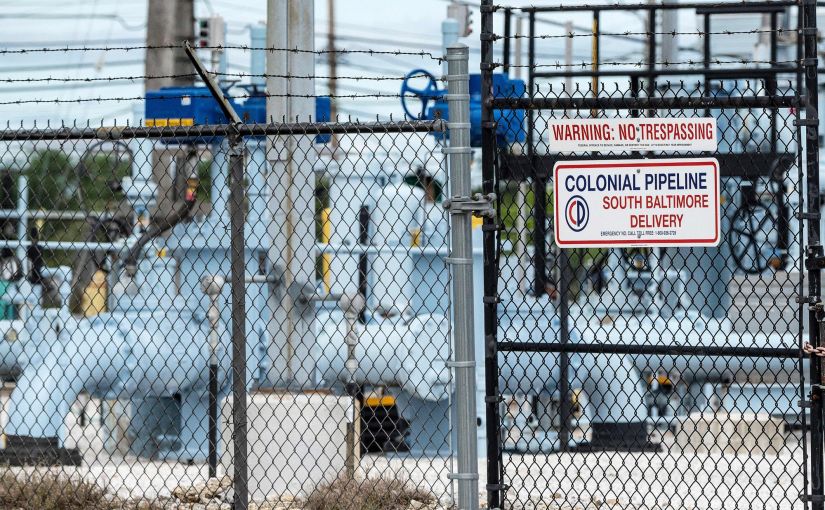
The taking of the Colonial Pipeline brought the authorities’ worst fears to life. The ransomware attack disabled the 5,500-mile network, causing fuel shortages in the south-eastern states of the US and prompting the Biden administration to declare a state of emergency. Although the Colonial Pipeline Company’s CEO, Joseph Blount, controversially paid the $4.4m (£3.2m) ransom, the network was out of action for a week.

Transparency and trust are key to having robust and executable action plans. Everyone has a role to play in security

This case was “not shocking” to Sarah Lyons, the NCSC’s deputy director for economy and society. There had been warnings aplenty. Only three months previously, for instance, a hacker unsuccessfully attempted to poison the water supply of Oldsmar, a city in Florida. 

“The pandemic has exacerbated cyber attacks targeting organisations, including providers of critical national infrastructure, which will always be an attractive target,” she says. “The Colonial Pipeline incident confirmed our belief that any such attack could have wide-ranging societal ramifications. It also gave us a glimpse at the kind of attack with a physical impact that could materialise in future if connected places providing critical public services are compromised.”

Fatal warning: potential cyber-physical attacks

The way that critical national infrastructure has evolved to use interconnected digital networks makes it far more vulnerable than it used to be, according to Lyons, who believes that the risks could be even greater when 5G is more widely adopted. 

“Regulated industries such as telecoms and energy are being connected to unregulated services and suppliers,” she explains. “These industries, which we all rely on daily, are an attractive target for a range of threat actors, unfortunately. A successful attack could cause significant disruptions to key public services and compromise citizens’ sensitive data.” 

Lyons urges operators to “recognise that it’s vital that we ensure these networks are resilient to cyber attacks. In a worst-case scenario, a successful one could endanger people.”

George Patsis, CEO of Obrela Security Industries, agrees, warning that “the sky is the limit” when it comes to the extent of the damage that cyber attacks on critical infrastructure could wreak. “These have the potential to be cyber physical, putting many people’s lives at risk,” he says. 

Patsis uses the London Underground as an example. “Computers control the timing of when trains arrive at junctions. If someone were to infiltrate the network and alter their synchronisation by only a few seconds, it could cause multiple fatal crashes,” he says.

Most worrying is a lack of robustness in operational technology (OT) security, which Gartner defines as “practices and technologies used to protect people, assets, and information; monitor and/or control physical devices, processes and events; and initiate state changes to enterprise OT systems.”

Patsis says: “As OT increasingly becomes internet-enabled, it creates new attack avenues. There is now a big focus on securing OT in the same way we do the IT estate.” 

While he notes that the Colonial Pipeline affair has been a “huge driver” for improving OT security, Patsis stresses that there is much work to do in this area.

Unique challenge: securing operational technology

Theresa Lanowitz, head of evangelism at AT&T Cybersecurity, takes much the same view. “With the convergence of IT and OT systems, there has been an exponential growth in internet-of-things devices that has heightened concerns about the digital security of these systems,” she says. 

Lanowitz calls for a “mindset shift” in securing OT assets. “Legacy infrastructure has been in place for decades and is now being combined as part of the convergence of IT and OT,” she says. “This can be challenging for organisations that previously used separate security tools for each environment and now require holistic asset visibility to prevent blind spots. Attacks are coming from all sides and are creeping across from IT to OT and vice versa. Organisations should adopt a risk-based approach that recognises that there is no perfect security solution.” 

She continues: “Enterprises that strategically balance security, scalability, access, usability and cost can ultimately provide the best long-term protection against an evolving adversary.”

Has the Colonial Pipeline attack encouraged infrastructure providers to take more effective defensive measures? “Frankly, not enough,” argues Rob Carew, chief product officer at Arcadis Gen, the digital arm of Arcadis, a Dutch engineering consultancy. “There is still a disconnect between cybersecurity and critical infrastructure.” 

He suggests that cybersecurity is widely seen in the sector as an “add-on”, rather than intrinsic, when it comes to monitoring the health of critical infrastructure.

“The problem is compounded by ageing hardware and software technology, which can often be exploited through unforeseen vulnerabilities,” Carew says. “Transparency and trust are key in having robust and executable action plans. Everyone has a role to play in security. If it becomes a regular topic of conversations among asset owners, operators, managers, maintainers and the supply chain, it will become part of the organisation’s DNA.”

Actions, though, speak louder than words. While the Colonial Pipeline incident may have set alarm bells ringing, there is still – months later – high panic across the infrastructure network, with the cybercriminals seemingly better equipped to expose vulnerabilities and gain financially from doing so.

This article first appeared in Raconteur’s Future of Infrastructure report in September 2021

Remote, hybrid, office? Which will be your ‘new normal’?


To help business leaders decide how their future workplaces might best operate, three experts with very different views on the subject argue the pros and cons of fully remote, hybrid and office working

After 18 months of enforced homeworking for many people, it’s difficult to foresee a future in which remote and hybrid working won’t feature. However, many businesses are keen to coax staff back to the office at least for part of the week – Covid-19 restrictions permitting – while others have spoken out against working from home, including Goldman Sachs CEO David Solomon who called it an “aberration”.

So, is hybrid working likely to last, or will there be a snapback to old operating methods? Here, three experts debate whether fully remote, hybrid or office working is the best option for the future.

Fully remote working

Darren Murph has written the manual on remote working, literally, publishing Living the Remote Dream: A Guide to Seeing the World, Setting Records and Advancing Your Career in 2015. Four years later, in July 2019, he was appointed head of remote at technology company GitLab, one of the world’s largest fully remote organisations with more than 1,300 employees spread across 65 countries.

For Murph, the past 18 months have proved that remote working is the future. “The pandemic has forced organisations to grapple with reality: distributed work is here, it’s happening, and it’s no longer a choice or an argument for the vast majority of industries,” he says. “Covid-19 accelerated a trend that began decades ago, as society leverages the internet to live better lives while driving business results. The benefits are many – to the employee, the employer and the world.”

Some of the advantages, Murph argues, are a more diverse and inclusive workforce, greater efficiency in workflows and a broader global coverage in servicing clients. He also believes being fully remote makes businesses more resilient and more able to preserve continuity regardless of whether the office is open or closed. 

“Businesses will be better equipped to weather future crises by empowering results that are decoupled from geography. They’ll find it easier to hire diverse teams and elevate introverted voices that have historically been squashed,” he says.

While Murph acknowledges that “all-remote isn’t for everyone” and can make onboarding recruits more challenging, he believes the pros far outweigh the cons. “Knowledge workers have proven that they can drive results without the crutch of the office,” he says. “Rather than employees needing to justify why they should work from home as opposed to the office, we’ve entered a world where employers must justify exorbitant waste in terms of commute time and real estate to accomplish digital tasks.”

Offering his three top tips for businesses seeking to optimise a remote-working model, Murph suggests the first step is to hire a dedicated remote-work leader. “Companies need to realise this is a full-scale organisational transformation and, if you want it done well, it can’t be a part-time job,” he says.

Murph also recommends that companies audit their values and documentation hygiene to ensure both are ready for a distributed workforce. Finally, he suggests starting to shut down office spaces. “Nothing sends a clearer signal that your future will be driven by how not where work happens than a shift away from offices,” he says.

Hybrid working

Samantha Fisher is head of dynamic work for Okta, an identity and access management company. Explaining what dynamic working means at Okta, she says: “It’s about personalising the working experience and enabling employees to work in whichever way makes the most sense for them. It’s not just a case of where employees are located – at the office, home or elsewhere – it’s about workplace design, people engagement, technology, talent acquisition, morale and company culture.”

At the start of the coronavirus crisis, 30% of Okta’s 2,400 employees were already working remotely. “We found that this flexibility increased empowerment, satisfaction and productivity,” says Fisher. “The pandemic accelerated the need for more flexible frameworks. Over the past year or so, employees have benefitted from a better work-life balance and reduced commuting costs, as well as greater autonomy which has led to more empowerment.”

Appointed Okta’s first head of dynamic work in January 2021, she was tasked with building organisational culture more broadly, anchoring equity, social connection and productivity, and enabling employees to work from anywhere successfully. “I spend a lot of my time working with cross-functional teams, thinking about the programmes, services and experiences we offer while in the office and how we can translate these for a hybrid environment and/or reposition services in a way that enhances experiences at any location,” she says.

The pandemic has forced organisations to grapple with reality: distributed work is here… it’s no longer a choice or an argument for the vast majority of industries

Fisher stresses the importance of “community building”, explaining that the workplace is a vital part of the business ecosystem and a key element of organisational culture. “I look at developing creative and holistic solutions that augment talent strategies, optimise technology enablement and support shifts in workforce operations,” she says.

Okta’s The New Workplace Report: A Business Balancing Act – published in June 2021 and based on a survey of more than 10,000 office-based workers across eight European countries and 12 industry sectors – found 42% of respondents wanted a mix of home- and office-based working, 17% wanted to work from home permanently and just 16% wanted to work in the office five days a week.

But what’s needed to make hybrid working successful? “For organisations to provide flexibility and equity in their workplace environment, you need executive support, investment in technology, a focus on culture and experience, and leaders to build and drive long-term strategy,” says Fisher. “It’s a fully cross-functional initiative and requires both passion and heart to curate a dynamic working environment.”

Office working

Chris Grazier, an office agency partner at Hartnell Taylor Cook and president of the Bristol Property Agents Association, is confident that office working will thrive again. But he urges organisations to be smarter with their workspaces rather than using the trend for hybrid working as a way to downsize and, ultimately, cut overheads.

Grazier admits that the democratisation of video conferencing during the pandemic has been “a revelation for all businesses”, including in the property industry in which he has operated for almost three decades. “The flipside,” he says, “has been staff isolation, the effect on teamwork, the inability to mentor junior staff and the loss of creativity that springs from face-to-face or group working.”

Now, after a year and a half of Zoom calls, there is a collective craving to return to the office and to network and collaborate without an awkward time delay or mistakenly being on mute. “The office is where business culture is formed,” says Grazier. “It’s both good for the employee, who can build some separation between home life and work, and it connects employers with employees in a way that a Zoom call never can. And despite headlines touting that the home is the office of the future, over the past few months we have witnessed businesses returning staff to the workplace.” 

Rather than employees needing to justify why they should work from home… employers must justify exorbitant waste in terms of commute time and real estate to accomplish digital tasks.

Indeed, data showing the floor space taken up in Bristol city centre in the past three quarters, including Q2 this year, reveals more ‘Grade A offices’ – high-quality workspace, refurbished or new – have been occupied than non-Grade A spaces. “This is a complete reversal of previous trends, and it hints that businesses are focusing on less but higher-quality space for their new offices than they did for their former ones,” Grazier says.

Echoing concerns from business leaders about tracking workers’ productivity away from the office, Grazier believes that by investing in smarter workspaces, staff will want to return. “I’d recommend that organisations use less space but improve the quality,” he says. 

Grazier also points out that many organisations are emerging from the pandemic with a decent balance sheet, thanks to government support, offering them a unique opportunity to upgrade their offices. “Don’t try to save money if you are moving,” he advises. “Try to spend that money more wisely by creating an environment that draws on the strengths of teamworking and positive culture.”

This article first appeared in Raconteur’s Hybrid Working report, published in September 2021

Five ways to better manage supply chain disruption

The fallout from the pandemic exposed deep-rooted issues and a worrying lack of visibility, but these practical insights will help in case of future crises 

1. Don’t focus on cost alone

The countless stock delays and shortages over the past 18 months caused by a lack of preparedness and agility for the coronavirus-induced disruption have, for the first time in decades, called into question the running of lean supply chains designed to boost efficiencies and profits. They have laid bare a fragile and complex system that “has ultimately morphed into an investment plan focused on quick fixes and last-minute saves”, according to Patrick Van Hull, industry thought leader at Kinaxis, a global supply chain management company. 

Malcolm Harrison, group chief executive of the Chartered Institute of Procurement and Supply, agrees that many had seemingly dialled-up risk in the hunt for greater financial rewards. “Ensuring resilience and achieving value have always been the overarching objectives for procurement and supply professionals,” he says. “Focusing on cost alone is a risky strategy for any organisation. We’ve had decades of strong, lean and sometimes single-sourced supply chains working so efficiently that we hardly noticed them.”

The pandemic, he says, has encouraged supply chain managers to renew their focus on multi-supply strategies, local sourcing and best value in the supply chain, including working with competitors.

2. Invest in technology

Dirk Holbach, chief supply chain officer of laundry and home care at Henkel, says it was a tremendous advantage that his organisation was already far along its digital transformation journey before the pandemic. “The real-time visibility along our supply chain, which is a result of deploying Industry 4.0 technologies, allowed us to focus on the right challenges and to make the best decisions,” he says.

Van Hull points out that companies invested in digital transformation pre-pandemic were financially outperforming industry averages and surged further ahead of rivals over the past 18 months. “These types of results present a significant opportunity for supply chains, which historically have struggled with translating operational capabilities and digital transformation into financial success,” he says. 

3. Develop supplier relationships

While investment in technology is vital to increase supply chain resilience, old-fashioned human-to-human talking to solve problems is just as important when disruption inevitably strikes. Developing and nurturing supplier relationships accumulates mutual trust that can be cashed in when required, whether that buys favourable prices, shorter lead times or extra stock.

And, as the idiom suggests, a problem shared is a problem halved. “Embrace collaborative supply chain risk management,” urges Dr Alireza Shokri, associate professor in operations and supply chain management at Northumbria University. “Invest time in a collaborative culture, build trust and use these relationships to strengthen prevention and mitigation strategies.”

Shelley Harris, commercial director of IPP, which pools and provides pallets and boxes across Europe, agrees. “Our partner relationships are key, helping us to face new challenges as well as to work as efficiently and productively as possible,” she says.

The strength of its supplier relationships has allowed IPP to continue to fulfil its customer deliveries, despite the challenges the wider industry is facing, notably driver shortages. “We’re stronger because of long-standing relationships – we’ve seen a minimal impact on our operation and resulting service to our customers,” she says.

4. Improve transparency

The number-one way to manage disruption, according to Harrison, is a deep understanding of your supply chain and a focus on transparency. While this requires the right technology, as businesses have had to operate more efficiently in the digital space with more automation, it starts with understanding the different tiers of the supply chain. 

“Transparency across all tiers of the supply chain is a challenge,” he acknowledges, “but that visibility contributes to value in that it [helps to] remove fraud and corrupt practices and [helps businesses] look for signs of modern slavery among their suppliers.” 

Harrison stresses it is important to understand the robustness of different suppliers – and their suppliers. Transparency allows a business to identify potential problems, for example if a component is sourced from a single country or location and to track shipments.

This chimes with Van Hull’s thoughts. “Increased transparency is highly desirable for supply chains to sense disruptions as they are happening and respond immediately,” he says. “That is even more useful when it can be tied to financial outcomes, such as reduced inventory and cash buffers, improved capacity utilisation and lower cost resolution of demand-supply mismatches.”

5. Get the training right

Holbach believes training is imperative to maximise the potential of technology solutions. Empowering local teams and using their expert knowledge will strengthen the supply chain. They will flag potential issues early, giving the network a better idea of where to go for help with routing or stock if required. 

“We’ve had to react with agility during the pandemic and that was only possible by trusting our teams worldwide,” says Holbach. “It created the freedom to act fast, find the best solutions and keep our customers and consumers supplied with essential products.”

He believes a progressive approach to training starts from the top of an organisation. “As leaders, you should never stop learning,” he says. “To prepare for the unknown, you have to have the right mindset when confronted with new and difficult situations.”

Harrison echoes this insight, saying that supply chain professionals need to be equipped with the right skills and commercial judgement, which can only be achieved through training and development. This means being up to date, qualified, informed and skilled.

“What this pandemic has shown is that you need to invest in both technology and people to ensure supply chains are resilient, then we will manage better through the next global shock,” he says.

This article was first published in Raconteur’s Supply Chain Resilience report in September 2021

Box cleverer: how to cut waste in ecommerce packaging

The pandemic-driven boom in online shopping has highlighted the challenge facing etailers and brands in finding packaging solutions that are sustainable and accessible, yet also cost-effective and secure

A meme on social media showing a tearful woman with a caption that reads “I get more Amazon boxes in a week than I can fit in my recycle bin” sums up the problem with packaging in 2021. 

The growth of ecommerce since the start of the Covid crisis – online sales in the UK during the first quarter of this year were 54% higher than the total for Q1 2020, according to research by Adobe – has heightened concerns about packaging waste. 

On the one hand, online shoppers complain about excessive packaging. On the other, a purchase that arrives damaged, needing to be returned and replaced, will have a far bigger environmental impact. 

While consumers are becoming increasingly eco-conscious and mindful of waste in packaging, etailers must consider several other factors, including cost, security and accessibility (23% of online shoppers in the US have damaged at least one purchase during the unboxing process, according to packaging firm DS Smith).

In December 2020, the Chartered Institute of Marketing (CIM) warned that the growth in ecommerce was the main reason why 85% of the UK consumers it polled thought that etailers were using too much packaging. Amazon was singled out as the worst offender by far, but other big companies attracting criticism included Asos and supermarkets Tesco, Sainsbury’s and Asda.

“We know the lockdowns have changed buying behaviour and there has been a considerable increase in online purchasing, which means more home deliveries,” says the CIM’s marketing director, Gemma Butler. “Even where companies have improved their packaging, the increased volume of purchases will naturally push up the amount of packaging in circulation.”

Innovation needed: recycling is not enough

Stressing the need for innovative packaging solutions, Butler calls for an update of the popular ‘reduce, reuse, recycle’ maxim. 

“Recycling cannot be seen as the answer,” she argues. “It should be considered only after reducing and reusing. Our recycling infrastructure cannot support the volume and variety of packaging in circulation, so most of the material still ends up in landfills. Organisations must rethink not only the materials they use in their packaging, but also the lifecycle of that packaging.”

A pan-European survey conducted by DS Smith in March supports her view. Nearly half (46%) of the consumers it polled said they wanted to see more cardboard or paper-based packaging, rather than plastic, while 58% wanted an overall reduction in the volume of packaging. Most notably, almost a third reported that they had stopped buying certain brands because they considered that their packaging was not sufficiently sustainable.

Organisations must rethink not only the materials they use in their packaging, but also the lifecycle of that packaging

Another finding – that 22% of UK respondents don’t always have room in their recycling bins for all the packaging they receive – is one that’s “disturbing” to DS Smith’s sales, marketing and innovation director, Marc Chiron. “Some boxes are being put to good use – people are reusing them for storage, for instance – but many aren’t finding their way back into recycling streams,” he reports.

Awareness about packaging that’s “fit for the circular economy and ecommerce age” is growing steadily, according to Chiron. “Companies can contribute by choosing solutions that eliminate waste and keep materials in use. But this goes beyond material choices, as supply chains need to be optimised to avoid the unnecessary use of transport too. That would be the win-win outcome for business and environment.”

Win-win: sustainable and branded packaging

Chiron adds that high-quality branding that explains an etailer’s approach to sustainability in packaging has become a key marketing tool. 

“Storytelling is a growing trend in the retail sector. It can elevate on-package branding to the next level,” he says. “Innovative businesses are using packaging that conveys their craftsmanship and passion. This enables a company to connect with customers in new ways, eliciting emotional responses and making it easier for them to identify with the business and its products.”

Jonathan Dixon, senior vice-president of sales at Arla Foods UK, agrees that it is crucial for “brands to get their packaging right”. He notes that ecommerce sales in the grocery sector are 70% higher than they were at the start of the pandemic – and that consumers spend only 15 minutes doing their weekly grocery shop online on average, compared with 43 minutes in a supermarket. 

“For new brands, packaging is their main marketing tool when selling online,” Dixon says. “It must therefore stand out to prevent shoppers from scrolling past.”

Companies that have created sustainable packaging solutions in recent times include Italian pasta brand Barilla. It adopted 100% paper-based containers in May 2020, taking out the plastic front windows that had made the packs less easy for consumers to recycle. Its move followed that of rival brand Napolina, which in September 2019 had switched the packaging of some lines from plastic to cardboard. Napolina estimates that this change has taken 16 tonnes of plastic out of the waste stream each year in the UK alone. The company is has started to extend plastic-free packaging to its core range in a bid to push the total up to 200 tonnes.

Wilkinson Sword recently switched to plastic-free packaging when it relaunched its Hydro shaving razor range. The change has removed 88 tonnes of PET and 35 tonnes of virgin paper from its supply chain every year, achieving a significant cost reduction in the process.

Wayne Snyder is vice-president of retail industry strategy for EMEA at Blue Yonder, a US specialist in supply management software. He believes that technology can help businesses struggling to strike a balance between packaging cost, security, accessibility and sustainability. 

“Retailers cannot look at any of these factors in isolation,” Snyder argues. “Each requires a different weight based on its characteristics as well as the business strategy. While this task may seem daunting, new AI technologies will enable an optimised method that factors in these questions to find the right balance.”

It’s clear that consumer brands looking to thrive in the ecommerce age must make sustainability a priority and think both inside and outside the box when it comes to packaging.

This article first appeared in Raconteur’s Future of Packaging report, published in July 2021

‘Just do it’: digital transformation lessons from Estonia

The Baltic state is a digital trailblazer, having made 99% of its public services available online. The government’s CIO, Siim Sikkut, offers his advice for businesses contemplating their own transformations

The smallest of the Baltic states by both area and population, Estonia has served as a political pawn in the hands of several neighbouring powers over the centuries. Since regaining its independence after the collapse of the Soviet Union 30 years ago, this republic has been punching massively above its weight in one respect: technological innovation.

In 2005, for instance, it was the first country to enable online voting. In 2012, it was the first to use blockchain technology for governance. By the time that Wired magazine named Estonia the “most advanced digital society in the world” in 2016, almost all public spaces in the country had been served by free Wi-Fi for a decade. Today, under the government’s so-called e-Estonia programme, 99% of government services are accessible online, while 70% of the country’s 1.3 million citizens regularly use digital ID cards. 

“We joke that our e-services are impossible only for marriages and divorces – you still have to leave the house for those,” says the man in charge of e-Estonia, Siim Sikkut, who has been the government’s CIO since 2017. 

He explains that the country desperately needed a technological “reboot” after gaining its freedom from the debilitating grip of Russian rule in 1991. With this in mind, the state committed itself to electronic governance – a decision that established a digital-first approach on which the country’s pioneering innovations have been based ever since. 

Sikkut, who also chairs the national task force on artificial intelligence, graduated from Princeton University with a degree in public and international affairs in the same year that online voting started. He initially joined the Ministry of Finance before becoming a digital policy adviser at the Ministry of Economic Affairs and Communications, when he co-founded Estonia’s ground-breaking e-residency scheme. Among other things, this offers entrepreneurs based anywhere in the world a digital ID granting them and their businesses remote access to markets in the EU.

Spearheading the world’s digital revolution

Sikkut, 38, is modest about the role he has played in creating what the e-Estonia website calls “an efficient, secure and transparent ecosystem”.

“I stand on many shoulders,” he says. “When I moved to my current role, it wasn’t a question of what to digitise next. All the low-hanging fruit had been picked. It has been about how to keep going to the next level of digitisation. We need to keep everything running while innovating and iterating.”

I hope that our experience in Estonia shows that it’s not rocket science. With commitment, anyone can achieve a digital transformation 

What might have been classed as a risky commitment to technology three decades ago has fostered a more progressive and open society, both online and offline, according to Sikkut. A Eurobarometer survey in 2018 found that 49% of Estonians trusted their government, compared with the EU-wide average of 34%, for instance. 

Indeed, it is said that in Estonia you are only two calls away from the prime minister – the implication being that people in this small country are community spirited and willing to help each other out.

Size matters: but trust trumps all

“It does help that there are few degrees of separation here,” Sikkut says. “With our small population, we get things done – both the connection and decision cycles are much shorter here than in other countries. But our talent pool is much smaller too, so our size is both a constraint and an opportunity.”

It’s no coincidence that the capital, Tallinn – where Sikkut lives with his wife and their three young children – is often referred to as Europe’s Silicon Valley. Estonia is estimated to have produced more start-ups per capita than any other European country in recent years. According to Startup Estonia’s online database, 1,104 enterprises have been established in the country since 2013 – including Uber rival Bolt and payment company Wise (TransferWise until it was renamed at the start of this year).

Any entrepreneur seeking to up the pace of their business’s digital transformation has much to learn from Estonia’s experience. Sikkut believes that strategic partnerships are key in this respect. He points to e-Estonia’s soon-to-be-launched digital testbed framework, a collaboration model that will offer free access to the government’s tech stack, on which any business worldwide can build new products or services and gain proofs of concept.

“I’d say to business leaders: ‘You have to be open for innovation and open to partnership,’ like we’re trying to be with our testbed framework. If someone comes to you with a good idea, take it on board, try it out and then perhaps you can move more quickly,” he says. “We’re looking to increase the speed of innovation in Estonia again by being open and encouraging experimentation with new ideas. The emergence of AI has been a game-changer, for instance, as we embark on this new stage of digitisation.”

Taking people with you

What other advice would Sikkut offer business leaders looking to introduce new digital tools and services? 

“If you build something that saves people time, money or effort and offers them value, they are likely to use it and refer it to others,” he says, adding that “you still might want to throw in incentives for people to start using them. For example, we offer much quicker tax reimbursements to those who complete their forms online rather than on paper.”

Sikkut stresses that it’s essential to spend an adequate amount on training people in how to use new digital tools. “We’ve invested in infrastructure and worked on skills to ensure that people can use our online services. You have to take care of your users so that you can bring them along with you,” he says.

His advice for any entrepreneur who may be approaching digital transformation with trepidation is to learn from his country’s success and stop dithering. 

“Just do it,” Sikkut says. “You’ll never have a perfect plan. Take an engineer’s attitude: try things out, fix them if they fail and try them again before scaling up your operations. I hope that our experience in Estonia shows that it’s not rocket science. With commitment, anyone can achieve a digital transformation. You don’t have to build everything from scratch. There are solutions that you can reuse and you can partner with people who’ve gone through it already – including us here in Estonia.” 

He continues: “The latest technology will probably not solve all your problems. What matters most is being open to possibilities and open to partnerships. If you give bright people a conducive environment, magic will happen.”

This article was first published in Raconteur’s Business Transformation report, published in June 2021

Absolute beginners: startup tips for first-time founders

Starting a business is challenging enough even in normal times, but at least there is plenty of expert advice on offer for the UK’s new wave of novice entrepreneurs

Ironically, no one knows who invented the adage “necessity is the mother of invention”. This ancient proverb has rarely been more relevant in the business world, given the pandemic’s seismic impact on enterprises of all sizes.

The coronavirus crisis has caused widespread job losses and limited the career prospects of millions of people. This has led many to start their own enterprises. In the 12 months to March 2021, more than 810,000 businesses were incorporated in the UK, 22% up on the preceding year’s total, according to Companies House. In Q4 2020 alone, 221,000 companies were established – the highest quarterly figure in a decade. 

Britons have been running an entrepreneurial, startup culture for centuries – it’s what we do very well

Starting a business from scratch is no mean feat even when there isn’t a pandemic. Fortunately, several successful entrepreneurs, acknowledging the help they received when they started, are willing to share their insights with first-time founders. One such high-flyer is Markus Villig. 

As a secondary-school student in 2013, the Estonian had used a £4,300 loan from his parents and brother to start the business that would become pioneering transport company Bolt. Five years later, he became the youngest CEO of a European ‘unicorn’, a privately owned startup valued at $1bn. 

Give people what they need – even if they don’t know it yet

Villig’s original plan had been to provide a digital platform for cab users in his home city of Tallinn. The teenager hadn’t passed his driving test (he still doesn’t have a licence) and was frustrated by the capital’s disorganised taxi facilities. 

Today, Bolt is worth over £2bn and has 1.5 million drivers in 40 countries. But it wasn’t an immediate success, partly because Villig had trouble persuading people to adopt his pioneering technology. 

“There was a resistance from drivers to joining, as they didn’t understand how easy it was,” he recalls. “To combat this, I took to the streets myself, approaching drivers at taxi stands to pitch the idea and show them the simplicity of the technology and how it could benefit them.”

Villig stresses the importance of clear, concise communication in marketing, adding: “Don’t expect people to love your idea as much as you do from the get-go. I was faced with a tough market when I started Bolt, so I had to go out of my way to show that our common enemy was the private car. Once I began using this as my key message, we began getting taxi drivers on board.”

He continues: “It’s easy to overthink things. What I have found is that we humans like things to be simple. The simpler your business targets are, the better. At Bolt, we do our best to boil ours down to a few sentences.”

Start with a business plan to evaluate strengths and weaknesses

Erica Wolfe-Murray, the author of a guide for new entrepreneurs called Simple Tips, Smart Ideas, echoes Villig’s advice. 

“If you have a new idea for a product or service, don’t expect everyone to understand it automatically. They won’t,” she says. “If you’re thinking about launching a business, ask yourself: ‘Why now?’ If you can’t answer that, or your response is just flannel, rethink everything. I’ve seen so many startups that were little or no different from other companies. It saddens me, because they can take a huge amount of effort to launch yet will often fail quite quickly.”

Another common – and often fatal – error that new entrepreneurs commit is to make the pursuit of financial success their main reason for starting a business, Wolfe-Murray suggests. 

Don’t expect people to love your idea as much as you do from the get-go

“So many companies focus on their offering and the money before they focus on their unique experience, possible trends and different ways of approaching markets,” she says. “To start with, I always look at devising a business plan without involving money. The internal aspects of the company inform its strengths and weaknesses, while the external factors present opportunities and threats. This simple divide can often be overlooked, yet it is crucial to any business plan.”

Wolfe-Murray adds that the process of evaluating weaknesses and what outside help might be needed to address the latter requires a key entrepreneurial skill: resourcefulness. 

“Don’t underestimate the value of what and whom you know,” she explains. “You can analyse and harness these elements to launch an original, smart business in ways you may not have originally thought. Why copy others when your own assets give rise to a much richer offering?”

The financial hard yards – external help needed?

Wolfe-Murray warns that poor financial management is the “biggest pitfall” for new entrepreneurs. “It can take most companies up to three years before they get going, but that relies on regular customers and decent cash flow,” she says. “Yet founders take their eyes off the ball because there is so much else to do apart from looking after cash flow. I often ask founders who manages the money in their households. If it’s not them, they may not be used to doing the financial hard yards.”

Hannah Bernard, head of Barclays Business Banking, agrees. She would encourage any new entrepreneur to keep money from their business separate from the funds in their personal account. This will make it more straightforward to track the company’s cash flow and keep on top of supplier payments.

Ask yourself: ‘Why now?’ If you can’t answer this, or your response is just flannel, rethink everything

“This will help you to build up a business credit history, which could make it easier to access a loan – should you need it – as your venture starts growing,” she says, stressing the need to keep a scrupulous record of all revenues and expenses.

Bernard believes that most entrepreneurs will never be able to master every aspect of running a business, so they “should not be afraid to seek external help. A good place to start is online, where there are lots of free resources. The Barclays business hub, for instance, has tips on aspects ranging from writing a business plan to building a team.”

Wolfe-Murray offers a final word of encouragement to those pondering whether or not to start a new venture. “Britons have been running an entrepreneurial, startup culture for centuries – it’s what we do very well. Small companies are the bedrock of our economy. They enable inventive people to do things that intrigue and fulfil them,” she says. “If you have a hankering to start your own business, just do it.”

This article first appeared in Raconteur’s Supporting SMEs report, published in June 2021

Mastercard cyber chief on using AI in the fight against fraud

Ajay Bhalla, Mastercard’s president of cyber and intelligence solutions, thinks innovations like AI can tackle cybercrime – and help save the planet

The fight against fraud has always been a messy business, but it’s especially grisly in the digital age. To keep ahead of the cybercriminals, investment in technology – particularly artificial intelligence – is paramount, says Ajay Bhalla, president of cyber and intelligence solutions at Mastercard. 

Since the opening salvo of the coronavirus crisis, cybercriminals have launched increasingly sophisticated attacks across a multitude of channels, taking advantage of heightened emotions and poor online security.

Some £1.26 billion was lost to financial fraud in the UK in 2020, according to UK Finance, a trade association, while there was a 43% year-on-year explosion in internet banking fraud losses. The banking industry managed to stop some £1.6 billion of fraud over the course of the year, equivalent to £6.73 in every £10 of attempted fraud.

If you don’t test things to break them, you can be sure their vulnerabilities will be discovered down the line

The landscape has rapidly evolved over the past year, says Bhalla, due to factors like the rapid growth of online shopping and the emergence of digital solutions in the banking sector and beyond. These changes have broken down the barriers to innovation, driving an unprecedented pace of change in the way we pay, bank and shop, says the executive, who’s responsible for deploying innovative technology to ensure the safety and security of 90 billion transactions every year. 

“Against that backdrop, cybercrime is a $5.2 trillion annual problem that must be met head-on. Standing still will mean effectively going backwards, as fraudsters are increasingly persistent, agile and well-funded.”

AI: the new electricity

It isn’t just the growing number of transactions that attracts criminal attention, but the diversity of opportunity, according to London-based Bhalla, who has held various roles at Mastercard around the world since 1993. 

“As the Internet of Things becomes ever more pervasive, so the size of the attack surface grows,” he says, noting that there will be 50 billion connected devices by 2025. 

Against this backdrop, AI will be essential to tackle cyber threats. 

“AI is fundamental to our work in areas such as identity and ecommerce, and we think of it as the new electricity, powering our society and driving forward progress,” says the 55-year-old.

Mastercard has pioneered the use of AI in banking through its worldwide network of R&D labs and AI innovation centres, and its AI-powered solutions have saved more than $30bn being lost to fraud over the past two years. 

In 2020, it opened an Intelligence and Cyber Centre in Vancouver, aimed at accelerating innovation in AI and IoT. The company filed at least 40 AI-related patent applications last year; it has developed the biggest cyber risk assessment capability on the planet, according to Bhalla. 

“We are constantly testing, adapting and improving algorithms to solve real-world challenges.”

Turning to examples of the company’s work, Bhalla says Mastercard has built an ability to trace and alert on financial crime across its network, a world first. He also points to the recently launched Enhanced Contactless, or ECOS, which leverages state-of-the-art security and privacy technology to make contactless payments resistant to attacks from quantum computers, using next-generation algorithms and cryptography. 

“With ECOS, contactless payments still happen in less than half a second, but they are three million times harder to break.”

Building security through biometrics


Such innovations are transforming customers’ interactions with financial services providers. For example, Mastercard has combined AI-powered technologies with physical biometrics – like face, fingerprint and palm – to identify legitimate account holders. These technologies recognise behavioural traits, like the way in which customers hold their phone or how fast they type, actions that can’t be replicated by fraudsters. 

“We see a future where biometrics don’t just authenticate a payment; they are the payment, with consumers simply waving to pay.”

Excited by developments in this area, Bhalla says Mastercard recently detected an attack that involved hundreds of devices attempting to log in from a phone that had reported itself as lying flat on its back. “Given the speed at which the credentials were typed, we knew it was unlikely it could be done with the phone flat on a surface,” Bhalla says. “In this way, a sophisticated attack that looked otherwise legitimate was detected before any fraud losses could occur.”

Cybercrime is a $5.2 trillion annual problem that must be met head-on. Standing still will mean effectively going backwards, as fraudsters are increasingly persistent, agile and well-funded

Mastercard might boast an impressive list of successful fraud-fighting solutions, but wrong turns are vital for the journey, Bhalla admits. “If you don’t test things to break them, you can be sure their vulnerabilities will be discovered down the line,” he says. “At Mastercard, trust in and reliance on our services is far too important to take that risk, so rigorously testing solutions before they get anywhere near the end user is our standard operating procedure.”

Trust is a must

A keen rower and golfer, Bhalla volunteers as an executive-in-residence at the University of Oxford’s Saïd Business School. He has a bachelor’s degree in commerce from Delhi University and a master’s degree in management from the University of Mumbai. 

Even with his experience and tech knowledge, Bhalla insists that Mastercard and others within the industry must go back to basics and focus on customer experience. The company’s leadership in standards has been core to earning and retaining the trust of its customers, he notes. 

The technology may be evolving quickly, but one core principle remains, says Bhalla. “Our business is based on trust, which is hard-won and easily lost.”

The correct operating processes and standards must be in place from the outset so that both customers and businesses can have confidence in the technology and trust that it will be useful, safe and secure. 

“What has changed is the sharp focus now placed on developing leading-edge solutions that prevent fraud and manage its impact, which is not surprising given that the average cost of a single data breach has now grown to $3.86 million,” Bhalla says.

Providing a blueprint for business leaders, Bhalla strongly believes that “innovation must be good for people … and address their needs at the fundamental design stage of the systems and solutions we create.”

“We see a future where biometrics don’t just authenticate a payment; they are the payment, with consumers simply waving to pay

Bhalla is using tech to fight fraud and drive financial inclusion, with Mastercard aiming  to connect 1 billion people globally to the digital economy by 2025. His ambitions are wider still, with much of his work focused on “protecting the world we have”. 

Mindful that climate change is high on the agenda, especially for younger generations, Mastercard has launched a raft of programmes in the area, including this year’s Sustainable Card Badge, which looks to identify cards made more sustainably from recyclable, recycled, bio-sourced, chlorine-free, degradable or ocean plastics.

Much like fighting fraud, global warming is reaching a crucial stage. Thanks to the efforts of industry leaders like Bhalla, the world stands a better chance of ultimate triumph on both fronts.

This article was originally written for Raconteur’s Fighting Fraud report, published in June 2021

The worrying rise of ransomware as a service

The Colonial cyberattack that cost a US fuel pipeline $4.4m in May highlights why businesses need to treat the fast-emerging threat of ‘ransomware as a service’ more seriously

A wry observation doing the rounds among cybersecurity experts is that the hackers who’ve transformed ransomware attacks into a multibillion-dollar industry are more professional than their high-profile corporate victims. 

It was certainly no laughing matter for the CEO of the Colonial Pipeline, one of the largest fuel-distribution networks in the US, when an attack in early May disabled the 5,500-mile system, triggering fuel shortages and panic-buying at filling stations. Within hours of the breach, Joseph Blount controversially paid a $4.4m (£3.1m) ransom to DarkSide, the Russian hacking group that mounted the attack, on the basis that it was “for the good of the country”. Despite this, the network was still out of action for a week.

The Colonial Pipeline case is one of many similar incidents, which have increased sharply in number since the pandemic started but have tended to go under the radar, as the victims are understandably reluctant to publicise their security failings. This high-profile example has exposed the rise of so-called ransomware as a service (RaaS), which DarkSide and various other professional hackers are now offering. 

Ethically speaking, you have to consider that you are enabling cybercrime by paying a ransom

The number of cybercrimes committed worldwide in 2020 was 69% higher than the previous year’s total. Ransomware was involved in 27% of these and a total of $1.4bn was demanded, according to a report published in May by US data security company Zscaler. In the UK, cybersecurity specialist Mimecast believes that as many as 60% of companies suffered a ransomware attack during the year. 

Ransomware is on the rise (Soumil Kumar from Pexels)

“Covid-19 has driven a huge ransomware surge,” reports Deepen Desai, Zscaler’s chief information security officer. “Our researchers witnessed a fivefold increase in such attacks starting in March 2020, when the World Health Organization declared the pandemic.”

Criminals seeking to exploit the network vulnerabilities created by the general shift to remote working during the Covid crisis either developed more sophisticated hacking methods or, seeking a shortcut, paid for RaaS. 

RaaS business model rings alarm bells

“RaaS has enabled even the least technically advanced criminals to launch attacks,” says George Papamargaritis, director of managed security services operations at Obrela Security Industries. “Gangs are advertising their services on the dark web, collaborating to share code, infrastructure, techniques and profits.” 

The RaaS model means that the spoils are split among three partners in crime: the programmer, the service provider and the attacker. “This is a highly structured and organised machine that operates much like many other legitimate organisations,” he adds.

The earliest reference to RaaS can be traced back to 2016. But, as Jen Ellis, vice-president of community and public affairs at Rapid7 and co-chair of the Ransomware Task Force, notes: “There are indications that it’s on the rise as more criminals take the chance to make a quick, easy and relatively risk-free profit by entering the ransomware market.”

This collaborative approach to ransomware attacks is terrible news for businesses, warns Ian Pratt, global head of security for personal systems at Hewlett-Packard. “Once, it was the preserve of opportunistic individuals who targeted consumers with demands of a few hundred pounds. Today, criminal gangs operating ransomware make millions from corporate victims in so-called big-game hunts,” he says. “This should have the alarm bells ringing in boardrooms.”

By educating themselves and their employees, business leaders can improve company-wide security protocols and so minimise the risk of ransomware attacks. Pratt explains that “users are the point of entry for most attacks”, accounting for 70% of successful network breaches. Malware is “almost always delivered via email attachments, web links and downloadable files”.

Prevention better than cure

Michiel Prins, co-founder of HackerOne, a vulnerability-disclosure platform connecting businesses with penetration testers, agrees. “Difficult as it may seem to prevent these attacks, prevention is always better than cure when it comes to ransomware,” he says. “This means maintaining a nimble and adversarial approach to cybersecurity that takes into account the perspective of an attacker, getting beyond traditional solutions that miss more elusive vulnerabilities.”

Prins argues that working with ethical hackers will “strengthen an organisation’s overall security posture”, as potential weak spots are reported and fixed “before serious damage is done”. Additionally, establishing a so-called bug-bounty programme, which rewards people for highlighting faults in the coding, “signals a high level of security maturity,” meaning that the criminals might look for easier prey.

If they do fall victim to an attack, should organisations accede to ransomware demands? CrowdStrike estimates that just over a quarter of victims end up paying the hackers to unlock their systems. Nearly 60% of UK businesses would enter negotiations, according to Sam Curry, chief security officer at Cybereason. 

Gangs are advertising their services on the dark web, collaborating to share code, infrastructure, techniques and profits

“We’d advise against paying ransoms. But in extreme situations, where lives are at risk or a national emergency is likely, it could be better to pay,” he says. “Before making that decision, it’s essential to notify your legal counsel, your insurer and the relevant law-enforcement agencies.”

Even when a business does cough up, there’s no guarantee that this will put an end to its problems. Peter Yapp, former deputy director at the UK’s National Cyber Security Centre and now a partner at law firm Schillings, cites the Travelex attack in December 2019 as an example. Many of the company’s web pages were still out of action two months later and a $2.3m ransom was eventually paid to the hackers. Later in 2020, Travelex sank into administration, “partly due to the losses and reputational damage caused by the attack”, he says.

Charles Brook, threat intelligence specialist at cybersecurity company Tessian, acknowledges that it’s a tough decision. “Ethically speaking, you have to consider that you are enabling cybercrime by paying a ransom,” he says. “But I can sympathise with organisations that may have no other option.”

There are other considerations, Brook adds. “If you pay, you could put a target on your back for further attacks. And, even after your files are decrypted, there may still be something malicious left behind.”

With the hackers in the ascendancy, Yapp believes that the government needs to step up its efforts to combat ransomware. “This has become such a serious problem that perhaps it’s time to lobby for the UK’s new National Cyber Force to fight back against these criminals in a different, military, way,” he suggests.

Perhaps the hackers won’t have the last laugh, after all.

This article was originally written for Raconteur’s Connected Business report, published as a supplement in The Times in June 2021

Generation game: how to sell to all ages

While consumers in different demographics have varying priorities when it comes to online shopping, they’re all losing tolerance for substandard etail experiences

Gertrude Stein, the avant-garde novelist and poet, declared that “whoever said money can’t buy happiness simply didn’t know where to go shopping”. The meteoric rise of ecommerce has, 75 years after her death, given this aphorism added meaning.

Thanks to the power of the internet and the ubiquity of smart devices and applications, today’s consumers have never had more places to go shopping and be happy, without even having to leave their homes. With such a wealth of choice at their fingertips, they’re unlikely to be patient when a retailer fails to hit the standard of ecommerce experience to which they’ve become accustomed.

Any brand that fails to engage with its target customers in their preferred place to shop will pay a heavy price. The lack of an effective ecommerce strategy has proved damaging for Topshop, Debenhams and Primark, to name but three laggards.

Research shows that 51% of consumers now want a mix of both bricks and clicks for the best experience

It’s clear that retailers need to keep pace with consumers’ changing requirements to survive. The digitalisation of the shopping experience, accelerated by the Covid-19 lockdowns, has transformed how customer loyalty is gained and lost. New statistics indicate what shoppers want from etailers varies depending on their age. 

A survey published by Sitecore, a company focused on improving consumers’ online experiences, suggests that 61% of 18- to 24-year olds are less loyal to brands than they were before the pandemic, compared with 33% of baby-boomers, while 69% of these post-millennials have become less patient with poorly functioning websites. 

Meanwhile, research from customer-service software firm Zendesk has indicated that 80% of UK consumers will switch retailers after only one bad experience. 

A great opportunity to innovate and expand the customer base

“The pandemic has undoubtedly changed the way we shop,” says Jeni Mundy, Visa’s MD in the UK and Ireland. “Our research shows that 51% of consumers now want a mix of both bricks and clicks for the best experience.”

She continues: “As the lines between offline and online continue to blur, there is great opportunity for businesses to keep innovating to reach new shoppers, expand their customer base and build their brands. But different generations and age groups have varying priorities, so it’s more important than ever for retailers to tailor their websites and social media offerings to meet their target audiences’ needs.”

Visa’s research suggests that 18- to 34-year-olds shop mainly online for a wide variety of goods and services. “Updating your website to showcase the full range of products is a good way to attract this audience,” Mundy recommends. “Many in this age group are also likely to shop on social media, so having a presence here and switching on the ‘swipe up to shop’ functionality is a great way to meet them.”

Social media campaigns and digital events encourage micro-influencers

Studies show that consumers aged between 35 and 54 most want an efficient online shopping experience. A well-signposted website is therefore vital. For people aged 55 and above, simplicity is the key, so maintaining an uncluttered, straightforward page design should help to attract and retain them as customers. 

Francesca Grillini, an ecommerce manager at Reckitt, points out that social media platforms ranging from TikTok and Clubhouse to Instagram and Facebook are especially popular among both millennial and gen-Z audiences. 

“Members of generation Z are digital natives who have attention spans of eight seconds, compared with millennials’ 12 seconds. Yet they are notoriously loyal,” she says. “They can quickly become brand ambassadors, acting as micro-influencers on social channels.”

Ecommerce is “more about necessity” for baby boomers, she says, suggesting that people in this generation have changed their shopping behaviour the most during the pandemic. Ecommerce has “opened previously closed doors” for boomers, many of whom have been forced to shop online more often because of lockdowns and health concerns. 

The Covid crisis obliged most high-street businesses to close their doors at various points over the past 18 months. North London restaurant Top Cuvée was among them, but it took a glass-half-full approach to the problem and has successfully turned to ecommerce, becoming an online wine supplier. It has fostered customer loyalty by adopting a multichannel marketing strategy, including email newsletters, social media campaigns (the firm’s Instagram following has grown tenfold to 35,000 in a year) and interactive online events. 

Brodie Meah, co-founder and chef at Top Cuvée, says: “Our mailing list is a great way of keeping people informed and engaged, but we generate a lot of sales from social media too. We recently held a digital Easter egg hunt, which drove mass engagement online as well as attracting over 1,000 customers to our physical store.”

Tom Pugh is director of client services at Revive Management, a software company specialising in payment systems. He salutes any retail business that’s willing to embrace a multichannel approach. 

“There is a huge demand for them to accelerate, improve and enhance their digital capabilities and to blend these with in-store experiences to add value,” he says. “Omnichannel strategies allow businesses to create breadth and increased accessibility to their customers.”

Connecting with consumers across various channels enables a deeper understanding of their generational habits, which is why investment in ecommerce is worthwhile, Pugh adds. “Providing customers with a variety of channels of engagement is key, as it empowers them to interact via their preferred channel.” 

After all, shopping instils happiness – as Gertrude Stein would concur.

This article originally featured in Raconteur’s Future of Ecommerce report, published in June 2021

Hyperautomation will revolutionise work – but what exactly is it?

Experts agree that the growing maturity of a cluster of technologies has transformative potential, but businesses must act fast if they’re to gain a competitive edge

Hyperautomation has been thrust into the spotlight for the second time in six months by Gartner. In October 2020, the research giant named it as one of its top strategic technology trends for 2021. Its latest report on the subject, published at the end of April, forecasts that the global market that enables hyperautomation will be worth almost £430bn in 2022 – a 24% increase on the previous year’s figure. 

“Hyperautomation has shifted from an option to a condition of survival,” says Fabrizio Biscotti, research vice-president at Gartner. 

But what is hyperautomation, why is it generating such interest now, and – most crucially – how can businesses best harness its potential? 

In essence, hyperautomation is a strategy that enterprises adopt to quickly identify, vet and automate as many processes as possible, applying a disciplined, holistic approach and mix of technologies. It spans the whole spectrum of operations, using digital tools to simplify many time-consuming tasks. These tools include AI systems, robotic process automation (RPA), low-code application platforms and virtual assistants. 

The concept is becoming increasingly relevant, Biscotti says, because organisations will “require more IT and business process automation as they are forced to accelerate their digital transformation plans in a post-Covid, digital-first world”. 

Gartner’s October 2020 report had noted: “Many organisations are supported by a patchwork of technologies that are not lean, optimised, connected, clean or explicit. At the same time, the acceleration of digital business requires efficiency, speed and democratization. Organisations that don’t focus on efficiency, efficacy and business agility will be left behind.”

Tackling low-hanging fruit

Peter van der Putten is director of AI solutions at cloud software firm Pegasystems and an assistant professor of AI at Leiden University in the Netherlands. He suggests that the drive towards hyperautomation has been “gathering pace for a while as the technologies have matured”. 

Their simultaneous emergence has created far-reaching possibilities. There is low-hanging fruit to be gobbled by business leaders, he says, although those who invest heavily in hyperautomation stand to gain the most from it.

“There is more to hyperautomation than streamlining workflows to save time and reduce cost,” van der Putten stresses. “There are strategies that businesses can use to link automation with business outcomes more directly. Realising the potential of hyperautomation hinges on robust governance and the quality of executive-level support – how it is implemented across an organisation and not in narrow niches.”

Hyperautomation will do to the knowledge worker what the industrial revolution did to the manual worker

For instance, the ability to manage exceptions through AI enables finance, IT and governance experts to deliver value for industries that already use new networks or decentralised cloud services. A recent global survey of 1,300 business leaders by Pegasystems identified key areas where hyperautomation has already been benefiting financial services providers. Respondents reported achieving quick wins in a number of functions, including finance, data management and production. They expect to see significant advances in areas such as supply chains and “partner ecosystems” over the next five years.

As an example of what’s possible with hyperautomation, take credit broker Loan.co.uk. The business, which has been building intelligent systems since 2014, has transformed mortgage lending from a process that’s traditionally been opaque, complex and painfully slow. The total automation improvements to date have “saved our 40 advisers and processors on average three hours and 45 minutes a day”, reports CEO Paul McGerrigan.

The company’s AI helper, Albot, can search thousands of lenders’ offers in less than a second while matching more than 10,000 criteria, delivering the lowest rate appropriate for the applicant’s circumstances. 

“Our smart AI underwriter can fully underwrite about 100 cases in 30 seconds, including credit searches,” McGerrigan says. “Previously, it would have taken an adviser 20 minutes to underwrite one complex case.” 

A workplace revolution

The company’s new approach has significantly increased transparency and, in turn, engendered greater trust among its customers. McGerrigan urges other companies to embrace hyperautomation, which, he says, “will do to the knowledge worker what the industrial revolution did to the manual worker. We are seeing the largest shift in how we work in 100 years. Most firms have been taken by surprise at the speed of change, while some are still asleep.”

Guy Kirkwood, chief evangelist at UiPath, an RPA software provider, agrees that the potential for hyperautomation is huge. “In the US alone, 2.6 trillion hours of work a year are automatable,” he says, noting that the pandemic-induced lockdowns have added impetus to the trend. 

“Work will be revolutionised,” Kirkwood predicts. “Almost over night, employees were expected to work from home, deal with unfavourable economic conditions and handle a huge rise in their workloads in areas such as customer service and data entry. Many turned to automation to adapt.”

He points to a firm providing smart infrastructure that used to print, sign, scan and upload 400,000 invoices a year manually. The business “now has a robot that performs these tasks digitally. This means that no employee needs to physically be in the office to process an invoice.”

Now that businesses have been catapulted into the digital age, regardless of their industry, we are on the verge of a new era of work in which hyperautomation will play a much greater role. Companies that make the leap today and go big on automation will be winners tomorrow. 

This article was originally published in Raconteur’s AI for Business report in May 2021

Trust is a must: why business leaders should embrace explainable AI

The EU’s proposed regulation on artificial intelligence has earned widespread praise. The prospect of harmonised rules presents an ideal opportunity for firms to improve transparency and reduce bias in their processes by investing in AI that’s easier for humans to understand 

The European Commission vice-president responsible for media and information matters, Margrethe Vestager, neatly summarised the founding philosophy of the EU draft legal framework on AI at the time of its publication in April. 

“Trust is a must,” she said. “The EU is spearheading the development of new global norms to make sure AI can be trusted. By setting the standards, we can pave the way to ethical technology worldwide.” 

Trust is a must (Anna Shvets from Pexels)

Any fast-moving technology is likely to create mistrust, but Vestager and her colleagues decreed that those in power should do more to tame AI, partly by using such systems more responsibly and being clearer about how these work. 

The landmark legislation – designed to “guarantee the safety and fundamental rights of people and businesses, while strengthening AI uptake, investment and innovation” – encourages firms to embrace so-called explainable AI.

If we want AI to play a role in decision-making, then we have a right to understand how the AI came to a decision, regardless of its complexity

Most business leaders have welcomed the initiative, understanding that the goal is to increase public trust in AI by promoting the use of more transparent systems. 

Peter van der Putten is director of AI solutions at cloud software firm Pegasystems and an assistant professor of AI at Leiden University in the Netherlands. He believes that the EU has produced a “sensible, risk-based framework” that distinguishes “prohibited, high-risk and low-risk” AI applications from each other.

“This is a significant step forward for both EU consumers and companies that want to reap the benefits of AI but in a truly responsible manner,” he says.

The end of ‘computer says no’ 

Given that many organisations are using opaque algorithms to make significant decisions – sometimes with disastrous results – the creation of a legal framework that would encourage them to adopt explainable AI is welcome. So says Matt Armstrong-Barnes, chief technologist at Hewlett Packard Enterprise. 

“If we want AI – constructed using complex mathematics – to play a role in decision-making, then we, as citizens, have a right to understand how the AI came to a decision, regardless of its complexity,” he argues. “Explainable AI can answer the fundamental question: why? Once we know this, the decision can be evaluated to ensure that it’s made without bias. ‘Computer says no’ is no longer acceptable or desirable.”

Pip White, MD of Google Cloud in the UK and Ireland, agrees. “Your ability to understand your AI and machine-learning models entirely is key to your ability to roll out the technology confidently, particularly in regulated industries where trust is critical,” she says. “It’s also paramount in helping to unpick bias and other gaps in data or models. Ultimately, the more informed you are about the ‘why’ of AI-driven decisions, the more useful and responsible your AI deployments will be.”

But not all experts believe that that the draft law, which proposes fines of up to 6% of a company’s global revenue for the most severe breaches, will have a sufficiently positive effect if enacted in its current form. 

By setting the standards, we can pave the way to ethical technology worldwide

“You have to admire the EU for arriving late to the party and telling everyone to turn the music down,” says Mark K Smith, founder and CEO of ContactEngine, a conversational AI company. “I agree that AI needs regulation, but a regulation that stifles innovation would be unhelpful and lead only to developments being encouraged elsewhere.”

A well-timed reset

Van der Putten, who stresses that AI was never intended to replace human intelligence, believes that the proposed law will serve as a “reset moment” for the technology and its proponents, because it will help to improve trust. 

The EU’s intervention is timely, concurs Joe Baguley, EMEA vice-president and chief technology officer at enterprise software firm VMware. A survey by his company at the start of this year found that only 43% of Britons trust AI.

“This absence of trust can be attributed to AI’s perceived lack of transparency, which must be a key consideration for business leaders,” Baguley says. “There is no doubt that AI has the potential to revolutionise the workplace and society, but the need for explainable AI will become more pressing, as fears about the technology remain high.”

He continues: “If developers themselves don’t know why and how AI is thinking, this creates a slippery slope, as algorithms keep becoming more complex. Offering the public more insight into how AI makes decisions will give them more confidence and, in turn, help them feel more secure about the organisations that use the technology.”

The legal implications for AI in other jurisdictions

Kasia Borowska, managing director of AI consultancy Brainpool, believes that the rest of the world needs to catch up with the EU in regulating the technology. 

“The next step needs to involve making these regulations international, because uneven laws between different blocs could have catastrophic consequences in the long term,” she warns. “International leaders should look at this urgently. We know that AI will give unparalleled advantages to those in less controlled countries.”

How should businesses in the UK respond to the lead that Brussels is taking? “Be more guide dog than guard dog,” advises Caroline Gorski, group director of R² Data Labs at Rolls-Royce. “Create your own simple framework that meets the EU requirements. Focus on defining what can be done rather than what can’t, then break it down into steps, with auditable standards for each step. Join them all up and create a procedure.”

Simon Bullmore, co-founder and CEO of data-literacy consultancy Mission Drive, suggests that firms seeking guidance on explainable AI should engage the Open Data Institute, the Alan Turing Institute and the Office for Artificial Intelligence.

He urges business leaders to treat the EU’s initiative as a chance to invest in explainable AI – and to educate both themselves and their employees in the technology. 

“Regulators step in when they lose trust in the market’s competence and desire to self-regulate,” Bullmore says. “Part of the challenge of using AI is the disconnect between what leaders know about AI and what their organisations are doing with it.” 

Now that the rules of the game are changing, it will be the proactive leaders that gain the competitive edge by going back to basics with AI. 

This article first appeared in Raconteur’s AI for Business report in May 2021

Creating a crisis management plan

An unexpected crisis of some sort is almost an inevitability when you’re running a business – but you can avoid being severely affected by having a solid crisis management plan. Here’s how to put one in place …

What we’re talking about

One inarguable fact of running a business: there are countless things that could – and probably at some point will – go wrong. A delivery might go missing, you could inadvertently wade into controversial territory with a social media post, or a global pandemic could hit and reduce your revenues to zero overnight.

While you can’t avoid the crisis, you might be able to avoid some of the fallout by thinking ahead and putting plans in place for things that could go wrong, however unlikely they might seem. That’s what crisis management is all about: it’s the process of preparing to deal with a disruptive – and usually unexpected – situation or emergency. It involves work across all the functions of the business, from financial modelling to PR. How you respond publicly to an unplanned event can be critical when your community closely follows how you handle things.

Why it’s important

A crisis can happen to a business of any size – not just big multinational ones. And if recent events have taught us anything, it’s the disproportionate impact of a crisis on small businesses. 

The thing to remember is that although crises are unpredictable and you can’t directly control them, you can manage how you respond to them to lessen their impact. And the key to your response lies in having a well-laid-out plan and a robust strategy ready to go when one hits. Creating plans for hypothetical events might not be top of your priority list, especially when there are plenty of present issues to keep you occupied. But when you take the time to think about everything that could go wrong, you’ll soon realise the value of some prep. By being proactive and using good management, you can even turn a crisis into an opportunity – enriching relationships with your existing customers, and even gaining new ones.

Things to note

Crisis management is possible on a budget. Though you can spend a lot of time, money and effort on crafting a crisis management plan, there are plenty of free or inexpensive tools and templates to take advantage of as a small business.

A bad response to a crisis can have a longer-lasting impact than the event itself. For example, dealing with a crisis badly might sink staff morale and lead to customer loyalty, and consequently sales, taking a hit. That’s why it’s important to take all aspects of your response into account when you’re planning.

The scale of the crisis can affect your response. That’s why it’s useful to have several contingencies for the same crisis at different scales. For example, your plan might include instructions on what to do if your revenue falls moderately, and different instructions if your revenue drops to zero.

Managing a crisis might take up your time. Make sure your crisis plan includes ideas about how to keep the rest of your business running as smoothly as possible while you’re dealing with the unexpected. For example, by reassigning some of your team members to take over certain responsibilities while you manage the crisis itself.

How to create a crisis management plan

(1) Identify the crises your business could face. First, brainstorm all the possible problems that could pop up – and leave nothing off the table. To get you thinking, here are some common risks businesses face: a financial crisis such as a fall in revenue; a personnel crisis like unethical or illegal activities among your employees; an event that impacts your reputation; a technological crisis like a downed server or a cyberattack; or a natural crisis such as a flood or a storm.

(2) Examine the potential impact of each one. After listing all the possible internal and external issues that could come your way, start to explore how they might impact the various parts of your business, including your operations, finances, staff and reputation. Ask yourself what the knock-on effects of any event might be. For example, a supplier going bust might cause delivery delays that drive customers away – which in turn could lead to a temporary drop in sales, and leave you with less money to cover your overheads. Don’t forget to consider how much it’s likely to cost you to deal with each crisis as well. 

(3) Come up with potential solutions. Consider the crises and impacts you’ve listed and decide what actions you need to take to: reduce the likelihood that they’ll happen; resolve them in real-time; or reduce the impact they have on your business. Treating this as a collaborative exercise and gathering your team to get your collective ideas on a whiteboard is a great way to do this. Make sure you go into granular detail about how long it’ll take you to resolve the crisis, what tools and resources you’ll need, who’ll be involved and whether you’ll need to address your staff and customers – or even make a public statement. 

(4) Delegate responsibilities. Allocate specific duties to your team members – even if there are only a handful of you – and bring them up to speed with your plan. For example, you may want someone to handle some of your responsibilities, like ordering stock and managing customer orders, while you’re dealing with the crisis itself. Depending on the type of crisis, you’ll also need to identify who to get involved externally, such as solicitors, consultants or first responders.

(5) Update your plan regularly. As your business grows and circumstances change, you’ll need to revisit your plan and regularly update it. Aim to review your crisis plans at least every six months to make sure they still apply to your current team, business activities and facilities.

(6) Review your response. Finally, if you do experience a crisis, take the time to evaluate how you handled it and incorporate any learnings into the other plans you have in place or develop in the future.

Key takeaways

• Crisis management is all about advance planning for potentially disruptive situations for your business.

• This type of planning is essential for small businesses – which are likely to be disproportionately affected by major crises.

• Unexpected crises can lead to unexpected opportunities if your business survives them.

Learn more

Perspective. The leaders of international crisis and reputation management firm Bernstein Crisis Management have a blog that explores crisis management issues that appear in the news.

Example. Prohibition’s list of PR crises that various recognisable companies experienced in 2020 illustrates the breadth of issues that can affect a business.

Tool. Smartsheet offers a variety of templates for crisis management plans.

This article was originally published by Courier in May 2021

Banking in the near future: optimising risk management and resilience in the digital age

Roundtable highlights: Technology may be the great enabler for banks and their customers, but to achieve holistic risk management, culture change and education are equally important

Speakers

Charlotte Branfield, Head of operational resilience, Citi

Andrea Brody, Chief marketing officer, Riskonnect

Marc Leaver, European chief operating officer, Standard Chartered Bank

Jason Maude, Chief technology advocate, Starling Bank

Ralph Nash, Chief compliance officer, HSBC UK

Suresh Viswanathan, Chief operating officer, TSB

Future of banking (Expect Best from Pexels)

Q What is the current state of personalisation in banking in the UK and around the world?

Ralph Nash Last year’s events have accelerated some of the trends already emerging in banking. These include the increased use of automation and digitalisation and the concept of “the bank in your pocket”. Branch networks will remain important, but increasingly we see demand-led interaction around digital and that’s something we need to satisfy. A greater digital focus creates both risk and opportunity from a stability and resilience perspective. There are some risks, both technical and ethical, but if we get it right, it could be a win-win scenario for the bank and the customer. We are at an exciting juncture.

“Driven by demand for seamless customer experience and fintech partnerships, banks will become hubs where products can be plugged in and out. That’s pretty revolutionary”
Charlotte Branfield

Jason Maude In the next decade, affording customers immediate and secure access to their data in the same way they have access to their money will become a requirement, rather than a “nice to have”. If you, as a bank, cannot offer that connectivity or application programming interface (API) capability, you will be like a town the railroad missed out, and you will weaken and die. Customers, including small and medium-sized enterprises, are not going to do business with a bank that relies on paper processes.

Charlotte Branfield What makes a good bank is how fast they reach the customer, to solve their problems and provide financial services conveniently, efficiently and responsively. Therefore, the concept of a bank is evolving from the traditional bricks-and-mortar bank to an “embedded finance” model. Driven by the demand for high-quality seamless customer experience and fintech partnerships, banks will become hubs where products can be plugged in and out. When you think about banks’ business models, that’s pretty revolutionary. The whole system is changing and it’s an exciting time to be involved in operational resilience.

Marc Leaver I agree that we are at an inflexion point in banking: if we don’t change the traditional way of delivering products and services to clients, we will be redundant in the digital age. We see ourselves as a bank that connects clients, products and markets. To do this we utilise digital offerings to tap into the digital needs of our clients. Three pillars to build this: innovative partnerships exploring disruptive business models; investment in fintechs; and, arguably the most challenging element, greater internal innovation.

Suresh Viswanathan The definition of where a bank starts and finishes is transforming. Previously we have been constrained by physical infrastructure and analogue systems. As we emerge from a post-pandemic world, the march to digital is inevitable. However, as we move towards a world driven by open banking and APIs, you lose control of when demand hits. People trust banks and I think now it is obligatory to ensure we deliver more value to customers than just a current account, a loan, a mortgage and a card. It’s a unique position to be custodians of customer data and leverage that trust, and it means we, as banks, can offer them more connectivity.

Andrea Brody We talk with our financial services customers all the time. The same topics are discussed; the drive for greater automation and data analytics is taking centre stage because of the need for connectivity. It’s imperative to leverage technology, but improved risk management in corporate strategy is required and the pandemic has exacerbated the need for better reporting.

Q What are banks’ biggest operational challenges in 2021 and what problems are on the horizon?
RN
 The last year emphasised the importance of banks as a transmission mechanism of government policy to support individuals and businesses through the coronavirus crisis. We have effectively done years of lending in a few months, at an unprecedented level. Managing the exit from government support schemes will be a significant operational challenge for HSBC and the industry, this year and next, particularly in the UK. Customers’ payment holidays will end, but some will be unable to resume repayment on their debt. Historically banks have been worried about cash and keys, and now they should treat data and systems as crown jewels and focus on building resilience for the latter. The operating model and technologies need to support that, as well as meeting regulatory and societal expectations.

JM To keep pace with those expectations, it’s essential to have the architecture to operate faster. It’s often thought that for banks there is a seesaw-like balance between security and reliability on the one side and speed of delivery on the other. At Starling Bank, we have constructed a system that makes these two things mutually reinforcing. We rapidly deploy feature changes, new products and services, and seek bugs daily to increase resilience. This system will be vital as we look to enter new markets globally in 2021.

“We are marching to the cloud. As networks become smarter and 5G is more widespread, we can push more content into the hands of devices customers hold”
Suresh Viswanathan

ML Standard Chartered Bank has moved to a cloud-first strategy and we are looking to shift our core banking platform into the cloud by 2025, subject to regulatory approvals. Regulators are beginning to become more comfortable with banks’ evolution to digital and familiar with safe data storage. Certainly, the strides made by Starling Bank and others are fabulous for the industry and the customers we serve. Partnerships with technology specialists are critical to our strategy because we know clunky platforms and traditional banking methods are not sustainable, frankly.

SV Today, 90 per cent of TSB’s customer services are digital, as is 70 per cent of our sales. In terms of operational resilience, it is very important to have a multichannel approach because you want to comfort and support customers and be readily available. We are marching to the cloud and, as networks become much smarter and 5G is more widespread, we can push more content through the pipes into the hands of devices customers hold. That capability gives us the ability to educate customers and improve financial literacy. A key imperative, though, is to become more holistic in our management of risk.

CB I agree that banks need to embrace holistic risk management and think about processes differently. At Citi, our priorities lie in better understanding our clients’ experience of using our services and improving upon it. As an industry, we have to move away from the mindset that cybersecurity, for example, is only a tech expert’s responsibility. That approach causes a disconnect concerning operational risk because, in today’s digital economy, the fundamental commodities at risk are trust, data and connectivity, not just money. If we want to manage cyber risk properly, we are going to have to have far greater engagement from the client relationship managers, the user experience designers, and the product sales and development teams, and not just within banking, but in the public sector as well.

AB Considering the customer’s viewpoint is a perfect way to look at risk holistically. Every department in a bank is responsible for risk. Thus, silos need to be broken and communication between the different functions improved, and this can now be enabled by technology.

Q How can technology help optimise risk management?
RN Increasingly, we feel there are some challenges in using data from an ethical perspective. How do we ensure we don’t end up with unintended consequences due to modelling our customers’ data? For instance, if we become more sophisticated at modelling the propensity of a customer to commit financial crime, or pose a compliance risk, do we end up inadvertently becoming less inclusive and less able to target the unbanked at a time when probably we should be trying to do the complete opposite? There is also the question of staff surveillance; what is legal but fails on the “creepiness” test?

ML The debate about vaccine passports has dominated the news recently, showing that the ethics of handling customer data is no longer a horizon risk. As banks, we are grappling with the same challenges: we know if we use data-driven insights, we can make better business decisions and we can improve the way we serve our clients. But what is the tipping point? While customer data protection has long been part of the design of a bank’s processes and systems, with increasing digitalisation, data management best practice needs to be embedded into its DNA. Ultimately, the customer’s data is a gift and we must keep it secure.

JM We think of cybercriminals as competitors who are trying to steal our business, so we combat them by making it too expensive for them to spend time trying to hack our systems. A security bug is a big draw because it allows you to hit multiple people all at once and in banks no one has coded everything from scratch. Chaos engineering is going to become more prevalent in our industry. We deliberately attack our systems in a controlled manner to test and prove we are resilient.

SV There is a lot of artificial intelligence (AI) and machine learning in the banking industry, though some applications are more mature than others. Smart partnerships that drive innovation will be vital to delivering super specialisation, for example if you want to optimise the noise-to-signal ratio in ATM fraud. It’s about adding value to the customer, but not at the cost of impacting operational resilience. For this reason, we need to be bold, be innovative, fail fast and move on.

CB There are so many shiny new tech toys and it’s easy to think a bank has to have the latest gadgets and be deploying the latest piece of AI, but without actually understanding why. It’s critical to go back to basics and back to your first principles. Ask yourself, “What benefit is this bringing to either the business or my customers?” It’s an exciting time to be involved in resilience and risk management because it means looking carefully at your organisational structure and culture.

AB It is indeed an exciting time and there is clearly a real focus on operational resilience in the digital age from those in the financial services space. There are many challenges, but a bank’s technology stack must support the desired outcomes. It will be fascinating to see how the ethics and compliance concerns evolve in the coming years.

This article was originally published in The Times, as part of Raconteur’s Future of Banking report, in April 2021. The videos for the roundtable session, which I moderated, can be accessed here