I woke up this morning and knew I was not feeling well when I spotted a sausage flying past the window. It was, in fact, a seagull. I then realised that I’d taken a tern for the wurst.
The telling of this – admittedly terrible – joke in the early hours of a Sunday morning in a Brussels pub, while dressed (against my will and better judgment) as a moustachioed French maid, led to immediate retribution from the great friend I’d honoured by making master of ceremonies at my impending wedding.
“Let’s finish him,” said Julian, a wolfish grin curling up his lips, evoking the infamous and chillingMortal Kombat termination line. “It’s the humane thing to do – ending Ollie’s night now, for the sake of everyone else.”
The faux justification made little impression on the other members of my stag party. They nodded in boozy agreement, and the “barracuda” was ordered for me. “Une grande, s’il vous plait, patron!”
For those not familiar with the undiluted tequila-gin drink, I envy your ignorance and wish I’d never encountered it. But there I was, dressed in tights, sloshed with a clutch of my closest pals, knowing that I’d have no option other than to take the forfeit meted out, regardless of its size.
Gamely I pinched my nose and gulped down the the repulsive contents of the tumbler. It slipped and slithered down my throat, and Julian had his way, soon enough.
The high-jinks could have been much worse, of course. New film The Stag, a Irish comedy caper about a camping trip with the boys to celebrate the last weekend of freedom for Fionnan (played by Hugh O’Conor), follows in the tradition of stag movies from the accidental-prostitute-murderingVery Bad Things to the Mike-Tyson-baiting Hangover series. All of these films highlight the ritualistic laddish aspects of this modern-day rite of passage: the humiliation; the fancy dress; the jocular badinage; and of course the intoxication through drink, drugs – or both.
We’ve all heard stories about lonely stags being chained naked to lampposts or gaffer-taped to toilets, and the scattered horror stories of tattoos, arrests, hospitalisations – evenfake kidnappings. (A personal favourite is the story of a groom who, having been informed in his hungover state that he had fallen and broken his leg the previous night – hence his leg being in plaster – had to use crutches on his wedding day and throughout the official photographs, only for his best man to hammer off the dressing and reveal he had no injury, to the shock of his already-fuming bride.)
It’s difficult to separate the true-life terror from the urban myth when it comes to stag stories, but it’s certainly true that these crazy weekends away – whether in Las Vegas, Brussels or Blackpool – seem to tease out the vile, prurient über-lad lurking menacingly inside all men. Add to that the mentality of the herd and it’s a toxic mix – and big business in 2014.
A study, carried out by The Stag CompanyandHen Heaven, published last January found that stag-night spending has soared by over 50 per cent in five years, from an average of £91 a head in 2008 to £153 in 2012. (And hens are spending even more: £158.)
When and why did stag dos become so wild? Our fathers – and certainly grandfathers – never indulged in such hedonistic, barbaric behaviour. On the whole they had a couple of pints in the local with their mates, if anything at all.
Depending which historical experts you believe, the modern stag do can trace the origins back to either Henry VIII (he would have had six, don’t forget, and is unlikely to have restrained himself at any of them) or to the Spartans. Ahead of a wedding those notoriously hard soldiers would hold a dinner in their friend’s honour, and make a toast on his behalf. Tame by today’s standards. No paintballing, no cow-tipping, no stripagram. No nothing.
If you believe the movies, it’s the American bachelor party tradition – tied up in a tradition of frat-house dares and forfeits, that has ramped up the danger level of today’s stag events. But perhaps the British ritual is closer in nature to its French version: the enterrement de vie de garçon, or “burial of the boy”.
This is one last chance to act like a child – it’s a celebration of immaturity and base, juvenile humour – before the man is forced to put away childish things and take on his adult responsibilities; a final hurrah before he must embrace marriage and fatherhood, cooking sausages for the family and taking out the binoculars for a spot of twitching with the wife.
Now that would be life taking a tern for the wurst.
OK, OK – I’ll grow up, and draw a line under those embarrassing youthful pursuits and duff gags. Just don’t make me down another barracuda.
This article was first published in The Telegraph in March 2014
As the Women’s Rugby World Cup gets under way, a chastened Oliver Pickup explains why you should never compare yourself to the players you see on screen
Over the next three weeks the very best female rugby players in the world will squeeze, dip and drive in their quest for World Cup glory. And England, who have been defeated by the New Zealand Black Ferns in the finals of the past three editions, are heavily tipped to still be standing come the August 17 climax at Stade Jean-Bouin in Paris.
On Friday, Gary Street’s team will kick off their campaign against Pool A opponents Samoa in Marcoussis, a suburb 20 miles south of the French capital. Like the rest of England’s games, the match will be broadcast on Sky Sports – a sign that women’s rugby is finally getting the recognition it deserves.
And yet, the sight of the ladies flinging about the oval ball will inevitably flick a machismo switch in parts of the male population. Silently and priggishly, these men will puff their chests out and think: I can match up to these female international players.
Fools! Believe me, unless you’re a professional athlete at the top of your game, you can’t.
Warming to the task: Oliver stretches with the England team. (PIC: LEWIS MILES)
When I was invited to take part in one of England’s notorious ‘toughen-up Tuesday’ training sessions – which captain Katy Mclean calls a “total beasting” – earlier in the summer, I confess I took to proceedings a certain air of superiority. “I’m bigger, stronger and faster,” I thought to myself, playing a highlights reel from my university team heyday in my mind. “They’re not even professional sportsfolk.”
It didn’t take the England team long to knock such idiotic thoughts out of my head.
The England women’s rugby team is professional in everything but name (and, of course, pay packet, although there are whispers that the sevens team will be rewarded with contracts after the World Cup). For instance, in the past year the squad have spent 112 days on international duty. They juggle their jobs – the squad includes policewomen, teachers, and a vet – with these strenuous commitments to England. Each player effectively spends all her spare time either training or playing rugby.
Indeed, they are backed by a team of 12, including a doctor, three physios and three coaches, one of whom is Stuart Pickering, formerly the strength and conditioning coach at Worcester Warriors. Pickering would became my worst enemy that afternoon.
The training camp started with Pickering ordering the squad to strap on heart rate monitors, which would be constantly studied by the team of physios on the sideline. We were told to take on electrolytes as a mounted video camera was readied to scan the action. I felt a lump in my throat. This was not going to make pretty viewing.
We began the session with some touch rugby, which was mellow enough, and my only key involvement was a rather clumsy dummy run which led to a try for my side.
Next up was sprints. I was ushered out towards where the wingers and fullbacks were standing. “He’s a boy, so he’ll be quick,” I heard someone say. Buoyed by the comment, I kept pace with the speedsters for about the first four try line-to-22 bursts, though tailed off for the final six. I was tactically preserving my energy – or so I told myself.
Pickering barked: “Malcolms next.”
I queried what this involved. Mclean winked at me and said: “Just make sure you keep your head up and your hands on your hips; if you show signs of tiredness we will all have to do it again … so don’t.”
The next 10 minutes were horrific. It transpires Malcolms are a rugby league drill invented by the evidently sadistic Malcolm Reilly, the former Great Britain coach.
You start lying on the ground face down with chin on the halfway line, push up and run backwards to the 10-metre line, go down completely flat on the ground again before pushing up once more and sprinting to the far 10-metre line. Even describing it is an effort.
We had to perform this six times and by the fourth I was blowing hard. During the final repetition I was last by some distance, my legs were burning, and I was already expelling deeply unattractive noises of effort which would come to punctuate my afternoon with increasingly regularity.
On their fronts, their heads turned to watch me complete the set, the women cheered – rather than jeered – words of encouragement. “Suck it up Ollie, imagine it’s the last five minutes of the World Cup final,” shouted fullback Danielle ‘Nolli’ Waterman, daughter of Bath legend Jim Waterman, with a grin. I welcomed their collective mothering, and needed it for what was to come shortly.
While the squad and I completed our Malcolms, on the adjacent pitch the coaches had mapped out the ultimate rugby training circuit. It was killer, as though Martin Johnson had been granted carte blanche in designing the obstacles on a special edition of Gladiators.
Group huddle: Oliver and the squad during their session (PIC: GPPICS)
Having just about caught my breath, I buddied up with 28-year-old Mclean. At 5’6″ tall and weighing 11st the South Shields primary schoolteacher is one of the more diminutive of the group, and certainly possesses more modest dimensions compared to me.
Side by side we performed farmers’ lifts, raising weights before running half the pitch and back, twice. Then, with a 30-second breather, we were heaving weights on the end of ropes between our legs. By now my grunts were incredibly loud, and embarrassing next to the silent, efficient Mclean.
On and on we moved, from one challenge to the next, and as my energy levels dipped uncomfortably low it became a delirious blur. There was the plough, which required a low body dip and straight drive (rather than into the ground, as I could only manage in my shattered state), downing stand-up tackle bags, hitting and rolling other bags. And then, once all that was over, it was time for the coup de grâce.
We were tasked with wrestling the rugby ball off each other. I started with it, gripping as hard as I could – but Mclean stole it from me within five seconds. Completely zapped of stamina and spirit, I attempted to wrest the ball back, and simply couldn’t – not to save my life. And I think the skipper was even giving me a chance.
Emasculated and humiliated, I feigned willing to take part in the 40-minute game that followed the circuit training, slipping a bib over my head. As the women, who showed no sign of tiredness, took to the field one of the coaches, Graham Smith, tugged me back and said: “I don’t think you should do this mate … you might actually get hurt.”
He wasn’t wrong. Mightily relieved that I had an excuse to stop the punishment, I silently took my place on the touchline and watched on, humbled.
So as you watch Mclean and her amazingly focused England team-mates charge into their World Cup battle, dispel any thoughts that you, dear boy, could match them. Instead, give them the respect and support that they deserve.
This article was first published in The Telegraph in July 2014
Nick Yarris spent 22 years on death row for a crime he did not commit. He reveals what life is really like on death row and why this system of justice doesn’t work
“The death penalty is not the worst thing we can do to a human being; putting someone away for the rest of their natural life while they sit and watch everything they have ever loved rot and die is the worst. That’s why I volunteered to be executed rather than languishing in eternal hell.”
Nick Yarris is certainly well qualified to make this powerful statement. In 1982 the troubled delivery driver was wrongly convicted of the rape and murder of Linda May Craig and spent 22 years on death row in his native Pennsylvania.
Yarris’ prison nightmare ended in 2004 when he was exonerated thanks to DNA evidence. He had read about the nascent science of DNA testing in a newspaper article in 1989 and became one of the earliest of America’s death row inmates to seek to use it to prove his innocence.
“The majority of people given the evidence that was presented would think that it was an open-and-shut case against Nick,” Robert Dunham, a venerated appellate lawyer – who represented Yarris in the state post-conviction appeals (though was not responsible for his exoneration) – and now executive director of the Death Penalty Information Center, tells Raconteur.
“He had the same blood type as the murderer, by unfortunate coincidence, and four separate eye witnesses claimed to have seen someone who matched his description at the shopping mall from where the victim was abducted.
“He had falsely implicated someone else in another case an attempt to cut himself a deal, and his only defence was an alibi, with one witness being his mother who had good reason to support his defence, and the other being a store clerk. Objectively most juries would have convicted Nick.”
Following years of distressing setbacks, including when a box of DNA samples was accidentally destroyed en route to a laboratory, Yarris sought the most extreme relief from his imprisonment: in 2002 he dropped his legal appeals so that the execution process could be carried out. It was only when a judge demanded one last round of DNA testing that he was cleared, after the evidence came back that there were traces of two unknown people on the victim’s clothing.
“The DNA not only showed that Nick didn’t do it, it showed that all of this other evidence was wrong,” adds Dunham. “And it’s that type of error that we see in case after case. DNA testing erodes confidence in the reliability of these other forms of evidence.”
How it happened
Yarris grew up in a Philadelphia suburb and a happy childhood was irreparably fractured at the age of seven, when he was set upon by an older boy. The teenage aggressor whacked him on the head – so hard it caused brain damage – before raping the youngster, who couldn’t face telling his parents or five siblings what had happened. The resulting trauma triggered a downward spiral, and by his late teens he was “a drug-addled kid”, Yarris says.
Aged 20, he was arrested, at the wheel of a stolen car and under the influence of drugs, and was accused of the attempted kidnap and murder of a police officer. Although he was acquitted of those charges, while in custody before that trial, and in a desperate bid to reduce his jail time, he concocted a story, naming a drug-addict acquaintance he thought had died as the suspect in the rape and murder of Linda May Craig, which he had only read about in the newspaper. When it transpired that the person he had accused was alive and had no involvement in the incident he effectively made himself the prime suspect.
Once convicted, and sentenced to the death penalty, Yarris spent almost all of his time in prison in solitary confinement. For 14 years, between 1989 and 2003, he was not touched by another human being – apart from in anger. In a pitiful attempt to combat loneliness he resorted to lying on his arm until it became numb, and would then use it to rub his face to pretend he was being stroked by a loved one.
They didn’t turn us in to monsters with their torture, they made us loving, because we were able to forgive them when they got it wrong
There were numerous other unimaginable, unforgettable horrors, not least when he was forced by prison guards to fight with mentally disturbed inmates. “Oh man, I’ve been strangled, broken my hand, and much more,” Yarris tells Raconteur, recalling the brutal enforced scraps. “They would last five minutes, or until one man went down. A couple of times I had to fight men who were seriously psychopathic, with mental derangements and anger issues. They didn’t have medication to control them, and they were being taunted and pumped up by the guards. By the time they entered the cage they were like frothing, crazed animals. Thank God I’m 6’2”, weigh 14st, and know how to fight.”
On another occasion, an utterly defenceless Yarris was ambushed and battered viciously by unidentifiable guards in an attack that ultimately led to him contracting hepatitis C. “They got me good,” he continues. “It was a year and day after I had tried to escape prison, and I was tricked in to going into a room where four men dressed in black masks and riot gear were waiting for me. I was beaten up for four minutes, which seemed to go on forever.
“They shattered the side of a transverse bone in my lower back, busted my right eye socket, the retina of my left eye became detached, and 12 teeth were broken out of my mouth. Then they paraded me around on their truncheons to show the other inmates what punishment they would suffer if they tried to escape.
“Unfortunately, the dentist didn’t clean the returns on the units, and infected me with hepatitis C. So when, at the age of 42, I stepped out of a maximum security prison, where I’d spent 8,067 days, I was expected to die within two years, because my renal output was so bad. Back then there were no real cures for hepatitis C, just the old treatments which toxified my system so badly it blinded me and nearly killed me. That was until I had a liver transplant. I was one of the first cases cured; I’m actually a miracle. I was clean within six months of walking out of prison.”
On death row
When asked about how he readied himself with the prospect of being executed, and in error, Yarris says: “I was not a righteous person, so I wholeheartedly flung myself in to paying for the misdeeds that I did as a young man – for every window I broke, everything I stole, every drug I took, everything I did wrong in my life.
“It is not the sword of Damocles that bothers you when you are on death row; it’s the fact that everyone has a sword over them and the pressure is so intense that they act differently, as desperate men do. Those who are facing the worst situations can act with the worst behaviour, but also the most beautiful behaviour. It’s crazy how it is diametrically different, but it’s true.
“I chose very diligently to tap into whatever was worth living for, and read so much; most men don’t do that on death row. I saw my family as the victims more than myself, because they had no protection, no walls to stop the scorn of society. People would spit in my mother’s face, and call her the mother of a murderer, because she was my alibi witness.”
Yarris was freed with no apology and, after over two decades on death row, found the transition to ‘normal life’ incredibly tough. “Without guidance I was expected to settle back in to society, with people flinging themselves at me with hugs and emotion,” he says. “It was full on, and I had no support system, no money, no job, no qualifications. It was the greatest challenge you can imagine.
“For so long I lived in a world where if I expressed anger someone was going to bust me in my face, so I knew better. Out here we don’t know that penalty, so that’s why I’m not bothered by everything I went through, and I learned how to control my emotions.”
In a pitiful attempt to combat loneliness he resorted to lying on his arm until it became numb, and would then use it to rub his face to pretend he was being stroked by a loved one
In 2005, Yarris moved to England, and currently resides in Ilchester in Somerset, having become enamoured by the country following an invitation to speak to members of parliament about his travails. The 51-year-old, who has since become a father, now campaigns for the abolishment of the death penalty, and has addressed United Nations and European Union officials, and spoken at hundreds of schools.
“The fact that 159 people have been exonerated in America since 1973, with something like 22 cleared thanks to DNA evidence, shows that capital punishment is insane,” he adds.
“I, like the other 158 men set free from death row, am a living example that it’s a lie, and doesn’t work. We didn’t get out of prison and start killing people in vengeance, in anger, just like the state tried to do to us. The remarkable thing is all of the people that I know who have been exonerated from death row are the most caring, gregariously sweet-hearted people you could imagine.
“They didn’t turn us in to monsters with their torture, they made us loving, because we were able to forgive them when they got it wrong. We like to think that we are perfect as human beings, but we are not. At the end of the day, we don’t have any right to play with people’s lives, and kill one another.”
This article was originally published by Raconteur in August 2017
The world’s preeminent ‘cyborg artist’, Neil Harbisson (pictured above), has been stopped “several times a day, every single day, since March 22, 2004”. It’s impossible for him to forget the date: that Monday, 13 years ago, he had an antenna fixed to his skull in order to ‘hear’ colour. The attention generated by the unique appendage can be “really tiring”, London-born Harbisson admits to Raconteur. But, he believes, such sights will be the norm, and sooner rather than later thanks to the inexorable march of technology.
“Initially people questioned whether my antenna was a reading light,” says the 34-year-old, who sees in grayscale but can sense colours (the majority of which are beyond the visual spectrum) 360 degrees around him through audible vibrations. “By 2005 those who approached me thought it was a microphone; in 2007 most reckoned it was a hands-free device; and the following year a lot of them suggested it could be a GoPro camera. In 2012 the top guess was something to do with Google Glass, and more recently a selfie stick has been popular. Lately, people shout ‘Pokémon’ at me.”
Similarly, officials at Her Majesty’s Passport Office didn’t quite know what to make of Harbisson’s antenna to begin with. “On the photograph I submitted I argued that it was not electronic equipment but a new body part, and that I felt that I was a cyborg, a union between cybernetics and organism,” he continues. “I’m not wearing technology; I am technology. It doesn’t feel that I’m wearing anything, it’s just an integrated part of my body; it’s merged with my skull so it is part of my skeleton. There is no difference between an arm, my nose, an ear, or my antenna. In the end, they agreed and allowed me to appear in my passport photograph with the antenna.”
Harbisson had no real issue adjusting to sleeping with an antenna atop his head, but there were other teething problems. “As I had become taller, at the beginning I would bump into doors upon entering cars, and get stuck in branches of trees,” he says. “And I would struggle to put jumpers on. I had to become used to the organ, the body part, as well as get used to the new sense, and it took a while. Having a new sense is something that most people have never experienced. It transforms your life because you perceive absolutely everything differently.”
Moon Ribas, Harbisson’s Catalan partner and fellow cyborg artist who he met when the pair studied at Dartington College of Arts in Devon, has two implants in her arms that allow her to perceive the seismic activity of the Earth and the Moon. Formerly, she warped her vision for a three-month period by using kaleidoscope glasses, and would wear earrings that quivered depending on the velocity of people moving behind her.
For fun, the out-there couple enjoys linking to satellites using NASA’s live feed from the International Space Station. “Instead of using my eyes to see the images, I simply connect the antenna to the data that comes from the satellites, and then I receive vibrations in my head, depending on the colours,” Harbisson says. “They have so many sensors in space that are collecting data, but no-one is actually looking at it. I feel I’m a ‘sensestronaut’ or a ‘mindstronaut’ because my senses are in space while my body is here on Earth.”
Future of humanity
Mindstronauting aside, it’s been a busy year for Harbisson, and a significant one for the future of humanity, with cyborgs in the ascendancy. At March’s South by Southwest – the annual conglomerate of film, interactive media, music festivals and conferences held in Austin, Texas – Harbisson, Ribas, and BorgFest founder Rich MacKinnon presented a draft of the declaration of cyborg rights and also introduced an accompanying flag “which you can only detect if you can sense infrared”.
“We believe it should be a universal right for anyone to have a new sense or a new organ,” argues Harbisson. “Many people can identify strongly with cybernetics without having any type of implant, and there has been a lot of support. There may even be a ‘cyborg pride’ parade in Austin next year.”
Additionally, in February his startup Cyborg Nest, co-founded with Ribas in 2015, began shipping its first product, North Sense – a $425 DIY embeddable device that gently vibrates when the user faces magnetic north.” (Mind-boggling pipeline projects, kept under wraps, reportedly include silent communication using Bluetooth, a pollution-detecting device, and eyes in the back of the head.)
I’m not wearing technology; I am technology
Cyborg Nest is just one of a growing cluster of ‘biohacker’ startups offering a variety of sense-augmenting implants, with body enhancements, prosthetics and genetic modifications are increasingly popular. Pittsburgh-based Grindhouse Wetware, for instance, has been developing ‘implantables’ since 2012, such as Circadia, a device that sends biometric data wirelessly via Bluetooth to a phone or tablet, and Northstar, which allows gesture recognition and can detect magnetic north (as well as the rather gimmicky feature of mimicking bioluminescence with subdermal LEDs).
What does it mean to be human? The answering of this existential puzzler has powered progression for millennia, but now, as nascent technologies fuse physical, digital and biological worlds, it has never been more complex, and critical, to define the age-old question. Alarmingly, we are hurtling inexorably towards the ‘singularity’ – a hypothetical point when artificial intelligence advances so much that humanity will be irreversibly disrupted. But, in fact, the migration from man to machine has already started.
Cyborg king (Lars Norgaard)
What is transhumanism?
Entering ‘Sir Tim Berners-Lee’ – the Briton who created the World Wide Web 28 years ago – into a Google search throws up almost 400,000 results. That figure is almost six times fewer than ‘transhumanism’, a movement few have heard of, yet one which is beating the heart of progress, albeit beneath the radar.
The touchstone definition from a 1990 essay by Dr. Max More, the Oxford University-educated chief executive officer of Arizona-based Alcor Life Extension Foundation, states: “Transhumanism is a class of philosophies of life that seek the continuation and acceleration of the evolution of intelligent life beyond its currently human form and human limitations by means of science and technology, guided by life-promoting principles and values.”
The benefits would be even broader across the whole of society if everybody got a little bit smarter
A raft of tech billionaires are considered either ‘de facto transhumanists’ or are fully signed up to the movement. Luminaries include Peter Thiel, the PayPal co-founder and Facebook’s first professional investor worth an estimated $2.7 billion by Forbes, Elon Musk, of Tesla Inc. and SpaceX fame, Google co-founder Sergey Brin, and – according to H+Pedia (an online resource that aims to “spread accurate, accessible, non-sensational information about transhumanism”) – Facebook’s CEO Mark Zuckerberg.
Dr. Anders Sandberg, a research fellow at Oxford University’s Future of Humanity Institute, suggests that transhumanism “questions the human condition”, and tells Raconteur: “It is in many ways a continuation of the humanist project, seeing human flourishing as a goal, but recognising that human nature is not fixed. Rather than assume it is all going to be an entropic mess, transhumanism suggests that many serious problems can be solved and that we do have a chance for a great future.”
There are practical, utilitarian, reasons why submitting one’s body to technology makes sense – at least to Dr. Sandberg and his fellow transhumanists. “Consider that the Government spends £85.2 billion on education every year; even a slight improvement of the results would either be a huge saving or enable much better outcomes,” he continues. “One intelligence quotient (IQ) point gives you about a two per cent income increase, although the benefits would be even broader across the whole of society if everybody got a little bit smarter.
“Childhood intelligence also predicts better health in later life, longer lives, less risk of being a victim of crime, more long-term oriented and altruistic planning – controlling for socioeconomic status, etc. Intelligence does not make us happier, but it does prevent a fair number of bad things – from divorce to suicide – and unhappiness.”
While Dr. Sandberg suggests that the aforementioned DIY ‘grinder’ self-surgery movement “problematic” he is “firmly in favour of self-experimentation and bodyhacking”. He flags up the apparent triumph of Elizabeth Parrish, CEO of Seattle-based BioViva, who in September 2015 underwent what her company labelled “the first gene therapy successful against human ageing”; it was claimed that the treatment had reversed the biological age of Parrish’s immune cells by 20 years.
The Swede is also optimistic about the prospect of ‘mind uploading’, or ‘whole-brain emulation’, as he prefers to call it. He acknowledges that the enabling technology is “decades away” but believes we could “become software people with fantastic benefits: no ageing; customisable bodies; backups in case something went wrong; space travel via radio or laser transmission; and existing as multiple copies.”
Little surprise, then, that Dr. Sandberg is keen on ‘cryonics’ – the deep-freezing of recently deceased people in the belief that scientific advances will revive them – and is fully signed up for Dr. More’s Alcor, the largest of the world’s four cryopreservation facilities. It currently houses 117 ‘patients’, who are ‘considered suspended, rather than deceased: detained in some liminal stasis between this world and whatever follows it, or does not,’ Irish author Mark O’Connell writes in To Be a Machine on the subject of humans of the future.
For Dr. Sandberg, the $200,000 cost of whole-body perseveration is justifiable as it would be “irrational not to” take the negligible odds that technologic advances will revive him, at some point. “Sure, the chance of it working is small – say five per cent – but that is still worth it to me,” he says. “And after all, to truly be a human is to be a self-changing creature.”
Is it morally wrong to augment humans?
David Wood, chairman of London Futurists, counters that question by firing a cluster of his own, asking Raconteur: “Is it morally wrong to teach people to read, or vaccinate people? Is it morally wrong to extend people’s lives by using new medical treatments, or seek a cure for motor neurone disease, or cancer, or Alzheimer’s? They are all forms of augmentations.”
Having warmed up the Scot, who spent eight years studying mathematics and then the philosophy of science (specialist subject quantum mechanics) at Cambridge University, he says: “Recall the initial moral repugnance expressed by people when heart transplants first took place. Or when test-tube babies were created, or when transgender operations were introduced. This moral repugnance has, thankfully, largely subsided. It will be the same, in due course, for most of the other enhancements foreseen by transhumanists.”
Wood, a science-fiction lover from childhood, was switched on to transhumanism “in the early 2000s”, after reading The Age of Spiritual Machines, a seminal book written by futurist Ray Kurzweil, who would later be personally hired by Google co-founder Larry Page “to bring natural language understanding” to the organisation. Famously, the American author has predicted that the ‘singularity’ is on course to happen in 2045, though many critics dismiss his forecast as fanciful and dogmatic.
We could become software people with fantastic benefits
Regardless, transhumanism is on the rise in Britain. “The UK Transhumanist Association (UKTA) used to half-jokingly refer to themselves as ‘six men in a pub’,” says Wood, who in July 2015 co-founded H+Pedia “The UKTA was superseded, in stages, by London Futurists – which covers a wider range of topics – and we now have over 6,000 members in our Meetup group.”
So, what does the near future hold for humanity?
“We can envision ever larger gaps in capability between enhanced humans and unenhanced humans,” adds Wood. “This will be like the difference between literate and illiterate humans, except that the difference will be orders of magnitude larger.
“Transhumanists anticipate transcending the limitations which have been characteristics of human experience since the beginnings of Prehistory: ageing; death; and deep flaws in reasoning. Maybe once that happens, the resulting beings will no longer be called humans.”
This article was originally published by Raconteur in June 2017
It is nearing 2pm on the first Sunday in June, and I’m at Deptford’s Fordham Park in south-east London, a paintbrush’s throw from Goldsmiths, alma mater of the arty glitterati. I’m wearing studded boots for the first time in a decade, ready to make my debut in the Luther Blissett Three-Sided Football (3SF) League, on the last day of the 2016-17 season.
Greg, a Polish builder sporting a scarlet Mohican, introduces himself with a wink and a hearty handshake. A player from another team snakes across the hexagonal pitch – six, 27-metre-long sides have been marked out by fraying string – on his rusted bicycle. He dismounts flamboyantly, twirling a hoary, upturned, waxed moustache that Salvador Dalí would have envied.
A third character, modelling faded neon-pink socks, is Chris Collier, the towering captain of Strategic Optimism Football, who enjoys playing ‘psychogeographical incidental urban poker’ in his spare time. He hands me a brooding jersey with a hexagram sigil at its centre. “This auto-destructive shirt was painted, splattered and dunked with a specially mixed brew of bleach and sulphuric acid, during a particularly violent thunderstorm,” the 35-year-old teacher tells me. “Welcome to the side.”
The rise of 3SF
I’ve come to experience the subversive, cultish alternative sport of 3SF, which Mark Dyson, one of collective group of 20 trailblazers responsible for establishing the league three years ago, suggests is “football fused with chess, and poker”.
“The rules are very simple,” he continues, cheerily, while clipping the last of the netting to the three makeshift goals. “And there are only three of them.” Namely, three teams of (in this case) five players are required on the pitch at the same time; the ball used must be round; and – here’s the kicker – the victors are the ones who concede the fewest goals.
The games, which last 60 minutes (with three – of course – rotations of 20 minutes), adhere to some elements of conventional football: goal kicks; throw-ins; and corners. There is no extra-time, though, and no offsides, unsurprisingly. And no referee. “Teams agree democratically on whether an infringement has occurred,” says Dyson, who in January 1994 played in what is widely regarded as, if not quite the first, the most-significant 3SF match in history.
The wiry, 51-year-old architect recalls being one of the “lucky people” to take to a frosted Glasgow Green to try out the bizarre game. It was a direct response to late Danish artist and philosopher Asger Jorn’s conjuring of the concept as a method of explaining his refinement of the Marxist dialectic (resulting in what he referred to as “triolectics”) in his 1962 book The Natural Order (Naturens Orden).
Dyson, with a mischievous grin, proffers me a timeworn flyer advertising the match that was handed out to delegates at that Glasgow Anarchist Winterschool meeting 23 years ago. “You are invited to participate in an experiment in three-sided football,” it begins. “Each team has a choice of goals to score in, but is concerned more with defending their own goal. The winning team need score no goals themselves, but could rely more on keeping the other teams disunited.”
That famous 1994 game was proposed by The London Psychogeographical Association’s Fabian Tompsett, who stumbled across the idea after he began translating Jorn’s texts in to English in 1990. According to the flyer, it promised to break “down the tedium of modern football” and required “precision, persuasion, and skill”. The inaugural match was not easy on the eye, however. “Most of us had had a bit too much to drink and certainly a bit too much to smoke when we went out to the pitch,” Dyson, who despite the chilly conditions bravely used his jumper for one of the six goalposts, said in a 2015 interview with Vice.
“I vaguely remember the first five to 10 minutes as about 50 people just running after the ball. None of us were footballers, so it must have looked appalling. This went on for about half an hour, but it was bloody freezing so we quickly abandoned it and fled to the pub.”
Back in south-east London, Dyson tells me he didn’t play 3SF again until the early 2010s. Buoyed by interest, he and likeminded friends of an artistic, anarchy bent founded Deptford Three Sided Football Club (D3FC) in February 2012, to commemorate the 50th anniversary of Naturens Orden. Two years later the league – which currently boasts six clubs, including the wonderfully titled Aesthetico Athletico, Philosophy FC, and New Cross Irregulars – was established. And the quality of standard has steadily improved, unfortunately for him.
“When we started, the league attracted a lot of art students, and we couldn’t play football to save our lives; we could just about kick the ball in a vague direction,” Dyson tells Raconteur. “Deptford was perfectly suited to the game for a number of reasons: not only does the area allegedly have the largest concentration of artists per square kilometre in Europe; but, more importantly, unlike most of London’s parks, Fordham Park is a free communal space that is not policed.
3SF is football fused with chess, and poker
“We have always employed a policy of radical inclusivity; we don’t turn anyone away. Initially there were a lot of ladies and kids playing. Occasionally the drunks, who enjoy watching us, come and have a go, and fall over. It’s all lovely. Now it attracts football stars; because of that, I’ve had to relegate myself to goalkeeper.”
Notwithstanding his alleged lack of footballing talent, in mid August Dyson will take his goalkeeping gloves to Kassel, a city in central Germany (“the capital of the German fairy tale route”, informs the local tourist office), where the second 3SF World Cup is taking place. It will be an extension of Documenta 14, an exhibition of contemporary art.
“There are various subversive and surreal things happening, and a lot of different festivals being superimposed on top of each other, because Lithuanian Redas Diržys, the director of the Art School of Alytus, loves the quantum concept of superposition,” says Dyson.
There, in ‘Kathalytus’ – “a psychogeographical merger of the three cities of Kassel, Athens and Alytus” – he will represent “the temporary autonomous republic of Deptford, which secedes from the UK for the purpose of all international matches; there is even a ceremony for the secession”.
Three years ago Dyson featured at the first World Cup, fittingly held in Silkeborg, a Danish town located in the middle of the Jutlandic peninsula and the birthplace of Jorn. He died in 1973, yet his legacy and rebellious spirit lives on through his provocative and pioneering art and literature, and 3SF.
The New Cross Irregulars
The origin
Jorn was born in March 1914, four months before the start of World War I, to Lars Peter and Maren Jørgensen, both teachers, and committed Christians. He rebelled first against religion, inwardly to begin with, and later against authority, outwardly. Jorn became a founding member of the avant-garde movement COBRA as well as the Situationist International, a cluster of social revolutionaries, artists, intellectuals, and political theorists, prominent in Europe from 1957 until its dissolution in 1972, a year before his death.
The group, disillusioned by everyday life in an increasingly capitalist world, sought to disrupt the possibilities of work and play by throwing up creative alternatives. Triolectics, Jorn’s philosophical system, was manifested through 3SF, though the game was never played in his lifetime.
“Jorn felt that the dualistic antagonisms of the East / West political dialectic could be ameliorated through the introduction of a tertiary power which would engender a rotational series of shifting alliances to neutralise the tension,” Dyson said in a Telegraph article published on the eve of the 2014 World Cup. “To help explain, he suggested imagining a game of football but with three sides instead of two.”
Geoff Andrews, who in 2013 launched the International Three Sided Football Federation, is manager of Philosophy FC, and was another co-founder of the Luther Blissett 3SF League, tells Raconteur: “There has always been an anarchic side to 3SF, which is, literally, the thinking man’s version of football. Asger was looking at modern capitalist society which he thought was divided in a two-class battle and he wanted a way to disrupt or at least challenge the ethos of that system; 3SF allows individuals to express themselves in a more liberating, spontaneous way than in the conventional game.
“There has been a lot of media interest from across the globe as well as at a more local level – from people who just want a kick about, from coaches of semi-professional teams interested in improving training methods, and from men and women, young and old, who seem to enjoy the simple pleasures of playing football, in contrast to the corporate game. It is a modern, or even postmodern, take on ‘jumpers for goalposts’.”
Collier, the skipper of Strategic Optimism Football – a club currently in a ‘chiselling phase’, “during which we hope to eradicate ourselves completely by 2019” – says: “Games have been played from Australia to Alytus, Belarus to Bilbao, Borneo to Bogotá, Malawi to Milan, and New York to Malaysia. They have been played in ancient stone circles, cemeteries, and Soviet fuel silos. There was even a midwinter, midnight game in a remote mountain forest in the Czech Republic, and another on the shore of the Baltic Sea played with a giant football the size of a Ford Fiesta.”
Dyson tells Raconteur that the Luther Blissett 3SF League – which, incidentally, is not named after the former Watford, AC Milan and Bournemouth striker, who won 14 caps for England in the early 1980s; rather, it was adopted because the London Psychogeographical Association had proposed the founding of such a league in back in 1996, and suggested the name in solidarity with the Italian ‘Luther Blissetts’, who were cultural activists who staged urban and media pranks – is “just another one of the many experiments” of the sport.
There has always been an anarchic side to 3SF, which is, literally, the thinking man’s version of football
“When we played one-off games many times we came to understand that in conventional play there is a societal levelling off,” he says. “The nature of the triolectic at work means that there is a built-in advantage to the minority teams, so they would gang up on the winning team towards the end of the game. And that occurred on a regular basis.
“We hoped that by setting up the league, the mathematical dynamics of overall league positions would break that, habit and result in more nuanced games. We were attempting to see whether there were some other methods of organisation which would disrupt that particular dynamic.
“The league – which convenes on the first Sunday of every month, from September to June – has worked, in that there are some utterly bizarre scores. In one of the most intriguing matches, at the end of the 2015-16 season, the players from my team, Deptford, were trying to score in their own goal, while New Cross Irregulars had fled their goal to try and defend any goals from going in against us, because of the triolectical permutation of goalscoring.
“It was wonderful that happened, but at the same time, strangely, within the league there was a reintroduction to the dialectical competitiveness that conventional football exhibits, which was what was being deliberately critiqued by 3SF. So the league has half the spirit of three-sided football, and half the spirit of conventional football.”
Mark Dyson (left) and Chris Collier at the game
The game
As I take to the hexagonal pitch in my fragrant but rather menacing-looking Strategic Optimism Football shirt, Gazzetta dello Sport journalist Filippo Ricci’s description of 3SF being “organised chaos” comes to mind. Captain Collier, a Goldsmiths graduate, ushers me out to the right ‘wing’, and within a couple of minutes I’ve rounded Dyson to score against D3FC, having been played through beautifully by an Aesthetico Athletico player.
We net a few more times, in both opponents’ goals, to make the score 2-2-0 after 20 minutes, when the whistle for the first rotation is blown. During the break, tactics are discussed, and collectively we are urged to dismiss any natural and conventional impulses to attack. It’s hard, and weird, to resist.
As we enter the final third of the match, Strategic Optimism Football are still winning – or not losing – 5-4-3, after Aesthetico Athletico’s goalkeeper rolls the ball to our striker, Matt, who then scores against him immediately, and cheekily. I start to think this 3SF malarkey is a breeze. In a blink that thought, and the mood of the game, changes.
Suddenly, both of our opposition teams are ganging up against us; it’s 10 versus five – and one of our five is Mo, who is playing in slip-on shoes and seems to be checking various social media accounts on his smartphone. We attempt to hold on to our lead, akin to Davy Crockett in the Battle of the Alamo, and like the raccoon-hat wearing commander in the Texas Revolution, it is only a matter of time before our defences are breached, twice, alas. Amazingly, the hugely enjoyable game ends in 5-5-4, with my adopted team having leaked a handful of goals.
“That was one of the best games ever,” says Dyson, taking his mudded gloves off. “Everyone deserves a beer. And with it being the last day of the season who is up for trying another game of football – but without a ball? It’s a card game called Wandsworth …”
I ask Collier about whether he is planning to attend the World Cup, which runs from August 18 for three days. “I will indeed,” he beams, “but the team will not represent any topographical region or nation state. For we hail from the psychogeographical territory of ‘Meonia’.
“There will be five of us travelling over from Meonia in our new ‘I Scream’ van, which is like an ice cream van, but instead of playing the maudlin strains of Greensleeves or Yankie Doodle, passersby will be subjected to a marginally less annoying barrage of auto-destructive noise and shrieking.
“If you fancy it, you are most welcome. Why don’t you bring your boots?”
Maybe I will, I tell him. And I mean it.
After weeks of chasing I finally hear back from Tompsett, who – if Jorn is the father – is considered to be the son of 3SF. Via email I had asked him what the great Dane would think about the flourishing of his game, now that we are approaching the second World Cup.
“He would be waiting patiently for the third,” he replies, adroitly.
This article was originally published by Raconteur in August 2017
When crises hit, organisations always lean heavily on their internal finance specialists to reduce costs, streamline operations and plot a roadmap to recovery, in that order. While lessons should have been learnt after the global economic crash a dozen years ago, and more robust business continuity plans established, it was impossible to predict the speed, scale and severity of the coronavirus pandemic.
Once again, business leaders are looking, desperately, to their finance teams for rapid solutions to colossal challenges. It’s a mighty responsibility, given the amount of uncertainty and an impending global recession.
“During the current crisis, C-suite executives rely on financiers to identify the most cost-effective sources of financing, not only for the survival of the firm in the short run, but also for the growth that follows economic stagnation,” says Dr Nikolaos Antypas, finance lecturer at Henley Business School.
“For most companies, the top-down directive is: survive first, grow later. Since the pandemic started, the role of internal finance has shifted towards turning down or postponing indefinitely any project or cost item with non-existential importance.”
However, unlike in 2008, access to digital technologies, cloud storage and data analysis are enabling faster results, greater agility and collaboration, and better forecasting. If COVID-19 has accelerated digital transformation, the financial function is in the driving seat of that change.
Tech-savvy organisations have major advantage
Laggard organisations that decline to embrace technology will fail. And even industries that have rallied well since lockdown, such as ecommerce and healthcare, should be anticipating more obstacles on the road to recovery.
“The threat of decreasing revenue looms ominously,” warns Antypas, nodding to the tapering of the furlough scheme, which could trigger a sharp rise in unemployment. “No company should be complacent with their current success; their customer base is about to lose its revenue stream and that loss can have devastating ripple effects. Even the most profitable company can suffer if cash flows are not managed efficiently.”
Red Flag Alert, a credit risk management company, has amassed financial data of UK businesses for the last 16 years. The analysis is bleak. “UK industry is facing a mountain of unsustainable debt; it could be as much as £107 billion,” says Mark Halstead, a partner at the Oldham-based firm.
“Technology and data will be critical to companies bouncing back from the pandemic. It will also enable businesses to protect themselves and strive for growth in an economy saddled with record levels of debt.”
Technology and data will enable businesses to protect themselves and strive for growth in an economy saddled with record levels of debt
Organisations that invested in digital technologies and evolved the financial function before the pandemic have an early-adopter advantage. Kaziu Gill, who co-founded London-headquartered LimeGreen Accountancy in 2009, has long promoted accountancy software and other digital tools to his clients, who are mostly small and medium-sized businesses in the creative industries.
“COVID-19 has forced many businesses to change and become leaner and more mobile, but we have managed to continue without any disruption,” he says. “In some cases, we have been more productive.
“We are seeing more businesses exploring how they can grow digitally and the suite of tools that we use complements any organisation’s approach to budget and forecasting.”
Finance functions arm themselves with digital tools
LimeGreen enjoys a partnership with cloud-based accounting software platform Xero. “We offer plug-ins to Xero, like Spotlight, which is a great forecasting tool, and Receipt Bank,” says Gill. “And there are other project management tools that help link the financial function with human resources, such as CakeHR. We have always strived to utilise tech and now financial functions simply have to make that transition to digital. Pieces of paper are no good when you can’t send or receive physical mail during lockdown and with remote working.”
He argues that the recent open banking directive – a government-enforced programme designed to open up banking data, launched in 2018 – strengthens the case for finance departments to embrace digital tools. “It’s the perfect time because every bank in the UK is obligated to open up their application programming interfaces so third-party software companies can use them.”
Xero, for instance, recently launched a short-term cash-flow tool that projects bank balances 30 days into the future, showing the impact of existing bills and invoices, if paid on time. “This capability helps the financial function to scenario plan accurately and make changes to business plans instantly,” explains Donna Torres, Xero’s general manager of global direct sales and operations.
“It’s more important than ever for organisations to have an up-to-date view of their cash flow so they can plan, forecast and make the right decisions about their future. Cloud accounting technology provides a real-time snapshot.”
Empowering finance teams to change business plans
Financial functions that push to arm their organisations with other digital tools, including artificial intelligence-powered document scanning and e-signature, are discovering they can achieve company-wide efficiencies almost overnight.
Mike Plimsoll, industry head of financial services at Adobe, offers a banking example. “Facing increased demand with reduced branch capacity to maintain social distancing, TSB acted quickly to transform a significant amount of offline forms into digital-only interactions, creating an end-to-end journey for its personal and business banking customers,” he says.
“After implementing Adobe Sign, TSB managed over 80,000 customer interactions in the first eight weeks, saving the need for up to 15,000 potential branch visits.”
Adopting a shorter planning window is paramount for business continuity and recovery, says Thomas Sutter of Oracle NetSuite’s Global Solutions Centre of Excellence. “Most businesses operate on a 12-month budget cycle and manage strategictra plans with longer timeframes, but at this time the focus must shift to immediate priorities,” he says.
“Now more than ever, establishing a clear framework of visibility and control will streamline and protect cash flow in the short term, keep customers happy, and reveal new and innovative options business leaders have available to drive the business forward in the future. Finance leaders and their teams will be at the heart of these strategic moves.”
Finance departments may have had more responsibility thrust upon them when COVID-19 hit, but it seems their role will only grow in importance in the coming months and years. Technology is both empowering and enabling their new lofty status.
This article was originally published in Raconteur’s Business Continuity and Growth report in August 2020
Business leaders seeking to justify the critical need to drive innovation often, and erroneously, quote Charles Darwin, whose 1859 book On the Origin of Species transformed the world. “It is not the strongest of the species that survives, nor the most intelligent, but the most adaptable to change,” according to the sage advice.
Alas, there is scant proof the English evolutionist said or wrote those famous words. Nevertheless, the paraphrased comment holds water in 2020, because organisations that fail to prioritise evolution will drown. Conversely, enterprise pioneers who embrace a proactive attitude will sail ahead of rivals by achieving operational optimisation to drive innovation.
Progressive businesses have attempted to keep pace with society and technological advancement since well before Darwin’s time. However, in this digital age, the speed of disruption cascading upon all industries has elevated the level of urgency. Enabling innovation is now imperative for survival.
Some of the brightest ideas come from the most unexpected places. Be open to opinions, have empathy, show curiosity to learn
“Over half of all Fortune 500 companies from 2000 no longer exist because they failed to pivot,” says Simon Marshall, founder of TBD Marketing, a Bristol firm that helps organisations identify and grasp opportunities, either to improve operational optimisation or in other markets.
He points to Nokia – founded in 1865, six years after Darwin’s masterwork was published – as an example of a company that has sought to drive innovation, but has floundered in recent times. The Finnish organisation began life as a wood pulp mill before expanding into other vertical markets, from rubber boots and tyres, to televisions and mobile phones.
Indeed, Nokia was the world’s largest mobile phone manufacturer before Apple introduced the iPhone in 2007 and triggered the smartphone revolution. Four years later, Nokia’s chief executive Stephen Elop warned the company was “standing on a burning platform”, having missed the boat.
Survival of the…most adaptable
Marshall cites another cautionary tale. “Kodak owned the patent for digital photography, but was unwilling to slay its golden goose. It stalled and, when the patent ran out, others stepped in and killed off the photography giant. Organisations need to make brave internal decisions to drive innovation and pivot.”
As markets merge and shift, taking adequate time to consider outside insights, to gain fresh perspectives and spot potential threats and opportunities quickly, is vital. “Nokia performed those three transformations in over a century, whereas Apple’s transition from iTunes downloads to Apple Music streaming took only 15 years,” says Marshall.
“Consider that Netflix initially rented physical DVDs and helped kill off Blockbuster, before launching its streaming service a decade ago. The streaming service is now itself under fire from Disney+, Apple TV+ and others looking to fragment that market again.”
Driving innovation and encouraging creative working, while sustaining operational optimisation, is perilously challenging, though. Tim Flower, global director of business transformation at employment engagement organisation Nexthink, likens it to “changing all four tyres on the car while it’s moving”. He stresses the importance of a heads-up outlook to keep aware of potential problems and possibilities on the horizon.
This outside-insights approach resonates with Emilie Colker, managing director of London design firm IDEO. She posits that cultivating a creative and innovative mindset is the only way to future-proof an organisation. Offering tips to business leaders, she says: “First, acknowledge that you will never have all the answers.
“Listen to your team. Some of the brightest ideas come from the most unexpected places. Be open to opinions, have empathy and show curiosity to learn. When striving for momentum in innovation, remember that your people are your power and unlocking their combined potential should be your number-one priority.”
Successful innovation is people-centric
Sandeep Kishore, who has led the transformation of Zensar Technologies from a legacy IT organisation to a “100 per cent living digital enterprise” since he was appointed chief executive in 2016, says: “People are always at the heart of any innovation. Technology is the tool and the platform, but not the solution.”
Kishore, whose 10,000 employees can communicate with him through the company’s new smartphone application, believes people-centric innovation is most likely to succeed because it is driven by empowering workers rather than increasing profits.
Further, innovation has to be a work in progress. “It’s a continual journey,” he says. “The model of innovation needs to be flexible and adaptable to the changes we keep facing across industries.”
How much, then, should organisations invest in innovation? Alf Rehn, professor of innovation, design and management at the University of Southern Denmark, and author of Innovation for the Fatigued, notes that Amazon spent a mind-boggling $36 billion on research and development alone in 2019, a 27 per cent increase on the previous year.
“That number is about 13 per cent of its revenue and doesn’t include all its innovation expenditure,” he says. “Top companies in innovation-focused industries tend to fall into the 5 to 15 per cent band of revenues. But budget alone doesn’t drive innovation; without a strong creative culture, innovation becomes very difficult.”
Rehn suggests that “culture eats innovation for breakfast” and advises business leaders to “create a working environment in which people feel comfortable presenting new ideas, taking risks and putting the effort in to generate new value”. He adds: “The approach of tomorrow’s winners is balancing outside insight with intelligent inside risk-taking.”
Neil Sholay, vice president of innovation, Europe, Middle East and Africa, at Oracle, agrees. “Innovation is made, not born,” he says. “There’s no proven formula; you can’t simply snap your fingers and expect invention to happen spontaneously. What you can do is create the ideal environment for it to flourish. With the right approach and processes, it can even become regular and reliable.
“While innovation doesn’t need to be big, it does need to be structured. The groundwork must be laid in advance, otherwise it won’t happen at the regularity and speed demanded by the market.”
This article was originally published in Raconteur’s Operational Optimisation report in March 2020
Ridley Scott’s 1982 cult film Blade Runner, based on Philip K. Dick’s science-fiction classic Do Androids Dream of Electric Sheep?, came of age five months ago: its dystopian futurescape was Los Angeles ablaze in November 2019.
While some elements accurately hit today’s world, now stricken by the coronavirus pandemic, the planet is dangerously warm and computers can be commanded by a human voice for instance, other predictions fall short. High-collar, full-length trench coats are unfashionable, flying cars have failed to take off and, most pertinently, so-called ‘general’ artificial intelligence (AI) does not exist.
Sci-fi is increasingly becoming sci-fact, admittedly, but a technology that can replicate a range of highly advanced human characteristics – the basic definition of general AI – does not walk among us, yet. Moreover, the so-called singularity, when machines achieve sentience and technological growth becomes uncontrollable and irreversible, is some distance away, most experts say.
“Think of general AI as HAL from 2001: A Space Odyssey, or Skynet in the Terminator series,” suggests Bernd Greifeneder, founder and chief technology officer of leading automated-software organisation Dynatrace. “We’re currently nowhere near that becoming a reality, with estimates ranging from it being five years to a century away. Some even believe we’ll never see general AI step out of sci-fi and into the real world.”
Arguably that conclusion is good for the longevity of the human race, though not everyone agrees. “Unless humanity takes a wrong turn, general AI is likely to arrive around 2050, perhaps sooner,” says David Wood, chair of London Futurists. “General AI, handled wisely, can enable humanity to enter a profound new era that I call ‘sustainable superabundance’, in which we can transcend many of the cruel limitations of the human condition that we have inherited from our evolutionary background.”
Gorilla warfare in the technological jungle
Wael Elrifai, global vice president of solution engineering at Hitachi Vantara, pleads for greater caution. “When we achieve general AI, it will drastically transform our economy and society in ways we can’t even predict,” he says. “We’ll be faced with what Dr Stuart Russell, a pre-eminent thinker in the field, dubs ‘the gorilla problem’. Namely, human beings will be outmoded by machines in the same way we evolved to dominate our gorilla kin.
“Finding our place in that future isn’t a decision that can be left in the hands of a few. Technologists, educators, psychologists, policymakers and testing experts must put their heads together to consider how we measure human capital, improve human performance and ensure equity in a world where machine intelligence surpasses human capabilities.”
For the moment, though, narrow AI, which is programmed by humans to focus on a niche task, will have to suffice. The hype around AI has calmed recently, in part because business leaders have realised it is neither akin to the general AI of Blade Runner or Terminator nor a silver bullet. Narrow AI, however, is potent if pointed the right way; those who work out what direction to aim at will triumph.
Besides, as Dr Iain Brown, head of data science at SAS in the UK and Ireland, posits: “The machines have already taken over, to some extent, and with little resistance.” Our smartphones, smart speakers and driverless cars all rely on AI. “Self-learning machines are embedded in services or devices used by three quarters of global consumers,” says Brown, “and algorithms choose what news we read and the entertainment we consume.”
Canny members of the C-suite are beginning to realise the true potential of narrow AI. “General AI isn’t a pipe dream, but it is irrelevant,” says leading futurist Tom Cheesewright. “Focusing on it as a business leader is like seeing the wheel for the first time and spending your time dreaming about a Tesla. Make use of the wheel.”
Targeting niche tasks with narrow AI
Indeed, according to Microsoft’s Accelerating Competitive Advantage with AI report, published in October, businesses in the UK already using AI at scale are performing 11.5 per cent better than those who are not, up from 5 per cent in 2018. Further, the study calculates the number of UK companies with an AI strategy has more than doubled, from 11 per cent two years ago to 24 per cent in 2019. The report also finds that more than half of organisations in the UK (56 per cent) are using AI to some extent, including a rise of 11 per cent in machine-learning from the previous year.
“Narrow AI is certainly a more rewarding prospect for businesses in the short term, as it has more specific applications and so can help to overcome the clearly defined challenges that exist today,” says Greifeneder. “It’s also easier to manage the risks and ethical implications associated with it.” As an example of granting too much autonomy to a machine, he points to Microsoft’s infamous AI chatbot Tay, which began tweeting racist and inflammatory remarks in March 2016, after just 24 hours of exposure to users on Twitter. And, like any tool, AI can be used for good or bad.
Focusing on general AI as a leader is like seeing the wheel for the first time and spending your time dreaming about a Tesla. Make use of the wheel
“We don’t need to wait for general AI to experience elements of AI utopia or dystopia,” says Peter van der Putten, assistant professor of AI at Leiden University in the Netherlands and director of decisioning solutions for cloud software company Pegasystems. “AI is used successfully to understand the structure and function of COVID-19 and to mine COVID-19 research articles. But bias has been creeping into models to determine credit card limits, decide who needs to await a court case in jail or who gets selected for preventive care programmes.”
“If you don’t understand what you are trying to solve first, you are carrying a hammer looking for a nail and AI is going to be of no real use,” says Nick Wise, chief executive of OceanMind, a not-for-profit organisation using AI to protect the world’s fisheries.
For now, the realm of sentient computers seems a long way off. And if we humans are prudent, if or perhaps when general AI becomes a reality, man and machine will augment one another. As Brown concludes: “The future belongs to the cyborg: humans working hand in glove with AI, rather than the android alone.”
This article was originally published in Raconteur’s AI for Business report in April 2020
Less than two years ago, in June 2018, when Ticketmaster UK revealed cybercriminals had stolen data from up to 5 per cent of its global customer base via a supplier, it set alarm bells ringing.
The following month, a CrowdStrike report laid bare how ill-prepared organisations all around the globe were against hackers seeking to exploit third-party cybersecurity weaknesses. Two thirds of the 1,300 respondents said they had experienced a software supply chain attack. Almost 90 per cent believed that they were at risk via a third party. Yet, approximately the same number aadmitted they didn’t deem vetting suppliers a critical necessity.
Given Symantec’s latest Internet Security Threat Report, launched early last year, highlighted that supply chain attacks had increased by 78 per cent in 2018, one hopes organisations heeded the warning signs and shored up their third-party cybersecurity policies well before COVID-19 hit businesses.
Experts fear companies that failed to bolster their cyber defences are now even more exposed because supply chains have become fragmented, and hackers, like great white sharks, smell blood. “Criminal groups have recognised that to catch the big fish they need to catch some smaller fish first,” explains James McQuiggan, security awareness advocate at KnowBe4.
To extend the fishing – or rather phishing – analogy: to net the whopper organisations hackers are scooping up the tiddlers in the supply chain, McQuiggan says, as they “may not have the robust security programs and often unable to afford adequate cybersecurity resources or personnel.
“As such, they are potentially more susceptible to social engineering scams or attacks. The criminal groups will attempt to gain access and then leverage the connection to attack a larger organisation.”
You’re only as secure as your weakest link
Predators know when to attack vulnerable prey, and COVID-19 has weakened the cybersecurity of countless organisations. “Coronavirus passes from person to person, and a percentage of victims are asymptomatic, yet can infect others – cyberattacks work in a similar way,” says Matt Lock, UK technical director at Varonis.
“A smaller supplier that’s fallen behind on their basic cyber hygiene can become infected with malware and unknowingly spread it to their business partners.”
Alluding to the issues presented by lockdowns enforced because of the pandemic, he continues: “At first, we were seeing cases where companies took shortcuts to get their employees online to keep their businesses running. Now companies are starting to settle into their new normal. They’re taking a step back, actively trying to rein in access and resolve security issues that cropped up in their race to get everyone the access they needed to do their work.”
Chris Sherry, a regional vice president at Forescout, argues there has never been a more vital time to have a cyber-resilient supply chain. “COVID-19 is the ultimate stress test for many supply chains,” he says. “The demand for critical supplies has never been greater, and it’s the biggest challenge. It’s a marathon to continue with ‘business as usual’ while trying to achieve an output of 150 per cent. Industry 4.0 and the industrial internet of things are driving improvements in operational efficiency, but also leaving suppliers more vulnerable than ever to downtime or data loss if critical processes are interrupted.
“The benefits of operational technology and automation are clear, but they also significantly increase the potential attack surface of any organisation. As bad actors look to take advantage of the crisis, the cybersecurity strategy of any supplier should ensure this is well understood, continuously monitored, and appropriately secured.”
Top tips to shore up cybersecurity
If an organisation’s cybersecurity is only as sturdy as its weakest link in the supply chain, what could – and should – be done in the face of an increasing number of attacks?
“Ultimately, the relationship of ‘trust’ many organisations once had with their third-party suppliers is no longer enough,” says Sherry. “The National Cyber Security Centre puts out a huge amount of guidance on the right questions to ask, as well as the right parameters to measure the security of your supply chain.”
Nigel Stanley, chief technology officer at TÜV Rheinland, agrees that the NCSC is a good source of information, and points to its Cyber Essentials certification scheme, which offers a “base level of cybersecurity assurance”. For him, streamlining supplier assessments is crucial, as is how deeply the supply chain network is traversed.
However, he notes: “Managing this is a challenge as presenting suppliers with 150 questions to answer every month can be a real turn-off. Using supplier contracts to enforce cybersecurity controls can be useful as it links payments and contracts to cybersecurity performance. The problem is how such a program can be implemented proportionately, balancing supplier and customer requirements.”
Criminal groups have recognised that to catch the big fish they need to catch some smaller fish first
The ‘zero-trust’ certification offered by analyst firm Forrester is worth the money to improve cybersecurity across the supply chain, suggests Patrick Martin, head of threat intelligence at Skurio. “Securing the supply chain is key,” he says. “Look for suppliers with certifications like Cyber Essentials Plus and BS 10012 ISO/IEC 27001, and don’t be afraid to ask suppliers and partners to provide proof of their practices.”
Serving up a final piece of expert advice, he adds: “Another great first step is to monitor the deep and dark parts of the web for breached data, credentials and mentions in attack planning scenarios. In this way, businesses can be much better prepared to mitigate an attack if they see it coming.”
Considering Ticketmaster UK’s supply chain breach was almost two years ago, it’s fair to say organisations have had ample time to prepare, but those who failed need to move quickly with the fallout from COVID-19 likely to be long and painful.
This articlewas originally published in Raconteur’s Procurement and Supply Chain Innovation report in May 2020
Is there any wonder, in this eerie and uncertain period, which began abruptly and has destabilised social and economic structures, the mental health of people is collapsing? With millions across the country struggling to cope at the dawn of the coronavirus epoch, and prospects appearing bleak, what can organisations do to support employees?
Worrying stats abound. The latest figures from the Office for National Statistics (ONS), published on July 17, indicate almost two thirds (65 per cent) of Britons “feel worried about the future”. Mind, a mental health charity, found in late June that almost a quarter of adults (22 per cent) with no previous experience of mental health say it is now poor, or very poor.
Worse, the numbers are increasingly dispiriting. In the week ending July 5, for instance, 27 per cent of us thought that the current situation was “making my mental health worse”, according to the ONS. The following Sunday, on July 12, it had risen to 30 per cent. In the same timeframe the percentage of people “feeling stressed or anxious” jumped from 58 to 68 per cent, alarmingly.
A lockdown lasting over a third of 2020 has tested the emotional limits of everyone, and broken many. Isolation from friends and family, coupled with a dark cloud of doubt stretching to the horizon, have taken their toll. At the end of June, the Mental Health Foundation revealed that one in ten people in the UK “reported having had suicidal thoughts or feelings”.
Workplace wellbeing was critical before coronavirus
“The stressors for people during lockdown have been extensive,” says Dr Samuel Batstone, a consultant clinical neuropsychologist. “As such, you would expect a general increase in mental health issues and greater severity of symptoms.”
Dr Batstone argues because our brain anatomy is “essentially the same” as it was thousands of years ago – when fight, flight or freeze responses were short term and typically concerned with physical threats – our minds are failing to deal with “more abstract threats, like a pandemic”.
He continues: “In the developed world we seldom face a physical threat. However, we have replaced this stressor with numerous other, more abstract threats such as deadlines, money, peer pressure, relationships, social media and 24-hour news channels. The problem is that our biological evolution – regarding brain structure and function – has not kept up with this social evolution.”
Sir Cary Cooper, professor of organisational psychology and health at Manchester Business School, concurs that our brains have failed to keep pace with the helter-skelter of modern life.
“The issue of mental health was a big one in the workplace before the coronavirus outbreak,” he says, pointing to a Health and Safety Executive study that showed 57 per cent of working days lost between 2017 and 2018 were due to “stress, depression or anxiety”. More recently, in January, Deloitte calculated that poor mental health costs UK employers up to £45 billion each year.
Counting the cost of collapsing mental health
And then the exponential spread of coronavirus began. Businesses that previously realised the importance of employee wellbeing, and had established support systems, have been better placed to help employees with the coronavirus fallout. Others have improvised well, and technology has enabled frequent contact, despite mass home working.
“Good organisations have ensured that line managers have direct contact on a one-to-one basis with each of their direct reports, from shop floor to top floor,” Professor Cooper says.
Many companies have sought out digital solutions. For example, American startup Humu uses artificial intelligence to sift through employee surveys to discover behavioural aspects and improve their overall wellbeing, while Kooth Work and Rightsteps offer good – and inexpensive – options for businesses to assist the mental health of staff.
Dave Lewis, principal at employee health and wellbeing specialists Rightsteps, says: “We’ve seen a surge in businesses – particularly SMEs – turning to us during lockdown as they’ve sought urgent support for their employees. Getting access to scalable, affordable and effective wellbeing solutions sooner rather than later is key to preventing the escalation of issues and minimising the impact on the business.”
Renate Nyborg, general manager in Europe of meditation platform Headspace, agrees. “The pandemic has forced organisations to expand their staff support rapidly,” she says. “Since mid-March, we’ve seen a 400 per cent increase in requests from companies seeking support for their employees’ mental health.”
Organisations turn to digital solutions
While all employers have a duty of care to protect the health and safety of their employees, Lynne Connolly, global head of inclusion and diversity at investment company Standard Life Aberdeen, believes organisations should go above and beyond for their staff. “Irrespective of legal obligations, as an ethical employer we want to help colleagues deal with mental health issues and have a range of interventions and resources at hand to provide active support,” she says.
“These range from the traditional – such as having someone to talk to – through to an app that tests a user’s emotional wellbeing and takes them on a journey to help them take control of their emotions. That same app acts as a pathway to professional counselling.”
Indeed, Moneypenny data shows that it’s good to talk: the average length of a call increased by 22 per cent during lockdown. “We crave human contact,” suggests Joanna Swash, chief executive of the outsourced-communications company.
Chinwagging aside, she showed impressive innovation to keep team morale high at the start of the pandemic. “We quickly introduced new initiatives, such as online yoga, meditation and exercise classes, as well as virtual lunches – with food delivery vouchers sent to employees’ homes – and much more,” says Swash, hinting at an evolution of wellbeing perks.
Similarly, at global workforce communications platform SocialChorus, co-founder and chief strategy officer Nicole Alvino implemented “distancing days”. She explains: “We decided that one day a month would be a company holiday, for the rest of 2020.”
In the coming months – possibly years – with a global recession looming, Alvino believes “empathy needs to be the foundation” of an organisation’s support for employees. “And this doesn’t require a capital investment,” she says. “For companies who can allocate resources, access to counselling services, meditation programmes and physiotherapy are impactful investments in your people.”
This sentiment chimes with Nyborg of Headspace. “Getting the best out of a workforce is difficult if leaders don’t empathise with employees and strive to understand pressures they might be facing,” she adds. “Moving forward, employers need to manage with compassion, transparency, and flexibility.”
This article was originally published in Raconteur’s Employee Experience report in July 2020
As business leaders cautiously unbolt their doors after lockdown, blinking to adjust to a new reality, it’s becoming clear that office spaces offering safety, agility and value are highly desirable in these uncertain times. In the raging debate about the coronavirus-era office, there is a strong argument for embracing flexible workspaces. So let’s talk about flex space.
While home working has benefits, numerous studies show it affects both physical and mental health. Little wonder a recent survey published by Office Space in Town (OSiT), providers of serviced offices in London, Cardiff, Northampton and Edinburgh, discovered that just 5 per cent of employees want to work remotely on a full-time basis.
“Respondents cited the inability to unplug, loneliness and distractions as major pitfalls of home working,” says OSiT chief executive Giles Fuchs.
Indeed, statistics released exclusively for this Future of Work report, reveal that 97 per cent of 14,000 members of leading flex-space provider The Office Group (TOG) believe they will require an office as the coronavirus pandemic subsides. Furthermore, the new research, carried out in partnership with Leesman, indicates almost half the respondents (46 per cent) feel disconnected from colleagues during home working, while 38 per cent feel disconnected from their organisation.
“Despite many hailing the pandemic as the death of the office, I believe we’re seeing its evolution from a rigid concept to one of fluidity,” says Olly Olsen, co-founder and co-chief executive of TOG. “More than 40 per cent of our inquiries during lockdown have come from companies that are currently in traditional offices, which just aren’t set up to offer the space density or layout required to meet safety measures and create a comfortable work setting in this new era.”
Embracing new health measures
Enrico Sanna, co-founder and chief executive of Fora, which has 11 flex-space venues in London, is equally bullish. “We are going to continue to see flexible workspaces take market share from traditional offices, probably at a faster rate than we have been doing to date,” he says. “To reopen an entire headquarters for just 10 per cent of the workforce is completely uneconomical.”
To reopen an entire headquarters for just 10 per cent of the workforce is completely uneconomical
Also, having employees stationed across three or four different sites, as flex-space providers often offer, helps from a health and safety perspective. Sanna explains: “There are fewer people to spread infection and, if someone is taken ill, it doesn’t risk the entire workforce.”
Richard Hyams, founder and director of architects astudio, points to findings by Bisnow, published in April, as evidence of the global trend for flex space. Almost three quarters of those surveyed (71 per cent) want their employers to provide some form of flexible workspace following the lockdown. However, he warns that flex space providers must invest in technology and better ventilation systems to take advantage of the predicted uptick in demand.
“Even before we were worried about airborne pathogens, air quality was a growing concern,” he says. “The Lancet reported, in 2018, that 800,000 people in the UK die annually as a result of poor building air quality. At astudio, we have designed displacement air systems that ensure the air we breathe is as clean as possible. Already these systems are helping to future-proof flex spaces against health risks.”
Tech solutions for health challenges
Happily, most flex-space providers are moving with the times. “Fora has installed thermal imaging cameras that test the temperature of people entering the building, signage and one-way-systems, as well as best-in-class ventilation, and increased levels of sanitation and hygiene,” says Sanna.
Similarly, The Argyll Club, which has 38 luxury workspaces across London, has listened to customers’ concerns about public transport and increased bike storage and built more showers. Beth Hampson, commercial director, is unsurprised that flex space is increasingly appealing to business leaders. For one, they need not be tied into long-term office leases for buildings that, due to social-distancing measures and home working, are likely to be woefully under-utilised.
“It’s clear remote working isn’t going away completely, but it’s also evident that getting teams back into offices is needed for the UK’s morale and economic recovery,” she says. “The most successful businesses in this new age will be those that can effectively find an equilibrium between the two.
“For employees, this means a hub they can use as needed to create a working week that best suits them. For employers, it means a safe home for your business, which is run with stringent health and safety policies, but with a shorter lease, so you can adapt to the changing economic cycle and expand or contract as needed.”
Flex space is critical for survival
OSiT’s Fuchs agrees. “Flexible workspace offers businesses the ability to be nimbler as they recover from the financial strains of the pandemic and gradually bring back furloughed staff, as well as the capability to flex space up and down to cater to social-distancing requirements,” he says. “And having flexible access to ‘burst space’ outside their current real-estate commitments is invaluable.”
In addition to helping rehouse teams and assisting with overflow, flex spaces can attract and retain both talent and clients. “The shared services provided by flexible workspaces offer businesses the ability to access HQ-standard facilities,” says Fuchs. “At OSiT, all our tenants can typically access gyms, salons, doctors, restaurants, cafés and even hotel rooms.”
Aside from the promise of exclusive access to dumbbells and haircuts, Hampson from The Argyll Club summarises the primary reason this industry is on course to grow in the coming weeks, months and years. “Flex space has always been about helping businesses remain agile,” she concludes. “Now that agility is no longer just a ‘nice to have’, it’s critical for survival.”
This article was originally published in Raconteur’s Future of Work report in July 2020
The pandemic has jammed the fast-forward button on progress in many industries, mainly for the better. Indeed, concerning the evolution of sales roles, the prevailing feeling is the sudden rebalancing of importance between field and inside sales is long overdue.
The need to sell during COVID-19 has precipitated a doubling down on digital tools within sales organisations and shone a light on the dark arts of those operating in the field. This scrutiny, coupled with the ease of video conferencing and the substantial cost-savings it achieves, has highlighted uncomfortable questions about new and future sales roles, as well as issues around adequate remuneration.
“Traditionally, good salespeople were unmanageable individuals and measured by results,” says Richard Higham, executive director at SalesLevers. “If you were doing a good job, you were bombproof.
“Until a few years ago, inside sales was used for early-stage, low-value transactions and to warm people up before the real heroes [in field sales] would ride out on their Harley-Davidsons to solve the problems.
“But before the coronavirus pandemic, sales organisations had recognised quite a lot of relationships and transactions on a big scale could be managed entirely without meeting people. There was already an increase in transparency with sales roles, as well as a blurring of the edges.”
Digital-first sales strategy
The previous model was forcing cheaper cost of sale towards inside or digital salespeople and higher cost of sales, the big-ticket items, more towards field-based sellers, according to Andrew Hough, chief executive of the Association of Professional Sales.
Now, though, he believes sales teams will neither return to the office nor recommence field-selling until the end of social distancing. Also, the advance and necessary adoption of technology “will allow us to measure things in a more sophisticated way than just first past the post”. Hough adds: “Compensation will become more outcome-based and there will be different ways we measure people.”
This blurring of sales roles is forging a hybridisation of the modern salesperson, says Kathryn Wright, chief sales officer of Upside, a London-based fintech focused on customer engagement.
The role of field sales will be changed forever,” she says. “Technology has enabled us to continue building business relationships and facilitated back-to-back meetings that wouldn’t have been physically possible to achieve before lockdown.”
Dr Peter Colman, partner at consulting firm Simon-Kucher, urges sales teams to become experts at remote selling: “Key and field accounts usually receive close personal attention through the traditional outside sales channel. Sustaining that level of attention is now impossible, which means the mix must change radically in favour of remote sales.”
However, data from growth and sales platform HubSpot shows marketers in the UK are sending 49 per cent more emails than they were before the lockdown, although responses are down by 24 per cent.
Crevan O’Malley, HubSpot’s director of sales in Europe, Middle East and Africa (EMEA), argues that while the current circumstances are unquestionably impacting sales roles, the blurring of roles has been coming.
Merging of skills
“Inside and field sales have been converging in successful ways for some time,” he says. “Skills like emotional intelligence and self-awareness have long been key for high-performance field sales teams, and they’re just as important when you ‘go inside’ and adopt a digital-first sales strategy.
“Personalised engagement via digital channels, impactful language and an empathetic tone are key skills that inside sales need to master for high performance. Lasting business relationships can be built ‘remotely’, but what you say, how you engage and how you make people feel matter more than being face to face.”
This chimes with Richard Langham, managing director, EMEA, at Highspot. “Even before the pandemic, ‘spray and pray’ tactics were failing,” he says. “There’s often only a small handful of key, time-poor decision-makers you’re trying to reach. Flooding their inboxes with billions of one-size-fits-all generic emails doesn’t work. Worse, it actively damages the relationship.”
Hence, the skill of using data has engendered greater respect by sales leaders for those in inside sales. “When used properly, the right data, at the right time, helps your sales team earn a more authentic human connection with the person they’re talking to,” says Langham, who has identified a shift from new customer acquisition to customer satisfaction because of the crisis.
Wright, from Upside, says the sales team of tomorrow “will look more like channel managers and customer-success managers”, and believes embracing data and technology is paramount. “With omnichannel marketing, sales teams can see every touchpoint, every video watched, every document opened,” she says. “This provides two opportunities: an accurate cost per action and feedback on what helps the customer to understand the company’s offering.”
Jamie Barlow, managing director at Hyped Marketing, says a 20-80, field-inside sales split is the vision of the future and those who secure sales should be compensated accordingly. With sales roles updating, it’s critical to invest in technology, specifically marketing automation, which enables campaigns to operate autonomously 24 hours a day, Barlow stresses.
“Digital tools allow us to engage on a personal level with hundreds of prospects and help qualify leads,” he says. “We will then take an educated approach as to which point to remove the prospect from the automation programme and engage on a one-to-one level.”
Stephen Corfield, senior vice president and general manager of industry sales for Salesforce in the UK and Ireland, promotes a pairing of “technology with a personal touch”.
“Smart, context-aware customer service will only grow in importance to better serve experiences and value-added interactions,” he says. “The sales team will need to be nimble and wholly data-driven in its approach.”
Evidently, sales roles are transforming fast. And for everyone, aside from field sellers on their Harleys, that’s a good thing.
This article was originally published in Raconteur’s Sales Performance report in June 2020
The nationwide lockdowns, enforced to limit the deadly dissemination of COVID-19, sparked explosions in digital transformation and home-working trends across the globe. Digital transformation, though, is not deployed once: it’s an ongoing strategic campaign.
Technology and people are the two drivers powering successful digital transformation. Yet myopic business leaders, bedazzled by tech, risk forgetting the latter. Investing in staff training is critical. Moreover, it’s a win-win situation.
“The only thing worse than training your employees and having them leave is not training them and having them stay.” Henry Ford, the founder of the eponymous automotive giant and architect of the assembly line technique of mass production, died 73 years ago, but his words live on with matured meaning.
Encouraging employees to re-skill, or up-skill, emphasises a level of care and commitment towards them, at this time of acute vulnerability. If left unchecked, automation advancements and coronavirus’ long shadow are enough to disable anyone’s career. While investment in staff training boosts morale and, in turn, productivity, it also helps better future-proof an organisation and narrows the chasmal skills gap.
The World Economic Forum’s Future of Jobs Report 2018 laid bare the need to learn new talents to thrive in tomorrow’s workplace. Analytical thinking and innovation will be most desired in the 2022 skills outlook; manual dexterity, endurance and precision will be the first shown the door.
Further, the researchers calculated that on average employees will require 101 days of retraining and upskilling from 2018 to 2022 as “emerging skills gaps – both among individual workers and among companies’ senior leadership – may significantly obstruct [organisations’] transformation management”.
MANIFOLD BENEFITS OF INVESTING IN EMPLOYEE TRAINING
“On the one hand, businesses must retain and retrain their workforce to keep up with as well as take advantage of a constant stream of innovations,” says Anthony Tattersall, head of EMEA at online learning platform Coursera, which has generated more than 25 million enrolments since mid-March – a 520 per cent rise from the same period last year. “On the other hand, individuals must keep pace with a constant stream of innovations that hybridise and alter jobs.”
Last year the Office for National Statistics predicted 1.5 million jobs in England are at “high risk of being automated in the future”. Mr Tattersall continues: “Many jobs will slip away, but increased productivity will mean that many more new jobs will replace them – across all industries. These jobs are at risk of going unfilled if we don’t adapt to a new way of thinking about education and learning new skills throughout a lifetime.”
There are manifold benefits of investing in employee training, states Mr Tattersall. Funded learning improves staff engagement and empowerment, and helps facilitate the transition to remote working. It also enhances the emotional wellbeing of employees. “The act of learning helps cope with stress,” he says, noting the average age of a learner on the Coursera enterprise platform globally is 29.
But with business leaders struggling to cope with the onslaught of disruption wrought by COVID-19, is enough being done to protect future careers?
D2L published research in June that showed almost three-quarters (74 per cent) of learning and development (L&D) professionals believe the rise of automation and artificial intelligence is having “a serious effect on their workforce”. While 59 per cent have subsequently evolved their L&D programmes, the same percentage of employees don’t believe these challenges can be met with the current offering.
COLLABORATION AND A CONTINUOUS LEARNING CULTURE
“There is not only a mismatch between employees’ and L&D leaders’ views on the skills crisis,” says Alan Hiddleston, D2L’s director of corporate learning EMEA, “but it would seem that many organisations do not offer engaging learning opportunities that actively encourage personal development and ‘enable’ their workforce to continue to test themselves.
“To deliver effective L&D solutions, there needs to be greater collaboration among departments. Establishing a continuous learning culture is key.”
LinkedIn’s Leading with Learning report, also launched in June, presents a more positive conclusion. Some 76 per cent of L&D professionals in the United Kingdom say that more chief executives are now “actively championing the development of their workforce” since the COVID-19 outbreak – up from 28 per cent in a comparable study conducted in October.
“The coronavirus pandemic has forced many companies to pause hiring,” says Namrata Murlidhar, director at LinkedIn Learning, “and instead focus on helping their existing employees adapt to the ‘new normal’ and develop skills that will be crucial to future growth.”
So-called MOOCs (massive online course platforms) – including Mr Tattersall’s Coursera and Udemy – have stepped up. “The online learning world is now overflowing with courses on pretty much any topic from a professional or personal standpoint,” says Amanda Rosewarne, business psychologist and co-founder of the Professional Development Consortium, which accredits online courses. “Cost-effective online training is disrupting the world of education. Prior to COVID-19, it was estimated that the e-learning industry would be worth $325 billion by 2025. This is likely to have quadrupled since lockdown.”
Ms Rosewarne urges caution when selecting online courses, as many are scams, but says: “With barriers to entry being low, millions of people across the globe are beginning to share their knowledge with the world. The online learning boom shows that people are thirsty for knowledge.”
RISE OF BLENDED LEARNING FOR A LIFE-JOURNEY
Martin Raymond, co-founder of strategic foresight consultancy The Future Laboratory, argues that learning was due a shakeup. “If you could time-port a university professor from the 19th century to today they would think few things have changed,” he says, referencing the youth of students and the hierarchical system. “Prior to COVID-19, this was changing, especially for those in their 50s and 60s, millennials and members of Generation Z.
“We understand that new skills, disciples, and insights are needed to accommodate this multifaceted life-journey we are on. And since universities are still trying to accommodate the single career path, many organisations – recognising that their employees will stay with them, our research shows, for 2.3 years maximum, unless there is a wider prize to be won – are becoming educators in their own right.”
Mr Raymond celebrates the surge of blended learning – “part digital, part remote, part face-to-face” – and traces the trend for lifelong learning back to 2008, and the global financial crash, “when jobs became more precarious”.
It’s a time Lord Jim Knight, chief education and external officer at Tes Global, well remembers. “I was employment minister in the aftermath of the 2008 crash, and was part of preventing the scarring effect on young people of long-term unemployment,” the 55-year old says. “Right now, we are in a deeper economic crisis than anything in my lifetime. I hope a similar focus can help this time, but individuals also have a responsibility.”
Can organisations survive if they fail to invest in their staff? “Frankly no, not in the longer term,” continues Lord Knight. “Technological change and globalisation are redefining work and the wider economy constantly. The only answer is more individual and corporate agility – that is only possible through a deep-rooted, lifelong-learning culture.”
Hackathons, brown bag sharing sessions, and “coffee roulette” on Slack have been embraced to improve the learning culture within Tes, and break down siloes, reveals Lord Knight. “Right now people need to feel active and valued, even when isolated,” he adds. “Investing in them through learning and in making it easier to work remotely is just non-negotiable.”
It’s imperative that business leaders heed these lessons, and invest in their employees.
This article was originally published in Raconteur’s Digital Transformation report in June 2020




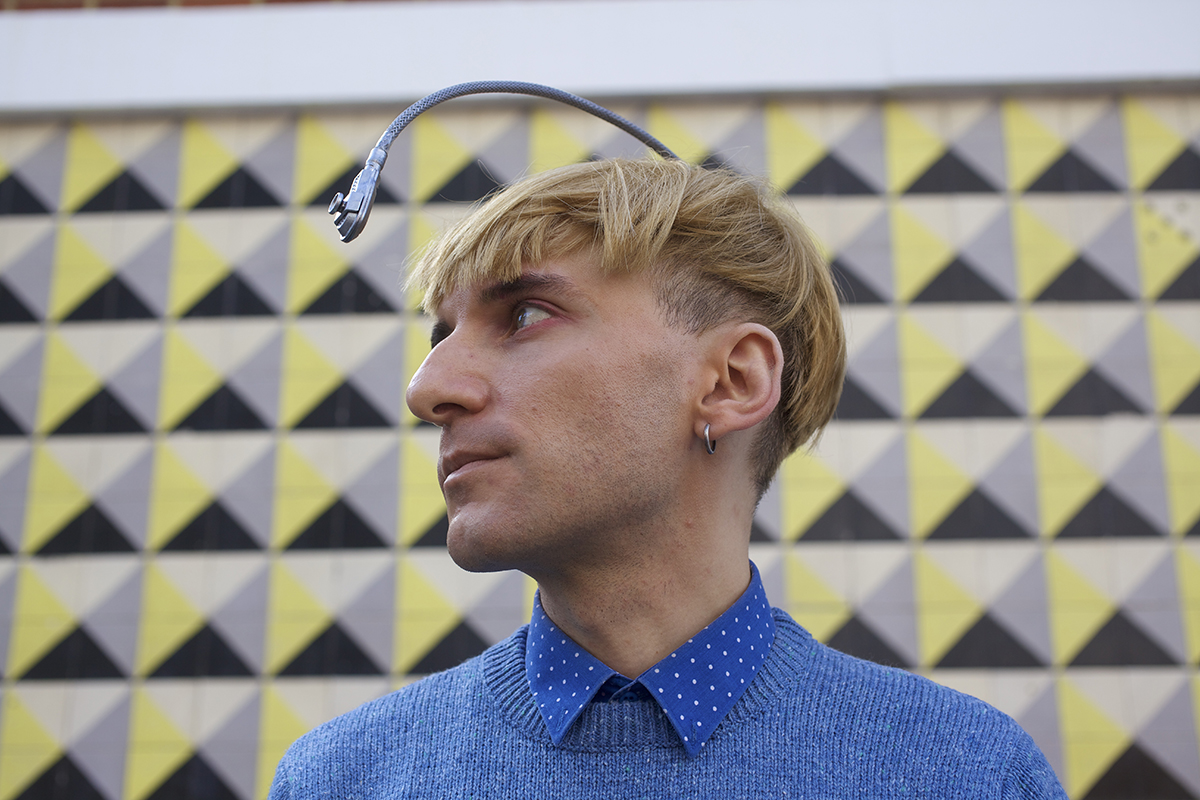

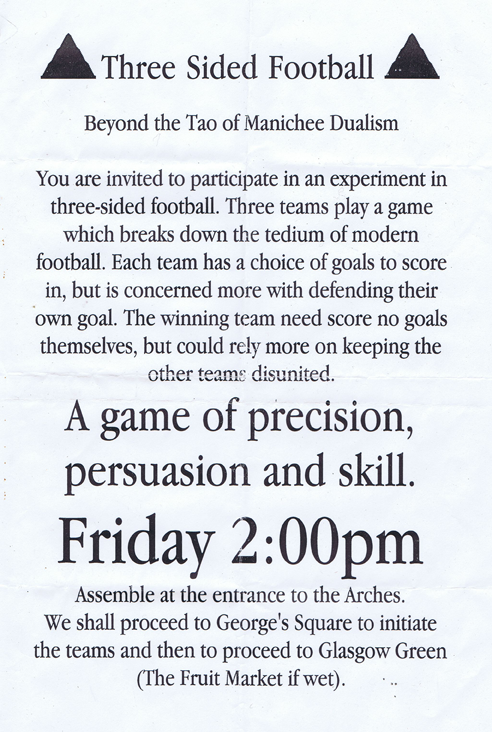

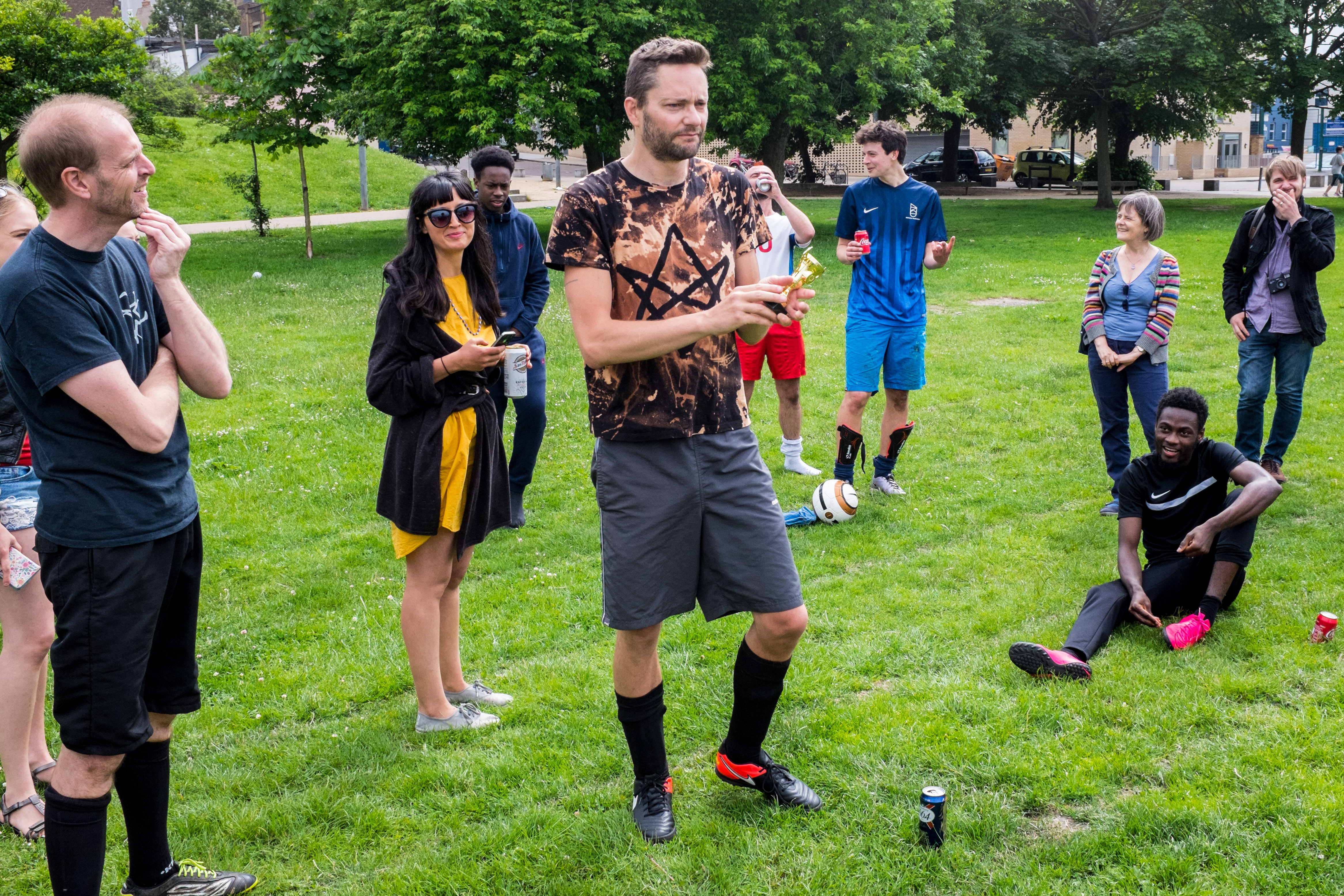

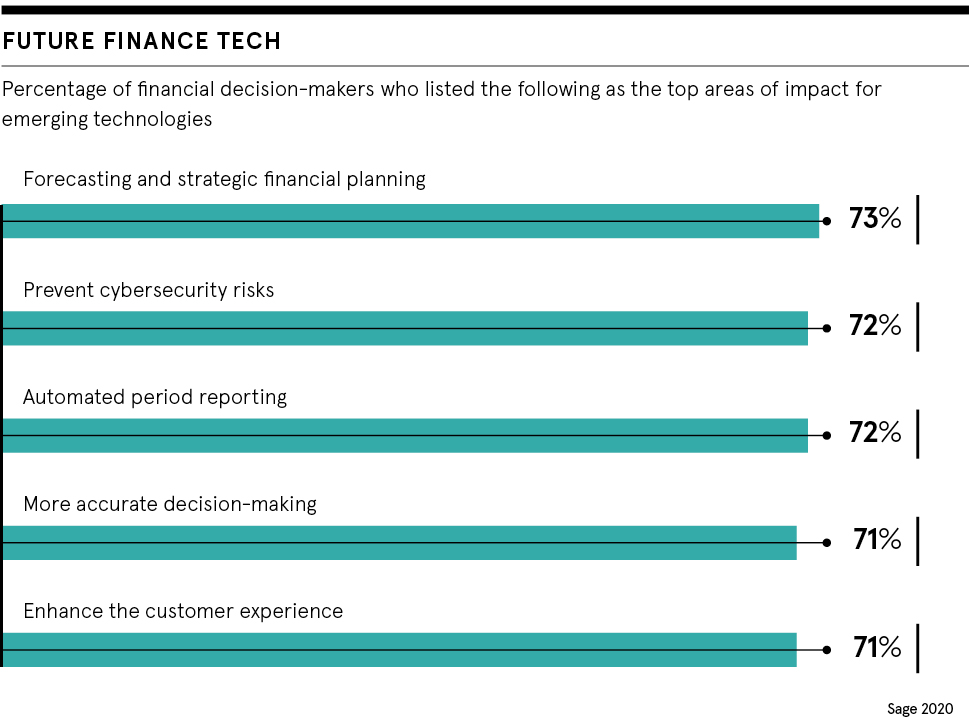

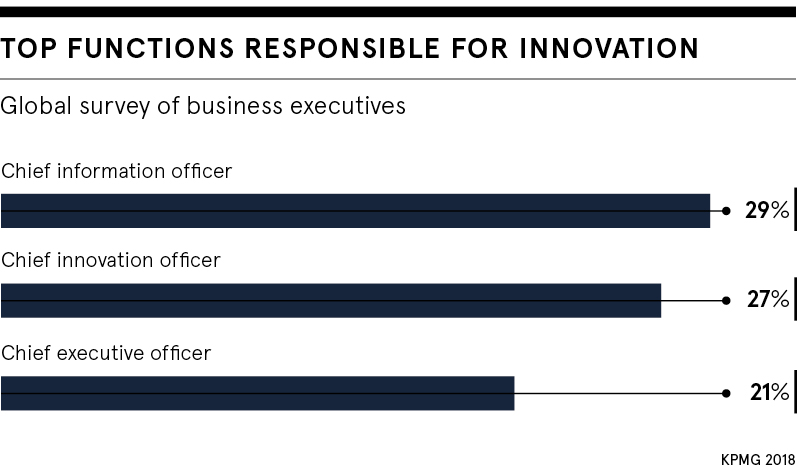


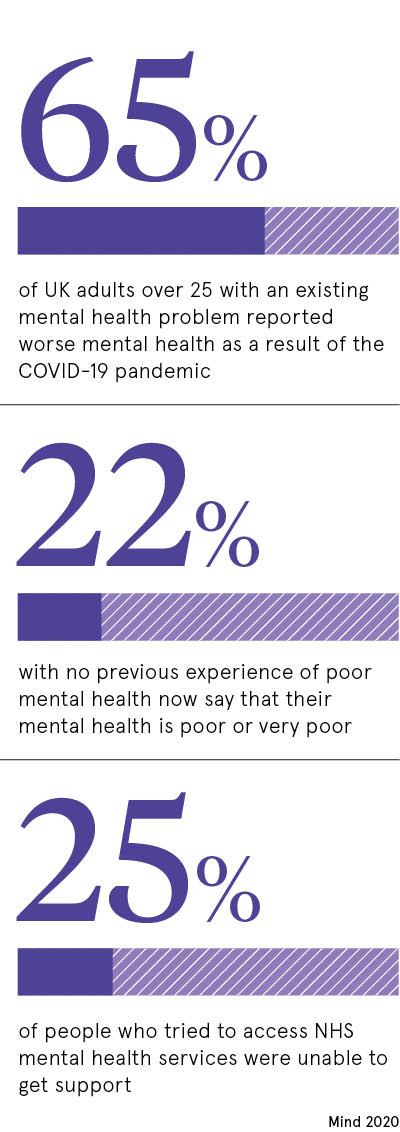


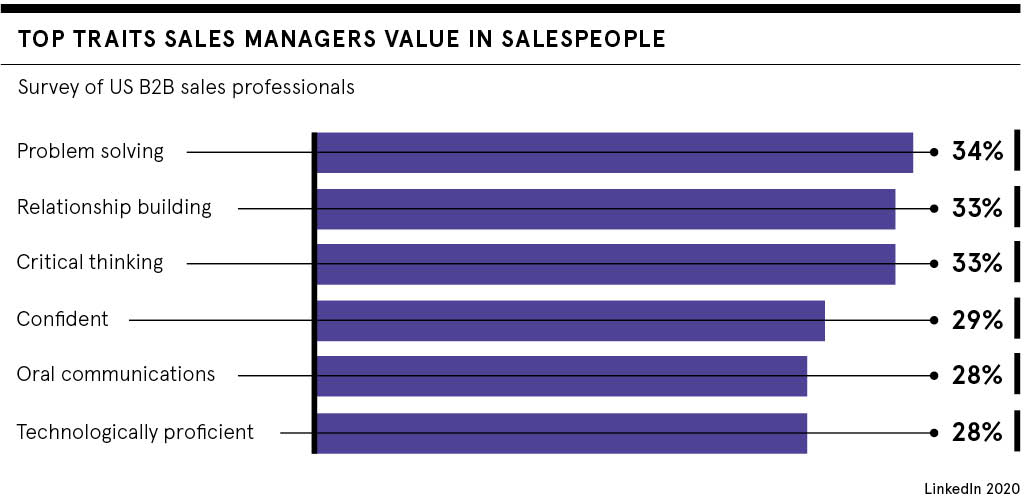

 Oliver Pickup