Dell’s digital boss on being a change agent for transformation

Jen Felch is leveraging her deep knowledge and experience from 17 years at Dell to manage change, drive collaboration and supercharge innovation

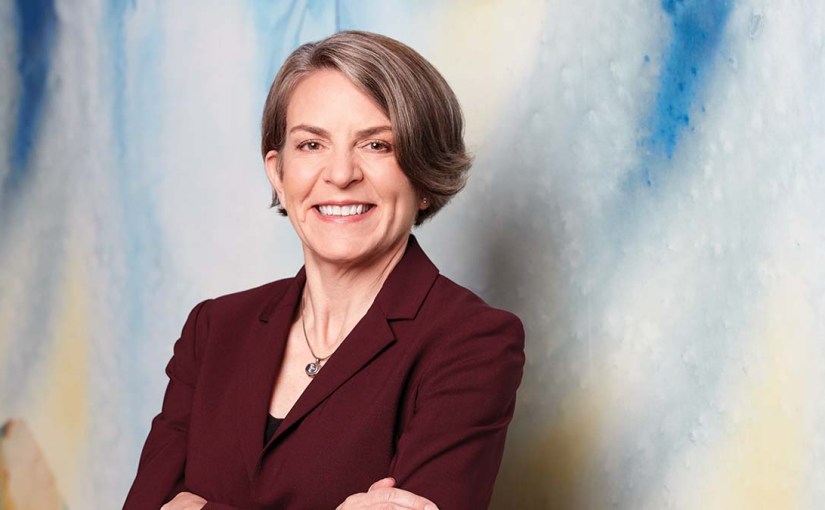
What’s the secret to achieving as smooth a digital transformation journey as possible? Taking your people every small step of the way with clear communication and, more specifically, letting them help plot the route. This insight is shared by an expert perfectly placed to offer an opinion on the subject: Jen Felch, Dell Technologies’ chief digital and information officer.

In September 2019, she took on the dual roles for the first time in the computer technology company’s 37-year history. Back then, like everyone else, Felch had no inkling of the coronavirus-induced disruption that lay ahead. 

During the pandemic, from her home in Austin, Texas, she has been at the helm to navigate the organisation’s road to recovery, driving the strategy, direction and delivery for Dell Digital, Dell’s IT arm. 

As if that wasn’t enough, Felch combines her responsibilities as CDO and CIO alongside “the emerging role of change agent for digital transformation”. No wonder the 53-year-old has taken up hot yoga to help increase her physical and mental flexibility.

Aside from an eight-month stint with Boeing in 2010, she has been employed by Dell since April 2003. Her deep knowledge of the company is hugely beneficial to steering digital transformation, particularly in a period of epochal change. Felch has access to all areas, is a trusted ally and understands various stakeholders’ pain points.

“I started my career as a software developer and spent two years working in the Dell factories as part of a development rotation, and it was a fabulous experience,” says Felch. “That hands-on operational experience is invaluable and I still leverage it today. I don’t have to imagine what it is like in a factory because I have first-hand knowledge.”

Digital transformation: a never-ending continuum

Felch boasts a Bachelor’s and Master’s degrees in mechanical engineering from the Massachusetts Institute of Technology and is an alumnus of the Leaders for Global Operations Program at MIT, where she earned her MBA and a Master’s in computer science. She continues: “Thanks to my 17 years with Dell, I can make use of a network of people across the company. 

“I can pick up the phone to find out what is really happening in a certain area and what people are truly thinking. By understanding what they are trying to achieve and how we can make them more effective, employees are less resistant towards technology adoption and change.”

We might have great technology, but it is having highly skilled people who are available and have the environment in which to innovate that makes the difference

Indeed, when asked about the biggest challenge to successful digital transformation, Felch is quick to answer: change management. “You need the right mechanisms – people, tools and processes – for managing and leading change. You need people within your organisation who will champion change, interact with the business and with the technical teams, and drive understanding and solutions to opportunities.” 

She posits it is “human nature” to find change daunting, hence why there is resistance, at least initially. However, Felch acknowledges the irony of IT professionals needing to be more communicative, collaborative and, well, human in 2021. Man and machine must comprehend one another and stride ahead together to enable an optimal digital transformation journey.

“Today, IT all depends on developing the right engineering culture within an organisation,” Felch says. “At Dell, we are highly dependent on how we engage with others and we have to draw out those latent needs, so we understand where we are going and innovate accordingly. 

“We might have great technology, but it is having highly skilled people who are available and have the environment in which to innovate that makes the difference.”

Little surprise, then, that Felch views digital transformation, both for her company and its clients, as a “continuum that doesn’t end”. She explains: “For us, digital transformation is much more than upgrading a server rack; it is about a mindset to keep the whole business performing and moving forward. As we look ahead, we’re finding the balance between security, privacy and ease-of use, which I believe can be accomplished with good design.”

Further, she is a “firm believer” in Dell’s lean and agile methodology concerning development that drives transformation. “Our iterative approach is delivering great results,” Felch says, lauding a more open, collaborative mindset across the business and also with trusted partners. 

“It’s incredibly powerful when you pair strong technologists with strong business partners and modern IT, like a developer experience rooted in self-service, to drive transformation. That’s where you see multiple wins of creating better experiences, improving employee satisfaction and driving out cost.”

Lean and agile development: delivering results

The outcomes are impressive. She claims that by eliminating redundant work and reducing manual tasks or testing, Dell Technologies has shifted around 10 per cent of its workforce into the development team to “be able to engage with our business partners directly to develop new solutions”.

The company has also reduced its cycle time to deploy new capabilities by 30% and the number of incidents – when a user calls for help – by 31%. It has done this, Felch says, through a focus on user experience, fixing the root cause of existing problems and driving quality in new capabilities.

“The net of it all is that we’re getting faster and more responsive, quality is improving and we have better engagement with our business partners. That’s what digital transformation is all about,” she says.

Finally, Felch stresses how business-critical it is for organisations to “embrace digital transformation”. Those that do not, and are closed to change and constant evolution, will fail – and sooner, rather than later.

“Digital transformation can drive growth opportunities, enhance customer experiences, better connect employees and continue to accelerate positive change within a business,” she explains. 

Given Felch’s wealth of knowledge and experience, it’s worth heeding her words of wisdom.

Felch’s top five tips for leading through digital transformation

  1. Start small
    Find the people who are willing to drive change and solve their first problem. Solve it, celebrate it and let that be the example that you build upon for broader transformation. Having people who can step back, see the larger opportunity or problem that could improve other areas or be replicated, and interact with designers, developers, and so on, can serve as powerful change agents within your organisation.
  2. Focus on the end user experience
    Take the time to listen and observe the problem or opportunity. This avoids the “telephone game” and helps surface latent needs that will delight the user.
  3. Invest in your own processes and team
    Create and embed common ways of working and interacting for the entire team so that it is easy for people to focus on the problem. Have common processes for tracking status and priorities so that people can bring their expertise, whether that’s in DevOps, design, or user experience, to solve the problem efficiently. 
  4. Stay connected to your teams
    Keep providing context and communicate priorities left and right, up and down, to help keep everyone pulling together in the same direction. Stay close so that you can jump in to help remove obstacles, celebrate successes and to remind people that change can be hard. Mistakes will happen but if we commit to learn quickly and to move forward together, driving real change is hugely rewarding.
  5. Be optimistic
    Stay flexible, agile and be ready to pivot. Be optimistic about the present and excited for what transformation will deliver in the future.

This article was first published by Raconteur in April 2021

Catalans Dragons supporters warmed by blaze of glory at Wembley

In August 2007, the French rugby league club tackled St Helens in the Challenge Cup final – and although they didn’t win, their loyal fans didn’t mind too much

At midday yesterday, under the gaze of Big Ben in Westminster, a throng festooned with red-and-yellow flags met to begin their pilgrimage to Wembley. Against the backdrop of the Houses of Parliament, these proud supporters of the Catalan Dragons, in their traditional colours of sang et or (blood and gold), were something of an incongruity, but it was hard not to be taken in by their good humour.

Trumpets sounded, Catalan songs were sung and alcohol consumed as they snaked their merry way to North-West London. For them, as the first French team in the final, and with this being the first time in eight years that Wembley has hosted the final, this was a dream – the score would not matter.

“I don’t care if it’s 50-50,” beamed Robert Pelissier, a season-ticket holder at Stade Gilbert Brutus back in Perpignan. Despite the great expense, he flew his family to London for the weekend for the match against St Helens, the current Super League, World Club Cup and Challenge Cup champions.

“We’ve been to Cardiff, and last year Twickenham, but never to Wembley, the temple of league,” Robert’s wife, Magali, covered in the Catalans’ uniform, offered.

In only their second Super League season, the French team had surpassed their wildest expectations by making the final. To the purists, however, wiping ale from their silvered whiskers, a final between the two rugby league super powers – Wigan and St Helens – would have been fitting for the occasion. Wigan’s 37-24 defeat to the Dragons in the semi-final caused many of the former’s fans to hand back their Wembley tickets.

Craig Spence, the RFL’s communications manager, was pleased that the 73,000 tickets allocated to them were all sold, and conceded that demand for final tickets was insatiable. “It has been the most in-demand cup final in recent memory,” he said. The 17,000 Club Wembley seats were one problem, but a marketing campaign, enlightening these supposed mostly football fans on the delights of rugby league in order that they would attend, seemed to have worked, as the crowd reached 84,241.

The estimated 5,000 Catalan supporters, who made the trip, by plane, train and car, were outnumbered five to one by St Helens’ fans. The Dragons laid on coaches and chartered three planes in an attempt to transport as many Catalans across the channel, however, at a cost. A VIP ticket cost €1,000 – “The equivalent of one month’s wages,” suggested Magali – prompting many to seek alternative routes.

As the underdogs, the Dragons gained the support of the neutral. As it was, the final score of 30-8 was fair, but far from the mauling that many expected. The chairman of St Helens, Eamonn McManus, claimed that after their third Challenge Cup victory in four years, St Helens have “to be up there as one of the greatest sides in history”.

In the press box, it was clear how important Les Catalans’ appearance in the Challenge Cup final was to the French. As well as being covered by national channels Canal+, France 2 and Stade 2, and regional stations TV 3, France 3, and Televisió de Catalunya, Australian and New Zealand stations were also in attendance.

Further, the mayor of Perpignan, the regional president and the minister for sport, Roselyne Bachelot, were present. “Having The Catalans in the final was fantastic for the development of rugby league in Europe,” suggested Spence. “We have been able to market the game to a much wider audience.”

The Catalans’ owner Bernard Guasch – a handy scrum-half for XIII Catalan in his prime – was certain his team’s appearance will help develop rugby league in France. “This is the rebirth of rugby league in France,” he said. “Today is a fantastic day for French rugby league. Today we learned a lot and we will come back stronger and better.”

Guasch’s money has afforded the skills of many Australasian backs, with the idea being that these experienced internationals will nurture the French through their teething troubles in the professional era, until such time native youngsters will replace them.

Robert Pelissier summed matters up: “The fact we played the best team in the game, and at Wembley, must be an inspiration and motivation to French youngsters.”

This article was first published in The Observer in August 2007

Seven tips on how to blag being a beer expert

In early 2017, three years before the coronavirus crisis, Oliver Pickup found out how to become a beer expert in a couple of hours – though some of the details may have been forgotten through alcohol-induced amnesia

There are now over 1,700 breweries in the UK – the most since before World War II – and never has the market been so awash with varieties of beer. For British-based lager and ale lovers, these are heady times (geddit?) indeed.

Despite pubs calling last orders for the final time with alarming regularity, brewers’ fortunes are far from drooping, thanks to an increasingly discerning and expanding customer base. Last year, for instance, there was more land set aside for hops in Britain than before the 1960s, and over in America they can’t keep up with demand, according to Christine Cryne, an expert on the subject.

But how, with such a vast choice, does one go about navigating this wild world of beer? I met up with Christine – a master trainer and former director of The Campaign for Real Ale (CAMRA) – at The Harp in London’s Covent Garden to gain pointers on how to blag being an authority on the subject. It’s surprisingly easy, thankfully. So if you want to impress your mates with some beer knowledge, as I did, here are some handy hints. But beware: no one likes an immodest beer bore, so use these responsibly, and in moderation.

  1. Back to beer basics

“By and large 95 per cent of all beer is water,” says Christine, raising up a half pint of Hophead (3.8 per cent alcohol) produced by Dark Star Brewing Co., from West Sussex. “Most beer in the UK is simple, in terms of ingredients. It consists of hops, water, yeast, and malt, which is roasted barley.

“The malt provides the sugar, the yeast eats the sugar, and then you are left with the alcohol. The process involves stewing water and malt, and then you boil and add the hops for flavour.”

2. Making the malt of it

“This Hophead is a pale beer,” continues Christine, “and if you hold it to the light you will see it is clear, and light in colour. That indicates that a pale malt was used to make it. A majority of British beers use a pale malt as a base – this is barley roasted quite lightly.” 

There are plenty of other types of malt used in the UK, with Vienna malt a more expensive option than the pale, and roasted malt, used for heavier beers, can give a chocolate flavouring, for example. Crystal malt creates darker-coloured ales, and caramelised amber malt similarly colours the drink. And in a bid to go do their bit for sustainability, once the sugar is extracted from the malts, the brewer will often sell it to farmers as wild-cattle feed.

3. Hoppy and you know it

Christine pulls a bag of what looks like an ounce of skunk from her handbag, and plonks it down on the bar, next to her half-drunk Hophead. Alarmed, and fearful of being chucked out of The Harp (CAMRA pub of the year in 2010) or worse getting arrested, I ask what on earth she has presented. “These are Goldings hops – a popular hop in traditional-style British beers – and they are in fact a relative of the cannabis family,” she says. “And interestingly they are also soporific. So when you fall asleep after too much beer, perhaps it’s not always down to the amount of alcohol you have drunk.

“Rub some of the leaves on your hands – but don’t eat it – and smell. This is used by Fullers in their London Pride and ESB, for example, and very popular. The fruity character in this Hophead and the bitter finish comes from the hops. In these lighter beers, the hops will provide the bitterness. And, if you want a bitter taste, add the hops at the start of the boiling process. For a more aromatic flavour, put them in at the end.”

4. Be nosey

 “To determine flavour, the nose is more sensitive than the palette,” Christine continues, as we begin our second half pints, this time opting for Harvey’s Sussex Best (4.0 per cent). “But sniffing a beer which is up to the brim of the glass is no good. You have to have a few gulps so that the flavour is on the glass. In fact, the ideal vessel to smell and taste beer in is a sherry glass.”

Christine, organiser of the London Drinker Beer & Cider Festival – which takes place from March 8-10, 2017, at Camden Centre – says she has four criteria to consider when judging beer: appearance, aroma, taste, and aftertaste. “Ultimately, I want to see whether it is an easy-drinking beer,” she continues. “It has to be a balanced beer, and one which has a distinctive, memorable taste. The question is: ‘Would you recommend it to a mate, and have a second pint of it?’”

5. Savour the flavour

The main reason many fields had the hops removed after World War II was because fashion dictated a lighter-charactered beer with a subtle taste. “Now there are more varieties than ever before, and it’s really exciting,” enthuses Christine. “While American brewers like to go “big and bold” with their flavours of hops, in Britain we are catching up, becoming more innovative in our hops and we now enjoy a range of beers using hops from all around the world.

“The wheat beers we have are made with wheat, rather than malt, and naturally have a lemony taste,” Christine says, finishing her second half pint: a Harvey’s Sussex Best (4 per cent). “And lagers use bottom-fermenting yeast which can have many different flavours, including bubblegum. And it’s funny how fashions change, and trends differ geographically; for instance, if traditional UK tastes of cloves it means it is off, whereas in Germany it is desirable.”

6. Turning beer in to wine

As we begin to sup our third half pint, a Harvey’s Old Ale (4.8 per cent), Christine points out the beautiful ruby colouration. This is created by fusing pale malt with some dark malts, and it smells like used coffee granules. Given the unusual hue, I joke that it looks a little like red wine. 

Christine says that it has become trendy for brewers to age beer in the UK, and after a certain amount of time the flavour does in fact eventually become wine-like. To some it’s too bizarre to even consider drinking such a beer, but Christine love is. The oldest beer she has ever tried? A 1910 Bass Bitter, which was “lovely”, she adds with a grin. 

7. Pairing pints with food

As a general rule, we prefer to sip lighter beers in the summer, whereas the more complex, darker ales are the go-to drinks for the long, cold winter months. It’s all a matter of taste, of course, but on that subject Christine has some food tips, as we finish up our session in The Harp. 

“Golden ales are brilliant with fish,” she starts, “and stronger golden ales work well with soft, rich, creamy cheeses like camembert and brie. They really cut through the fatty character. Best bitters [with an alcohol content between 4 and 4.6 per cent] are superb with lamb, burgers, and a big slab of cheddar cheese. I like a dark beer to accompany dessert, too. It works well with a steamed chocolate pudding.”

As a final piece of – vital – advice, Christine adds: “You are less likely to have a bad hangover if you firstly start with beers that have lower alcohol percentages and work your way up in order, and secondly if you drink half a pint of water with every pint of ale. And remember to enjoy your drink – don’t neck it. You wouldn’t do that with wine, so why would you down a beer?”

Wise words, indeed. 

This article was first published in The Telegraph in January 2017

Five priorities for CIOs in 2021

Trends accelerated by the coronavirus crisis present challenges and opportunities; dealing with both has increased the workload for chief information officers

1 Regulatory compliance and security

The entry might have been number one in the charts for the past few years, but the mass jump to working away from the office catalysed by lockdown has meant chief information officers (CIOs) must be on top of data management, security and compliance. 

“The shift towards remote work and digital operations has meant the information security posture of many businesses, faced with an increasing amount of threats, has had to improve,” says Federico Baldo, CIO at Eurotech, a multinational company supplying internet of things solutions.

“Security starts at the top of an organisation and, while chief executives do not need to be security experts, they do benefit from an accurate understanding of the relevance of security to their organisation. And for many smaller businesses, in particular, it is the CIO’s job to lead the internal security programmes.”

Caroline Carruthers, chief executive of data strategists Carruthers and Jackson and former chief data officer at Network Rail, says a mindset transformation is required. “My biggest piece of advice for CIOs when it comes to regulatory compliance is they need to stop thinking about security and privacy as a tick-box exercise,” she says. “It’s essential they see this as a positive opportunity rather than a hurdle to overcome.”

There are enormous advantages for the organisations that get compliance right, she insists, from increased customer trust to more secure intellectual property.

2 Modernise IT infrastructure and systems

COVID has tested the robustness of supply chains, business models and information technology systems alike. In many cases, it exposed worrying vulnerabilities. 

“After the immediate response to the pandemic, it allowed the time to look at IT systems and assess whether they remained fit for purpose,” says Jean-Sébastien Pelland, deputy managing director of Eland Cables, a global supplier of cables and cable accessories.

“Businesses constantly evolve, requiring IT systems to adapt rather than making wholesale changes, simply due to the pace and perhaps uncertainty of the new avenues. Now is the time to make sure the systems match the business as it stands today.”

This chimes with Sharon Mandell, CIO of Juniper Networks, a multinational cybersecurity company. “As we ‘cloudify’ and ‘SaaSify’ our entire product line, Juniper also needs to update its IT architecture. We need one that’s more nimble, that brings new capabilities and that’s more user aware to enable the experience our customers and partners desire throughout their journey with us,” she says.

Like many organisations, Juniper has pivoted its offering, in part because of the pandemic fallout. “Modernising IT is a priority now as many of our systems were built around a business model that delivered hardware, with embedded software only, and traditional technical support and services,” says Mandell.

3 Ensure real-time visibility of critical data

“The world we’re living in is moving faster than ever and organisations relying on data even one week old are behind the curve,” warns data strategist Carruthers. “The nature and speed of change in 2021 will make real-time visibility of critical data the single biggest factor in winning new business across almost all industries this year.” 

She advises that “CIOs need to make sure they have insight into what is going on in their industries in real time” to make accurate predictions.

Rich Murr, CIO at Epicor, a global provider of enterprise resource planning software for the manufacturing, distribution, retail and service industries, agrees. He calls actionable data “the holy grail” of IT. “And sometimes it’s seemingly just as difficult to obtain,” he says. “The challenge is less about systems and more about the business processes that produce and consume the data. 

“CIOs need to educate their business peers, not to sit back and expect clean data to appear magically in their systems, but instead to take strong ownership and execute the hard business process improvement work necessary to create actionable data.”

4 Engage and educate the workforce

On Murr’s point of driving education and training, so employees can use all IT systems capabilities and have a good handle on data management, this is another important CIO task. “IT needs to work for the worker,” says Tim Christensen, chief technology officer at workforce communications platform SocialChorus.

Football Association CIO Craig Donald says: “Facilitating tech literacy will be central to my role in boosting enjoyment and attainment as the football community comes back to life in 2021. Particularly in non-tech organisations, CIOs shouldn’t just go in there being the mystical gurus of technology. Get a dialogue going and show how tech can directly impact relationships.”

Educating staff is particularly challenging for Jo Drake, CIO of The Hut Group, the retail and property company that in September attracted the largest initial public offering on the London Stock Exchange since 2013. “As part of a global business that is expanding at a rapid rate, it’s important to have the best team possible and the right talent to grow with us,” she says, pointing to several schemes that attract and nurture tech talent.

5 Make full use of cloud computing 

Eurotech CIO Baldo urges businesses to “go full-on cloud”. He says: “If the business gross margin is not sensitive to slightly higher costs, there are many more advanced and integrated security capabilities that smaller businesses can leverage through the use of cloud services from AWS, Azure, Google or IBM than could be achieved on-premise, within the same budget.” It is the CIO’s responsibility to manage the move to the cloud and beyond.

Dr Anjali Subburaj, chief architect of digital commerce at multinational manufacturer Mars, believes businesses can move up a level in this area. “Adoption of cloud computing allows IT teams to focus exclusively on driving business outcomes via their endeavours instead of grappling with IT infrastructure issues,” she says. 

Once the cloud is embraced, more tech opportunities become accessible. “CIOs should also be prioritising the introduction of an artificial intelligence-embedded approach,” Subburaj adds. “This will improve the accuracy and relevancy of outputs, such as supply and demand, and personalised product recommendations to consumers.”

This article was originally published in Raconteur’s Future CIO report in March 2021

Understanding the ‘next normal’ for businesses

Which trends accelerated by the coronavirus pandemic are here to stay? Exploring some of the businesses set to thrive in the digital era

The coronavirus pandemic has fired a starting gun for the acceleration of various trends and necessitated distant business plans to be hurriedly activated. E-commerce companies, automated software services, health-tech businesses, videoconferencing, communications platforms, and other organisations facilitating remote working are among the big winners.

But which innovations embraced en masse since March 2020 are here to stay? Conversely what will prove to be a lockdown-induced fad? Have we had our fill of virtual drinks, online quizzes and expensive cook-it-yourself restaurant kits?

Moneypenny, the leading outsourced communications provider will explore some of the business lessons from 2020 and beyond looking at organisations and companies that have thrived and, moreover, look set to succeed in the long term.

Online events platform Hopin, for example, has brought work colleagues together remotely with tools for virtual talks and networking. ZoomMicrosoft TeamsSlack and Workplace by Facebook, plus many similar videoconferencing and digital collaboration tools providers have also triumphed.

And as businesses start to re-open their workplaces, it will be fascinating to glean insights from the likes of Vpod, provider of next-level visitor management systems. Moneypenny recently collaborated with London-based Vpod to offer businesses dedicated video front-of-house and concierge support for the first time. Moneypenny’s video-based support will be added to Vpod’s Vgreet product: a virtual reception that offers a contactless check in and reduces visitor management costs.

Meeting rising customer expectations

While it may be unclear what the “next normal” will look and feel like exactly, we can start to make a decent, educated guess: because the direction of travel is clear. There is little doubt that the coronavirus pandemic has catapulted businesses into the digital era, but comfort, convenience and communication will all play even greater roles than before.

To adapt, progressive leaders seek more technology-driven solutions and are now more open-minded about outsourcing certain aspects, including communications, to better meet ever-rising customer demand. We can thank leading organisations like Amazon for that, raising the level of expectation to have things delivered by a simple couple of clicks on a device as soon as is humanly – or even robotically – possible.

Certainly, the retail landscape has evolved, and e-commerce has boomed.

In the United Kingdom, the latest Office for National Statistics figures, published in late January, highlight that online sales surged by 46 per cent in 2020 compared to the previous year. Looking deeper at the data, online food sales enjoyed the most significant uptick given the context offered by months of lockdown, growing by 79.3 per cent.

As a December ONS report noted: “The 2008 recession had a smaller impact than the COVID-19 pandemic on individual industries and the economy … Services such as hospitality – including pubs, restaurants and hotels – recorded almost no output in April and May, but industries such as information and communication, where staff could largely work from home, saw little change compared with February.”

Collaborating and sharing expert insights in the digital era

Accommodation and foodservice activities were 90 per cent smaller than a year earlier, according to the ONS. Will these industries recover, albeit in evolved forms, because of the vaccine roll out?

It’s clear that to keep up with customer and client expectations, technology solutions are no longer a “nice to have” – as perhaps they were 12 months ago – but business-critical.

Forward-thinking decision-makers have shifted their mindset. They realise that much in the same way servers and data have migrated to the cloud, collaboration with trusted partners and utilising the services of skilled experts and technology services in the outsourcing world makes best business sense on several levels.

The mass move to remote working has changed the way we interact with one another, and the rise of videoconferencing and walking meetings, and so on, have paved the way for businesses to engage both employees and customers in different and exciting ways.

For businesses determined to grow in the digital era, it is vital to invest in new forms of communication – but could nuance and the human touch be lost? Building trust – with customers, staff, and other stakeholders – is still imperative.

This article first appeared on Moneypenny’s blog channel in March 2021

Silver surfers ride the digital learning wave

Record numbers of baby boomers and older retirees are enjoying the manifold benefits of taking online courses

The proverb “you can’t teach an old dog new tricks” is barking up the wrong tree in 2021. Record numbers of baby boomers, aged between 57 and 75, and older retirees, including care home residents, are taking advantage of digital technologies to acquire novel skills and develop hobbies. In droves, they are turning on, logging in and not dropping out. 

The enforced lockdowns of the last year have accelerated this trend. Silver web surfers, unable to hug friends and family, have had the time, confidence and access to technology to embrace digital learning. Indeed, 41 per cent of people in the UK over 55 said they were comfortable learning a new digital skill during lockdown, according to BT research. 

Moreover, older generations are expressing a greater thirst for knowledge when compared to younger cohorts. The 2020 LinkedIn Opportunity Index suggested that not only are baby boomers more willing to welcome change (84 per cent) than millennials (74 per cent) and members of Generation Z (72 per cent), they are also more likely to invest time in learning transferable skills (78 per cent) than the two other groups (72 and 74 per cent, respectively).

Rocketing interest in online groups provided by the University of the Third Age (u3a), whose network has expanded to almost 500,000 older adults no longer working full time, supports this data. A year ago, with members forced to stay at home in an attempt to stem the spread of coronavirus, the UK-wide charity, which celebrates its 40th anniversary in 2022, pivoted online, establishing Trust u3a. 

“We’ve been excited to see huge numbers of members embracing digital learning and turning to online and social media, sometimes for the first time, to keep their interest groups going,” says Sam Mauger, chief executive of u3a.

Online learning opens minds and virtual doors

Trust u3a’s online offering has attracted hundreds of new members and spawned more than 80 online groups and courses, ranging from Japanese to birds of prey, from cooking to painting. “Digital technology has empowered us to keep learning and active, and allowed us to remain connected with one other,” says Mauger. 

“Instead of meeting face to face, photography groups can share images on WhatsApp, ukulele players have turned to Twitch to make music together and ballroom dancers are using Zoom to show off their moves.”

She plans to adopt a blended learning model when lockdown restrictions lift, as going digital has opened minds and virtual doors. “It has removed geographical barriers and enabled members to expand their learning and forge new relationships across the movement, from Scotland to Cornwall,” she says.

Discovering new interests and friends is one of the biggest pluses of digital learning for retirees, according to Amanda Rosewarne, business psychologist and co-founder of the Professional Development Consortium, which accredits online courses. “By learning via live online classes, you can interact with others who may also be feeling isolated and lonely,” she says. 

Elderly students enjoy several other benefits. “Studies show that learning new things triggers serotonin release in the brain, which is akin to the effect of antidepressants,” says Rosewarne. 

Further, a 2017 study for Age UK, Europe’s largest charity supporting older people, found that keeping the mind active can prevent age-related conditions, such as dementia. Committed learning, rather than crosswords or sudoku puzzles, is most effective, though.

Thanks to a variety of user-friendly devices and online courses, picking up a language, for instance, has never been easier or more convenient for retirees willing to enter the digital classroom. 

Trust issues: beware scammers

Birmingham-based septuagenarian John Bishop has attended a Greek class for years. Soon after his course went online in the autumn, with lessons conducted on Zoom, he “took the plunge” and bought a smartphone. Technology is not all Greek to Bishop now; all that is required to join his group is the click of a hotlink. “The ease of access and ease of use are key for my generation when it comes to online learning,” he says. “My advice is keep it simple and provide non-bot help.”

While Bishop is delighted that his lessons can continue online, he is looking forward to returning to in-person sessions. “Zoom is not superior to live lessons,” he says. “Video conferencing requires more concentrated eye focus, because all you are seeing is the screen rather than a room, and student interaction is less fluid. It also lacks the ancillary benefits, like the exercise of walking to and from the class.”

Sarah-Jane McQueen, general manager of CoursesOnline.co.uk, argues the convenience of online learning is hugely appealing to elderly students. “Rather than having to get up early and travel a sizeable distance to learn,” she says, “users can now get the same experience from the comfort of their own home and at a time that suits them, allowing them to easily balance learning around their daily schedules.”

However, McQueen notes the surging popularity of online courses for retirees has not gone unnoticed by those seeking to make quick money. “Particularly since lockdown, there has been a rise in the number of fraudulent courses being offered by scammers who are looking to profit from people’s willingness to learn,” she warns. 

“To help address these concerns, providers should make a concerted effort to highlight the feedback and reviews they’ve obtained from previous users that can work as testimonials which assure new users they are legitimate.”

Building trust so older people feel comfortable online, and don’t get left in the wake of technology, is vital. Pleasingly, there is now a vast number of online resources and initiatives designed to boost digital literacy among the elderly. For example, Barclays’ Digital Eagles scheme, launched in 2013, has delivered digital skills training to staff and residents in more than 500 UK care homes.

“There are many retirees who have achieved great things thanks to digital learning, often in fields that were perhaps far removed from what their previous careers encompassed,” McQueen adds. 

Clearly, a more apposite idiom for 2021 is “you are never too old to learn” and, with easy-to-use digital technology, there is no obstacle to becoming a very mature student.

This article first appeared in Raconteur’s Digital Learning report, published as a supplement in The Times in March 2021

The pros and cons of Bill Gates’ green premiums

Bill Gates recently published his “green manifesto”, but is it feasible for organisations to follow and, if not, what should businesses be doing instead?

You could argue it is a bit rich that Bill Gates, co-founder of technology titan Microsoft and one of the world’s wealthiest people, is calling for businesses to drive climate change. However, there is no debating that consumer and investor demand is forcing organisations to clean up their processes for the future of an endangered planet.

In How to Avoid a Climate Disaster, his latest book styled a “green manifesto”, published in February, the 65-year-old billionaire introduces the concept of “green premiums” or the differences in cost between a fossil-fuel-based way of doing something and the clean, non-emitting way of doing the same thing. But how achievable is Gates’ vision?

A fresh approach to doing business is essential to avoid a climate disaster, posits Gates. This new way requires courage from business leaders to take on risks they are not used to taking and also that investors are not used to rewarding. It’s a simple problem, he suggests: we must stop greenhouse gases by the middle of the century or else.

Green premiums essentially show how much it will cost to “zero out emissions” in all sectors of the economy where fossil fuels are involved, including producing electricity, manufacturing, agriculture, transportation, and heating and cooling. 

There are four areas where organisations can make “a practical difference”, according to Gates. The first involves “mobilising capital” to reduce green premiums. Second, businesses should buy greener products. Next, they should expand research and development. Finally, drive down green premiums by shaping public policies.

“Working in these four areas will not always be comfortable,” Gates concedes, though he adds: “These are short-term costs required of every business leader who wants to do more than pay lip service to climate change. In the long run, these risky steps will be good for business.”

The global reaction to his green manifesto, and green premiums in particular, has been ambivalent. Molly Scott Cato, a Green Party politician, who from 2014 until last year served as a member of the European parliament for South-West England, is in two minds about them. 

“As an economist, I like and agree with the green premiums principle of using market incentives to tackle the climate emergency and the consideration of how to achieve wellbeing with minimum energy use is important,” she says.

On the flip side, the professor of economics and finance at the University of Roehampton, says: “Green premiums are too technologically focused and adopt the adage that if you can’t measure it, you can’t manage it.” Scott Cato contends the planet’s systems are highly complex and ungovernable: “Many of the solutions require social rather than technological innovation.” 

Stressing the need for greater international collaboration and higher appreciation of the complexities, she says: “Gates’ proposal is also too exclusively focused on the climate and consequently risks displacement, for example where are the biofuels grown and have they destroyed peatlands for food growth?”

Oliver Bolton, chief executive of Earthly, a tech platform that helps businesses become “climate positive” through science-backed natural solutions, identifies another hurdle. “The use of green premiums is ultimately going to be driven by governments changing policy,” he says, “so it could be hard at the outset for businesses to use the model.”

Dr Jane Davidson, pro vice chancellor for sustainability and external engagement at the University of Wales, is more scathing of green premiums. “I’m disappointed at the proposition that ‘green’ is more expensive,” says the former minister for environment and sustainability in Wales. “This is classic short-term thinking, when each year the costs of us not being green goes up, contributing to climate change. 

“Green premiums are the wrong answer to the wrong question. We need a new value system that drives climate and biodiversity-led action, and drives out fossil fuels, waste and obsolescence.”

Despite the headlines and promises, there is concern that environmental, social and corporate governance strategies are largely meaningless, in part because they are not regulated and tricky to measure accurately. Moreover, could it be that by committing to a net-zero target in 29 years, as many have, businesses are delaying action on climate change, as it is not an imminent worry?

Indeed, while a search on financial data service Sentieo indicates that references to 2050 in corporate literature have doubled in the past two years, a PwC survey released in mid-March found climate change ranked ninth among global chief executives’ perceived threats to growth. Additionally, 27 per cent of the executives surveyed reported being “not concerned at all” or “not very concerned” about climate change.

Worryingly, this tallies with research from French-headquartered digital design software corporation Dassault Systèmes, published in September, that shows the coronavirus crisis caused 32 per cent of organisations to scale down attention given to environmental sustainability, while 18 per cent paused it completely.

“As organisations come out of crisis mode, it is vital they quickly return to making environmental sustainability a priority,” urges Séverine Trouillet, public sector and education director for Dassault Systèmes in Northern Europe. “This can be done by setting short to mid-term goals to help reach long-term ambitions, as well as building upon the already accelerated adoption of technology to reduce their footprint and increase their handprint, making positive impacts on the environment and communities.”

Trouillet believes those companies that act now can still achieve a competitive advantage. “Eco-conscious consumers will continue to vote with their wallets, meaning businesses failing to take it seriously will lose revenue and struggle to keep pace with rivals,” she says.

Peter Bakker, president and chief executive of the World Business Council for Sustainable Development, concurs. But he says a new wave of leadership thinking is imperative. “Three radical and strategic business mindset shifts – reinvention, resilience and regeneration – are critical to realising a sustainable and inclusive society,” the Dutchman says. 

Bakker concludes: “It is time to move beyond ambition and targets and make net zero real, within the next decade.”

This article first appeared in Raconteur’s Sustainable Business report, published in April 2021


FT Masterclass: Commando course with Brian Adcock

A former Royal Marine shows how to make it through an obstacle course

I’m waist-deep in thick, malodorous sludge. But right now the pong is the very least of my worries: a 6ft 4in former Royal Marine is bellowing at me from the riverbank.

“Spread out your body so there’s more surface area,” Brian Adcock orders, “then I can haul you in when you’re within range.” This sluggish, squelchy wading towards safety is the result of a failed, and deeply inelegant, attempt at a suspended commando crawl on an obstacle rather menacingly named The Chasm.

After losing balance, I had flipped off a horizontal rope two metres above the swamp-like waters. Following what seems an age, I manage to heave my body — heavier due to the now-sodden combat uniform I’ve been issued with — back on terra firma.

The dreaded sheep dip (Tom Jamieson)

“Well done, good effort,” says Adcock, clapping my back with his spade-like hand. “You can take a chuck up for that.” Seeing my confused expression — even between the streaks of camouflage paint daubed on my face — the 45-year-old explains: “In Royal Marine parlance, that means give yourself a round of applause.”

Even though I am soaked through and stinky, the 6km obstacle course, studded with 15 challenges, is proving fun. Adcock explains that to master the commando crawl, my vertically pointed left leg should be more relaxed, “acting as a keel” while I shuffle along the rope with my hooked right leg pumping, piston-like, in unison with my arms.

Our lesson is taking place in the grounds of Hever Castle in Kent, where Adcock is holding an obstacle course event called Commando Series. It is a picturesque setting — the estate was the childhood home of Anne Boleyn — but with the dreaded Sheep Dip and a 12ft wall still to overcome, this is no time to lose my head.

Obstacle course racing (OCR) is a fast-growing sport. While there are no official figures for the UK, there were 1,370 events in the US last year, with about five million participants — up from 354 events in 2012. The second annual world championships took place in Ohio last month, encompassing eight miles of hellish competition for the most hardy.

Adcock, who is used to organising mass participation events after being event director for the Millennium Youth Games and establishing the popular Castle Triathlon Series in 2009, says the UK can add something unique to the sport. “It may sound a bit arrogant but Royal Marines generally do it better than most. After all, assault courses were — and still are — used to prepare elite soldiers for battle.”

The obstacles are based on those that the original British commandos used at Spean Bridge, a godforsaken place in the Highlands near Fort William, during the second world war. Winston Churchill had seen Boer commandos using guerrilla warfare against British troops when he was a young war correspondent. After Dunkirk, he copied those tactics and mobilised an elite group of soldiers to boost morale by creating little pockets of chaos in occupied Europe.

“Ultimately, from a commando perspective, obstacle courses make sure that your bloke is in good shape when it comes to pulling the trigger, so he can best take aim and kill somebody,” explains Adcock. “That’s the root of OCR. Of course, we are not going around with a weapon and a 30kg pack on our backs but it’s fun and brings out the kid in a lot of people.”

Adcock himself endured 14 months of gruelling training at the Royal Marines’ commando training centre in Lympstone, Devon, in what he calls a “seminal” period of his life. He then served in the marines for seven years, latterly as a helicopter pilot, though he isn’t allowed to divulge any details. For two years he held the record for the notorious Tarzan assault course at Lympstone. (It starts with a death slide, concludes with a rope climb up a 30ft near-vertical wall, and should be completed in “full fighting order” — ie, all the kit.)

As we approach the monkey bars, I eye the horizontal ladder above our heads with trepidation. Adcock barks instructions as I clumsily swing across the bars with more sludge below. “Keep your lower body as still as possible,” he suggests. I obey, and find it quicker to power from pole to pole.

I’m relieved at getting this far, having prevailed over another commando favourite, the Smarty Tubes, by pulling myself along with my thrusting elbows. I’ve survived the Catacombs of Doom, and conquered Peter’s Pool — a 30m-wide clay pit — neck deep in chilly, murky water.

I have slid, slipped and sloshed my way round the course. Occasionally we have come “under fire”, with smoke bombs, explosions and replica gun shots. Ultimately, obstacle courses make sure your bloke is in good shape when it comes to pulling the trigger Nonetheless, I still feel daunted as I face the last two obstacles.

The Sheep Dip is a liquid filled, trough-like structure similar to the ones used to remove sheep’s parasites and contains a two-metre long, submerged drainage pipe. As I tentatively enter the water, Adcock tells me to put my hands, thumbs up, at the top of tunnel I’m about to dive through. That, and not to kick when horizontal in the water so that the commando to my rear can shove me to the other side. I dive on the count of three, whizzing along the narrow pipe. At the other end an instructor yanks me to the surface and orientates me.

The final obstacle is a 12ft wall. “It’s actually 13½ft,” says Adcock looking ahead. “Use the vertical rope, and the netting, leaning your body close to the face.” A 20-second, temple‑bulging clamber later, I’m on top of the wall, and feeling on top of the world. Gleeful yet weary, I can’t help but exhale a loud cheer.

As a reward for completing the route, Adcock hands me a cap comforter, an item worn by those second world war commandos. Not quite a green beret, but still symbolic of my achievement. Grinning, he adds: “You can take a chuck up.”

This article was first published in the Financial Times Weekend in November 2015

Why occupational health is now a top priority

Ethics aside, supporting the physical and mental health of employees creates a win-win scenario in the post-pandemic workplace, but there are challenges to providing better support

The coronavirus crisis has squeezed the life out of so much we previously took for granted, at home and at work. Things have changed, irreversibly. Many people express both a heightened appreciation of life and respect for mortality. But how does this translate to occupational health? 

As organisations begin to coax their employees back to the workplace, the expectation that employers should support the mental and physical health of staff, particularly in a workplace setting, has been dialled up in the past year. 

To instil confidence in employees that a return to work is safe, many companies provide COVID-19 rapid lateral flow tests, promise better ventilation, rigorous cleaning programmes and gallons of hand sanitiser. But is it enough? Should businesses take more accountability for their workers’ health?

According to employee benefits provider Unum’s Value of Help study, published in December, 86 per cent of UK employers have changed their approach to staff health and wellbeing because of the coronavirus situation. 

Moreover, 95 per cent of the 350 employers surveyed revealed the pandemic has “impacted their need to make employees feel more protected”, says Glenn Thompson, chief distribution officer at Unum UK. “Whether it is from individuals, communities or organisations, 2020 has brought the value of help and support to the front of all our minds,” he adds.

Dr Robin Hart, co-founder of Companion, which offers mental health support tools, is pleased organisations are showing a greater willingness to look after staff. “A lack of focus in this area historically has seen an increase in lost revenue and diminished productivity,” he says. “Attitudes have had to change in a very reactive way due to the pandemic. In reality, it’s accelerated a process which would have played out anyway, eventually.”

Win-win scenario

Besides, supporting staff health and wellbeing creates a win-win scenario. Health and Safety Executive (HSE) data shows that in the 12 months to March 2020, when the first lockdown came into force, approximately 828,000 workers, the equivalent of 2,440 per 100,000 people, were affected by work-related stress, depression or anxiety. This absenteeism resulted in an estimated 17.9 million working days lost. In the previous year, the cost of workplace injury and ill health was calculated by HSE at £16.2 billion.

“Nobody’s health should be worse at the end of a shift than it was at the start,” says Dr Craig Jackson, professor of occupational health psychology at Birmingham City University. “If it is poorer, then there is something morally, ethically and legally wrong in that workplace.”

He believes there is a newfound respect for occupational health departments. “The excellent, proactive work undertaken by many professionals in preparing COVID-secure workplaces – assessing staff return to workplaces, COVID screening, testing, tracking and tracing – will lead to people realising occupational health is not just somewhere to go to when you are ill and unable to work,” he says.

Jackson acknowledges “supporting staff better than before does involve additional time and costs”, but argues such spending is a good investment. This is backed by research from Deloitte, published last year, that estimates for every £1 spent by employers on mental health interventions, they gain £5 back in business value.

“Not only is there a strong moral case for employers to look after staff health, but it makes good business sense, too,” agrees Oliver Harrison, chief executive of Koa Health, provider of mental health programmes. “Healthy workplaces attract the best talent. They also avoid the negative impact of illness on productivity, measured in staff turnover, absenteeism and presenteeism.”

Wellbeing challenges

From a legal standpoint, organisations have a statutory obligation to protect their staff from physical and mental harm. However, Elena Cooper, employment consultant at Discreet Law, reports that “a large number of employees are taking advantage of what they perceive to be their employer’s duties around mental health”.

She asks: “We know a caring and supportive employer is a good employer, but where do you draw the line between being a profit-making entity and a nanny state?” With the prospect of businesses having to afford time off to long-COVID sufferers in the coming months, if not years, it’s a pertinent question.

Ethical and legal debates aside, organisations face other pressing challenges to improve staff wellbeing. “One of the greatest barriers is ensuring healthcare support tends to the needs of all who work within a company,” says Bob Andrews, chief executive of private medical cover provider Benenden Health. 

“There is often a disconnect between what employees want to see from a health and wellbeing programme and what businesses offer. Also employees are not the same and therefore a one-size-fits-all approach is outdated and ineffective.” He advises using a range of tools, including mental health apps, as well as low-cost human management.

Luke Bullen, chief executive in the UK and Ireland at Gympass, which seeks to improve wellbeing through exercise classes, spots another issue. “One of the major challenges for a post-pandemic workforce is going to be the hybrid workplace,” he says. “How do employees ensure their wellbeing strategy works just as well for those working at their tables as though working in the office?” Empowering staff to “tailor the wellbeing offering” is critical, he suggests. 

Spurred by events of the last 12 months, occupational health will surge in importance in the coming years. “By 2025 I expect it to be available anywhere, anytime, thanks to digital advancement,” predicts Paul Shawcross, clinical lead of occupational health services at physiotherapy provider Connect Health. His company employs an artificial intelligence-chatbot as a method of referral that “triages the patient to the right support for them, 24 hours a day, seven days a week”.

Whether it is bot therapists, wellbeing apps or human professionals, employers need to prioritise occupational health in the post-pandemic workplace. Support, of any kind, is what staff truly want and need right now.

This article was originally published in Raconteur’s Future of Healthcare report in March 2021

Time to reboot and drive meaningful change

For the future of humanity, society must grasp this opportunity to evolve, rethink broken systems, remove corrosive business cultures, and right deep inequalities

While it is distressing and lamentable that the chaos spread by the coronavirus pandemic has squeezed the life out of countless businesses across the gamut of industry and restricted liberties we all previously took for granted, I am optimistic that society will be reborn for the better. The darkest days will prove the catalyst to drive meaningful change for a brighter future, I sincerely hope.

Despite – or perhaps because of – being locked down, minds have been set free. Concepts that were considered radical at the start of 2020, such as universal basic income, have gained tremendous momentum. It has been liberating to discuss how to solve some of humanity’s most significant challenges, together. But the time for talking is over: we now need to act on the promises to improve life for more people and repair the planet.

The events of 2020 have exposed that society is gravely poorly, traditional systems are broken, and inequality in all its forms is growing. If the COVID-19 fallout has accelerated various trends and catapulted businesses into the digital era, now we need to reboot the world.

“The coronavirus pandemic has taken an X-ray of society and shown us where we are sick,” an Australia-based chief executive told me recently. “It’s also like a time machine and has taken us forward to where problems that were latent are now acute, whether that’s the glaring reality that to be successful businesses need to be as good at generating clicks as they are at bricks, or deep-rooted social inequality.”

It was galling to learn, via an Oxfam report published at the end of January, that the world’s ten wealthiest people according to Forbes – all men, bar one (Alice Walton, the only daughter of Walmart founder Sam Walton) – have seen their fortunes grow by $540 billion since mid-March 2020, when the pandemic took hold. 

However, I sense there is a genuine groundswell to rebalance inequality, in all its forms. It won’t happen overnight, but there will be an inexorable and seismic shift to the point where it is no longer morally acceptable to turn a blind eye to, for instance, racism and gender disparity. The same goes for environmental issues.

One of the few pleasing long-term consequences of the pandemic is the proof of concept of collectivism: if we act together, we can achieve remarkable things. Millennials and younger generations weaned on social media have always considered themselves part of a global community. If we can apply that drive and discipline to matters like the environment, sustainability and equality, we can deliver colossal change.

We must begin thinking beyond ourselves, where we live, to create the sort of future that we all need. Whatever happens, if we go back to how things used to be and forget the tragedy – as with happened after the September 11 attacks – would be a huge failure. As a society, we must grasp this unique opportunity to take stock, look at what’s worked and what hasn’t, and move forward to address some of the most expansive cracks.

How lockdown has affected my working experience

As I’ve typed from home as a freelance journalist since 2014, there were no sweeping changes required when lockdown was enforced, fortunately. However, one key difference was that my family members were suddenly also around, and in particular my young son required homeschooling (and entertaining). Over the last year, it has been fascinating to chronicle the significant changes society has undergone so far. I have found, though, that not relying on the black and white of email and speaking to clients and contacts – thus allowing the time and space for nuance and being, well, more human – has greatly benefited both parties and strengthened bonds.

This article was first published in Beyond the bylines report by Farrer Kane in March 2021

One man and his horse

Nic Fiddian-Green has been studying the horse’s head for nearly 30 years and has gained public acclaim with his sculpture at Marble Arch. He discusses with Oliver Pickup his artistic journey, near-death scrapes and taking George, his pet horse, to preview shows

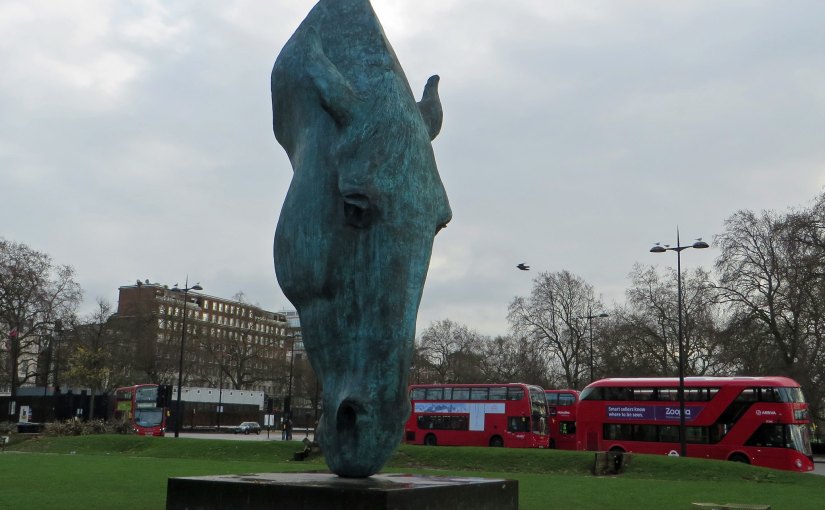
Nic Fiddian-Green, the artist behind the majestic, giant vertical horse’s head on the East Lawn at Marble Arch in London, restlessly follows a dream. The 33 ft’ Horse at Water’, situated at one of the capital’s most important crossroads – an axis where the Rolls-Royces of Park Lane merge with the Middle Eastern bustle of Edgware Road, Oxford Street’s shoppers and the cool urbanites of Notting Hill – has elevated the 48-year-old into the public’s appreciative gaze.

For almost 30 years, the Hampshire-born sculptor, heralded as Britain’s answer to Auguste Rodin, has toiled tirelessly to perfect his obsession; to, as he says, “re-draw the line of the horse”. While wealthy aristocrats and Hollywood stars can boast owning a Fiddian-Green head, his work has seldom been on public display. The Marble Arch sculpture has brought his art to a much wider global audience and spawned yet more grand-scale ambitions.

In mid-September 2011, I visited Fiddian-Green at his Surrey farmhouse, not knowing what to expect. I had been notified about his eccentricities by staff at the Sladmore Galleries in Bruton Place, Mayfair, and Jermyn Street, where his acclaimed summer exhibition had just concluded.

“Make sure you have a good sleep, so you have plenty of energy – you’ll need it,” one warned, recalling how, when he first showed at the Sladmore in 1999, “with all the great and good of the art world in attendance, he clip-clopped into the gallery on his horse, and left hoof prints all over the place”.

Just as my taxi driver’s SatNav declares us lost in deepest Surrey, I gain my first sighting of Fiddian-Green, as he zooms past and gesticulates – wildly and wordlessly – from a battered Land Rover’s window.

The cab trails him up a narrow, muddy lane that leads to the drive of a sprawling residence, complete with barns, stables and various vintage cars. After paying my fare, I turn to see the Land Rover’s driver’s door flung open and no sign of the man I’m supposed to be interviewing.

I enter the building and call out, but there’s no reply. For 15 minutes, I wander, baffled, through the house, where Fiddian-Green resides with his wife, Henri, and their three children. In the happy hodge-podge of the kitchen, I marvel at an unfinished full-size kit-car, family photographs, stacks of art books, and – of course – a number of the sculptor’s famous equine heads.

Suddenly he bounds in and greets me with a wolfish grin before rushing off to attend to various urgent phone calls, including the arrangement of a bobble-hat fitting.

When, with coffee mugs in hand, we eventually sit down some time later, I ask him about the incident at Sladmore: was it true that he had entered the preview show in one of London’s most respected galleries on horseback? “I know, it was bonkers,” he smiles, “but that was George, my horse, and I was pleased that he had made it to the show.”

Fiddian-Green, who graduated from Wimbledon School of Art before completing an MA at Central St Martins College of Art with a focus on Lost Wax Casting, explains where his passion for the horse’s head originated. At the British Museum in 1983 when, as a student at Chelsea School of Art, he set eyes on the 2,400-year-old marble Selene Horse, purloined by Lord Elgin from the Acropolis. And his world was altered, his artistic purpose found. This classical Greek sculpture, displaying elegance, poise and perspective, became his muse and remains a constant reference point.

The Selene head is referenced in his 35ft-high ‘Artemis’ on Trundle Hill near Goodwood, and again at the recent Sladmore exhibition, when a 14ft by 12ft equine head – on sale for £345,000 – took up the main room on Jermyn Street.

Rather than simply producing similar pieces, however, Fiddian-Green has spent his career striving for subtle ways to develop his subject to make it more spiritually rewarding, beautiful, and relevant for the modern world.

The horse, an animal so deeply embedded in our culture, has been a critical feature throughout art history. Indeed, the earliest example of art found in Britain was a horse’s head carved into bone from around 10,000 BC.

But since the horse has become less relevant in society, there have been times when Fiddian-Green has questioned whether he needed to re-adjust his focus. After beginning his artistic journey in the mid-1980s, he was dismayed by the early 1990s that the animals in formaldehyde by Damien Hirst, two years his junior, were so popular.

He recalls those early days working hard to perfect technique in the shed at the bottom of his garden, while Hirst’s work was all the rage.

“That was where art was moving and where the museums were looking – it was where the money was,” he says, “and what I was doing was concentrating on the complete opposite. I thought I was doing something wrong – should I do something nasty, and put a horse’s head in a vat of formaldehyde? It was never going to work. I just needed to be honest with myself. I never questioned it – I knew I couldn’t force it. For me, it was – and still is – about trying to get further into the subject.”

Fiddian-Green calls the great horse painter George Stubbs (1724-1806) “fantastic” for spending 18 months dissecting equine carcasses, thereby mastering his art much as the high Renaissance artists did. Like Stubbs, he stayed loyal to his vision. And, through decades of studying and obsessing over his desired subject, Fiddian-Green is now garnering the praise this constant effort and talent have deserved, thanks in no small part to the siting of work at Marble Arch, which only happened thanks to Henri’s determination.

For, in January 2006 – days after Sir Anthony and Lady Bamford had commissioned a 25ft piece for their Daylesford House estate in Gloucestershire – he was struck down by leukaemia and for three difficult years, interspersed by unpleasant operations and various stints in intensive care, he was a near-permanent resident at the Royal Marsden, a cancer hospital in Chelsea, where his life was in the balance.

Henri, a childhood sweetheart, informed the Bamfords of the dire situation, and they requested that Fiddian-Green finish the project, when, if, he was better. As the artist slowly regained full strength, his wife set about finding a London plot that could house the sculpture while the Bamfords secured planning permission.

By June 2009, Fiddian-Green’s condition had greatly improved, and the Bamfords’ 10-ton piece, ‘Still Water’, was completed and moved to Marble Arch. When, after a year, their planning permission was approved, the sculptor, encouraged by the positive public reaction, self-funded a similar, bigger, replacement for Marble Arch.

In the dead of night, a huge lorry drove the new sculpture from mid-Wales to London, where ‘Still Water’ would be seamlessly switched with ‘Horse at Water’. But there was a hitch: with the replacement horse being seven-tons heavier and 8ft taller, new planning permission at Marble Arch was needed. A last-ditch approval cleared the way, and Fiddian-Green’s costly gamble paid off.

“Marble Arch was so unplanned and accidental, it’s made me re-think my position,” he explains. “It has made me realise that being daring and bold enough to enter the public arena is a good thing. ‘Horse at Water’ is about gentleness in a chaotic world. That is my mission: to draw people into the stillness. There is an element of contemplation and spirituality.

“That is what is so fascinating about Fra Angelico and the others in the early Renaissance, because they really didn’t understand much about the rudiments of drawing and perspective and colour and form, but they understood about the spirit, probably deeper and greater than those who would come later.”

In his studio, which looks like a blacksmith’s hovel, Fiddian-Green draws on a cigarette and says: “Time now bothers me. It is limited, and I’m conscious of that – more so from being ill. I’m now prepared to risk it, take a bit of a chance, which I probably wouldn’t have said before. I wouldn’t have been daring or brave enough to risk it.”

Following a chance meeting at the Sladmore with an Italian who trains Spanish horses in the depths of Umbria, Fiddian-Green’s odyssey continues, and in the new year he will fly to Perugia to re-draw the line of the horse once again.

He enthuses: “I have to take all my opportunities. At the same time, I don’t want to force any issues; over-push it. I’ve always been one to try and let things happen in their own time. I want to let it take its natural course as much as possible.

“I have allowed myself to be led to this place, and I shall follow. It is natural, unplanned. I need to engage in the business of allowing it to happen, and not worrying about it. That’s the trick: just being able to let it go.

“It’s a quest for perfection – it doesn’t matter too much if you don’t achieve it; you will never find it. We’ll see what happens in Italy. Maybe nothing. Maybe something amazing. It’s a great dream.”

This article was first published in Seasons magazine in autumn 2011

Doubling down to build creative spaces in the age of remote working

Creativity often flourishes when people are together in the same place, but technology solutions can help whether at home or company headquarters

Even before the coronavirus pandemic, workspaces sought to maximise innovation and collaboration by introducing communal spaces, breakout areas, brainstorming pods and the like. Now remote or location-independent working has become more widespread, how can organisations ensure their offices remain a lightning rod for creativity?

It’s a puzzle that business leaders must urgently tackle. According to Nespresso research, over a third (34 per cent) of large enterprise businesses see themselves utilising co-working and collaborative spaces in the future. Organisations need to double down and make offices inviting, comfortable and collaborative spaces.

“Businesses can’t assume employees will flood back to the office in the long term,” says Rebecca Tully, managing director of inclusion and diversity at Accenture in the UK and Ireland. “Employees are increasingly looking for more flexibility from their employer. As such, the onus is on business leaders to rebuild trust with its employees when it comes to returning to the office, ensuring the environment is both safe and beneficial for them.”

Dr Susan Lund, partner at McKinsey Global Institute, says the tasks needed to be performed in an office have changed irreversibly because of the rise of remote working, the ubiquity of good wifi connectivity and the capabilities of tech devices. It is arguably more efficient for practical, task-based work to be performed at home. Meanwhile, creative and collaborative work is best done in the office.

“I can answer an email or write something from anywhere,” says Lund. “When people go into the office now they are not going to be sitting at desks in cubicles. The office, however, is important for creativity and collaborating, and also bringing on board and training new colleagues. The same is true for making business-critical decisions, serious negotiations and forming new relationships.”

In-office cross-pollination of ideas

Nicola Mendelsohn, vice president, Europe, Middle East and Africa (EMEA), at Facebook, concurs. “When I started my career, I would dream that one day I’d get the big corner office on the eighth floor, but that’s no longer the case,” she says. “The spaces we have to co-create, to ideate, to bring people together need to be even bigger than they were before the coronavirus pandemic.”

Future smart technologies will soon be harnessed by workplaces to provide personalised environments able to be altered seamlessly from one mode to another

While existing physical offices are widely considered to be vital for collaboration, Adam Steel, strategic foresight editor at The Future Laboratory, believes these buildings might evolve to become what he calls “rotation offices”. He explains: “These spaces, owned by multiple companies but used by one at a time for weekly or monthly face-to-face meetings, would help employees retain a degree of tactile humanness with colleagues, resulting in a cross-pollination of ideas.

“Beyond design, future smart technologies will soon be harnessed by workplaces to provide personalised environments able to be altered seamlessly from one mode to another.”

It’s already something the workforce expects, according to research from Aruba Networks that reveals almost three quarters (72 per cent) of people think the future workplace should automatically adjust and update itself.

Companies that embrace these concepts, using technology to usher workers to take breaks in social spaces and encourage conviviality, will likely experience a boost in productivity too,” says Steel.

ComRes research demonstrates the impact social spaces can have on overall efficiency, with two thirds of workers (67 per cent) feeling more productive after a coffee break.

Steel adds: “Being based around conviviality, the bleeding edge between workspace and hospitality space is a natural one and will also inspire a new wave of hospitality-focused brands to develop their own co-working spaces, enabling the creations of connections between employees, fostering collaboration and creativity.”

Investing in collaboration tools

Thankfully for businesses whose headquarters are not co-working spaces, technology is making it easier to innovate as part of a dispersed team. “Collaboration solutions that foster productivity, from online meetings and videoconferencing, to instant messaging and content-sharing, can be used to maintain a high level of collaboration between employees and facilitate creativity, regardless of their location,” says Sion Lewis, vice president, EMEA, for remote IT specialists LogMeIn.

“We are likely to see an increasing number of IT professionals adopting artificial intelligence in their workflow to make their collaboration efforts smarter and more efficient.”

More than ever though, the office is vital for generating innovation. And remote workers should be encouraged to head in for meetings regularly, says Lee Penson, founder of PENSON, the innovative commercial architectural firm behind Google’s famous inflatable office space. He believes the office “needs to be somewhere that caters for all teams to support their creativity, whether it’s in-house or remotely”, he says.

“The simplicity of taking a group call on FaceTime with colleagues and the progress of conferencing on the move has developed significantly. These innovations join people together in the most basic way. But spaces are still facilitators for unlocking creativity for people and businesses; the cross-pollination of ideas between people happens when they’re together,” says Penson.

Lewis concludes: “Technology is an enabler, not the end-goal, for creativity. It removes the barriers of geographies, time zones and accessibility, and creates a limitless space where people and their creativity can flourish. Ultimately, tech enables us to drive innovation, wherever we are in the world.”

This article – sponsored by Nespresso – first appeared on Raconteur’s Return to the Workplace for SMEs report in March 2021

How can purpose support growth targets?

Company culture is central to achieve staff engagement and motivation, and the coronavirus global crisis has provided an opportunity to pivot and rewrite business models

A happy worker is a productive worker, goes the oft-repeated business aphorism. It is incredibly challenging, though, to keep the workforce motivated through periods of significant change, such as during the early stages of a digital transformation journey or while a startup is experiencing rapid growth. However, change is something most organisations have experienced in 2020, as the coronavirus chaos has touched every part of our lives.

Business leaders should be sensitive to this current climate of uncertainty and potential bad news. Further, they must be careful not to become fixated on the bottom line and drive staff to hit growth targets. Taking this myopic view, and not paying due consideration to staff wellbeing and happiness, runs the risk of alienating the workforce.

Focus on your culture and the business will take care of itself

Organisations that foster and communicate an inclusive, company-wide culture driven by a clearly defined purpose are likely to find scaling more manageable. And now, following the global crisis, is the time for organisations to seize the opportunity to reset their culture.

“Focus on your culture and the business will take care of itself,” says Eissa Khoury, executive director for culture and engagement at Landor, a global branding and design agency. “Having a strong culture often translates into fewer checks and balances, and boosts efficiency as employees have much better clarity on what is expected of them, and how they’re meant to work collectively towards a common goal.”

Good communication and positive contributions

David Mills, chief executive of technology giant Ricoh Europe, goes further and posits an organisation looking to attract and retain top talent while scaling, and also appealing to consumers, must lead with a purpose that benefits society.

“Financial margins are no longer the sole indicator of business success or growth, sustainability must be at the centre of a modern business,” he says. “People are looking to employers to set an example and make more positive contributions to the communities in which they operate.”

Indeed, for positive contributions to permeate throughout an organisation’s culture, they must come from the top down, says Khoury. And leaders have to be transparent and communicate plans and progress, as well as setbacks, to staff.

Company news, he says, ought to be disseminated regularly and through various channels, particularly when people aren’t physically in the same space. Moreover, leaders should engage employees by encouraging their ideas and acting on them, so staff become more emotionally invested in the project.

“When scaling and growing a company, stress and long hours are often unavoidable,” says Khoury. “The essential advice for leaders is not to lose their sense of humanity and to appreciate that pushing teams too hard for too long is a terrible long-term strategy.

“If companies want their employees to be ‘bought in’ to the strategy, then they need to have a sense of ownership. The easiest way to accomplish that is to keep employees aware of how the company is doing, warts and all.

“Should companies try to push the company line to make employees think everything is rosy, they will see right through it, which creates mistrust and disengagement. Treat employees with respect, let them know what’s happening and make them feel like their contribution matters.”

Transparency breeds trust

Abbie Walsh, chief design officer at Fjord, an Accenture-backed design and innovation agency, agrees. “A focus on financial growth means companies risk losing sight of the very culture and values their brand was built on,” she says. “And if employees aren’t already feeling like a cog in a machine, the new hires, team restructures, redefined roles and a mountain of new processes that come with business expansion is sure to lead to levels of dissatisfaction.”

Walsh believes having a clear purpose will increasingly become critical for organisations, small and large. She points to the Fjord Trends 2020 report that suggests we should care more about our impact on the planet.

“In 2019, questions about capitalism’s trajectory of endless growth with profit as the sole measurable moved from shouting on the streets to conversations in the boardroom,” she says. “There is an urgent need for businesses to redefine value, reassess their goals and scale in a way that serves the interests of investors, society and employees at the same time.”

This article – sponsored by Nespresso – first appeared on Raconteur’s Return to the Workplace for SMEs report in March 2021

Opening the doors to a reimagined workplace

The coronavirus fallout has forced new ways of working and workplaces to be redrawn, but what could this look like?

We will look back on 2020 as the year the world reset for the digital age and for the better. To stem the flow of coronavirus, organisations of all sizes closed their offices. Out of necessity, business leaders were forced to rethink and revamp their operations.

The virus fallout has exposed systems that were either inefficient or outdated. Trends have been accelerated, with remote working being the most significant. Laggards have kickstarted digital transformation programmes and the pace has picked up for those whose journeys had already begun. Those with a progressive mindset, though, have embraced the opportunity to recalibrate the way things operate, and reimagined workplaces and workspaces are paramount.

“I don’t think there’s a company on the planet that hasn’t had to change as a result of what’s happened,” says Nicola Mendelsohn, vice president, Europe, Middle East and Africa, at Facebook, who admits many of the social media giant’s employees have “really struggled” with remote working.

“It would be wrong to assume we’re going to go back to how things were before. The companies that will do well as we come out of this are the ones, first and foremost, thinking about their people. They’re thinking about how they enable them to work in this hybrid way of working, part remote and part office.”

Putting people at the centre and collaborating

Adam Steel, strategic foresight editor at The Future Laboratory, agrees that organisations have to build workspaces around their staff to improve wellbeing and, in turn, productivity. “In our new working world, offices are being transformed with the health of employees now central to their function,” he says.

“And the benefits of remote working will cause employers to reconsider the entire purpose of the office. Employers should reimagine offices with their unique benefits in mind – their social, communal, convivial benefits – able to inspire collaboration and cross-pollination of ideas organically.”

However, recent Nespresso research highlights that in the UK worries about workplace safety and hygiene have been heightened because of the COVID-19 pandemic. As such, in-person creativity is being hampered. More than a fifth (21 per cent) of respondents expressed concern for cleanliness when they return to the office while 19 per cent said they’re unsure how they can collaborate safely with new measures in place.

Organisations have to show commitment to their employees’ wellbeing, regain the trust of their staff and provide workers with the confidence to return to the office. “Every company must now consider itself a health business, in both the physical and mental sense, and reflect this in day-to-day operations,” says Rebecca Tully, managing director of inclusion and diversity at Accenture in the UK and Ireland.

“It’s essential companies look beyond initial fixes, such as one-way systems and plastic screens, and explore how they can start to make bold, long-term, systemic design changes to the office space.”

Blending hospitality hubs and workplaces

Implementing simple technology solutions in the office can both reassure employees that their wellbeing is being considered and reactivate creative processes. “For example, low-cost wearables that replace security badges can create a connected ecosystem to aid social distancing and allow employees to locate empty spaces in the workplace easily, reworking the physical space to become more responsive to employee needs,” says Tully.

Beth Hampson, commercial director at flex-space provider The Argyll Club, which has 38 luxury workspaces across London, notes demand for co-working products has increased the longer people have experienced remote working this year. “Our members are seeking places to meet and be inspired away from the humdrum of home,” she says. “The key difference between working on home and office turf is collaboration. When inspiration and support from your team are needed, there is no substitute for the office.”

COVID-19 has given us the chance to press a big reset button

But the reimagined office is more than that; it is a hospitality hub. “Professionals want somewhere they can seamlessly and effectively complete multiple tasks they just couldn’t do at home,” says Hampson. “Whether that’s a team brainstorm, a midday yoga class followed by lunch with investors or an end-of-week drink with colleagues in a business lounge. Traditional offices sticking to a cookie-cutter approach will struggle in a post-coronavirus world.”

This chimes with Lee Penson, chief executive of global architecture and interior design studio PENSON. “We see hospitality and workplaces decategorising and becoming somewhat blended,” he says. “An office building doesn’t need to be just an office building any more. Buildings need to multi-categorise, multi-function, be more flexible, more efficient and offer more for the people who work and live in them.”

The office is vital for facilitating new ideas, communication and collaboration, says Penson. “It’s a place where everyone comes together, where people mingle, strike deals and become firm friends,” he says. “Nothing can replace catching up with a colleague over a coffee or lunch; that’s where inspiration starts. Humans are social beings and the workplace should enable that, even more so now.

“COVID-19 has given us the chance to press a big reset button. We hope things don’t go back to normal.”

This article – sponsored by Nespresso – first appeared on Raconteur’s Return to the Workplace for SMEs report in March 2021

How can a coffee break help the bottom line?

Communal coffee breaks, whether working from home or in the office, are an increasingly important way to relax and unwind, and boost productivity

In Sweden, they call it fika. Essentially it is a coming together where staff take a break and time out to socialise and promote wellbeing. York-based staff management software company RotaCloud introduced fika to the workplace in 2018, to “help make people’s days better”, according to co-founder James Lintern. “It’s a time when everyone can make a cup of coffee, have a snack and talk,” he says. 

“We don’t force people to take a break, but we strongly encourage it and we use automated alerts on Slack to remind people.” Lintern says the practice has had a positive impact on staff and, in turn, productivity. 

“Having this time set aside within the working day is very important,” he continues, “because it creates an environment of sharing and learning, and helps employees build a support system within the office. This is about fostering a mentality that makes it OK to stop, slow down and reflect.”

While the coronavirus has driven new ways of working and triggered an initial exodus from the office, this practice is even more important for both people and businesses. The stress of having to work away from the office, possibly juggling family commitments in addition to the uncertainty of the future, has led many people to work harder than before. This approach is counter-productive, says Dr Argyro Avgoustaki, associate professor of management at ESCP Business School.

“The more the employee is working, especially if there is no break or resting time, the more the productivity decreases, because they do not get the chance to recover physically, mentally or emotionally,” she says. “Working constantly without taking any breaks between or within working days may result in employees who are exhausted, fatigued and stressed.”

Healthy body, healthy mind

Given the sudden shift to mass home working, where conditions might not be optimal, there is even more reason to take regular breaks, argues Mark Fletcher, clinical director at occupational physiotherapy provider Physio Med. 

“Sitting for longer than 20 minutes has negative effects on your body, including an increase in musculoskeletal problems such as back and neck pain, while extended periods of sitting can affect the spine, neck and shoulders. This, in turn, can also affect the arms, elbows and wrists,” he says, suggesting employees should move away from their desks every 30 minutes, even if just for a few paces.

When it comes to better managing remote-working teams, regular check-ins are vital, to ensure employees are happy with their work and also, arguably more importantly, that their mental health is supported. Business leaders should view this as an opportunity to show their human, compassionate side, says Susan Hodkinson, chief operating officer at Canadian accounting firm Crowe Soberman in Toronto. 

“Communication should be frequent and transparent,” she says. “We have a virtual coffee event, which replicates the kitchen coffee chat with co-workers. You’re trying to have those touchpoints you would have in the office.

Nicola Mendelsohn, vice president, Europe, Middle East and Africa, at Facebook, agrees that virtual coffee meet-ups help keep colleagues connected, even virtually. She enjoys “coffee roulette”, using videoconferencing tools. “You enter your name and then play coffee roulette with colleagues. The random nature of it creates surprise. It’s a great way to get to know people in 15 minutes,” says Mendelsohn, adding it’s especially good for people joining the company.

Benefits of informal catch-ups

Tania Garrett, vice president of international employee experience at Adobe, says relaxing coffee breaks, whether in the office or while remote working, with other members of the team are essential for boosting morale. “One of the things we hear a lot from our employees is that they are missing their colleagues and the informal catch-ups,” she says. “As such, we have strongly encouraged our people managers to create opportunities for non-work catch-ups like ‘coffee chats’ or team events.” 

For the more introverted employees, Garrett encourages small groups for coffee chats so “everyone can feel safe and included in conversation and managers can ensure everyone’s voice is heard”. She adds: “These informal moments are critical for our teams to take time out from work and connect on a personal level.”

Organisations seeking to make their offices more welcoming to staff should think about the provision of quality coffee, says Beth Hampson, commercial director of The Argyll Club, which offers more than 35 flex-work spaces in London. “Coffee at work isn’t just for the caffeine-fanatic anymore; most professionals now want a quality hot beverage every day so offices can no longer afford to have below-par coffee,” she says. 

Coffee at work isn’t just for the caffeine-fanatic anymore; most professionals now want a quality hot beverage every day

Members of The Argyll Club can now take advantage of Nespresso on offer at their workplaces. “We’ve even had all of our teams retrained on how to make an exceptional cup of coffee,” says Hampson.

Ultimately, it’s people who power any business, so looking after them, in the office or at home, and providing them with ample opportunity to take coffee breaks creates a win-win situation. And as employees do return to the office, those workplaces that can offer quality coffee on-site will claim the hearts and minds of staff.
“After months at home, members told us they miss the city’s quality coffee shops, bars and restaurants as well as their offices and teammates,” adds Hampson. “So bringing all these much-loved elements together in one safe destination is the future of work for us.”

This article – sponsored by Nespresso – first appeared on Raconteur’s website in March 2021

Virtual onboarding: the new reality

Having to join a company virtually is likely to outlast the coronavirus pandemic as many companies shift to more permanent remote working. But this raises challenges over how to get new starters up to speed and feel part of a company

The deep trepidation felt by Jeevan Singh when she was appointed finance officer of influencer marketing platform Fanbytes in September is relatable for those who have endured a remote onboarding process in the past year, especially workers at the start of their career.

“Starting a new job in lockdown was terrifying,” says the 23 year old, who in 2019 graduated from Royal Holloway, University of London. “I thought I’d feel like an outsider and lack the essential team-working environment. Above all, I was worried that I’d miss out on training and be left to figure out how to do things.”

Fanbytes’ suite of online collaboration tools and a “fantastic culture” of frequent, virtual meetings and social events soon allayed her fears, though. “For anyone looking to start a new job remotely or for businesses wanting to create a more inclusive culture, regular face-to-face calls and chats should be at the top of the agenda,” recommends Singh. “While I haven’t met any of my colleagues in person yet – and they may all turn out to be catfishing [creating a fake identity] – I nevertheless feel like I know them well.”

Charlie Johnson, founder and chief executive of BrighterBox, a London-based recruitment firm that places graduates with startups, agrees that for younger talent beginning a full-time job virtually is particularly daunting. His organisation’s research reveals that more than a third (36 per cent) of respondents feel less confident about starting a role remotely, although 44 per cent say it would make no difference.

“Ultimately, what new starters are looking for in 2021 is plenty of contact time: one to ones with their direct managers as well as the wider team and virtual socials to get to know teammates on a more personal and less formal level,” says Johnson.

Managing a remote team by example

What about remote onboarding as a new manager? Having amassed 16 years’ experience working in financial services, Cedrick Parize was perhaps not as terrified as Singh when, last March, he joined MUFG as Europe, Middle East and Africa head of internal audit for the bank’s global markets. However, 12 months after he took up his position, Parize is yet to meet any of the eight-strong team, two of whom he hired, in the flesh.

“Initially, with it being the start of the first lockdown, it was a challenge to get a feel for the team,” he says. “So much human communication is performed through body language and experiencing a person’s energy.”

From the outset at MUFG, Parize was open minded and flexible, even agreeing to reschedule meetings so they didn’t clash with Joe Wicks’ workout sessions, and keen to display his human side. 

Ultimately, what new starters are looking for in 2021 is plenty of contact time.

“I encouraged video calls and switched my camera on, no matter how bad my outfit was,” he says. “There was no pressure for others to do the same, but I was happy to see that through leading by example, and slowly building up relationships, my team began to feel more comfortable, turning on their cameras. This change helped enormously to gain a sense of each individual.”

Clearly, the coronavirus crisis has transformed hiring practices and talent management. While organisations are struggling to keep pace with the change necessitated by government-enforced remote working, the direction of travel is evident. “Virtual recruitment and onboarding are undoubtedly here to stay,” says Jon Addison, vice president at professional social network LinkedIn. 

Indeed, 84 per cent of the 1,500 human resources and talent professionals surveyed from around the world for LinkedIn’s The Future of Recruiting report predict virtual recruiting will outlast COVID-19.

Winning the war for talent in 90 days

Addison argues that as the war for talent intensifies, organisations must sharpen their remote onboarding, career development and training capabilities. “The first few days in a job are extremely important in setting up new joiners well,” he says. “Remote onboarding can make that challenging, particularly for younger generations joining the workforce who may not know what to expect.”

The most progressive organisations will start the experience well in advance of the new hire’s first day. Addison says this is achieved by connecting them to their team, ensuring home office equipment arrives, if remote working is possible, and sending a welcome package that includes information about company culture and explaining what the coming days and weeks might entail.

As vice president of people and operations at ClassPass, the fitness and wellness network that hit a $1-billion valuation last year, and with almost 400 employees distributed across 30 countries, Hollen Spatz has had to ensure her organisation’s remote onboarding runs smoothly. 

All hires join a programme coined “the 90-day warm-up”. The onboarding process starts with “a few surprises in the mail, including some company swag” and a personalised note from the ClassPass leadership team. The programme consists of a series of sessions introducing new team members to various aspects of the organisation over a three-month period.

“Onboarding and staff retention go hand in hand,” says Spatz. “An employee’s experience in the first 90 days of their role will have a massive impact on their happiness, productivity and longevity with a company.”

To accelerate the assimilation, ClassPass has also created a series of virtual check-ins with managers so beginners are clear on their role expectations and have ample opportunity to raise questions.

Finally, Spatz acknowledges that the remote onboarding process requires continuous tweaking. “We used to send out gift cards for a welcome lunch over Zoom, but quickly realised people might not feel comfortable eating in front of new colleagues on camera,” she concedes. 

With remote onboarding and virtual training set to remain, there’s plenty for business leaders to chew over to improve the recipe for success.

Five tips to improve remote onboarding

1. Divide and conquer interview duties

Moneypenny, a global outsourced communications provider, has recruited more than 350 new staff members since March 2020, and group chief executive Joanna Swash believes the secret to a successful hire is to divide and conquer. “We have two people to carry out remote interviews,” she says. “This allows each person to ask different questions and enables them to watch body language while the other person is talking.”

2. Use technology solutions to ease the load

Alexander Nicolaus, chief people officer at Paysend, a UK-based international money transfer fintech, urges business leaders to embrace technology solutions to improve hiring and training efficiencies. “We built an onboarding intranet that acts as a self-service toolkit for new joiners,” he says. This facility relieves the pressure on the business and allows employees to access a wide range of information.

3. Build a remote culture

GitLab is a fully remote technology company that has 13,000 employees spread across 67 countries. Head of remote Darren Murph says the key to successful remote onboarding is instilling a company culture. “The three key aspects are our commitment to working handbook first, being outcomes focused and having intentional communication,” he says.

4. Buddy up new hires

Being assigned a work buddy is vital for remote hires, according to Nicole Alvino, co-founder and head of strategy at SocialChorus, a workforce communications platform. “We added ‘sidekicks’ early on in the pandemic to ensure every person would have a personal connection. The sidekick is a person who can help navigate the culture.”

5. Introduce the CEO

In many ways remote onboarding has improved efficiencies, not least when it comes to including the C-suite in the process. “It has offered an opportunity for our chief executive to join the new hire training sessions,” says Joan Burke, chief people officer at DocuSign. “Booking in time to lead a Zoom session is much easier than clearing his schedule for a face-to-face orientation session.”

This article was originally published in Raconteur’s Employee Engagement and Wellbeing report in March 2021

Tech, humanity and humour: meet the new CFO

When Govia Thameslink Railway suffered a 95 per cent drop in footfall, chief financial officer Ian McLaren drove recovery by being open to innovation and investing in staff

Drag queens, diversity and inclusion, and data-driven decisions are unlikely to be among the first words you would associate with a typical chief financial officer (CFO). However, Govia Thameslink Railway’s Ian McLaren is far from a stereotypical CFO, although he argues no such thing exists in 2021.

As the 52-year-old cycling enthusiast, who took up his position at GTR in December 2017, can attest, the tumultuous events of the past year have elevated the role of CFOs and significantly expanded their list of responsibilities, across the board. “When I started at GTR, my remit was a lot simpler and I was focusing on a narrow scope of my skillset, whereas now I’m using a much broader range,” he says.

“Today, it’s more about the human side of things, thinking about very practical stuff: keeping almost 8,000 colleagues safe while being able to carry out their duties, alongside supporting the varying ambitions of stakeholders and looking for opportunities to create value.”

The inference is the train has left the station for those who still believe a CFO’s primary journey is counting the beans. Business continuity has been paramount through the coronavirus crisis and those in McLaren’s position, at their respective organisations, have become more central to steering strategy.

Considering GTR, which handles 250 locations and some of the busiest train stations in London, went from “moving over a million people” in and out of the capital on a normal day, pre-pandemic, to footfall crashing by 95 per cent when the first lockdown was enforced in late-March, it has been a mighty challenge to get the business back on track. 

Broader range of skills required

Connecting with, and looking after, customers and staff alike has enabled McLaren to navigate a quicker route to recovery. “As an organisation, we are looking to build back better, greener and faster,” he says, “and part of that is drawing on the ability to listen and adapt.”

Today, it’s more about the human side of things, keeping colleagues safe while supporting the varying ambitions of stakeholders and looking for opportunities to create value

A good handle on technology also augments modern CFOs and, most importantly, their employers. McLaren has this in spades; his curriculum vitae lists two-year stints as CFO and head of finance at Nomad Digital and Digital Barriers, respectively. Indeed, he has been in the driving seat for GTR’s digital transformation journey, which began in 2017, and it “came into its own” last year, allowing colleagues to “work with technology in an untethered way”.

Further, through utilising products provided by technology partner Microsoft, McLaren and his fellow GTR strategists can gain “real-time insights that have led to data-driven decisions”. He says: “These insights have meant our colleagues can optimise their time on the ground and it has empowered people to do the job we’ve required of them, which has been ever-changing.”

Dealing with the pandemic has taught us that our ability to change can move at lightning pace, so over the next five years we need to become very good at rethinking everything we think we know

Since the first lockdown, that agility and flexibility, following the data, has been vital for GTR’s service operation and particularly for hospital staff and those they aid. “We realised there are nearly 70 NHS trusts across our network, and first-responders and critical workers relied on the train service, so we adapted our timetable predominantly for them,” says McLaren. “We became more of an off-peak rather than a commuter service. The old rush-hour peak has disappeared and now travel patterns are more evenly spread throughout the day.”

Value-creation officers: open to innovation

A suite of new digital applications has minimised disrupted running of services. These include an app, introduced in May, that indicates to train drivers and station staff how recently a long-lasting virucide, designed to stick to surfaces and kill viruses, including COVID-19, for up to 30 days, has been applied. 

“It has given all our colleagues confidence about going into a clean workplace,” says McLaren. Another app allows GTR staff to access the latest Public Health England information about the pandemic and report sickness and absence from work, thereby limiting potential bottlenecks.

“Technology has helped us all throughout the pandemic and understanding technology is increasingly important for CFOs and others in executive positions,” he says. “I’m lucky because tech has been my background, but it’s essential to know the risks associated with technology and cybersecurity especially. I would encourage all organisations to think more like technology companies, but being technology-savvy certainly raises a CFO’s stock.

“Dealing with the pandemic has taught us that our ability to change can move at lightning pace, so over the next five years we need to become very good at rethinking everything we think we know.”
McLaren, who has thrice cycled from Land’s End to John o’ Groats, owns ten bikes of various vintages, the oldest being a 1935 “speed racer”, and regularly clocks up 200 miles a week, finds strategy brainwaves often hit him when pedalling.
The secret is being open to innovation and new ideas. “Some might think the finance director is there to say ‘no’ and it’s all about cost-cutting. But to me, it’s more about value creation; we are becoming value-creation officers,” he says, suggesting that adopting a “beginner’s mindset to everything” helps in the current CFO’s role.

Invest in employees

“If you consider yourself an expert then you are closed to many things,” he adds. “I try to approach things with novelty and understand the art of the possible.”
Ultimately, the success or failure of an organisation is down to its employees, argues McLaren. “You have to understand the business and, more importantly, what makes its people tick.” Hence, he is passionate about diversity and inclusion, and keen to invest in and join events that “demonstrate my more human, fun side”. 

For example, he and his daughter have recently enjoyed tuning in to virtual drag queen shows, featuring the amusingly monikered Annabelle Lecter, put on for GTR’s LGBT+ Network. “Spending a tiny amount on a diversity and inclusion event is nothing compared to the huge value it generates to us as a business,” says McLaren. 

“It’s intangible, but you know you are creating something quite special when you see the brilliant reactions from colleagues, which then resonates with their service to customers.”

The anatomy of the modern CFO

The chief financial officer’s role has evolved somewhat since Ian McLaren gained his accountancy qualification over three decades ago; finance credentials alone are no longer sufficient.

“Today, finance roles need to be augmented with many more skills,” says Govia Thameslink Railway’s CFO. He suggests, in addition to being good with numbers, the modern CFO must understand legal and broader governance issues, and be technology savvy, not least to manage cybersecurity risks and data. On top of being able to structure commercial deals, they ought to be excellent negotiators too. 

In terms of personality traits, the best CFOs are armed with “a good sense of humour, can understand and show humility, and have tenacity”, says McLaren. Further, given the business agility necessitated by the pace of change, they require a certain amount of creativity, plus an openness and a “growth mindset” that enables them “to question, listen and rethink” strategies and business models.

Being a courageous leader, who can communicate with and energise colleagues and those across the business, is increasingly valuable for a CFO. “Having good people skills is essential,” McLaren concludes. “This skill helps with negotiation and, if you can be authentic and intentional, it will inspire those around you.”

This article was originally published in Raconteur’s Future CFO report in March 2021

Percy Fawcett and the Lost City of Z

This May will mark 92 years since Colonel Percy Fawcett disappeared without a trace, along with eldest son Jack, 22, and his teenage friend Raleigh Rimell, deep in the Brazilian jungle, while questing after an ancient lost civilisation hidden in the Amazon which he called ‘the City of Z’. And yet what has been labelled “the greatest exploration mystery of the 20th century” continues to captivate and endure. 

Even before the 57-year-old British explorer’s communiqués stopped while he was battling through the terra incognita of Mato Grosso (literally ‘thick bushes’) wielding his trusty 18-inch machete, the voyage into the unknown had captured the imagination of the world’s media. The Los Angeles Times, for example, named it “the most hazardous and certainly the most spectacular adventure of the kind ever undertaken”.

And when the bearded, blue-eyed and Stetson-wearing Fawcett, who is often described as a real-life Indiana Jones and may well have been the inspiration behind Harrison Ford’s intrepid filmic hero, went missing interest only increased. In January 1927, after close to two years without a word from the Fawcett trio, the Royal Geographical Society (RGS) – one of the many organisations who had part-funded their trip – declared: “We hold ourselves in readiness to help any competent, well accredited [search] party.” 

A welter of pleading letters from volunteers followed, yet in the decades since no one has found the remains of Fawcett and it is estimated that up to a hundred explorers have themselves disappeared on his trail. (Even James Bond author Ian Fleming’s brother, Peter, went on one failed expedition, though lived to tell the tale.) 

The Lost City of Z, which premiered at the New York Film Festival last October, will be shown at UK cinemas later this year and is based on David Grann’s 2009 novel of the same name. A former staff writer for The New Yorker, Grann himself had tracked Fawcett’s final steps, venturing through mud-slicked gorges and across rock-strewn rapids, and discovered that a monumental civilisation known as Kuhikugu may have in fact existed near where the missing explorer was looking, intriguingly. How close was Fawcett to reaching his El Dorado?

***

Percy Harrison Fawcett was born on August 18, 1867, in Torquay on the Devonian coast, to Edward Boyd Fawcett and Myra Elizabeth. His India-born father was a British aristocrat and a fellow of the RGS, though he had managed to squander two family fortunes and besmirch the Fawcett name, much to Percy’s embarrassment and disgust. In his diaries, he recalled a childhood “devoid of parental affection”.

Following an education at Newton Abbot Proprietary College, he received his commission as an officer of the Royal Artillery in 1886, aged 19. Happy to leave his parents in the UK, Fawcett served in the British colony of Ceylon (now Sri Lanka) and met his future wife, Nina Agnes Paterson, the daughter of a colonial judge. They wed in 1901 – and later he sired two boys, Jack (born 1903) and Brian (1906-1984) – though Fawcett remained, as he described it, a “lone wolf”, exploring Ceylon, which entranced him, and even seeking buried treasure and investigating archaeological ruins.

Fawcett grew up in a time, at the peak of the British Empire, when swashbuckling explorers were continually looking to expand their horizons for monarch and country, and his childhood was fuelled by tales of derring-do. These pioneers sought to confront and colonise new civilisations in far-flung destinations. 

For instance, a century before Fawcett was born, one such luminary was Captain James Cook, who from the late 1750 until his death in 1779 – at the hands of Hawaiian natives during his third exploratory voyage in the Pacific Ocean – sailed thousands of miles across largely uncharted areas of the globe and produced detailed maps of Newfoundland and Polynesia, as well as recording the first circumnavigation of New Zealand.

Further, between 1831 and 1836 young graduate Charles Darwin took a voyage on HMS Beagle, with the primary aim being to produce a hydrographic survey of the coasts of South America using calibrated chronometers and astronomical observations. It led, of course, to his theory of evolution by natural selection. His masterpiece, On the Origin of Species, was published in 1859.

And in 1883, when Fawcett was five, Scot David Livingstone died in modern-day Zambia of malaria and internal bleeding due to dysentery while attempting to map Africa, the so-called “dark continent”. Unsurprisingly, in popular culture the intrepid explorer featured prominently, and the first of the Allan Quatermain novels, penned by H. Rider Haggard (who became a friend of Fawcett’s), was published in 1885 and chronicled the discoveries of King Solomon’s Mines and ancient civilisations in Africa by the ‘Great White Hunter’.

Fawcett, an accomplished artist whose pen-and-ink sketches were exhibited at the Royal Academy, joined the RGS in the same year he was married in order to learn about surveying and mapmaking, powered by a desire to become a famous explorer himself. And in the first couple of decades of the 20th century he was held up as one of the last great amateur archeologists and cartographers – that is adventurers who stepped deep into uncharted lands armed with only a compass, a machete, and as David Grann noted in a 2005 article for The New Yorker “an almost divine sense of purpose”.

He was employed in the British Secret Service – mapmakers were often recruited as spies, as their vocation provided perfect cover – and was an agent in Morocco before, in 1906, the RGS offered him a different kind of mission. 

In Exploration Fawcett – an account of the seven expeditions in search of a lost city until his last one in 1925 which was published in 1953 by his youngest son, Brian, who had compiled his father’s manuscripts, letters and logbooks – the RGS president pointed at an atlas of South America and exclaimed to Fawcett: “Look at this area! It’s full of blank spaces.” 

The boundaries between Peru, Bolivia, and Brazil were poorly defined, he went on, and asked Fawcett to survey the area before warning: “What it really amounts to is exploration. It may be difficult and even dangerous.” Fawcett later wrote: “Here was the chance I had been waiting for. Destiny intended me to go!”

Without hesitation he set sail, leaving behind his wife and three-year-old son Jack, with a 60lbs pack, a clutch of willing recruits, and a copy of Rudyard Kipling’s 1898 poem The Explorer, which urges the reader to “Go and find it. Go and look behind the ranges.”

***

On Fawcett’s first of many expeditions to South America he was understandably wary of the indigenous tribes, who were known to kill trespassers and thought to practice cannibalism. He was convinced that by establishing friendly contact survival was possible, and as such, he ordered his men to never open fire. On one occasion, as his group were ambushed and arrows were fired at them, he and his men stood and played musical instruments. And, during other episodes, to display his peaceful intentions he would stride towards the Indians with his hands in the air. These actions worked, and he returned to England with his meticulous maps.

Despite his growing fame at home, the lure of South America became irresistible. He wrote: “Deep down inside me a tiny voice was calling. At first scarcely audible, it persisted until I could no longer ignore it. It was the voice of the wild places, and I knew that it was now part of me for ever … Inexplicably – amazingly – I knew I loved that hell. Its fiendish grasp had captured me, and I wanted to see it again.”

Through studying the early histories of South America, Fawcett became captivated by the rich legends and artistic traditions of local tribes – he even learnt dialects – and was sure that there had once been a large, developed civilisation living deep in the Amazon.

In 1920, after World War I – in which he fought on the front line in Flanders – Fawcett set out to find his ‘City of Z’, but had to end the expedition at Dead Horse Camp. While gripped with fever he shot and killed his poorly pack animal, and retreated to England. 

Five years later, nearly destitute and with his reputation dented, he had managed to gain funding for what would be his final trip in search of the ancient lost civilisation. Fawcett, his eldest son Jack, and Raleigh Rimell, departed from Cuiabá, the capital of the central Brazilian state Mato Grosso, on April 20, and were assisted by two local labourers, eight mules, a pair of horses, and two dogs.

 A month later, following what Fawcett described as a “shockingly difficult passage”, the group arrived at Bakairí Post, a small settlement of a couple of dozen huts. There, in the oppressive heat, and with jungle beasts – including vampire bats, scorpions and anaconda – lurking, the leader ordered his Brazilian helpers to head back to Cuiabá with the animals and his last letters. “By the time this dispatch is printed, we shall have long since disappeared into the unknown,” he wrote in one of his final articles. Fawcett’s words proved scarily prescient. 

In David Grann’s 2009 book, The Lost City of Z, the author suggests the trio reached Dead Horse Camp and rested at the village of the Kalapalo tribe. Despite the Kalapalos warning that they would be killed by the “fierce Indians” who occupied the territory to the east, Fawcett and his two companions, who were apparently lame, headed further into the unknown. For the following five evenings the tribe watched the smoke curl from the expedition’s camp fire before, on the sixth night, it disappeared, never to return.

Exploring South America

While the midpoints of the Americas had been reached by explorers in the 16th century there were still large patches of unexplored and uncharted territories in 1906 – the year Colonel Percy Fawcett was tasked by the Royal Geographical Society (RGS) to map the many “black spaces” in South America.

The boundaries between Peru, Bolivia, and Brazil were poorly defined, according to the president of the RGS, who told Fawcett: “What it really amounts to is exploration. It may be difficult and even dangerous.” So it proved on the 1925 trip, his eighth to South America.

That continent had beguiled Fawcett and his contemporary adventurers from all over the globe for some time, and especially after Charles Darwin’s 1831-36 voyage on HMS Beadle – which set out produce a hydrographic survey of the coasts of South America using calibrated chronometers and astronomical observations but which led to his theory of evolution by natural selection. His masterpiece, On the Origin of Species, was published in 1859.

Britain’s Age of Exploration

The Age of Discovery, or Age of Exploration, is the loosely defined period, from the end of the 15th century to the 18th century, when Europeans set sail for distant lands and sparked the start of globalisation. In truth, the period stretched to the 20th century, with wild regions of exotic countries still not mapped. 

Indeed, Colonel Percy Fawcett grew up in a time, at the peak of the British Empire, when swashbuckling explorers were continually looking to expand their horizons for monarch and country. 

One such luminary was Captain James Cook, who from late 1750 until his death in 1779 – at the hands of Hawaiian natives during his third exploratory voyage in the Pacific Ocean – sailed thousands of miles across largely uncharted areas of the globe.

And in 1883, when Fawcett was five, Scot David Livingstone died in modern-day Zambia of malaria and internal bleeding due to dysentery while attempting to map Africa, the so-called “dark continent”. 

Unsurprisingly, in popular culture the intrepid explorer featured prominently. The first of the Allan Quatermain novels, penned by H. Rider Haggard, was published in 1885 and chronicled the discoveries of King Solomon’s Mines and ancient civilisations in Africa by the ‘Great White Hunter’.

Fathers and sons

Percy Fawcett was born, in 1867, to Edward Fawcett – an India-born British aristocrat – and Myra Elizabeth. His father had managed to squander two family fortunes and besmirch the Fawcett name, much to Percy’s embarrassment and disgust.

Ironically, after complaining In his diaries of a childhood “devoid of parental affection” he himself was absent for long periods of his own two sons’ formative years. In 1906, when he embarked on his first South American expedition, his eldest son, Jack, was three, with Brian born later that year. 

Less than two decades later, on his eighth and final trip to South America, Fawcett took Jack, who turned 22 while in the Brazilian jungle, with him. One of Jack’s best friends, 19-year-old Raleigh Rimell, made up the trio of adventurers who went missing without a trace in 1925. 

Few would call Fawcett’s habit of marching far ahead, and out of sight – as detailed in Jack’s diaries (the young pair had to camp alone on one occasion) – good parenting. And that he led Jack and his companion to their death – presumably – only serves to highlight his selfish, goal-driven attitude.

The Lost City of Kuhikugu

There is evidence to suggest that Colonel Percy Fawcett’s ‘City of Z’ did exist, after all. The explorer had visited a colonial archive in Rio de Janeiro and read a worm-eaten document which was entitled Historical account of a large, hidden, and very ancient city, without inhabitants, discovered in the year 1753

In it, a Portuguese ‘bandeirante’ (mercenary), described how he had climbed a mountain path and uncovered the remnants of an ancient lost city. “The ruins well showed the size and grandeur which must have been there, and how populous and opulent it had been in the age when it flourished,” he had written. This, along with similar accounts, spurred Fawcett on through the Amazon rainforest.

Michael Heckenberger, Professor of Anthropology at the University of Florida, has spent more than a decade researching the possibility that Fawcett’s ‘City of Z’ was, in fact, Kuhikugu, an archaeological site located at the headwaters of the Xingu River, in the Amazon Rainforest. 

According to Heckenberger’s findings, Kuhikugu was most likely to have been inhabited between 500AD until as recently as 1615, when diseases brought over by Europeans may have killed off the indigenous denizens.

This article was first published in The Telegraph in 2017

Stuart Broad: talking wine and women with England’s ‘Enforcer’

Stuart Broad is blushing a vivid scarlet. For the first time in our lengthy interview England cricket’s chief aggressor is stumped. As the quick bowler is being repositioned for Square Mile’s cover shot, a playful snipe from the slips enquiring about his rumoured assignations with The Saturdays’ singer Mollie King, whose previous boyfriend was British supermodel David Gandy, has rendered him momentarily flustered. A wolfish grin curls on his lips before he regains his cool and replies: “You read the gossip pages, then?”

With his statuesque physique combined with his sky-blue eyes, flaxen hair and charming bonhomie, it’s easy to see why Broad is venerated like a pop star by a legion of female admirers. He is regularly sent postcards from fans telling him about their holidays – “quite interesting, really” – and on Twitter there are two appreciation accounts following his every tweet and turn: @TheBroadettes8 (1,500 followers and counting) and @Broady4evafans. Gamely, he even agreed to meet founder of The Broadettes, a 20-something Canadian named Jay Geeganage, at Lord’s last summer. “She was overcome by nerves,” smiles Broad – you suppose he gets that a lot.

Those who don’t become giddy when talking to the 6ft 6in Broad would find him to be charismatic and urbane, with an epicurean enthusiasm for food, wine, fast cars and luxury timepieces. “I have a weakness for watches,” he reveals. “I buy myself them as treats, when I think I deserve it. I’ve been given a £35,000 gold watch by my sponsors, Jean-Mairet & Gillman, and I bought a Franck Muller when we won the Ashes in 2009, but I’ve always dreamt of having an Audemars.”

After turning 27 last month, Broad is in the prime of his cricketing life, and with Australia visiting this summer England need their paceman running like clockwork and dialling up the pressure on the pitch as they attempt to retain the precious Ashes urn. Earlier in his career he earned the moniker ‘The Enforcer’, thanks to his rough-house bowling tactics, and even now he admits he finds it hard to shy away from confrontation.

“It’s a competitive mindset I’ve always had, even at school,” he says. “As soon as I cross the white line I change. That nickname – ‘The Enforcer’ – was coined by the media, and it was a time when I was thrown the ball to try and rough batsmen up. I like to have that string to my bow. I’d like to think that I’m more of a line and length bowler now, but there will still be occasions when I’m tossed the ball and told: ‘Right, let’s hit this guy on the head for 20 minutes.’  

“I’m not a verbal bowler, but I think you always have to have a presence: stand tall and look the batsman in the eye, let him know you are coming for him. A look can be more dangerous than a word.”

Sometimes Broad’s aggression has boiled over, and twice it has cost him half of his match fee. He claims to be able to control himself now, though, with the guidance of England team psychologist Mark Bawden. “Up to the age of about 24 I had a few disciplinary issues where I got a bit too hot headed,” he continues. “So now I work with Mark on what I call a ‘warrior’ mode. 

“On a graph you have one side where you are not in the battle enough, you are not fired up enough and not bowling well enough. In warrior mode, in the middle, you are perfect. You find the right emotional level and you are in the batsman’s face but in full control. And then there is the other side where your emotions have taken over from logic.”

England supporters will hope that the Nottinghamshire bowler can harness and master his inner warrior against Australia, from the moment the five-Test Ashes series begins on July 10 at his home ground, Trent Bridge. One of sport’s most-celebrated battles, the loosely biennial contest has been fought between England and the Baggy Greens since 1882, and for Broad the Ashes punctuates his life more than most. Indeed, it’s in his blood.

“Six months after I was born my old man went Down Under and won there,” he says proudly. His father, Chris, opened the batting for England in 25 Tests, and that 1986-7 campaign he was at the very pinnacle of his powers. In the five matches he managed 487 runs and was named man of the series. Following that defeat Australia enjoyed an 18-year dominance over England, until 2005. A year later Broad Jr. made his international bow, for the Twenty20 team – which he now captains and with whom he won the World Cup in 2010 – aged just 20.

His Test debut followed in late 2007, but it was a spell of bowling in the 2009 Ashes which catapulted him cricketing stardom. On the second day in the decisive fifth Test at The Oval Broad took five wickets for 37 runs and was later named man of the match, following England’s victory. Looking back at the game which launched his international career he says now: “It’s scary that it’s four years ago. I remember the next morning, walking down the players’ steps, I was asked to sign the front page of a newspaper which had a picture of me on it. I knew then that it was pretty special.”

In August 2010 Broad knocked a century on the hallowed Lord’s wicket – a feat which his father never achieved. “It was a great feeling to score a ton at that special ground, but it was more that I surpassed my dad’s best-ever score for England, 162,” he smiles, remembering his 169 against Pakistan. 

Later that year England travelled Down Under and managed to win their first series there since the heroics of Chris Broad and his teammates 24 years before. For the younger Broad it was deeply disappointing, though, as he was forced to withdraw from the tour following a stomach-muscle tear after only two Tests. 

And that was after he became Peter Siddle’s final hat-trick victim in the opening clash at The Gabba in Brisbane. Recalling the intensity Broad says: “There were 42,000 people and the ground was shaking, bouncing. There was a kind of tribal element to it, as though they were shouting ‘kill, kill, kill’. I showed weakness to be intimated by their attempts to disintegrate me mentally, and it provided a learning curve. I’ve never slumped to that mindset since.”

The agony of flying back to England prematurely, shortly afterwards, was the nadir of his career. “While bowling in Adelaide I felt this inner explosion – I could hardly breathe. I walked off, and lifted my shirt off and there was blood underneath the skin. That was the only time I’ve ever cried in sport,” he admits. “My emotions completely overwhelmed me. Test match losses are pretty painful – five days is a long time to work your arse off any get nothing – but injuries are the lowest point as a sportsman.”

Broad used his recuperation time well, however, teaching himself how to cook. He believes that in a special England cricket team edition of Come Dine With Me he would wow the others. “I’d start with prawn cocktail and salmon sashimi, and accompany it with a lovely glass of Cloudy Bay,” he enthuses, hinting at his oenological leanings. Indeed, he’s partial to Châteauneuf-du-Pape, recommends Meerlust Rubicon from Stellenbosch, and – showing a thoughtful benevolence – sets down a decent bottle on every birthday anniversary of England teammate Matthew Prior’s four-year-old boy Jonathan.

“I’d then serve up a slow-cooked lamb shank with a Pinot noir, followed by a hot chocolate fondant with vanilla ice cream,” he continues, before adding with a twinkle: “and then I’d bring out a selection of teas before smashing it all out of the way and plonking a big bottle of Jägermeister on the table. That would win some votes, I reckon.”

Prior, the team’s wicketkeeper, would certainly not win any culinary awards, according to Broad. “Once I went round to his house and I was waiting 40 minutes before he handed me oven-cooked cheese on toast, as he couldn’t find the switch for the grill,” he recalls. “It tasted horrible, too. But it just goes to show what can happen to men who are away from home for ages and have their food sorted out for them.”

The team can be abroad for up to 10 weeks at a time, so hobbies and interests are important to ward off homesickness and ennui. Some read – captain Alastair Cook “gets through a lot of books” – others play music. For instance, Joe Root (whose team sobriquet is ‘Wireless’, as in router) is a mean ukulele player while Swann used to take his guitar away but once forgot it when England began an unbeaten streak and now leaves it at home out of superstition.

The competitive edge which has elevated Broad and the rest of the England team to international level is always present, as evidenced by the tense atmosphere during poker games and Jonathan Trott’s behaviour on the Xbox. “He is completely ruthless,” says Broad. “He won’t tell you cheat buttons and he takes great pleasure in absolutely destroying opponents. It’s a bit like the way he bats – he won’t give it up for anything. I’ve been in his room winning 2-0 in a football game after 50 minutes and he will turn it off and tell me to get out.”

While abroad, if Broad is ever missing his life in the UK he goes for dinner with his elder sister, Gemma – the team’s performance analyst. “She was in the England set up before me,” he says, “and there are no niggles.” In fact he credits his sibling for helping improving his bowling in the recent series in New Zealand. “I was struggling a little bit with my alinement, so I got Gemma to look up my wickets for the past three years. I had them rolling on my iPad, and I could see my position at the crease changing,” Broad continues. “From there I worked out a technical issue which has helped me bowl better since. I’ve always been a cricket geek – I love the side of analysis and stats.”

When asked what he would be if he were not a cricketer Broad quickly answers: “A Top Gear presenter. Well, I would like to be a Formula One driver – I’m absolutely fascinated by all the analysis, and I’ve been to a few Grands Prix and met Sebastian Vettel through Red Bull (another sponsor) – but I think I’m too tall, and perhaps not as fearless as those guys.” His ideal car? “It’s got to be a 1963 Aston Martin DB5 – like the one seen in Skyfall,” Broad grins, those blue eyes sparkling. 

If England’s enforcer revs up his engine to burn off the Aussies and secure the Ashes urn this summer perhaps he will even treat himself to that dream Audermas watch he has coveted for so long. He certainly won’t be blushing then.

This article first appeared in Square Mile in June 2013

Sand aliens and heel flicks: introducing England’s beach soccer team

NB This article was originally published in The Sabotage Times in September 2013

In mid-September Tahiti will host the Beach Soccer World Cup and, as one might expect, Brazil are the hot favourites. At the last count in 2007, the South American country had 2,097 beaches – easily more than any other nation – and it’s little surprise, then, that they have been crowned the best on the globe a staggering 13 times since they hosted the inaugural tournament in 1995.

Indeed, the first World Cup to be hosted outside Brazil – and away from its birthplace, Copacabana Beach in Rio de Janeiro – was in 2008 when the French hotspot for the sport Marseille enjoyed the responsibility; that was in part down to the charisma of Eric Cantona, in charge of Les Bleus then.

However, the defending champions for this edition in Tahiti – the economic, cultural and political centre of French Polynesia, famed for its black sand beaches – are not the boys in yellow and green, but Russia.

To the uninitiated, that the Eastern European powerhouse are champions of the five-a-side, 36-minute beach format, may be a shock. If you dig a little deeper in the sand, though, you’ll learn of the money the Russians have thrown at developing the sport. There are dozens of indoor beaches, their professional national league is in rude health, the Rubles on offer are astronomical, and that’s down to the status the sport is starting to command.

It’s the second-most popular form of football – behind the 11-a-side grass version, of course – and big business. The stats at the last World Cup, held at the marina in Ravenna, Italy, illustrate its attraction. In the 31 games played 269 goals (most of them outrageous flicks and bicycle kicks) were scored at an average of 8.41 per 36-minute match, and the average crowd was 3,730; for Russia’s 12-8 victory over Brazil there were 5,500 in attendance. With the game on the rise it’s easy to understand how the world’s best players can earn upwards of £200,000 a season.

Brazilian André, who netted Six goals in the final in Italy and won the golden boot with 14, is one of the most highly rated stars at the moment, and countryman Venícius Ribeiro Mariane Fambre, a defender better known as Buru, is another star.

The game’s fading genius is João Victor Saraiva, aka Madjer. The Angola-born Portuguese turned 36 in January, won the golden boot at the 2005, 2006 and 2008 World Cups and can name his price to take to the sand. He has almost the perfect physique for a beach soccer star – balletic, tall and streamlined with strong legs and feet that can run and turn in the sand with ease. (Wayne Rooney, I’m informed, would not make a good player on the beach.)

Then there’s Ramiro Figueiras Amarelle, a Spanish forward who plays for FC Barcelona – yes, Lionel Messi and friends have an affiliated beach soccer side – who regularly wins the most-valuable player gongs, while 23-year-old El Salvador attacker Frank Velasquez is the coming man.

“Those guys are like sand aliens,” says John Hawkins, who almost single-handedly established the England beach soccer side a dozen years ago. “They float across the beach. They don’t stop running for 36 minutes, they are so acrobatic and they can use both feet. You just look at them and it’s a goal. They have training camps, play all the year round across the globe, getting better and better … and we have postmen, painters and Black Cab drivers.”

beach soccer  3

Earlier this year, with the Tahiti World Cup approaching, I was keen to find out whether the English had a chance of qualifying – I was rather taken by the idea of covering the Three Lions on an exotic, volcanic island with a population of less than 200,000. And if Russia could win the sport’s greatest prize England had every chance, right?

The initial signs were not good. The national team’s website was very basic, and it took some scratching around to track down Hawkins, who was in charge from the early noughties and stepped away in December, after 12 years of dedicated service.

It quickly became apparent that England had no chance of advancing to the finals. As it transpired they were trounced at a qualifying tournament in Moscow in July last year and only four teams, the semi-finalists – Spain, Russia, Ukraine and the Netherlands – moved on. Disappointment that the Three Lions are currently way behind a raft of other nations in Europe, never mind on the global stage, quickly transformed to an odd pride, however, as I unearthed a much more heart-warming story; a Don Quixote of modern times, if you will.

Hawkins, now 42, returned to his beloved Isle of Wight in 2000 after he had endured a spell in London, and bought Small Hope Beach in Shanklin. The young entrepreneur, a keen footballer and decent cricketer in his youthful pomp, had a background in events and marketing and set about promoting his new acquisition. He soon organised a beach soccer tournament “as a bit of fun and a way of launching the beach”. It was an instant hit. That small-time competition kick-started the English beach soccer revolution.

“The uptake was incredible, it was really quite shocking,” remembers Hawkins. Sports marketing company Octagon, who at that time had the rights to the sport in England, soon approached him in the hope he would do the leg work for them. He agreed and soon took over all of the responsibility.

“It just steam rolled,” he smiles. “It went from me and a friend, Joe Redstone, building a set of wooden goals out of timber, painting them yellow – to make them look professional – and Superglueing them together, to being asked by Octagon, less than a year later, whether I wanted to take over the England team.”

His ebullient personality propelled the interest in beach soccer but, after taking charge and then becoming manager in 2005, he found it an increasingly pricey hobby. “For about four or five years we were the only people actively promoting beach soccer in England and we approached the Football Association and tried to make the sport credible,” he says. “They took a while to agree to us wearing the Three Lions badge and the FA logo but wouldn’t back us financially. It was a lot of fun, but it was becoming very expensive.”

The lack of funding was in part down to the FA’s promotion of Futsal, a technical, indoor five-a-side game which uses a smaller football and, most importantly perhaps, unaffected by inclement conditions. Reading between the lines there was also reluctance because the powers that be deemed beach soccer as FIFA’s play thing, and with relations icy at best with the game’s leading authority, the FA were always cool on the idea.

That the FA’s purse strings were drawn taut did not curb Hawkins’ enthusiasm initially, although last summer’s qualifying proved a fatal disappointment. In the first qualifying game England were narrowly defeated by Azerbaijan – and that contest served to highlight the main issues facing the England side.

beach soccer 1

“You tell people walking along the street that England were knocked out by Azerbaijan and they just mock you,” continues Hawkins. “What they don’t understand is that the Azerbaijan beach soccer team is basically the national football team. They are all fully professional players, and all they do is play beach soccer, they have everything funded. They were on a £10,000 win bonus each to beat us – that was more money than we had generated that year to fund our season – and we lost 4-3.

“Our players then were juggling playing beach football around their jobs and families and with next to no money. We would have to put together £8,000 or so to fly the team off to an event, and it has been really, really tough. We usually punch well above our weight, but as we normally don’t win then it’s not newsworthy, and it does not resonate.”

In spite of that England have produced a number of decent players in the last decade, including current manager Terry Bowes. Until his early 20s he was mates with Ashley Cole and a promising left-midfielder on Arsenal’s books. Now, aside from managing the national team, he is a London Black Cab driver.

Then there is GC Giancovich, a former spear fisherman and a chef, who became England’s first-ever professional player in 2008 when he signed for Serie A side Cervia. And Mitch Day, who plies his trade in the tough Swiss league for Grasshopper Club Zurich, is another star performer, while postman Jamie O’Rourke has to ask Royal Mail for special permission to play for England and Isle of Wight painter Matt Evans is the new great hope.

There are signs of improvement in the infrastructure, too. Regions have now been chalked up and footballers across the land have access to beach soccer, at least in theory. Hawkins has moved on, but did so with a final, selfless flourish: he won the right to design and build five of the six Olympic legacy beaches for London 2012, and had the sport he has devoted so much time, effort and money to in mind, naturally.

His successor, David Jones, has been involved in the England set up since 2007 and he is determined to develop the game. “It’s a great small-sided version of football that should be being played by far more people in England,” he says. “I want to help to change that.

“John had a massive hill to climb when he first took over. He’s achieved an awful lot in his time and most people won’t appreciate just how difficult it has been. I plan to move the sport forward, especially into urban areas. We need more players, more teams and move activated regions.”

Another goal for Jones is promotion to Europe’s Group A, which comprises of the top eight nations. England, currently one rung below, will host an annual National Championship event, says Jones, in the hope of increasing the talent pool.

He even believes that the FA can be won round, and their cheque books opened – “I’m sure their interest in the sport will increase once more people are playing the game” – and has targeted a second World Cup final appearance (after the third-placed finish in the eight-nation inaugural tournament, before the professional era).

“It is much harder for a European nation to qualify as we only have four places and Russia, Portugal, Spain, Italy and Switzerland will always be strong contenders,” Jones adds. “Ukraine and Belarus are emerging fast and then you have Poland and Romania. However, if Holland can qualify, as they have done for Tahiti, then with some improvement there is no reason why England can’t.”

While I’ll not be in Tahiti when the World Cup kicks off in September, to watch Russia defend their World Cup or the Brazilian sand aliens, with a favourable wind England, with a bit of luck and a lot of investment, may soon be at beach soccer’s top table once more.

This article was originally published in The Sabotage Times in September 2013