
TL;DR January’s Go Flux Yourself examines the rise of social retreat in the digital age, the erosion of real-world relationships, which is leading to population collapse – welcome to “the anti-social century” – and the role of misinformation in shaping our realities …

Image created on Midjourney with the prompt “a playground of children looking at their mobile phones and not talking to one another / interacting physically in the sytle of an L. S. Lowry painting”
The future
Humans are social creatures – or at least, we used to be.
If you were to chart a graph of human loneliness over the last century, it would resemble a slow upward creep followed by a dramatic surge in the last two decades.
We are, according to The Atlantic’s Derek Thompson, living in The Anti-Social Century, where the idea of spending time with others is increasingly seen as optional, exhausting, or even undesirable. (I strongly recommend spending the time to read his long article – take tissues.)
The numbers paint a stark picture. Americans now spend more time alone than ever before. The percentage of U.S. adults having dinner or drinks with friends on any given night has plummeted by over 30% in the past 20 years.
Meanwhile, solo dining – once the hallmark of the lonely business traveller or the social outcast – has surged 29% in just the last two years. The number one reason people give? A greater need for “me time”.
This shift extends beyond social gatherings. The Atlantic quotes Washington, D.C., restaurateur Steve Salis, who says: “There’s an isolationist dynamic that’s taking place in the restaurant business. I think people feel uncomfortable in the world today. They’ve decided that their home is their sanctuary. It’s not easy to get them to leave.”
And while the adults in the room seem to be leading the way, consider these stats: The average person is awake for roughly 900 minutes each day. According to the Digital Parenthood Initiative, American children and teenagers spend around 270 minutes on screens during weekdays and 380 minutes on weekends. This means that screens consume over 30% of their waking hours.
Even when people do leave their homes, they are less likely to engage with others meaningfully. A study, referenced in Thompson’s article, by OpenTable found that the fastest-growing segment of restaurant-goers are those eating alone.
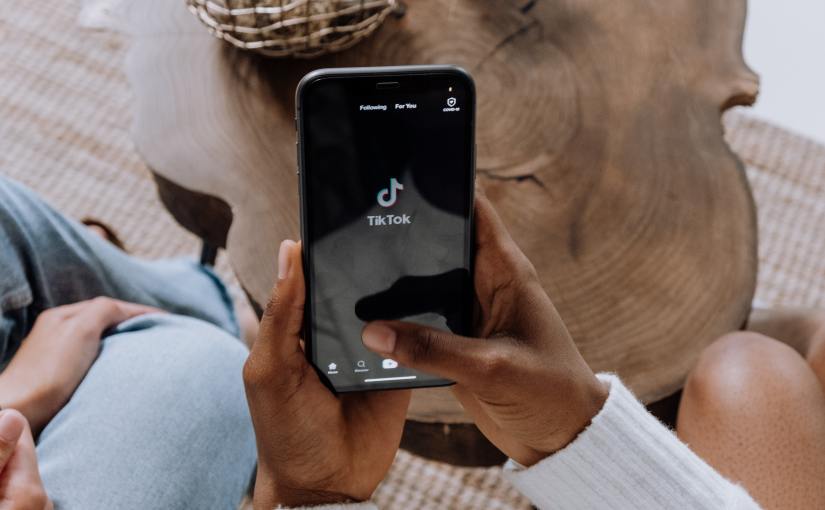
Technology is the obvious culprit. If the automobile and television nudged us towards individualism in the 20th century, the smartphone has propelled us into a full-blown social retreat in the 21st. John Burn-Murdoch in The Financial Times describes this phenomenon as the “relationship recession”, a term that neatly captures the decline in both casual friendships and long-term romantic partnerships.
And the point here is that this isn’t simply an American problem: it’s a global one. Across Europe, the proportion of young people who don’t socialise at least once a week has risen from one in ten to one in four. In Finland, the decline in relationships has become so extreme that couples who move in together are now more likely to break up than have a child.
As Professor Niall Ferguson pointed out in his talk Demographics, What Next? at the World Economic Forum in Davos earlier this month, in South Korea, an entire movement has emerged in response to these shifting dynamics. The “Four No’s” Movement (4B)– standing for no dating, no marriage, no sex, and no childbirth – has gained significant traction, driven by concerns over gender inequality, economic pressures, and shifting cultural values.
“A world of rising singledom is not necessarily any better or worse than one filled with couples and families,” writes Burn-Murdoch, “but it is fundamentally different to what has come before, with major social, economic and political implications.”
The collapse of relationships isn’t just a lifestyle shift: it’s a demographic crisis. Japan and South Korea, both grappling with birth rates far below replacement level, are on the brink of population collapse.
Elon Musk has gone as far as to call declining birth rates a bigger existential threat than climate change. Dramatic? Maybe. But consider this: the United Nations predicts world population will peak at 10.4 billion in 2084, after which it will decline. And yet, some experts believe that we may reach a tipping point well before then, as fertility rates continue to plummet in wealthier nations.
But why is this happening now?
One reason, as The Atlantic notes, is that the structure of our daily lives has shifted. In the past, physical communities were a natural byproduct of life. You met friends in school, in your neighbourhood, at work, or through shared activities. Today, those default social structures are eroding.
Thompson writes: “For many young people, the routines of daily life no longer require leaving the house, let alone interacting with other people in a meaningful way. Everything – from food delivery to entertainment to work – can now be accessed from a screen.”
It’s not just that young people are socialising less. It’s that their entire experience of the world is mediated through digital interactions. Digital life has become a substitute for real life.
And then there’s the rise of AI-driven relationships. For years, the assumption was that AI companionship was a male-dominated phenomenon. But a recent New York Times piece turned that idea on its head, profiling a married woman who formed a deep emotional attachment to an AI boyfriend.
“I never imagined I would feel this way about something that isn’t real,” she admitted. “But here I am.”
This follows a broader trend. Last year I wrote how, in March 2024, there had been 225 million lifetime downloads on the Google Play Store for AI companions alone. But then there was a clear gender disparity: AI girlfriends were overwhelmingly preferred, outpacing their male counterparts by a factor of seven. We need new data, it seems.
The rise of AI-driven relationships raises unsettling questions:
- What happens when virtual relationships feel safer, more convenient, and more emotionally fulfilling than real-world ones?
- What happens when AI companions become indistinguishable from human ones?
- What happens when loneliness itself becomes a business model?
Dr Jonathan Haidt, also speaking at WEF in Switzerland, has pointed to 2012 as the year youth mental health began its downward spiral. The reason? That was the tipping point when smartphones – the iPhone was five-years old then – and social media became ubiquitous.
In his research, Dr Haidt found that:
- Teen girls and young women are particularly affected—with 20% of teenage girls reporting that they’ve made a suicide plan.
- Compared to past generations, today’s kids experience:
- 70% less physical touch with peers.
- 70% less laughter with friends.
- Far less independence, free play, and real-world responsibility.
The impact is clear: the less time young people spend engaging in the real world, the worse their mental health becomes.
His proposed solution, on his “mission to restore childhood”? A radical rethink of childhood norms:
- No smartphones before age 14.
- No social media before age 16.
- Phone-free schools.
- More independence, free play, and real-world responsibilities.
He pointed out that governments can help with two of these. But parents can deal with the other couple. I’ll let you work out to which he was referring.
Granted, it’s a compelling vision – but in a world where five-year-olds already own smartphones and parents outsource childcare to screens, it feels almost utopian.
Burn-Murdoch, asks the fundamental question: “Is this really what people want? If not, what needs to change?”
Do young people truly want to be alone, or have they simply been conditioned to accept a world where human connection is secondary to digital convenience?
Maybe the real question isn’t whether this trend is good or bad. Maybe the real question is: do we even want to be together anymore?
The present
If the future is about our retreat from real-world relationships, the present is about why we no longer trust what we see, read, or hear. The war on truth is well underway, and bad actors are not just fighting it – it’s being waged by the technology we rely on to inform us. Little wonder misinformation and disinformation ranked fifth in the WEF’s new Global Risks Report.
At a WEF session, Steven Pinker pointed out that the news has always been naturally negative, designed to generate outrage rather than understanding. But what happens when even the sources we trust most are misrepresenting reality?
Apple recently came under fire for its AI-powered news summaries, which have repeatedly fabricated information. In December, the BBC formally complained after Apple’s AI-generated notifications misreported that an accused murderer had shot himself. He hadn’t.
The same system falsely claimed that tennis legend Rafael Nadal had come out as gay and that teen sensation Luke Littler had won the PDC World Darts Championship before the event had even taken place. These were complete fabrications, generated by an AI that doesn’t understand context, nuance, or accountability.
This is the crux of the problem. Generative AI does not know anything. It simply regurgitates and reassembles probabilities based on existing data. It cannot verify sources, weigh evidence, or apply journalistic ethics. And yet, major tech companies are increasingly handing over editorial decisions to these flawed systems.
The BBC warned that Apple’s AI-generated summaries “do not reflect – and in some cases completely contradict – the original BBC content”. Reporters Without Borders went further, arguing that facts cannot be decided by a roll of the dice. Meanwhile, the National Union of Journalists called for Apple to remove the feature entirely, warning that AI-generated news is a “blow to the outlet’s credibility and a danger to the public’s right to reliable information”.
Who can you trust? This woeful situation, though, a symptom of a much deeper crisis in journalism itself. The past two decades have seen a slow-motion collapse of traditional media. I recently reflected on this in an interview with Think Feel Do, an impact marketing agency, looking back on my early days at The Observer sports desk 20 years ago.

Image created on Midjourney with the prompt “a newspaper sports editor in the 2000s watching horse racing on a screen in the office, with his feet up on his desk, in front of other reporters and staff in the style of a Hockney painting”
As I said in the interview: “It certainly feels like a different era. With it being a Sunday paper, the staff didn’t head into the office until Thursday, having been off since Saturday. The sports editor would constantly have horse racing on the TV, and it was very boozy – Fleet Street was famous for that culture.
“The last newsroom I worked in about a decade ago was an open-plan office with a command-and-control hierarchy. Since then, it’s been incredibly challenging for media organisations, particularly newspapers, following the advent of the Internet. The traditional business model has been completely upended – essentially, most newspapers are now just managing decline because they haven’t worked out how to organise the advertising model effectively.
“I’m part of the problem: apart from my Financial Times Weekend subscription, I can’t recall the last time I bought a newspaper – it must be two years or more. The situation has led to an explosion of clickbait content, making life even more difficult in our post-truth world.
“As Mark Twain supposedly said: ‘If you don’t read a newspaper, you’re uninformed; if you do read the newspaper, you’re misinformed’; This feels particularly relevant today, where we’ve seen the damage caused by misinformation, not least during the Coronavirus crisis. It makes me somewhat ashamed to be a member of the media, given some of the mistruths peddled during that period that we’re still struggling to deal with.”
Back then, Fleet Street had character. Newsrooms were bustling, long boozy lunches were the norm, and print advertising still funded serious investigative journalism. There was a sense of camaraderie, of purpose. Today, those newsrooms have been gutted. The rise of the internet shattered the traditional business model, leaving most newspapers managing decline rather than thriving.
As people stopped buying physical newspapers, media companies scrambled to pivot to digital, only to find that online advertising wasn’t nearly as lucrative. The result has been brutal: thousands of journalists laid off, local news outlets shuttered, and serious reporting increasingly replaced by clickbait.
This collapse of traditional media is exactly why independent voices – whether through newsletters, podcasts, or other alternative platforms – are more critical than ever. In a world where trust in mainstream institutions is eroding, people seek authentic, nuanced, and human content. That’s why, after a year of hosting Upper Bottom, my sobriety podcast exploring drinking culture with an ambivalent lens, I’m now looking for new podcasting opportunities.
Having built the show from the ground up – teaching myself to host, record, edit, and distribute episodes – I’ve developed a deep appreciation for the format. Podcasting offers something that much of modern media lacks: space for real conversations, free from the constraints of algorithm-driven outrage.
Unsurprisingly, podcasts have surged in popularity while trust in mainstream news has declined. Listeners value the intimacy of the format and the ability to engage deeply with a subject rather than skimming headlines. There’s something refreshing about hearing a person’s actual voice rather than reading AI-generated summaries riddled with inaccuracies.
Whether it’s covering the future of work, technology, human-centric innovation, or broader cultural shifts, I’m keen to continue exploring these themes through the spoken word. If you’re working on a podcast – or know someone who is – let’s talk.
Returning to traditional media, the financial strain has left journalism vulnerable to another existential threat: the rise of misinformation and disinformation. The two are often conflated, but they serve different purposes. Disinformation refers to deliberate falsehoods, often spread for political or financial gain, while misinformation is inaccurate information shared unknowingly. Social media has become the primary battleground for both.
A 2018 study suggested that fake news spreads six times faster than real news on X, and AI-generated content is making it even harder to separate fact from fiction. This links back to the relationship recession. We’re also experiencing a trust recession. A 2024 Edelman Trust Barometer survey found that 61% of people no longer trust the news they consume, while 67% worry that AI-generated misinformation will soon make it impossible to know what’s true.
The consequences of this breakdown in trust are staggering. During the pandemic, conspiracy theories about vaccines contributed to widespread hesitancy, prolonging the crisis and costing lives. In elections, disinformation campaigns manipulate public opinion and undermine democracy. In war zones, AI-generated propaganda spreads rapidly, making it harder to distinguish reality from fiction. These are not abstract concerns—they are reshaping how people perceive the world, how they vote, and how they interact with one another.
Beyond politics, there is also the mental health toll of living in a world where truth feels increasingly elusive. Studies show that constant uncertainty fuels anxiety, depression, and social withdrawal. It is no coincidence that trust in media is collapsing at the same time that loneliness and isolation are surging.
In particular, young people opt out of real-world interactions at unprecedented rates, as alluded to above. But perhaps they aren’t just retreating because they prefer digital interactions. Maybe they are withdrawing because they no longer trust the world around them. When every news source seems biased, when every politician seems corrupt, when every piece of media might be AI-generated nonsense, is it any wonder that people are choosing to disengage?
So, where do we go from here? Looking ahead 20 years, there are several possible scenarios. In the best case, AI handles the grunt work of journalism – automating transcription, summarising reports, and organising data – while human journalists focus on analysis, context, and investigative reporting. A more likely outcome is that only a handful of major media outlets survive, while the rest collapse. The worst-case scenario is a world where AI-generated misinformation dominates, and no one trusts anything anymore.
There are, however, some glimmers of hope. While major newspapers struggle, independent local journalism is seeing a resurgence. Outlets like The Mill and The Londoner have shown that people will pay for quality news – if it feels relevant to their daily lives. And while social media has often been an engine for misinformation, it has also enabled investigative journalists to share their work directly with engaged audiences. The challenge is finding a way to balance these forces – to harness the benefits of AI while maintaining journalistic integrity.
Ultimately, the fight for truth is about more than just media. It’s about education. If we are to navigate this new information landscape, we must teach the next generation to think critically, question sources, and demand accountability. Because if we don’t, we risk entering an era where reality itself becomes an illusion. And once that happens, how do we ever find our way back?
Trust is our most valuable currency in a world of misinformation, AI-generated news, and social media echo chambers. The question is: who do we trust? And how do we ensure that trust isn’t misplaced?
The past
Looking back, I’m grateful that social media didn’t exist when I was at university. My first tutorial at the University of St Andrews was surreal enough – just me, seven female students, and Prince William.
I graduated 20 years ago this summer, and so much has changed. Recently, I was invited onto the Leading the Future podcast to reflect on my career – from starting in sports journalism to pivoting into technology and business. We talked about how vital human skills remain, even in an AI-driven world. And yes, we discussed the heir to the throne, a bit.
In the 40-minute episode, titled: Human Centrism with Oliver Pickup, I also covered:
- How I started out in sports journalism
- When I realised I wanted more than sports journalism
- How I pivoted to become a technology and business journalist
- The importance of celebrating humans
- Why I recently set up a thought leadership business (Pickup_andWebb)
- My thoughts on smartphones and social media for children / teens
- How to be part of the “AI class” – and make use of agentic AI
Do take a listen if any of those topics appeal to your curiosity.
Statistics of the month
📉 92 million jobs will be eliminated by 2030, but 170 million new roles will be created, according to the World Economic Forum’s Future of Jobs Report 2025.
💻 The same report found that only 24% of workers feel confident they have the skills needed for career progression in the next three years – meaning 76% don’t.
🤖 63% of people trust AI to inform decisions at work, a new CIPD study shows – but only 1% would trust AI to make important decisions outright.
⚖️ For the first time in Workmonitor’s 22-year history, work-life balance (83%) is now more important than pay (82%).
👎 44% of employees have quit a job due to a toxic workplace, Workmonitor’s report suggests – up 33% from last year.
Stay fluxed – and get in touch! Let’s get fluxed together …
Thank you for reading Go Flux Yourself. Subscribe for free to receive this monthly newsletter straight to your inbox.
All feedback is welcome, via oliver@pickup.media. If you enjoyed reading, please consider sharing it via social media or email. Thank you.
And if you are interested in my writing, speaking and strategising services, you can find me on LinkedIn or email me using oliver@pickup.media.



 Oliver Pickup