A quotation attributed to American-Canadian science-fiction writer William Gibson surges to mind when assessing the scarcity of active use-cases of the fifth-generation mobile network and the associated technologies and industries required to enable 5G at scale. “The future is already here; it’s just not evenly distributed,” the father of cyberpunk commented decades ago.
Evangelists promise 5G will provide super-speed broadband connections, up to a hundred times faster than 4G, and flash the green light for autonomous vehicles, among a panoply of other pluses. It will start the internet of things (IoT) revolution and make cities truly smart, finally. What needs to happen, then, to improve the distribution and adoption of 5G?
“The opportunity to take advantage of advanced cellular technologies to drive digital transformation across the board – industrial and robotics, automotive, aerospace and defence, smart cities and more – is unprecedented,” says Rob Jones, the UK-based strategic alliances regional director at multinational software and services provider PTC. “Advanced cellular capabilities have the potential to fuel the fourth industrial revolution, but only if the ecosystem co-operates to enable 5G.”
It’s a sizeable “if”, given there remain concerns around the readiness and reliability of supporting industries and services, including collocation, big data, cybersecurity and edge computing, to deliver and enable 5G en masse. Indeed, the financial and ecological cost to build the necessary infrastructure is colossal, says Thomas Spencer, telecoms lead at software firm R3.
“Mobile network operators (MNOs) face an uphill battle to enable 5G,” he says. “It is estimated they need to invest up to $1 trillion in upgrading network infrastructure for 5G, while already having to manage sprawling networks of towers, cables and switches just to support their ongoing operations.”
No ‘big-bang’ moment for 5G
There are further complexities. “The challenge of how to finance and optimise infrastructure usage extends to MNO plans for 5G rollout and in particular how to roll out small cell sites,” says Spencer. Next year in the United States alone, there will be some 400,000 small cell sites located on public infrastructure, restaurants, offices and homes. “Determining who owns, operates and finances these sites poses a significant and operational challenge,” he adds, hinting that blockchain might provide a solution.
Richard Carwana, Dell Technologies’ UK telco and service provider director, is similarly ambivalent about what must happen to enable 5G. “We are still joining the dots on how this will be built out,” he concedes. “There won’t be a ‘big bang’ of 5G that some had expected, rather a gradual introduction of services and operators moving into the telco space. Partnership and collaboration will be pivotal to make significant progress and drive implementation.”
He points out that “5G requires dense fibre connectivity to underpin use-cases, whereas 4G and 3G did not” and calls for “telecoms providers, industry leaders and governments to come together to understand requirements and build solutions for specific use-cases”. As an example, Carwana notes how the German government is collaborating with telco providers to build new motorways with autonomous-only lanes.
Partnership and collaboration will be pivotal to make significant progress and drive implementation
Closer to home, the UK government has acknowledged the ban of China’s trailblazer Huawei is likely to delay widespread 5G rollout by at least two years, notes Robert Pocknell, intellectual property partner at Keystone Law in London. “European Union research shows Huawei is the number-one leader for patents that are fundamental to 5G rollout,” he says.
Strong cybersecurity measures needed to enable 5G
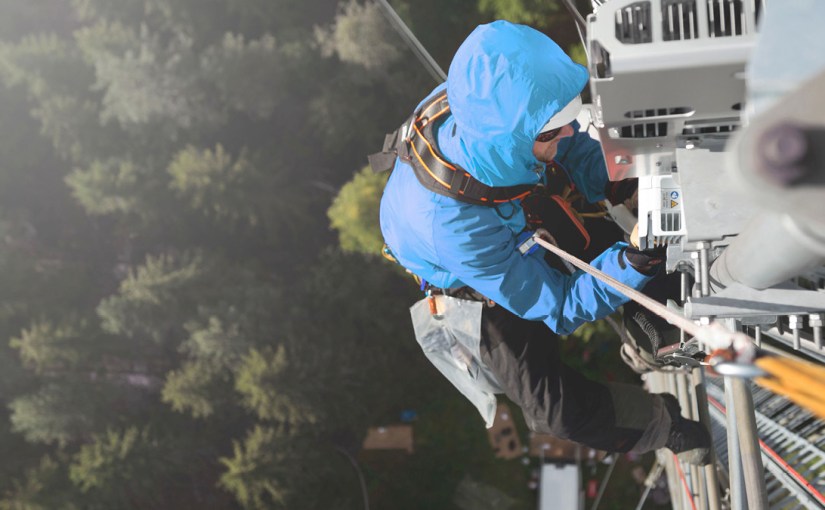
Politics aside, cybersecurity readiness is one of the fundamental issues holding up the advancement of 5G. Is it any wonder, when achieving 5G’s lofty goals relies on billions of interconnected devices, remote workers and the growth of cloud infrastructure? “Add to this the increasingly heavy compute and network infrastructure that is needed to support 5G applications, devices, data and services,” says Martin Rudd, chief technology officer at Telesoft Technologies. “Security, 5G and IoT are inextricably linked.”
The recent AT&T Cybersecurity Insights Report: Security at the Speed of 5G highlights the considerations that stakeholders must address. “A key takeaway is that 76 per cent of the respondents expect wholly new threats to emerge as a result of 5G and the increased attack surface,” says Theresa Lanowitz, head of evangelism and communications at AT&T Cybersecurity. “The remaining 24 per cent of participants expect a volumetric increase in existing threats.”
Shahzad Nadeem, head of smart cities at design and engineering consultancy Plextek, agrees and says: “On top of security, there are concerns around the ownership of data, along with compatibility and interoperability with existing systems.”

Security and trust issues – spooking investors?
Additionally, erroneous claims that 5G is connected to the spread of the coronavirus has further hampered its progress, says Amelia Westerberg, associate strategist at R/GA London. “Conspiracy theorists are the biggest threat to the uptake of 5G,” she argues. “Anti-5G attacks on phone masts and general national security and health concerns have caused 5G rollout to be delayed in most markets.”
As of mid-September, just shy of 300,000 people and organisations from 220 nations had signed the Stop 5G on Earth and in Space appeal, and investors might be getting spooked. It’s a tricky sell in the first place, with all the moving parts. As Nadeem says: “Because the technology is still evolving and its value potential split across its different uses in different domains, there are difficulties in justifying the business case and return on investment.”
Also in September, it was reported that in Grenoble, France’s answer to Silicon Valley, mayor Éric Piolle, a rising star in The Greens political party, is in no rush to provide access to 5G, questioning the impact it will have on the environment, especially if millions of new handsets are required.
While it is evident that to maximise 5G’s vast potential there is a reliance on a confluence of upgrade technologies, as well as multi-stakeholder collaboration and enormous investment, could it be there are more basic hurdles to overcome first? “For people to adapt and trust 5G,” Westerberg concludes, “it needs to establish itself as a positive contribution to culture as well as the economy.”
This article was first published in Raconteur’s Future of 5G report in September 2020












 Oliver Pickup